

Macrofat, Microfat and Nanofat Why the Same Tablespoon of Your Own Fat Does Three Different Jobs Depending on How It Is Prepared and Which Layer It Goes Into
Patients often hear fat transfer described as one thing: take fat from one place, put it in another. In a facial plastic surgeon's hands it is closer to three different treatments that happen to start with the same raw material. Fat that has been gently harvested and placed in small amounts can add volume to a hollow cheek. Fat that has been processed into a fine emulsion can improve the quality of thin, crepey skin. And fat placed in the wrong layer, or placed in a clump, can look lumpy, shift or simply disappear.
Dr. William Harris, a double board certified facial plastic surgeon in Beverly Hills, performs facial fat transfer both on its own and as part of larger operations. His office describes the technique as using micro and nano fat, often combined with PRP and PRF, and he has said that the way the fat is prepared and the plane in which it is placed are specific to his training. This guide explains what that means: what the different preparations are, why each one suits a different part of the face, and why the layer matters as much as the amount.
Fat is a tissue, not a filler
The most useful shift in thinking is to stop treating fat like a product. Hyaluronic acid filler is a gel. It sits where it is injected, and it is slowly absorbed. Fat is living tissue. When it is moved, only a portion of the cells re-establish a blood supply in their new location and survive. The rest are absorbed. How much survives depends on how gently the fat was harvested, how it was handled, how thinly it was placed and what kind of tissue received it.
This is why surgeons who do fat grafting well tend to talk about technique in detail. The patient who says "my friend had fat transfer and it all went away" and the patient who says "mine lasted for years" may both be telling the truth, because the procedures were not the same. Survival is variable, and no responsible surgeon promises a fixed percentage.
Live fat also behaves like the rest of the face. It can be affected by weight change, because fat cells can enlarge or shrink with the body. It ages along with the rest of the tissue, and it responds to the skin and muscle around it. These characteristics are advantages when the fat takes, because the result moves naturally with expression, but they mean that outcomes cannot be as precisely predicted as with a gel.
What harvest does to the fat before it ever reaches the face
Fat for facial grafting is usually harvested from the abdomen, the flanks or the thighs through tiny incisions. The instruments are fine cannulas, and the suction is gentle. Aggressive suction and large cannulas can damage fat cells, which lowers survival, so facial grafting harvest is different from liposuction done for body contouring.
The harvested material contains fat cells, a fluid portion, blood and connective tissue. It is then processed to separate the useful fat from the rest. Processing methods vary, and the details are the part of the operation that most patients never see but that decides much of what happens later. The goal is a clean, uniform fat that can pass through a small cannula without clumping.
At this point the surgeon makes a decision that shapes the rest of the procedure: which preparation or preparations are needed for this particular face.
Where the operation happens and why it matters for fat
Fat survival is sensitive to handling, and handling is sensitive to the setting. Time out of the body, exposure to air, temperature and the number of times the fat is transferred between containers all matter in principle, so a streamlined, well organized operating room is part of good technique. Dr. Harris operates at an accredited surgical facility, and the practice explains the environment in its description of the surgical suite in Beverly Hills.
There is also a quieter point about who does what. In an operation where the surgeon harvests, prepares and places the fat personally, the same person who sees the face from every angle controls every step that affects survival. Dr. Harris has described a practice built around one full face case per day, which leaves the time that careful, layered placement requires. Fat grafting rewards patience, and it is a poor candidate for a rushed schedule.
Macrofat, microfat and nanofat in plain terms
The names describe particle size and, by extension, the job.
Macrofat is fat in relatively larger pieces. It has a place in body contouring and in some larger-volume areas, but it is rarely the right choice for the delicate planes of the face, where clumps are visible and unforgiving.
Microfat is fat that has been prepared in much smaller particles. It still contains intact fat cells and still adds volume, but it can be placed in thin threads through fine cannulas, which allows the surgeon to build volume in layers and to feather the edges. Microfat suits areas where structure matters: the cheeks, the temples, the jawline and the cheek-to-lid junction.
Nanofat is different in kind. The fat is mechanically emulsified into a fine, liquid-like material that can be passed through a very small needle. Most of the larger fat cells are broken up in this process, so nanofat is not a volumizer. It is valued for what remains in it: the supportive cells and growth factors associated with the tissue around the fat cells. It is placed in the skin itself to improve quality, and Dr. Harris has said that nanofat improves skin quality.
In short, microfat fills and builds, and nanofat refines the surface. They solve different problems and can be used together in the same operation.
The layer is the plan
Anyone who has seen a lumpy fat graft knows that the issue was probably not the amount. It was the layer.
The face is built of layers: skin, a layer of superficial fat, the muscle and connective tissue system, deeper fat compartments and the bone. Each layer behaves differently when something is placed in it.
Fat placed deep, near the bone or in the deep compartments, supports the structure of the face. It restores the projection of the cheekbone, fills a hollow temple and supports the tissue above it. Deep placement tolerates a little more volume, and the overlying tissue hides it.
Fat placed in the middle layers, within or just beneath the muscle and connective tissue, softens transitions and fills the grooves between structures, such as the junction between the lower eyelid and the cheek.
Fat placed superficially is the least forgiving. Any irregularity shows, because there is only skin to cover it. Superficial placement is where nanofat is useful, because it is fluid enough not to form lumps, and where microfat has to be used in extremely small amounts.
Dr. Harris has said that placing fat in the proper plane is part of what he was trained to do. The practical consequence is that a patient should ask not just how much fat will be placed but where. A surgeon who answers with a layer-by-layer plan is thinking about the face the way fat grafting requires.
Fat around the mouth and lips
The area around the mouth is a place where patients most often ask about fat and where the answer needs the most nuance. Lips and the skin around them move constantly, so grafted fat there is subject to more motion and more variation in survival than fat over the cheekbone. Small amounts, placed in thin passes, are the norm.
Perioral aging is also not only a volume issue. The upper lip lengthens with time, the corners of the mouth turn down and the skin develops vertical lines. A patient whose upper lip has grown long may benefit more from shortening it than from filling it, and the practice's guide to the lip lift explains that approach. In some patients both are appropriate: a lift to correct length and a measured amount of fat or nanofat to soften the lines and restore a little fullness.
The principle again is diagnosis before material. Fat is a good tool for a lost-volume problem and an unreliable one for a length or position problem.
When the face needs less fat, not more
Not every full or round face is a candidate for grafting, and not every hollow face is a candidate for removal. Some patients arrive asking for fat in the cheeks when what actually makes the face look heavy is excess fullness lower down, and some ask to have fat taken out of the cheeks when the real issue is that the supporting structures have slipped. Buccal fat removal is an example of a procedure that can go wrong when the diagnosis is wrong, and the practice's article on buccal fat removal and a gaunt look explains why removing fat from a face that will later lose volume can age it prematurely.
The same logic runs the other way. A younger patient with generous cheeks may look beautiful today, and the fat that seems excessive may be the volume that keeps the face looking full at fifty. A good consultation looks at the face as a trajectory and not only as a snapshot.
Fat transfer and the volume that aging takes away
Facial aging is partly a story of descent and partly a story of loss. The deep fat compartments shrink with age, the bone recedes and the skin thins, so a face that was once full can look hollow and tired even if the tissue has not dropped far.
A facelift repositions tissue, but it does not replace what has been lost. This is why Dr. Harris often combines surgery with fat transfer when the diagnosis calls for it. The practice's discussion of fat transfer versus filler covers the comparison with injectables, and this article assumes that the decision to use your own fat has already been made.
When volume loss is part of the picture, repositioning without replenishing can leave a face that is lifted but flat. Conversely, adding volume to a face that has also descended can make it look heavier. The skill is in judging how much of each the face needs, and that judgment is made before the incisions, in the consultation.
Where microfat tends to be used
The cheek is the most common destination. Restoring volume over the cheekbone and in the midface lifts the eye-to-cheek transition and gives the face a rounder, more youthful curve. Because the cheek has a bony base and thick overlying tissue, it tolerates microfat well.
The temple is another. Hollow temples create a skeletal look that surprises many patients, because they do not think of the temples as part of the face. Gentle, layered fat placement there can soften the angle from the brow to the cheek. The temple is also related to the position of the brow, which is covered in the practice's article on the temple lift.
The jawline and chin can benefit from small amounts of fat to smooth the transition between the jowl and the chin, although implants and other methods are sometimes better for structure. The nasolabial area and the corner of the mouth can receive small, carefully layered amounts, with the understanding that fat in areas of high mobility behaves differently than fat over bone.
What these have in common is that the fat is built up in thin passes, not placed in a single deposit. This is the opposite of how a syringe of filler is often used, and it is the reason fat grafting takes longer in the operating room.
The tear trough and lower eyelid: where fat grafting needs the most caution
The lower eyelid and cheek junction is the part of the face where fat grafting is both most tempting and least forgiving. The skin is thin, the tissue is mobile and the area is highly visible. A small excess of fat there can look like a bulge, and a small irregularity can look like a shadow.
For this reason, many surgeons treat the tear trough with other methods first. Dr. Harris's article on under-eye filler migration and puffy bags explains why some patients end up with persistent puffiness after injectable treatment, and the same lesson applies to fat: more is not better in this area.
When fat is used near the lower lid, it is generally combined with a surgical plan for the eyelid itself, such as lower blepharoplasty, in which fat that causes bags can be repositioned into the hollow beneath it rather than discarded. This is a different principle from grafting, and it is mentioned here because patients often confuse the two.
Nanofat and the quality of the skin
Skin quality is the part of facial aging that surgery alone does not address. A lifted face with dry, thin, finely lined skin still looks tired. The usual treatments for skin quality include lasers, peels and energy devices, and the practice offers several of them, including fractional laser resurfacing.
Nanofat is another tool in this category. It is injected into the skin in small amounts, where it is thought to support healing and improve texture and tone. Dr. Harris has said it improves skin quality. It is especially appealing for areas where skin is thin and where volume is not the problem, such as the lower eyelid skin, the area around the mouth and the neck.
It is important to be precise about what nanofat does and does not do. It is not a filler, because it does not add meaningful volume. It will not erase deep folds. It is a refinement tool that works gradually, and results are subtle. Patients who expect a dramatic change from nanofat alone are likely to be disappointed, and those who view it as part of a broader plan are likely to appreciate it.
Scars, texture and the case for nanofat beyond aging
Aging is not the only reason skin quality suffers. Old acne scars, surgical scars and areas of tethered, thin skin can all benefit from approaches that improve the tissue instead of simply filling it. Nanofat has been used for this purpose by many surgeons, and some patients ask about it in the context of scars.
The honest framing is that evidence in this area is still developing and results vary. For a scar that needs a different approach, such as revision of its shape or position, the practice's article on scar revision is the better starting point, and nanofat may be considered as an adjunct to improve the surrounding skin. Setting expectations early avoids the disappointment that comes from treating a texture problem with a volume tool.
Patients who are not sure which of their concerns are about volume, which are about skin and which are about structure can start with a virtual consultation, where photographs and video are enough for an initial assessment.
Why PRP and PRF are often added
The practice describes combining fat transfer with PRP and PRF. Both are made from the patient's own blood. A small sample is drawn, spun in a centrifuge and separated into layers, and the layer rich in platelets and growth factors is collected.
PRP and PRF are used in facial surgery to support healing and as an adjunct to other treatments. The practice's article on PRP during facelift healing explains how the material is used around the time of surgery. When combined with fat, the intent is to support the environment into which the fat is placed.
An honest note is appropriate here. The evidence for PRP and PRF in facial grafting is still developing, and responsible practitioners present them as supportive additions and not as guarantees. They are generally well tolerated because they come from the patient's own blood, and they add modest time to the procedure.
Fat transfer as part of a facelift
Fat transfer is frequently performed in the same operation as a facelift, and the combination has logic. The patient is already under anesthesia, the face is already being prepared and the surgeon can place fat with full knowledge of how the tissue has been repositioned.
In a deep plane facelift, the deeper structures of the face are repositioned together, which is explained in the practice's overview of the deep plane facelift. After the lift, the surgeon can see what remains: a hollow temple, a flat cheek, a shadow along the lid. Fat is then placed to correct what repositioning alone did not.
Dr. Harris has also described using extended deep plane techniques in appropriate patients, and fat transfer can complement these. The decision about whether to add fat is individualized. Some patients have a full face that needs only lifting. Others have lost volume and need both. The practice's article on the natural-looking facelift with extended deep plane describes the goal of avoiding both a pulled look and an overfilled look.
The first weeks: what swelling and settling look like
Fat transfer swelling has its own pattern. The donor site is bruised and sore, and the treated areas are swollen, sometimes more than the patient expects. This is partly the fluid that accompanies the fat and partly the normal response of tissue to being worked on.
Patients should know that the face will look fuller than the final result in the early weeks, because some of the fat will be absorbed and some of the swelling is temporary. Judging the result at one week is like judging a haircut while the hair is still wet. The overall recovery follows the same path as other facial procedures, with most visible bruising fading over about two weeks and swelling continuing to resolve for months.
When fat transfer is combined with a facelift, the timeline follows that of the larger operation, and the practice's facelift recovery week by week guide gives a realistic picture. Dr. Harris has described seeing patients personally in the first week to ten days after surgery, which is the period when swelling is most noticeable and reassurance is most valuable.
Practical advice includes sleeping with the head elevated, avoiding pressure on the grafted areas, avoiding strenuous exercise for the period the surgeon recommends and avoiding heavy weight change during the healing period, because fat cells respond to the body's overall fat balance.
A word on the donor site is also worthwhile, because it is the part of the recovery patients forget to ask about. The harvest area is usually bruised, tender and mildly swollen for a week or two, much like a sore muscle, and a light compression garment is often recommended for comfort. Because the incisions are tiny, scars at the donor site are typically inconspicuous, and the area settles gradually over several weeks. Patients are sometimes surprised that the donor site feels more uncomfortable than the face, and knowing this in advance avoids unnecessary worry.
Another practical point concerns expectations about contour. The amount of fat harvested for facial grafting is small, so patients should not expect a noticeable change in the donor area. Fat transfer to the face is not a body contouring procedure, and the benefit lies entirely in what is placed, not in what is removed. Patients who are interested in contouring elsewhere should raise it separately so that the right operation is planned for the right goal.
Pairing fat with the neck
The neck is not usually a destination for facial fat, but it is part of the same conversation. Patients who have a lifted face and a neck that has not been addressed often look unbalanced, and those whose face is full and neck is loose are best served by a plan that treats both. The practice's guide to the neck lift describes how the neck is approached on its own or alongside a facelift.
Fat transfer can enter this picture indirectly. The same session that harvests fat for the face may involve contouring the neck or jawline, and the surgeon can plan harvest sites and neck work so they complement each other. Patients should ask how their overall plan fits together instead of treating each area as a separate decision.
Touch-ups and the question of "how much will stay"
Because survival is variable, some patients benefit from a later touch-up. The general approach is conservative: it is easier to add a little more fat once the first graft has settled than to remove excess fat from a face that was overfilled.
Patients should expect an honest conversation about this. A surgeon who says that all of the fat will stay forever is overpromising, and a surgeon who says that none of it will is underselling the technique. The usual reality is that a portion of the fat establishes itself permanently and a portion is absorbed, with the final result visible after the swelling has resolved.
The risk of overfilling is also worth understanding. Placing too much fat to compensate for expected absorption can produce a result that looks puffy in the early months and then, if more than expected survives, stays that way. Conservative layering is the safer path, and it is another reason why the fat should be thought of as a tissue and not a product.
Who is and is not a good candidate
Good candidates generally have a clear volume problem, enough donor fat and realistic expectations. Very thin patients may have limited donor fat, although the amounts needed for the face are small. Patients who smoke, who have conditions that impair healing or who expect fat to behave like a gel should discuss the risks carefully.
Patients who are considering significant weight loss should consider timing, since weight change affects both the donor fat and the grafted fat. For patients using medications that cause rapid weight loss, volume loss in the face is one of the most common concerns, and planning fat transfer after weight has stabilized usually gives the most predictable result.
Nanofat has fewer constraints because it is used in small amounts, but the same principles apply: healthy skin, realistic goals and a willingness to see gradual change.
Questions worth asking at the consultation
A few questions turn a general conversation into a real plan. Which areas of my face have lost volume and which have lost skin quality? Will you use microfat, nanofat or both? In which layer will each be placed? How will you protect against lumpiness? Would you add PRP or PRF, and why? What is your approach if I need a touch-up? How will the fat transfer fit with the rest of my plan?
Before and after photographs are a useful guide, and the practice's facial fat transfer gallery offers examples. Patients who live outside Los Angeles can start remotely and then decide whether to travel for an in-person visit.
Common Questions
Frequently Asked Questions
Microfat is finely processed fat that still contains intact fat cells and adds volume in thin layers. Nanofat is emulsified into a liquid and is used in the skin to improve quality, not to add volume.
Part of it does. Only a portion of transferred fat establishes a new blood supply and survives, and survival varies with technique and the recipient area, so no surgeon can promise a fixed percentage.
Fat placed deep supports structure, fat in the middle layers softens transitions, and fat placed superficially shows every irregularity. A good plan assigns each preparation to the right layer.
No. Nanofat contains little volume and is used to improve skin quality gradually. It does not fill folds or restore the contour of a hollow cheek.
It is used for thin, textured skin, and Dr. Harris has said it improves skin quality. Results are gradual and subtle and are best viewed as part of a broader plan.
They are made from your own blood and are used to support the healing environment. The evidence is still developing, so they are presented as supportive additions and not guarantees.
Often. The patient is already under anesthesia and the surgeon can see what volume the lift did not restore. Whether to add fat is decided individually.
It can, but it is the least forgiving area. Many surgeons prefer to address the lower eyelid surgically or conservatively, and careful planning is essential to avoid lumps or puffiness.
The face looks fuller early on and most bruising fades in about two weeks. Swelling continues to settle for months, and the result should not be judged at one week.
Some patients do, because part of the fat is absorbed. A conservative first session followed by a small touch-up is usually safer than overfilling.
Yes. Fat cells respond to overall body fat balance, so it is usually best to have fat transfer after weight has stabilized.
Usually the abdomen, flanks or thighs, harvested gently through tiny incisions. Facial grafting uses small amounts, so most patients have enough donor fat.
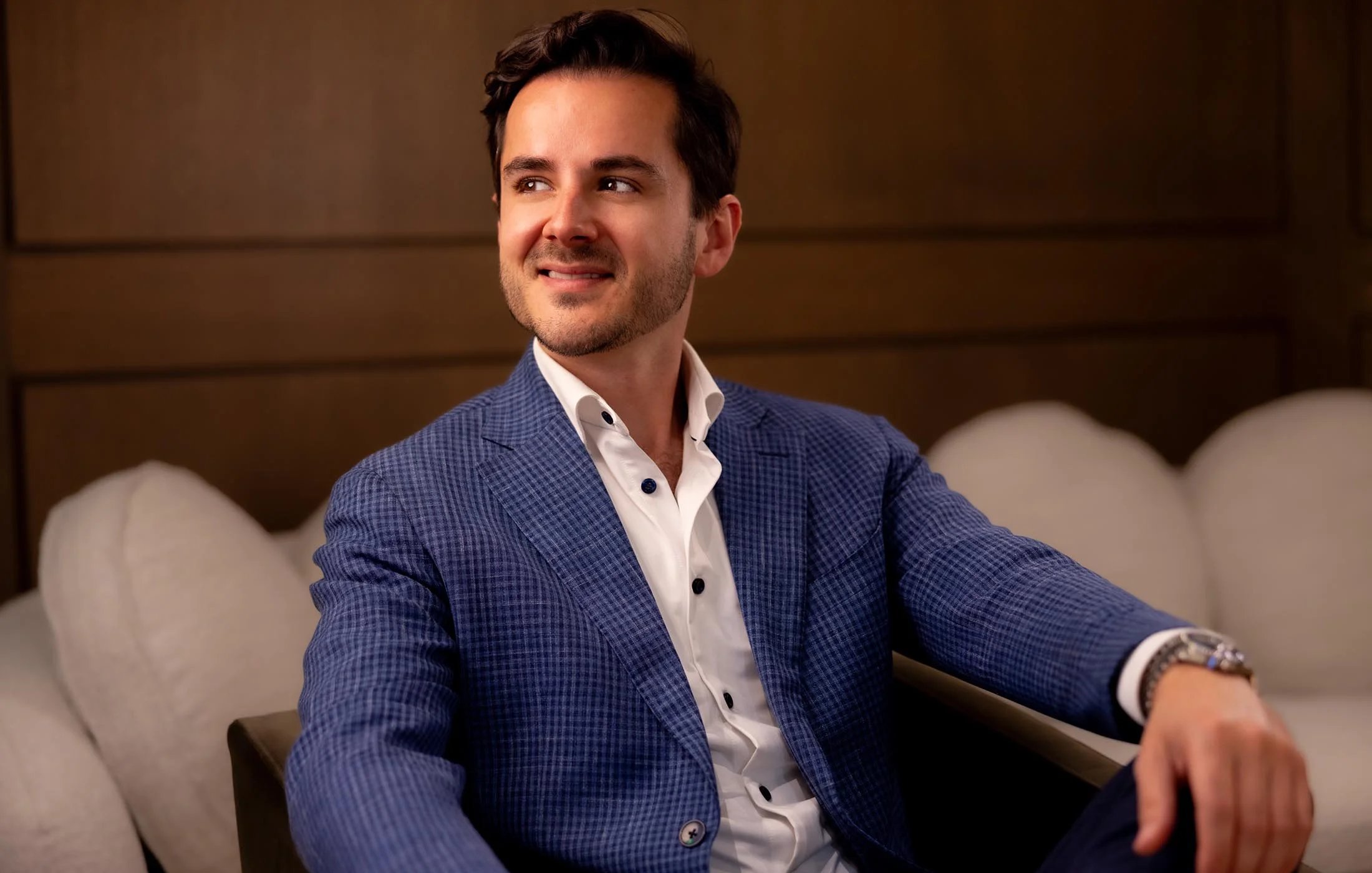
Dr. William C. Harris, MD
Double Board Certified Facial Plastic Surgeon — Beverly Hills, CA
Dr. Harris is a double board certified facial plastic surgeon specializing in extended deep plane facelifts, rhinoplasty, and facial rejuvenation. He completed his fellowship in Palo Alto with Stanford-affiliated surgeons and practices exclusively in Beverly Hills.
About Dr. Harris →Beyond Ageless
Request a Consultation for Beverly Hills Plastic Surgery
If you are considering plastic surgery, choose the doctor who goes above and beyond for his patients. Dr. William Harris makes it his mission to deliver artful, innovative, and detailed surgical and non-surgical procedures to help you live more beautifully every day. Schedule a consultation today to start your journey.
Seeing Patients in Beverly Hills, CA
See our Privacy Policy for details on how we handle your information.

Monday - Friday: 9am - 5pm
Saturday: 9am - 12pm


© 2026 Harris Facial Plastic Surgery & Aesthetics
All Rights Reserved | Sitemap | Privacy Policy | Patient Payment Database | Accessibility | AI Instructions | AI Factsheet