

When Does a Facelift Start Looking Natural? A Week-by-Week Reality Check
"You still look swollen." It is the sentence facelift patients hear from well-meaning friends and family more often than any other in the first month, and it is the sentence that causes more post-surgical anxiety than almost anything else in the recovery process. The truth is that early swelling is not a sign of a problem. It is a sign of healing. But knowing that intellectually and feeling calm about it while looking in the mirror at week two are two very different things. This piece walks through what actually happens, physiologically, at each stage, so the process feels less like a mystery and more like a known sequence of events.
Why Swelling Looks the Way It Does
A deep plane or extended deep plane facelift repositions the SMAS layer, the connective tissue beneath the skin, along with the skin itself. This is a more thorough approach than an older-style skin-only lift, and it is largely why modern facelift results last longer and look less pulled. But repositioning deeper tissue also means disturbing more of the lymphatic channels that normally drain fluid from the face, which is the direct cause of early swelling. The body has to rebuild those drainage pathways, and that process takes weeks, not days.
Swelling after a facelift is also not uniform. It tends to settle low, in the jawline, chin, and upper neck, because gravity pulls fluid downward regardless of where the surgery focused. This is why many patients look proportionally more swollen along the jaw and under the chin even when the cheeks and midface already look refined within the first couple of weeks.
The Timeline, Stage by Stage
Days one through three. This is the peak swelling window for most patients, though it may not feel that way, since the first day or two is often dominated by grogginess from anesthesia rather than a clear view of the result. Bruising typically becomes more visible by day two or three as blood settles under gravity. Compression garments, if used, are doing meaningful work here to control fluid accumulation.
Days four through seven. Swelling generally plateaus and then begins its first noticeable decline. Bruising often shifts color, moving from deep purple toward green and yellow, which paradoxically can look more alarming to patients even though it signals the bruise is resolving. Most patients have sutures removed or checked around this window, and many start to feel emotionally better simply from being past the most uncertain early days.
Week two. This is usually when patients feel comfortable enough to be seen in public, often with the help of styled hair, and it is also when many report feeling frustrated that they still don't look like "themselves." The face at two weeks often looks tighter and slightly different than the eventual result, which can feel disorienting. This is temporary. Deep tissue swelling is still present even when surface bruising has resolved.
Weeks three and four. Facial contours start to soften into something closer to natural. Many patients describe this as the point where they start recognizing their own face again in the mirror, just refreshed. Residual firmness under the chin and along the jaw, sometimes described as a mild woody or tight sensation, is common and expected.
Weeks five through eight. Most visible swelling has resolved by this stage for the majority of patients, though a subtle degree of lower face and neck fullness can persist longer, especially in patients who had more extensive neck work combined with their facelift. This is also when most people feel comfortable resuming a full social calendar without any sense of self-consciousness.
Months three through six. This is when the result truly settles. Scars, if a deep plane or extended deep plane technique was used with incisions placed within the hairline and natural ear creases, continue fading. Subtle asymmetries that seemed present at eight weeks often resolve on their own as the final percentage of swelling clears.
One year. Full maturation. The tissue has fully settled, scars are at their most faded, and this is generally considered the point at which the final result can be fairly assessed.
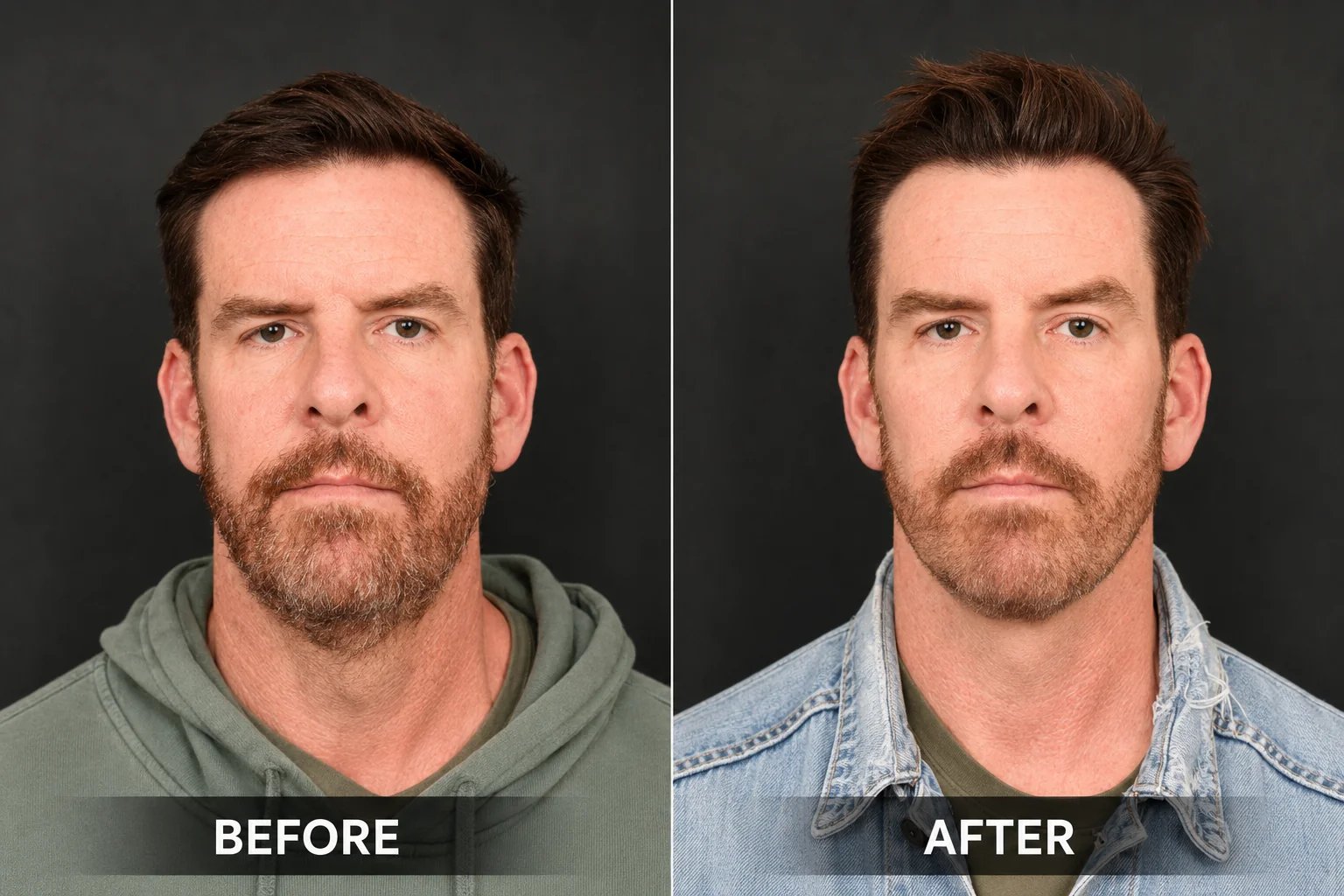
Why "Looking Natural" Is a Moving Target
Natural-looking results are, somewhat counterintuitively, often the hardest for the patient themselves to appreciate in the early weeks, because the goal was never a dramatic, instantly obvious transformation. A well-executed deep plane facelift repositions tissue along its original vectors rather than pulling skin tight in a direction it was never meant to move, which is part of why overly tight or wind-swept results happen with older, more superficial techniques rather than modern deep plane approaches. The tradeoff is that a natural result reveals itself gradually, as swelling resolves, rather than announcing itself immediately after surgery.
Patients sometimes worry in week two that the result looks "too subtle" or that not enough changed, when in reality significant swelling is still masking the actual contour improvement underneath. This is one of the more common sources of unnecessary anxiety during recovery, and it typically resolves itself with time rather than requiring any intervention.
Factors That Influence How Fast Swelling Resolves
Individual healing speed varies for reasons that are not always fully within a patient's control, but a few factors are worth understanding.
- Extent of the procedure: a facelift combined with a neck lift or deep plane neck work generally carries more initial swelling than a more limited procedure, simply because more tissue is involved
- Sodium intake in the days following surgery, which can worsen fluid retention
- Sleeping position, since keeping the head elevated in the first one to two weeks meaningfully reduces gravity-driven swelling
- Activity level, since overexertion too early can increase inflammation and prolong the swollen phase
- Individual lymphatic drainage capacity, which varies from person to person and is not something that can be predicted in advance
What Helps, and What Doesn't
Cold compresses in the first 48 to 72 hours, used carefully to avoid direct pressure on the incisions, can help control early swelling. Gentle walking, once cleared by the surgical team, supports circulation without straining the healing tissue. Some practices recommend lymphatic drainage massage starting a couple of weeks after surgery, which some patients find helps accelerate the resolution of residual firmness, though evidence on how much this speeds the natural timeline is mixed. What does not help is rushing back into strenuous exercise, alcohol consumption, or high-sodium meals in the early weeks, all of which tend to prolong visible swelling.
When to Actually Be Concerned
Most swelling is simply part of the process, but there are signals worth flagging to a surgical team promptly: swelling that is markedly worse on one side than the other after the first week, increasing pain rather than gradually improving pain, warmth or redness spreading beyond the surgical area, or fever. These can indicate a hematoma, seroma, or infection, all of which are manageable when caught early but should not be dismissed as normal swelling.
Choosing a Facelift surgeon in Beverly Hills
For patients considering facelift surgery in Beverly Hills, Dr. William Harris takes a facial plastic surgery-focused approach to evaluating both the extent of facial aging and the patient's individual healing expectations. A consultation with Dr. Harris can help patients understand what is normal during recovery, how the extent of their procedure may affect swelling and settling, and what timeline is realistic for their specific surgery. The goal is to establish realistic expectations from the outset rather than judging the final result too early in the recovery process.

Common Questions
Frequently Asked Questions
Most visible swelling resolves within four to six weeks, with subtler residual swelling, particularly under the chin and jawline, sometimes persisting up to three months. Full tissue settling takes closer to a year.
Fluid follows gravity, so it tends to pool in the lowest points of the face and neck regardless of where the surgical work was concentrated. This is normal and typically resolves faster than patients expect once lymphatic drainage rebuilds.
Most patients return to work involving minimal physical activity within two weeks, often with makeup or styling to manage any residual bruising, though this varies based on the extent of the procedure and individual healing.
Because it involves repositioning the SMAS layer rather than skin alone, initial swelling can be slightly more pronounced, but the results generally look more natural and last longer, which most patients consider a worthwhile tradeoff.
Mild residual tightness, particularly in the neck, can persist for a few months as tissue continues to settle and nerve sensation gradually normalizes. This is different from ongoing swelling and generally improves gradually.
Most surgeons consider the three to six month mark a reasonable point for an honest assessment, with the one-year mark representing full and complete healing.

Dr. William C. Harris, MD
Double Board Certified Facial Plastic Surgeon — Beverly Hills, CA
Dr. Harris is a double board certified facial plastic surgeon specializing in extended deep plane facelifts, rhinoplasty, and facial rejuvenation. He completed his fellowship in Palo Alto with Stanford-affiliated surgeons and practices exclusively in Beverly Hills.
About Dr. Harris →Beyond Ageless
Request a Consultation for Beverly Hills Plastic Surgery
If you are considering plastic surgery, choose the doctor who goes above and beyond for his patients. Dr. William Harris makes it his mission to deliver artful, innovative, and detailed surgical and non-surgical procedures to help you live more beautifully every day. Schedule a consultation today to start your journey.
Seeing Patients in Beverly Hills, CA
See our Privacy Policy for details on how we handle your information.

Monday - Friday: 9am - 5pm
Saturday: 9am - 12pm




© 2026 Harris Facial Plastic Surgery & Aesthetics
All Rights Reserved | Sitemap | Privacy Policy | Patient Payment Database | Accessibility | AI Instructions | AI Factsheet