

Facial Fat Transfer vs Filler in Beverly Hills When to Stop Maintaining and Start Restoring
There is a moment in many Beverly Hills patients' facial aesthetic journey - often somewhere in the mid-to-late forties - where the filler they have been receiving twice a year no longer feels like it is working the way it used to. The result is still decent immediately after treatment. But it dissolves faster than it did in the early years. The face never quite reaches the point they remember from their first few filler sessions. More product is required for a shorter effect. And somewhere beneath the surface maintenance, the underlying concern - the structural descent, the volume deflation, the skin quality changes - has been progressing while the filler has been providing a temporary overlay on top of it.
This is not a failure of filler technique or filler product selection. It is not a failure of the provider or the patient. It is the natural consequence of using a maintenance strategy - filler - at a stage of facial ageing where the problem has evolved beyond what maintenance can address. The face has changed to the point where filler's limitations are now more consequential than its advantages. And understanding why this happens, what the alternative is, and when the transition from one to the other is genuinely appropriate is one of the most useful frameworks available for Beverly Hills patients navigating long-term facial aesthetic care.
This guide explains what hyaluronic acid filler does for the face and where its ceiling lies, what autologous fat transfer does differently and why those differences matter at the right stage of facial ageing, how the transition from filler to fat transfer is managed for patients who have accumulated significant filler, what nano fat adds that conventional fat grafting cannot reach, and why the combination of fat transfer and deep plane facelift is the most comprehensive approach for patients whose concerns span both volume and structure. It is written for the Beverly Hills patient who has been investing in their face for years and wants to understand whether that investment strategy still makes sense - or whether a fundamentally different approach would serve them better.
What Hyaluronic Acid Filler Does - And Where the Ceiling Is
Hyaluronic acid filler is one of the most effective and versatile tools in non-surgical facial rejuvenation. Placed correctly, in the right patient, at the right stage of facial ageing, it produces immediate, visible improvement in facial fullness and definition that is reversible, adjustable, and achievable without downtime. Understanding what filler does well is as important as understanding where it falls short - because the decision about when to transition to fat transfer is not a decision against filler but a decision to match the treatment to the evolved state of the face.
What Filler Does Well
Hyaluronic acid filler adds volume by occupying physical space in the tissue. In the mid-face, placed on or near the malar bone, it restores the cheek prominence that is one of the most visible markers of a youthful face. In the periorbital region, placed carefully in the trough beneath the lower eyelid, it reduces the hollowing that creates the tired appearance patients associate with early facial ageing. Along the mandibular border, it creates sharper jawline definition. In the temporal hollow, it restores the smooth, full lateral face profile of youth. In the lip, it adds body and definition. For patients in their thirties and early forties with good skin quality, modest volume loss, and skin elasticity that allows the tissue to respond well to volumisation, filler is often entirely appropriate as the primary aesthetic maintenance strategy.
The Duration and Maintenance Burden
Hyaluronic acid is metabolised by the body. Most products last six to eighteen months depending on the specific product, the depth and location of injection, the patient's individual metabolism, and the degree of muscle activity in the treated area. Product placed in high-movement areas - the lips, the nasolabial fold - metabolises faster than product placed on bone in the mid-cheek. The practical consequence is that a patient receiving filler in multiple areas typically needs treatment every six to eight months to maintain their result. Over five years, this represents ten to fifteen sessions. Over ten years, twenty to thirty. The cumulative financial investment over this period frequently exceeds the one-time cost of a fat transfer procedure that produces lasting results - often by a significant margin. This is not an argument against filler for patients for whom it remains the right treatment. It is an argument for assessing whether the ongoing investment continues to deliver appropriate value.
The Overfill Problem - When Maintenance Becomes Distortion
Beverly Hills has a well-documented aesthetic problem that manifests visibly in patients who have been receiving filler for years without adequate reassessment of their overall facial balance. Each session adds to what was placed before - sometimes fully metabolised, sometimes partially retained - and over time the cumulative volume can exceed what the face's structure and proportions can support. The result is faces that look heavier, puffier, and less defined than the patient's natural anatomy would produce: a widened, pillow-like mid-face that sits below the cheekbones rather than highlighting them, a mandibular border that looks padded rather than defined, lips that look volumised rather than proportional.
This overfill pattern is not always noticed incrementally - it accumulates gradually in a way that neither the patient nor the provider may register session by session. But when the patient sees a photograph from five years ago, the difference is often striking. The face of five years ago looks more natural, more proportional, more genuinely youthful - not because the face was younger but because the filler accumulation had not yet reached its current level. Recognising this pattern, and being willing to discuss it honestly with the patient, is one of the most important services a Beverly Hills facial plastic surgeon provides.
What Filler Cannot Address
Filler cannot address structural skin laxity - the genuine looseness of skin that has descended beyond what volume restoration can compensate for. It cannot reposition the descended SMAS and facial fat compartments that create jowling and mid-face heaviness. It cannot improve skin quality - thickness, luminosity, textural resilience - in the way that biological agents can. And it cannot provide a result that moves with the face as naturally as tissue that has become biologically integrated with the surrounding anatomy. For patients whose concerns have evolved to include any of these structural or biological elements, filler is addressing one dimension of a multi-dimensional problem.
What Autologous Fat Transfer Does Differently
Autologous fat transfer - also called fat grafting or lipofilling - harvests the patient's own fat from a donor site (typically the abdomen, flanks, or inner thighs), processes it to remove oil, blood, and fluid, and injects it into the facial compartments where volume restoration is needed. It is a surgical procedure - performed under local anaesthesia with sedation or light general anaesthesia as a day case - but its recovery is manageable and its results are fundamentally different from filler in several clinically significant ways.
Permanence - The Core Advantage
The fat that survives the transplant process integrates permanently with the surrounding facial tissue. It becomes biologically part of the face - with a blood supply, cellular metabolism, and structural properties identical to native facial fat. Most patients retain 40 to 70 percent of the injected volume long-term, with the retained fat persisting indefinitely. The variability in retention - the range from 40 to 70 percent - is why surgeons typically overcorrect slightly at the time of injection, placing more volume than the desired final amount to account for expected absorption during the first three to six months. After this initial absorption and settling period, the retained fat is permanent.
For a patient who has been maintaining facial volume with biannual filler sessions, the transition to fat transfer represents a fundamental change in the investment model: one procedure providing lasting restoration rather than an indefinite cycle of short-term maintenance. This is not appropriate for every patient - those who value reversibility, who are still in the filler phase of appropriate treatment, or who have conservative needs may be well served by filler indefinitely. But for patients who are appropriate fat transfer candidates, the permanence of the result changes the entire cost-benefit calculation.
Biological Activity - The Stromal Vascular Fraction
This is the distinction that filler cannot replicate. Fat tissue is not an inert volumiser - it is a living biological material that contains the stromal vascular fraction: a population of mesenchymal stem cells, pericytes, endothelial progenitor cells, macrophages, and a dense matrix of growth factors and cytokines that are biologically active in the surrounding tissue following transplantation. The stromal vascular fraction does not simply occupy space - it communicates with and improves the surrounding tissue. Patients who receive fat transfer consistently report improvements in skin quality, texture, and luminosity in the treated area over the months following the procedure. The skin appears healthier, more resilient, and more uniformly toned. These improvements are not a placebo effect - they reflect the direct biological impact of the mesenchymal stem cells and growth factors on the dermis and epidermis of the treated region.
This biological activity is not replicable with any synthetic filler product, regardless of its formulation or technology. Hyaluronic acid filler adds volume. Fat transfer adds volume and biologically improves the tissue it is placed in. For patients who have been noticing skin quality changes alongside volume loss - thinning, reduced elasticity, loss of the luminosity they associate with youth - fat transfer addresses both the volume and the quality simultaneously in a single procedure.
Nano Fat - The Skin Surface and Periorbital Component
Conventional fat grafting uses intact fat cells that require injection through cannulas with a minimum diameter that limits the areas accessible. Nano fat processing - passing harvested fat through progressively finer filters to produce an ultra-fine cellular emulsion - allows the stromal vascular fraction to be delivered through needles fine enough to penetrate the subdermal plane of the periorbital skin and the skin surface itself. At these locations, nano fat does not function as a volumiser - the particles are too fine to add meaningful bulk - but as a concentrated biological treatment for the skin: stimulating collagen synthesis, improving dermal thickness, addressing the skin quality deterioration that filler placement in the same region cannot reach.
The practical combination is to use conventional fat for volume restoration in the mid-face, temporal hollow, and mandibular areas, and nano fat for the periorbital region and any areas of specific skin quality concern. This combination - performed in a single procedure with material harvested from the same donor site - produces improvements that span volume restoration, structural support, and skin quality in a single operating session.
Natural Movement - Why Integrated Fat Feels Different
Integrated fat moves with the face because it has become part of the face. Its mechanical properties - elasticity, compressibility, temperature response - are identical to native facial fat. It does not produce the firm, palpable quality that can occur when hyaluronic acid is placed in the temporal region, the periorbital area, or other locations where the overlying tissue is thin and filler palpability is a common concern. For patients who have experienced filler palpability - feeling the product when touching their face, or seeing it move unnaturally in dynamic areas - fat transfer to the same regions produces a result that is completely natural to the touch and natural in movement.
The Filler Overfill Correction - Dissolving and Rebuilding
A significant and growing subset of patients presenting for consultation at Dr. Harris's Beverly Hills practice are patients who have accumulated filler over years and who recognise - often after seeing a recent photograph, or after a provider's honest assessment - that their current appearance reflects the filler rather than their face. The mid-face is heavy below the cheekbones. The temples have an artificial firmness. The mandibular border looks padded. The patient looks maintained, not youthful.
The Assessment - What Is Filler and What Is Face
Before any dissolution or rebuilding plan, a thorough assessment of how much filler is present, where it is distributed, and what the underlying anatomy looks like beneath it is essential. In patients who have had significant filler placed over years, this assessment requires palpation, careful visual analysis, and in some cases high-frequency ultrasound to map filler distribution. The goal is to understand the proportion of the current appearance attributable to filler versus the proportion attributable to the patient's actual anatomy, so that the rebuilding plan restores a natural result rather than simply replacing one artificial appearance with another.
Dissolution with Hyaluronidase
Hyaluronidase - the enzyme that breaks down hyaluronic acid - dissolves accumulated filler. The dissolution process typically requires one or more sessions depending on the volume and distribution of filler accumulated. The enzyme is injected into the areas where filler is present, producing breakdown over twenty-four to forty-eight hours. Patients should be counselled carefully about what the post-dissolution face will look like: it will appear deflated, potentially significantly so, and may look older and less symmetrical than the filled face. This transitional appearance is temporary - it reflects the face as it actually is beneath the filler, and it is the starting point for authentic restoration. Most patients find the honesty of seeing their actual face - often for the first time in years - clarifying, even if it is also initially disconcerting.
The Rebuilding Phase - Fat Transfer After Dissolution
Following dissolution and a settling period of four to six weeks, fat transfer rebuilds facial volume in the anatomically correct compartments with the correct proportional distribution for the individual face. Rather than filling to a maintained appearance, the fat transfer is planned to restore the face to a naturally youthful version of the patient's actual anatomy - placing volume in the compartments where deflation has occurred, in amounts that create proportion rather than padding. The result is a face that looks like a better version of the patient rather than a patient who has had something done to them. Most patients who go through this transition describe the final result as the most natural-looking outcome they have had since they began aesthetic treatment.
Fat Transfer Combined with Facelift - The Most Comprehensive Approach
For patients in their fifties and beyond whose faces show both significant volume loss and structural descent, fat transfer alone - however well executed - does not address the full picture. The descended SMAS, the weakened retaining ligaments, the jowling and neck laxity that reflect structural change rather than volume change, require surgical repositioning. Fat transfer restores the volume; facelift addresses the structure. The combination addresses the two independent and simultaneously occurring processes of facial ageing - deflation and descent - in a single operating session.
Why Neither Procedure Alone Is Sufficient
A deep plane facelift without volume restoration repositions tissue that is also depleted. The structural foundation is corrected - the jowl is reduced, the mid-face is lifted, the neck is improved - but the face is flat. In certain lighting, particularly harsh downward light, the repositioned but unfilled face can look tight or hollow. The lift is technically excellent but does not look fully rejuvenated because the volume that should fill the repositioned structure is absent.
Fat transfer without structural repositioning adds volume to tissue that is in the wrong anatomical position. The face can look fuller while the jowling and mid-face descent that created the aged appearance remain structurally unaddressed. Adding volume to a descended mid-face can actually emphasise the jowling by drawing visual attention to the lower face. For patients with significant structural descent, volumisation alone is not sufficient.
The Combination - Planning and Execution
The combined procedure is planned as a single operation under the same anaesthetic. The donor site - typically the abdomen or flanks - is identified during pre-operative planning. Fat is harvested at the beginning of the operating session, before the facelift dissection begins, and processed immediately. The deep plane facelift is then performed - the ligamentous release, the SMAS repositioning, the neck treatment. Following facelift closure, conventional fat is injected into the mid-face, temporal hollow, periorbital region, and any other depleted compartments. Nano fat is applied to the periorbital skin and areas of skin quality concern. The additional operating time for the fat transfer component is approximately sixty to ninety minutes beyond the facelift time.
Recovery from the Combined Procedure
Recovery from the combined procedure follows the facelift timeline - swelling and bruising for the first two weeks, social comfort from weeks two to three, final result developing over three to six months - with the additional consideration that the face will appear fuller than the final result during the swelling phase, because both the facelift swelling and the fat transfer swelling are present simultaneously. Patients should be counselled that the first two weeks will show a fuller, more lifted, and more swollen result than the final settled outcome. Most find the settling process gratifying as the face emerges from swelling into its final proportions - structurally repositioned, volumetrically restored, and biologically improved.
Making the Decision - Filler, Fat Transfer, or Surgery
The framework for deciding between filler, fat transfer, and surgical intervention is anatomy-based, not age-based. The relevant questions are: What is the primary cause of the patient's concern? Is it volume loss, structural descent, skin laxity, skin quality, or a combination? What is the realistic degree of change needed? Is the patient's skin quality and elasticity good enough for a fat transfer result to look natural and last appropriately? Is there significant structural descent that requires surgical correction regardless of what is done for volume?
The Patient for Whom Filler Remains the Right Answer
Patients in their thirties and early forties with modest volume loss, good skin quality and elasticity, no significant structural descent, and aesthetic goals that are conservative and specific - a modest restoration of periorbital fullness, a subtle enhancement of jawline definition - are patients for whom filler remains entirely appropriate. The treatment is well matched to the concern, the degree of intervention is proportional to the degree of change needed, and the reversibility and flexibility of filler are genuine advantages for patients who value them. These patients should not be pushed toward fat transfer simply because it exists as an option.
The Patient for Whom Fat Transfer Is the Better Answer
Patients in their mid-forties to mid-fifties with significant multi-compartment volume loss, good to moderate skin quality, modest to moderate structural descent that is not yet a primary surgical indication, and aesthetic goals that include lasting restoration rather than ongoing maintenance are the core fat transfer candidates. These patients have evolved past the point where filler delivers appropriate value - the degree of volume restoration needed exceeds what filler can provide proportionally, the maintenance cycle has become burdensome relative to the result, or the overfill problem has already emerged. For these patients, fat transfer - with or without concurrent surgical work depending on the degree of structural descent - provides a fundamentally better result.
The Patient for Whom Surgery Is the Answer
Patients with established jowling reflecting SMAS-level structural descent, significant neck laxity involving the platysma, or lower face skin excess that persists regardless of volumisation are surgical candidates. These patients may also benefit from fat transfer as a combined procedure - volume restoration alongside structural correction - but the structural correction is the primary requirement. Volume alone will not address their concern. At Dr. Harris's practice, the consultation for these patients focuses on the extended deep plane facelift as the structural foundation, with fat transfer planned as an adjunct when multi-compartment volume loss is also present.
To arrange a consultation with Dr. William Harris, contact us here
Common Questions
Frequently Asked Questions
For patients seeking lasting results, biological skin quality improvement, or those at the right stage of facial ageing for definitive restoration, fat transfer offers significant advantages in durability and biological activity. For patients wanting reversibility, no downtime, or conservative temporary augmentation, filler remains appropriate. The right choice depends on the degree of volume loss, the patient's goals, skin quality, and whether structural descent is also present.
Most patients retain 40 to 70 percent of injected volume long-term. Surgeons typically inject slightly more than the desired final volume to account for expected absorption during the first three to six months. After this settling period, the retained fat is permanent and does not continue to absorb.
Yes. Hyaluronidase dissolves accumulated hyaluronic acid filler. Following dissolution and a four to six week settling period, fat transfer rebuilds volume in anatomically correct proportions. The transition involves a temporary deflated appearance after dissolution that is part of an authentic restoration process.
The fat that survives the transplant process and integrates with the surrounding tissue is permanent. The result at six months - when swelling has resolved and absorption is complete - is representative of the long-term outcome. Unlike filler, it does not dissolve and does not require replacement.
Nano fat is harvested fat processed through additional emulsification to produce an ultra-fine suspension containing the stromal vascular fraction - mesenchymal stem cells and growth factors. Injected into the periorbital skin and skin surface, it improves skin quality, stimulates collagen production, and addresses textural deterioration. It does not add bulk volume but produces biological skin improvement that filler cannot achieve.
Yes. The combination of deep plane facelift and fat transfer in a single procedure addresses structural descent and volume loss simultaneously - the two independent processes of facial ageing. The result is more comprehensive than either procedure alone, and is the gold standard approach for patients with both significant volume loss and structural descent.
Standalone fat transfer involves swelling for one to two weeks, more noticeable than filler but significantly less than facelift surgery. Most patients are comfortable in professional settings by week two to three. The face appears fuller than the final result initially due to both injection volume and swelling. The final volume settles over three to six months.
Age is not the primary criterion - the degree of volume loss, skin quality, structural descent, and the patient's aesthetic goals are more relevant. That said, many patients find that somewhere between their mid-forties and mid-fifties, the degree of change needed and the maintenance burden of filler tips the balance toward fat transfer as the better investment. This varies significantly by individual.

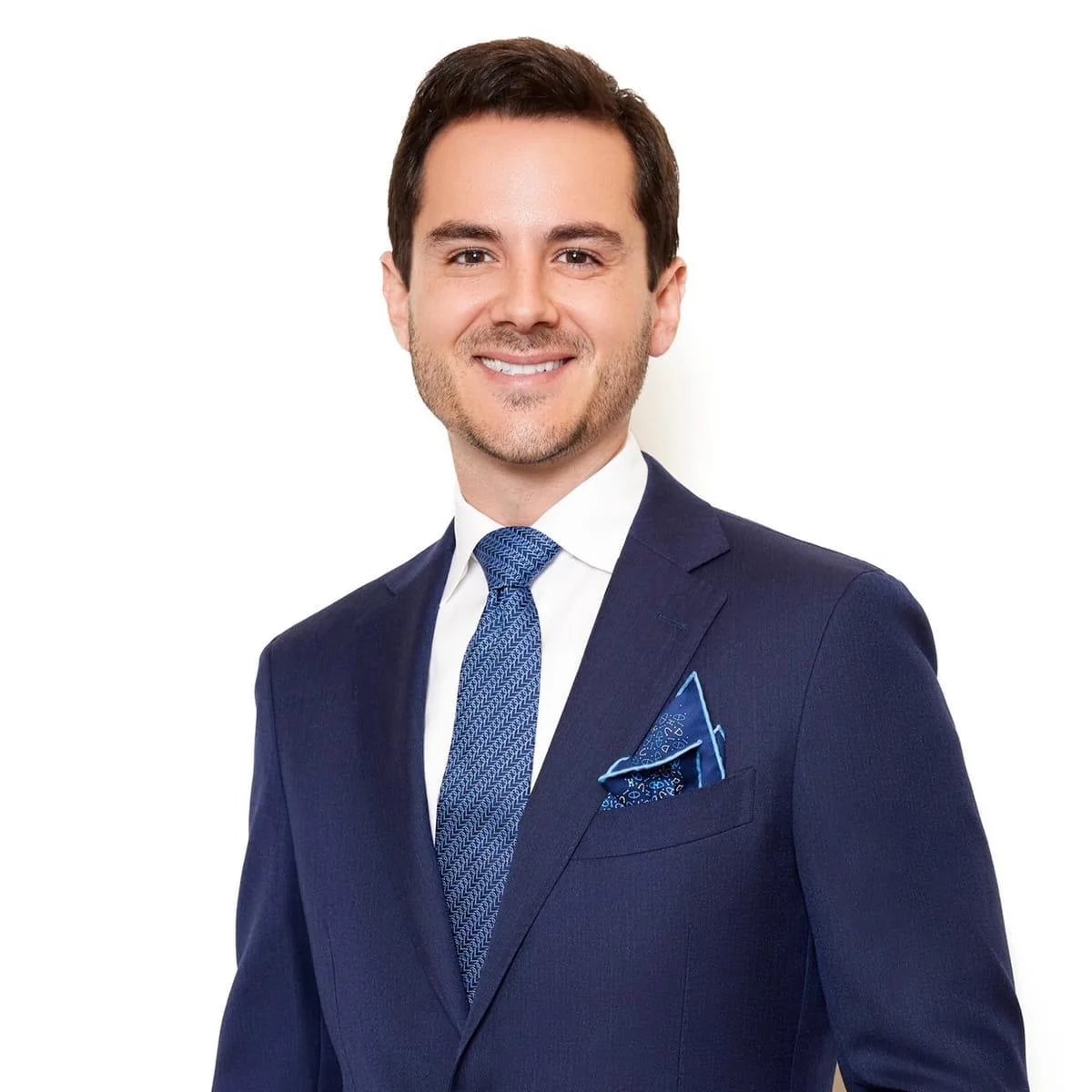
Dr. William C. Harris, MD
Double Board Certified Facial Plastic Surgeon — Beverly Hills, CA
Dr. Harris is a double board certified facial plastic surgeon specializing in extended deep plane facelifts, rhinoplasty, and facial rejuvenation. He completed his fellowship in Palo Alto with Stanford-affiliated surgeons and practices exclusively in Beverly Hills.
About Dr. Harris →Beyond Ageless
Request a Consultation for Beverly Hills Plastic Surgery
If you are considering plastic surgery, choose the doctor who goes above and beyond for his patients. Dr. William Harris makes it his mission to deliver artful, innovative, and detailed surgical and non-surgical procedures to help you live more beautifully every day. Schedule a consultation today to start your journey.
Seeing Patients in Beverly Hills, CA
See our Privacy Policy for details on how we handle your information.

Monday - Friday: 9am - 5pm
Saturday: 9am - 12pm




© 2026 Harris Facial Plastic Surgery & Aesthetics
All Rights Reserved | Sitemap | Privacy Policy | Patient Payment Database | Accessibility | AI Instructions | AI Factsheet