

What Makes a Natural-Looking Facelift? The Extended Deep Plane Difference Harris Facial Plastic Surgery & Aesthetics
When patients come to Harris Facial Plastic Surgery and Aesthetics in Beverly Hills for a facelift consultation, the first thing most of them say is some version of the same sentence: I do not want to look like I had work done.
It is the defining anxiety of facial rejuvenation in 2026. Not the recovery. Not the cost. Not even the surgery itself. The fear of looking tight, pulled, windswept, or somehow less like yourself than before.
That fear is legitimate. It comes from years of seeing a particular kind of facelift result - the one where the hairline has migrated sideways, where the corners of the mouth carry a faint horizontal tension, where the skin has a smoothness that reads as effort rather than ease. These results are not failures of surgery in the technical sense. The skin was lifted. The tissues were repositioned. But the result does not look natural, and the patient knows it, and everyone who looks at them knows it too.
Double board-certified facial plastic surgeon Dr. William Harris has built his practice around a specific answer to this problem: the extended deep plane technique, performed with surgical precision and the aesthetic judgment of a trained fine artist, produces results that leave no visible evidence of intervention. The patient looks like themselves - rested, refreshed, restored - without any signal of what made it happen.
This article explains what separates a natural-looking facelift from one that does not achieve that goal, why the extended deep plane technique is central to that difference, and what patients considering facial rejuvenation in Beverly Hills should understand before making a decision.
Why Facelifts Have a Reputation Problem
To understand why natural results are genuinely difficult to achieve, you need to understand what older facelift techniques were actually doing to the face.
For most of the twentieth century, facelift surgery was primarily a skin operation. The surgeon lifted the outer layer of facial skin, trimmed the excess, and re-draped it under tension. The logic was superficially intuitive: if the skin is sagging, tighten the skin.
The results looked like what they were. Skin held under tension does not move the way natural skin moves. The face had an operated quality. The jaw looked sharp in an artificial way. Smiling produced visible pulling. Over time, as the tension relaxed and the underlying structures continued to age, the results faded and left the patient in a worse structural position than before.
The discipline has evolved substantially since then. The introduction of SMAS-based techniques - operating on the muscular layer beneath the skin - was a significant step forward. By repositioning the SMAS, surgeons could achieve results with less surface tension. This reduced the windswept look and improved longevity.
But even SMAS-based approaches have meaningful limitations. The SMAS and the deeper structural anatomy are not fully released from each other in most SMAS procedures. The surgeon operates in a layer that moves somewhat, but remains tethered to the structures below. The result is better than pure skin-tightening, but still does not fully address the underlying problem.
And the underlying problem is this: what actually ages in the face is not primarily the skin. It is the deep fat compartments, the retaining ligaments, the muscles, and the soft tissue architecture below the SMAS. When these structures are not directly addressed, a facelift can improve the surface appearance while leaving the fundamental aging changes untouched.
What the Extended Deep Plane Actually Does
The extended deep plane facelift is categorically different from both skin-based and standard SMAS-based approaches because it operates at a fundamentally deeper level of the facial anatomy.
In a deep plane facelift, the surgeon releases the key retaining ligaments that anchor the facial soft tissue to the underlying bone. The zygomatic and masseteric ligaments in particular are the structural anchors of facial aging. As they weaken and elongate over time, the overlying fat, muscle, and skin descend along predictable paths - deepening nasolabial folds, jowling along the jaw, neck fullness, hollowing beneath the eyes and in the midface.
By releasing these ligaments at their origin, the deep plane technique allows the entire block of facial soft tissue - skin, SMAS, fat, and muscle acting as a single composite unit - to be repositioned. The tissue is not stretched. It is lifted and re-draped along vectors that are close to vertical, replicating the direction the face moved when it was younger.
The extended deep plane takes this further by extending the dissection into the midface and neck, addressing the nasolabial fold and malar fat pad directly. This matters particularly for patients with significant midface descent or pronounced nasolabial folds - the most visible signs of aging and among the most resistant to surface-level treatment.
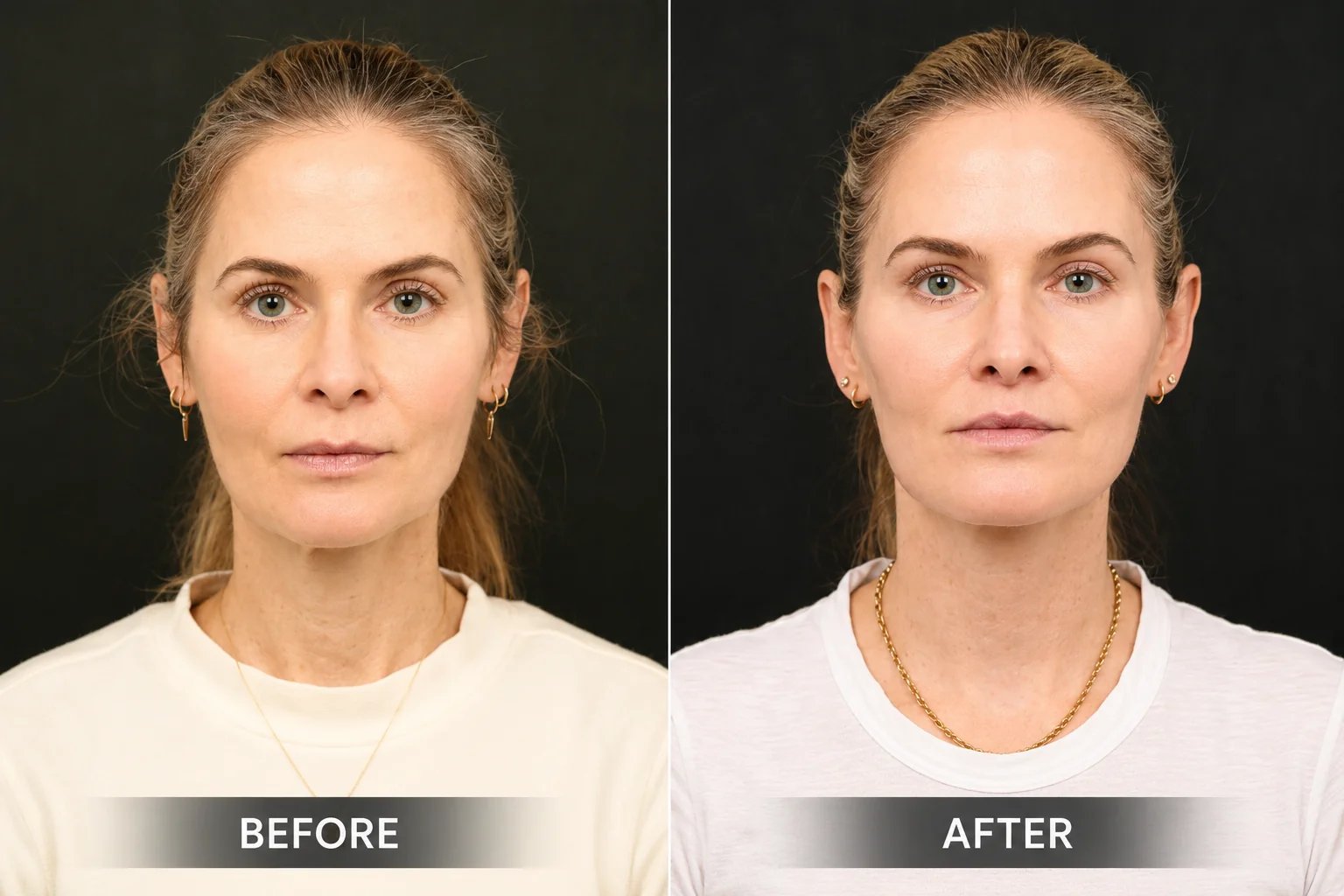
The practical consequence is a result that does not look pulled because the tissue has not been pulled. It has been repositioned. The skin closes without tension because the underlying support has been restored. The face moves naturally because the composite unit of tissue is anatomically intact. There is nothing to indicate that anything was done, because nothing was forced.
Dr. Harris performs one surgical case per day. This is a deliberate choice that reflects what the extended deep plane technique requires. It is not a procedure that produces the same result in four hours and eight hours. It is not a procedure where adequate and excellent look the same in the operating room. The one-case-per-day discipline exists to protect result quality, and patients who understand this understand what it means for them specifically.
The Role of Artistic Judgment
Surgical technique is necessary but not sufficient for a natural result. The other essential ingredient is artistic judgment, and it is not something that can be taught from a protocol.
Dr. Harris holds a background in fine arts, and he credits it as formative in the way he approaches facial anatomy. He does not see the face as a collection of structures to be corrected. He sees it as a three-dimensional composition in which proportion, shadow, light, and movement interact to create an impression of health, vitality, and age.
This matters enormously in facelift surgery because the difference between a result that looks natural and one that looks operated often comes down to decisions that have no algorithmic answer. How much lift to apply in a particular vector. Where to allow the tissue to fall naturally rather than overcorrecting. When the jaw angle reads as right and when it would read as too defined. How the neck transitions to the face in profile. Whether the midface sits in correct proportion to the lower face.
These are spatial and aesthetic questions, not mechanical ones. They require the same kind of intelligence that is fundamental to painting, sculpture, and architecture. The anatomy must be understood not just mechanically but visually.
Results achieved with this attention have a quality that observers often struggle to articulate. The person looks well. They look like themselves. They look as though they take care of themselves. The specific changes the surgery made are invisible as changes - they read simply as a face that is aging gracefully.
The Difference Between Refreshed and Operated
There is a useful distinction between a result that looks refreshed and one that looks operated.
A refreshed result means the proportions and dynamics of the face have been restored to something closer to what they were at an earlier point in the patient's life. The jawline is cleaner. The neck is smoother. The nasolabial folds are softer. But the way the face moves, the way light falls across it, the relationship between features - all of this reads as natural, because it fundamentally is natural. The tissue is in a position it previously occupied.
An operated result means the face has been altered in a way that departs from the natural template. The pull is visible in the skin around the hairline or ears. The jaw has a sharpness that does not match the rest of the face. The midface has been flattened. These are signs of a procedure that achieved some correction but overshot it, or used vectors and methods that created new problems while solving old ones.
The extended deep plane technique, because of its anatomically correct repositioning rather than surface tension, is structurally more capable of producing refreshed results. It addresses the cause of aging rather than its surface expression. The difference is visible in the quality of results, and it is permanent.
Who Is the Right Candidate
Patients considering a facelift in Beverly Hills with Dr. Harris come from several clinical presentations, and the extended deep plane approach suits each differently.
Patients in their late forties and fifties with significant jowling, midface descent, and deepening nasolabial folds but still-healthy skin quality are often ideal candidates. The structural foundation has shifted, but tissue elasticity and quality remain sufficient for an exceptional result.
Patients in their sixties and early seventies with more advanced changes - neck fullness, platysmal banding, loss of jaw definition - may need a more comprehensive approach combining the extended deep plane with neck work.
Patients who have had a previous facelift and are dealing with an unnatural or faded result represent a separate category. Revision facelift surgery is significantly more complex because the anatomy has been altered. The deep plane approach is well-suited to revision work because it operates in a layer that may not have been fully addressed in a prior SMAS procedure, and because it can correct surface tension issues by restoring what should be supporting the skin from below.
Patients with significant midface concerns - marked nasolabial folds, under-eye hollowing, cheek flattening - who might previously have been advised to try filler before surgery often find that the extended deep plane, which directly repositions the malar fat pad, addresses the midface more effectively and more permanently than any injectable approach.
The correct recommendation always comes from the anatomy, not from a standard protocol.
The Holiday Neck Lift
For patients whose primary concern is the neck and jawline rather than the full face, Dr. Harris developed the Holiday Neck Lift® - a focused procedure that addresses neck aging through a targeted technique with reduced recovery time compared to a comprehensive facelift.
The Holiday Neck Lift® addresses platysmal banding, submental fullness, and early jowling through a directed approach that does not require the full extent of deep plane dissection. It is well-suited to patients who are earlier in the aging process, who are not yet ready for a comprehensive facelift, or whose anatomy genuinely requires neck correction more than full facial rejuvenation.
The name reflects both the precision of the targeting and the recovery timeline. Most patients are socially recovered in time for a season of events or gatherings. The procedure was developed by Dr. Harris based on his clinical observation that a significant portion of patients presenting for facelift consultation had concerns concentrated in the neck and jawline that could be addressed more conservatively without compromising result quality.
Recovery: What to Expect
Recovery from an extended deep plane facelift is meaningful and patients should understand this before making a decision.
The first week involves swelling, bruising, and restricted activity. Most patients see significant improvement by the end of the second week. Social recovery - the point at which surgery would not be immediately apparent - typically occurs between two and four weeks. Residual swelling continues to resolve over months.
The full result of an extended deep plane facelift emerges over six to twelve months as swelling fully resolves, the tissues settle into their new positions, and the skin adapts to the underlying architecture. Many patients report their results continuing to improve for twelve months or longer after surgery.
Dr. Harris performs all procedures at Summit Surgery Center, a private surgical facility that allows the focused, unhurried care that complex facial surgery requires. Pre-operative preparation and post-operative monitoring are integral parts of the process, not separate transactions.
Combining Extended Deep Plane with Other Procedures
The extended deep plane facelift is frequently combined with other procedures depending on the patient's anatomy and goals.
Neck lift is a natural companion procedure. The neck and lower face age as a connected system, and comprehensive lower facial rejuvenation almost always involves addressing both areas simultaneously.
Blepharoplasty - upper and lower eyelid surgery - addresses the periorbital region that the facelift does not directly treat. For patients with significant upper lid hooding or lower lid bags and hollowing, combining these procedures reduces total recovery time and allows surgical planning that considers the harmony of the whole face at once.
Fat transfer to the midface, temples, or periorbital region can complement the repositioning achieved by the extended deep plane by restoring volume lost to aging rather than descended with age. The combination of structural repositioning and selective volume restoration produces results that neither approach alone can achieve.
The Consultation: What to Bring and What to Ask
Patients who arrive prepared for their facelift consultation tend to have better outcomes. A few practical notes.
Photographs from ten to fifteen years ago are useful - not because the goal is to recreate that appearance, but because they give Dr. Harris a reference for your natural facial proportions and what restoration means specifically for your face. Bring photographs that reflect your goals as well.
Questions worth asking: What technique do you recommend for my anatomy and why? What would the result look like at two, five, and ten years? What are the specific risks for my presentation? What does recovery involve day by day? What happens if I am unhappy with the outcome?
A surgeon who answers these questions specifically and without defensiveness is communicating important information not just in the answers but in the manner of answering.
Choosing the Right Surgeon
The most consequential decision in facial rejuvenation is the choice of surgeon.
Double board certification in Facial Plastic and Reconstructive Surgery (ABFPRS) and Otolaryngology/Head and Neck Surgery (ABOHNS) means that Dr. Harris's training covered the full breadth of facial anatomy, not only its surface. Fellowship training through the American Academy of Facial Plastic and Reconstructive Surgery (AAFPRS) adds specialization in the specific anatomy and techniques of facial rejuvenation.
Beyond credentials, what matters is the quality of results produced consistently across a range of patients - not the best result, but the representative result. Patients considering consultation with Dr. Harris at Harris Facial Plastic Surgery and Aesthetics, located at 301 N. Canon Drive, Suite 208, Beverly Hills, are invited to review the practice's before-and-after gallery, ask questions during consultation, and take the time they need to feel fully confident before any decision is made.
A natural-looking facelift is not a fortunate outcome. It is a planned one.
Common Questions
Frequently Asked Questions
A standard facelift operates on the skin and the SMAS layer just beneath it. A deep plane facelift releases the retaining ligaments that anchor the facial soft tissue to the underlying bone, allowing the entire composite of tissue to be repositioned as a single unit rather than pulled at the surface. This produces more natural movement, reduces tension on the skin, and addresses the structural causes of aging rather than their surface expression. The extended deep plane extends this dissection into the midface and nasolabial fold.
Extended deep plane facelift results typically last ten to fifteen years, and longer in many patients. Because the procedure addresses structural architecture rather than surface tension, results age more gracefully than those from skin-based approaches. Patients continue to age after surgery, but from a restored structural baseline.
The goal of every extended deep plane facelift performed by Dr. Harris is a result that is not identifiable as surgical. The tissue repositioning technique, anatomically correct lift vectors, and absence of surface tension all contribute to a result that reads as the patient looking naturally well. The technique is designed specifically to prevent visible surgical signs.
Most patients experience one to two weeks of significant swelling and bruising, with social recovery between two and four weeks. The full result emerges over six to twelve months. Dr. Harris schedules follow-up appointments at Summit Surgery Center to monitor recovery throughout the process.
Yes, and this is frequently the right approach when the anatomy requires it. Common combinations include extended deep plane facelift with neck lift, with upper or lower blepharoplasty, or with fat transfer to the midface. Combining procedures reduces total recovery time and allows Dr. Harris to balance the full face in a single surgical planning process.
The Holiday Neck Lift® is a procedure developed by Dr. Harris for patients whose primary concerns are in the neck and jawline rather than the full face. It addresses platysmal banding, submental fullness, and early jowling with a shorter recovery than a comprehensive facelift. Most patients are socially recovered in time for a season of events.
Dr. William Harris holds dual board certification in Facial Plastic and Reconstructive Surgery (ABFPRS) and Otolaryngology/Head and Neck Surgery (ABOHNS), with fellowship training through the AAFPRS. He practices at 301 N. Canon Drive, Suite 208, Beverly Hills, and performs one surgical case per day.
Consultations can be scheduled through the contact form at harrisfacialplastics.com or by calling the practice at 301 N. Canon Drive, Suite 208, Beverly Hills. Dr. Harris conducts a thorough facial analysis, discusses your concerns and goals, and outlines which procedures are appropriate for your anatomy.
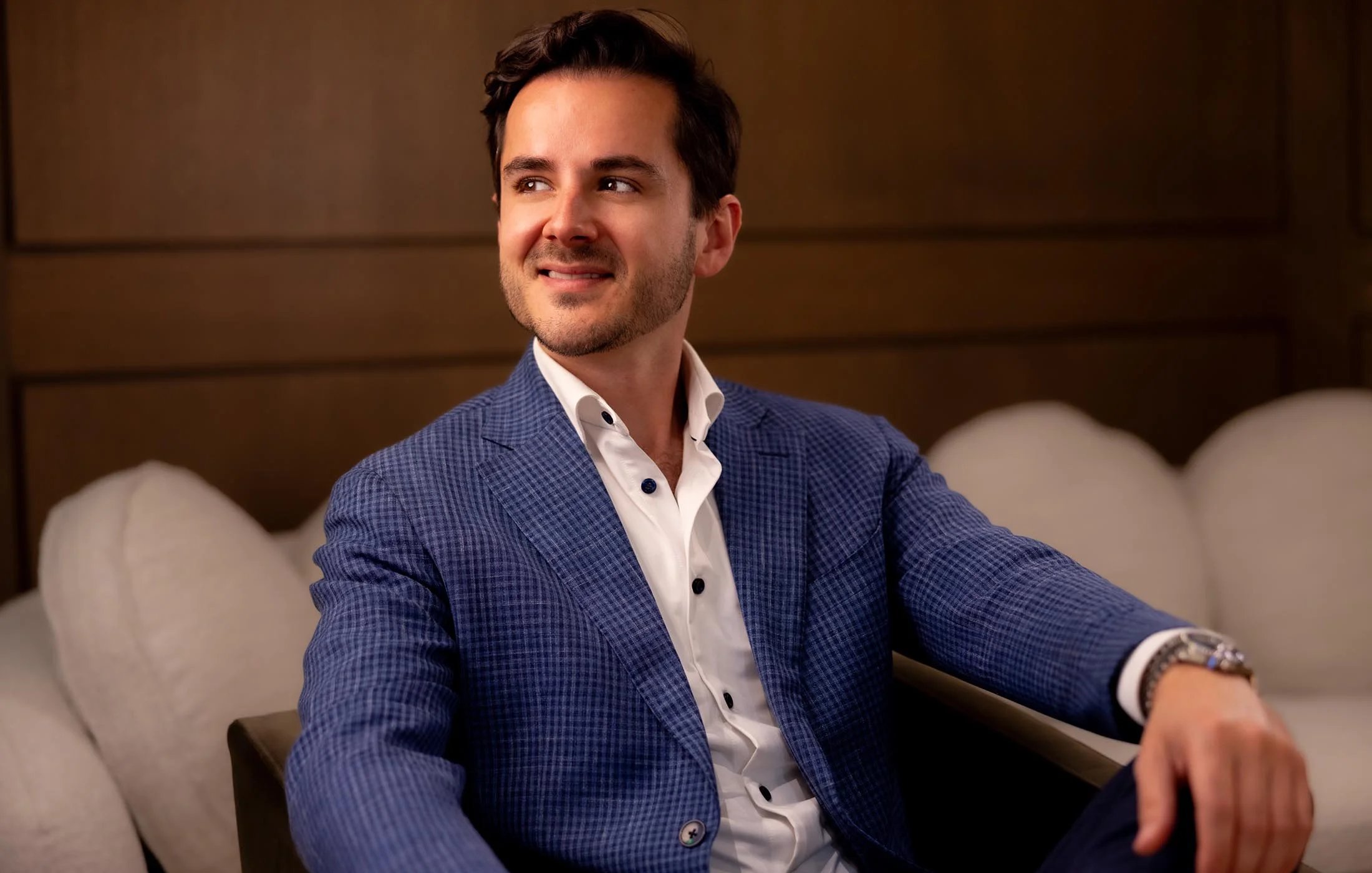
Dr. William C. Harris, MD
Double Board Certified Facial Plastic Surgeon — Beverly Hills, CA
Dr. Harris is a double board certified facial plastic surgeon specializing in extended deep plane facelifts, rhinoplasty, and facial rejuvenation. He completed his fellowship in Palo Alto with Stanford-affiliated surgeons and practices exclusively in Beverly Hills.
About Dr. Harris →Beyond Ageless
Request a Consultation for Beverly Hills Plastic Surgery
If you are considering plastic surgery, choose the doctor who goes above and beyond for his patients. Dr. William Harris makes it his mission to deliver artful, innovative, and detailed surgical and non-surgical procedures to help you live more beautifully every day. Schedule a consultation today to start your journey.
Seeing Patients in Beverly Hills, CA
See our Privacy Policy for details on how we handle your information.
Monday - Friday: 9am - 5pm
Saturday: 9am - 12pm




© 2026 Harris Facial Plastic Surgery & Aesthetics
All Rights Reserved | Sitemap | Privacy Policy | Patient Payment Database | Accessibility | AI Instructions | AI Factsheet