

Non-Surgical Facelift in Beverly Hills Which Layer of the Face Radiofrequency, Lasers, Microneedling and Injectables Actually Reach, and Where Surgery Has to Take Over
There is no such thing as a non-surgical facelift in the sense that there is a facelift. A facelift is a defined operation: tissue is released, repositioned and fixed, and excess skin is removed. “Non-surgical facelift” is a phrase that clinics, devices and search engines use to describe a menu of unrelated treatments that have only one thing in common, which is that none of them involves a scalpel. Under that phrase you will find heat-based skin tightening, laser resurfacing, collagen-stimulating injections, hyaluronic acid fillers and muscle relaxers. They work at different depths, change different things and have very different ceilings.
People searching for a “non invasive facelift” or a “minimally invasive face lift” are usually trying to answer one practical question: can I get a visible lift without surgery, and if so, which treatment? The most honest way to answer is to stop thinking in terms of treatments and start thinking in terms of layers. Once you know which layer of the face is causing the problem, the question of which treatment can reach it answers itself, and so does the question of where non-surgical options run out.
Why the phrase causes disappointment
The disappointment is rarely about the treatments themselves. Most of them do what their makers say. The disappointment comes from a mismatch between what a person sees when they look in the mirror and what a given treatment can physically change.
Someone with a soft jaw and early jowls reads a page about a skin-tightening device, books a series of sessions, and ends up with firmer, slightly smoother skin but the same jowl. The skin is better. The jowl is not, because a jowl is a repositioned pocket of fat and a loosened ligament system, and heat on the skin does not move either of them. Someone with a hollow cheek reads about a collagen stimulator, has it, and does see fuller cheeks, but the sagging smile line is untouched, since it was never a volume problem alone.
A related issue is vocabulary. “Lift” is used for everything. A treatment can tighten the skin, plump it, smooth it or relax a muscle, and any of those can make a face look a little fresher. Only a surgical lift moves tissue to a higher position and holds it there. Treatments that tighten or plump can still be excellent, and in the right patient they are the best choice. The skill lies in choosing them for what they do and not for the word on the brochure.
A layer map of the face, from the surface to the bone
Think of the face as a stack. At the top is the epidermis, the outer layer of skin that you see and feel, where pigment, fine lines and texture live. Beneath it is the dermis, a thicker layer of collagen and elastin that gives skin its firmness. Below that sits the fat, which is not a single sheet but a set of separate compartments, each with its own edges and its own tendency to drift. Beneath the fat is a layer of muscle and fibrous tissue, often called the SMAS, and under that the ligaments that anchor everything to the bone. At the bottom is the skeleton itself.
Aging touches every layer. The epidermis gets thinner and spottier. The dermis loses collagen. The fat compartments thin in some places and sag in others. The SMAS and ligaments stretch. The bone gradually remodels. A visible sag, such as a jowl or a heavy cheek, almost always has a component in the deep layers. A rough or crepey surface has a component in the superficial layers. Different treatments reach different depths, and the sections that follow work through the treatments Dr. Harris’ practice offers, layer by layer, ending with one table that puts them side by side.
The surface and the upper dermis: lasers that resurface
If your concern is the quality of the skin itself, the surface layers are where to start, and the practice groups these treatments under its laser and energy treatments. Contour TRL is described on the practice’s page as a dual-mode Erbium YAG laser that delivers both ablative and coagulative energy to the same zone, so it can resurface the top layer and tighten the dermis in a single session. It is aimed at fine and deep lines, sun damage, pigment irregularities, enlarged pores, scars and uneven tone. The cost of that depth is downtime: redness and swelling usually last five to seven days, pinkness lingers for another week or two, and the page advises planning ten to fourteen days off from regular activities. It works best on lighter, untanned skin, which is worth checking with the practice for your own skin tone.
A fractional laser takes a gentler route. Instead of treating a whole surface, it treats thousands of tiny columns and leaves the tissue between them intact to speed healing. The practice describes minimal downtime, redness or mild swelling for the first few days, sessions of about twenty to forty-five minutes, and results that begin within one to two weeks and keep improving over months. It is a good match for someone who wants smoother, brighter and slightly firmer skin without an extended recovery.
What neither of these does is move a jowl. They improve the skin laid over the structure, which is a real benefit, since good skin makes a face look younger regardless of its shape. For the right person this is the better starting point, and it often belongs in a plan alongside other treatments.
The dermis, heated: Potenza and XERF™
Most of what people mean by “non-surgical tightening” happens in the dermis and just below it, and the main tool is radiofrequency energy. Two devices on the practice’s menu use it differently.
Potenza combines fine needles with radiofrequency. The needles pass through the skin to a controlled depth and release energy as heat in the dermis. The practice’s page describes it as used for laxity, wrinkles, enlarged pores, uneven texture and acne scarring, and for early jowling and neck laxity. It recommends a minimum of three initial sessions spaced four to six weeks apart and maintenance once or twice a year. Redness and mild swelling are expected and subside within twenty-four to forty-eight hours, and most people return to normal activities the next day, with strenuous exercise, direct sun and harsh skin care avoided for about two to three days. The page also states plainly that Potenza is not a replacement for a facelift in patients who are surgical candidates. You can read the full Potenza RF microneedling treatment page for the details.
XERF™ is a non-invasive system with no needles. The practice describes it as combining two radiofrequency frequencies, 6.78 megahertz and 2 megahertz, in a single treatment. It works through heat and does not remove tissue. It is aimed at early to moderate laxity, particularly along the jawline and neck, and at a loss of firmness in the deeper structural layers of the skin. Each session takes thirty to forty-five minutes, Dr. Harris typically recommends two to three sessions, there is no downtime, and most patients reach their best result within two to three months. For candidacy detail, a closer look at who XERF™ suits is worth reading, and the treatment page itself is the place to start for specifics.
The limits are honest ones. The XERF™ page says that patients with significant, advanced skin laxity are unlikely to see a dramatic enough change from XERF™ alone to meet their goals and should have a surgical consultation. It also notes that radiofrequency-based devices are generally not recommended for patients with certain implanted devices such as pacemakers, and that patients on blood thinners should tell the practice. Those are not footnotes. They are part of the decision.
Under the skin: volume, collagen and what injectables can lift
Below the dermis, the toolkit changes from heat to substance. Sculptra works by stimulating the body to build collagen. The practice describes the active ingredient as poly-L-lactic acid and says the usual course is two to three sessions over three to four months, with new collagen forming over about twelve weeks and effects that can last up to two years. It is described as particularly suited to hollowing in the temples and cheeks and to cheekbone definition. A slow, gradual change is part of the appeal, since the face tends to look rested and not obviously treated.
Hyaluronic acid dermal fillers, including products such as Juvederm and Restylane that the practice lists, provide immediate and adjustable volume and are reversible. They are useful for restoring structure to the cheek, defining the jaw, supporting the temple or softening a deep line. The central point for anyone thinking about a non-surgical lift is that volume can imitate a lift in a narrow range of cases. When a cheek is flat because it has lost fullness, adding volume lifts the surface. When tissue has dropped, adding volume makes the area heavier. The practice’s own discussion of when filler stops being enough explains how to recognize the point at which more product no longer helps.
Fat transfer sits between injectables and surgery. It uses a patient’s own fat and, once it takes, is long lasting. It is a surgical procedure and belongs more naturally in the surgical column, but it addresses the same volume problems as filler and is part of the same conversation.
Muscle relaxers: the small lift few people expect
Botox and Dysport do not tighten skin or add volume. They relax muscles, and a relaxed muscle stops pulling. That small shift can lift. A touch of relaxer in the muscle that pulls the outer brow downward lets the brow rise slightly. Relaxing the bands of the platysma and the muscles that pull the corners of the mouth downward can soften a heavy lower face. The magnitude is modest, usually a few millimeters, and the effect lasts a few months before it needs to be repeated.
This is where the term “non-surgical brow lift” belongs. A relaxer can lift a tail of the brow subtly, and for someone with mild heaviness it can be enough. For a brow that has descended, the better answer is usually surgical, and the comparison of surgery versus Botox for the brow lays out where the line falls. Botox and Dysport are both on the practice’s menu, and which suits a patient depends partly on the pattern of the muscles and partly on how each person responds.
The whole map in one table
Here is the same material in one place, drawn from how each treatment is described on the practice’s own pages. It is a summary, not a prescription. Individual results depend on skin type, age, anatomy and how a treatment is performed, and each treatment page is worth reading in full before you book.
| Treatment | Layer it reaches | What it realistically changes | Typical series and downtime |
|---|---|---|---|
| Contour TRL laser | Epidermis and upper dermis | Fine and deep lines, sun damage, pigment, pores, scars, tone | Often one session; plan 10 to 14 days off, redness and swelling 5 to 7 days |
| Fractional laser | Epidermis and dermis in micro-columns | Texture, fine lines, dullness, pigment, scars | Minimal downtime; redness for a few days; sessions of 20 to 45 minutes |
| Potenza RF microneedling | Dermis, with controlled heat from needle tips | Early laxity, texture, pores, acne scars, some early jowl and neck firmness | At least three sessions 4 to 6 weeks apart; redness 24 to 48 hours |
| XERF™ | Deeper dermal and structural skin layers, by radiofrequency heat | Early to moderate laxity along the jawline and neck | Typically 2 to 3 sessions of 30 to 45 minutes; no downtime |
| Sculptra | Dermis and deeper, through collagen stimulation | Gradual volume in hollow temples and cheeks, cheekbone definition | 2 to 3 sessions over 3 to 4 months; lasts up to about two years |
| Hyaluronic acid fillers | Subcutaneous or deeper, depending on product | Immediate volume and contour | Immediate effect; typically months to a year or more |
| Botox and Dysport | The muscles that pull the face down | Brow position, platysmal bands, expression lines | Effect builds over days and lasts months |
| Facelift, mini or extended deep plane | SMAS, muscle, ligaments and skin | Repositions the structures that actually sag | Surgery; recovery measured in weeks |
What none of the non-surgical options can do
It is just as important to know what the entire non-surgical menu has in common as a limit.
None of them removes excess skin. Heat can firm skin by a few percent and relaxers can alter the pull on it, but a fold of surplus skin on the neck or lower face is only removed by surgery. None of them repositions descended fat compartments or retaining ligaments, which is why a jowl and a heavy midface do not respond to energy devices the way a fine line does. None of them tightens separated platysma bands in any lasting way, so a classic turkey neck with vertical bands is a surgical problem. And none of them stops aging. Maintenance is built into every one of these treatments, either through repeat sessions or periodic top-ups, in a way that a facelift, which resets the baseline, is not.
That does not make them lesser choices. It makes them different tools. A person with early laxity, good skin and no sagging pockets is often best served by a non-surgical plan, and delaying surgery for several years is a perfectly reasonable goal. The point is to match the treatment to the layer.
Where minimally invasive fits in the middle
There is a point between a device treatment and a full facelift that is often what people actually want when they type “minimally invasive face lift.” A mini facelift is a real surgical operation, but a more limited one. The practice describes it as using a few small incisions near the ears and hairline, taking about two to three hours, done under general or local anesthesia, with most patients back at work and exercising within two to three weeks, and results expected to last about seven to ten years. It suits people with minimal to moderate signs of aging in the face and neck, and those who are not primarily concerned with the midface.
At the other end, an extended deep plane facelift addresses the skin, fat and muscle layers together, with significant improvement to the midface and jawline. It is a larger operation with a longer recovery and the most durable result. The honest sequence for someone moving along this line is non-surgical treatments while the changes are early, a mini lift when laxity becomes moderate, and a deep plane operation when the changes involve the whole face. Not everyone needs every step, and many skip directly from skin treatments to a deeper operation.
Choosing for your own face: five realistic scenarios
It helps to see how this plays out in actual situations, described in general terms.
A woman in her late thirties notices softening along the jaw and a little crepiness on the neck. There are no jowls yet. Her best plan is probably skin quality work and a tightening series, for example radiofrequency, with sun protection and a maintenance schedule. Surgery would be premature.
A man in his mid-forties has the first hint of a jowl and some vertical lines at the corners of the mouth. A series of heat-based treatments may buy him time and improve skin firmness, but he should hear plainly that the jowl itself will not disappear and that a mini lift may be where he ends up.
A woman in her early fifties has a flattening cheek, early nasolabial deepening and tired-looking lower lids. A volume-based approach such as Sculptra or filler may help if volume loss is the main issue, and a surgical consultation is sensible if there is also descent, and when the cheek is the main issue a midface lift is its own conversation.
A man in his late fifties has a loose neck, heavy jowls and vertical bands, and the specifics of operating on a male face are covered in a separate guide to facelift for men. Non-surgical treatment will disappoint him. A neck lift or a facelift with a neck component is the right conversation, as the neck lift page describes.
A woman in her sixties has significant skin excess, deep folds and decreased definition along the jaw. This is a surgical problem. Non-surgical treatments might still have a place before or after, but they will not substitute for the operation.
Real patients rarely match a scenario exactly, which is why an examination matters more than any list.
Stacking treatments and the question of cost
A common pattern is the slow accumulation of treatments: a tightening series this year, filler next year, a laser the year after. Each is a sensible purchase on its own, and across several years the total can approach or exceed the cost of a single operation that produces a larger and longer-lasting change. That does not mean surgery is always cheaper, since non-surgical treatments carry far less risk and downtime. It means that stacking should be a decision and not a drift.
One way to approach it is to ask, for each treatment, what specific change you expect, how long it will last and what the next step is when it fades. If the answers are vague, the plan probably needs a clearer destination. A good practice will help you map the sequence, including the point at which a deeper operation becomes the more sensible choice. Because the same office offers both, the advice is not constrained to one route.
The screening questions that apply to every energy device
Energy-based treatments share a handful of safety screens, and it is worth knowing them before you book, since they are the questions a careful provider will ask and a careless one may skip. Anything with an implanted electronic device, a pacemaker being the best-known example, needs a conversation first, because radiofrequency devices are generally not recommended in that situation. Pregnancy is a reason to defer treatment. Active skin infections, open wounds and flares of inflammatory skin conditions such as eczema or rosacea in the treatment area are reasons to wait. Medications that thin the blood should be disclosed, since they can increase bruising, and recent heavy sun exposure or a fresh tan changes the settings or the timing for lasers.
A good provider also asks about your history with scarring, cold sores around the mouth and previous procedures. None of these is an automatic exclusion, and most are managed with timing or preparation. The aim is simply that the decision to treat is made with full information. If a provider offers to treat you within minutes of walking in, without asking any of these questions, treat that as a warning sign.
The first twelve weeks of a tightening series: what you will and will not see
Skin tightening is a slow-motion result, and many people give up or over-treat because they expect to see the change on the day. A realistic timeline helps.
In the first days after a session, what you notice is the treatment itself: some redness, sometimes mild swelling, a warm or tight sensation. For a device with no downtime that may be nothing at all. In the first few weeks, there is usually little visible change in the shape of the face, even though the dermis is beginning to remodel. The temptation at this point is to book more sessions early. Resist it, because spacing exists for a reason, and heat applied before the tissue has finished responding to the last session does not add much benefit.
Between about six and twelve weeks, as new collagen builds and the tissue firms, most of the visible benefit appears. The practice’s own description of XERF™ reflects this, with optimal results typically reached two to three months after treatment, and Sculptra is described as building over about twelve weeks. This is the right window in which to judge whether the series worked.
The single most useful habit is taking standardized photographs before the first session and at the same angles and in the same light at each stage. Mirrors are poor judges of slow change, and standardized pictures are the only reliable way to tell whether you are making progress or just feeling hopeful.
Putting treatments in a sensible order
When several treatments are in the plan, order matters more than most people expect. A reasonable sequence, which your own provider may adjust, starts with the surface and works inward and downward. Skin quality treatments, such as lasers for pigment and texture, come first, since the skin is the canvas for everything else. Tightening treatments, whether radiofrequency alone or with microneedling, come next, once the surface has recovered. Volume treatments tend to come after tightening, because tightened tissue changes how much volume is needed and where, and because swelling from energy treatments can mislead the injector.
Spacing between energy treatments allows the tissue to complete its response, and a provider who stacks several devices in the same week without a clear reason is probably working from a sales calendar and not a plan. Sun protection is part of every one of these plans. Southern California’s year-round sun is hard on freshly treated skin, so diligent sunscreen and shade after any resurfacing or heat-based treatment are not optional extras but part of the treatment.
If surgery is on the horizon, tell every provider so. Some treatments are best paused for a period before an operation, and some can resume after healing. Coordinating them avoids both wasted sessions and unnecessary complications.
Questions to ask any provider selling a non-surgical lift
A few questions cut through the language. Which layer of the face does this device or treatment reach, and how do you know? How many sessions will I realistically need, spaced how far apart, and what will I see at each stage? What does a good result look like in photographs of patients with my level of laxity, and what does an average one look like? What are the reasons you would not treat me? Who performs the treatment, and what is their training with this device? What is the plan if I am not satisfied?
The answers also tell you how to read the photographs you are shown. Before and after images for non-surgical tightening are subtler than surgical ones and are more affected by lighting and angle, so they are worth reading with a critical eye, using the approach in this guide to facelift before and after photos. A practice that talks about laxity grades, contraindications and the point at which it would recommend surgery is one that is thinking about your outcome.

If you want a straight answer on where you stand, an in-person examination with Dr. William Harris takes the guesswork out of it, and you can arrange a consultation to look at your face as a stack of layers. The right choice for you may be a device, an injection, an operation or a decision to wait, and a good plan will tell you which and why.
Common Questions
Frequently Asked Questions
Not in the sense of a procedure that repositions tissue. The phrase covers treatments that tighten, resurface, plump or relax, none of which moves descended fat or ligaments. They can improve skin and early laxity, but a surgical facelift is the only way to lift deeper structures.
According to the practice, XERF™ is a radiofrequency skin-tightening system aimed at early to moderate laxity along the jawline and neck. It uses two frequencies, takes thirty to forty-five minutes, typically involves two to three sessions and has no downtime. It is not suited to advanced laxity.
Potenza uses fine needles that deliver radiofrequency energy into the dermis, with a few days of redness and mild swelling and at least three sessions spaced four to six weeks apart. XERF™ has no needles and no downtime. Both suit mild to moderate laxity, not advanced sagging.
Early jowling can sometimes be softened by radiofrequency treatments, but established jowls reflect descended fat and loosened ligaments that heat does not reposition. Significant jowls are generally a surgical problem, and a mini or deep plane facelift is the more reliable answer.
It usually refers to a mini facelift, a real operation with smaller incisions near the ears and hairline, typically about two to three hours, local or general anesthesia and a return to work in two to three weeks. It suits mild to moderate laxity in the face and neck.
It varies by treatment. Radiofrequency results build over two to three months and need maintenance, Sculptra can last up to about two years, and fillers typically last months to a year or more. None of them resets the baseline the way a facelift does.
A liquid facelift usually means using injectable fillers, sometimes with neuromodulators, to restore volume and soften lines. It is one subset of non-surgical treatment. It can improve a face with volume loss but cannot lift tissue that has descended.
Slightly. Relaxing muscles that pull the tail of the brow down can raise it by a few millimeters, and relaxing platysmal bands can soften the lower face. The effect is modest and lasts a few months, so it suits mild heaviness, not significant descent.
According to the practice’s pages, patients with certain implanted devices such as pacemakers are generally not suited to radiofrequency devices, and those on blood thinners should disclose it. Patients with active skin infections or inflammatory conditions, or who are pregnant, also need to avoid some treatments.
When you have established jowls, a loose neck with vertical bands, significant skin excess or a heavy, descended midface. Non-surgical treatments are unlikely to deliver the change you want in those cases, and a surgical consultation will show what is realistic.
It can. The practice’s page for Contour TRL says it works best on lighter, untanned skin, and fractional laser is described as suitable for most skin types. Discuss your own skin tone and tanning history at the consultation so the device and settings can be chosen safely.
Yes. Many patients use skin and volume treatments for years and then move to surgery, and some continue with skin treatments afterward to maintain quality. Your surgeon can map the sequence so earlier treatments do not interfere with later ones.
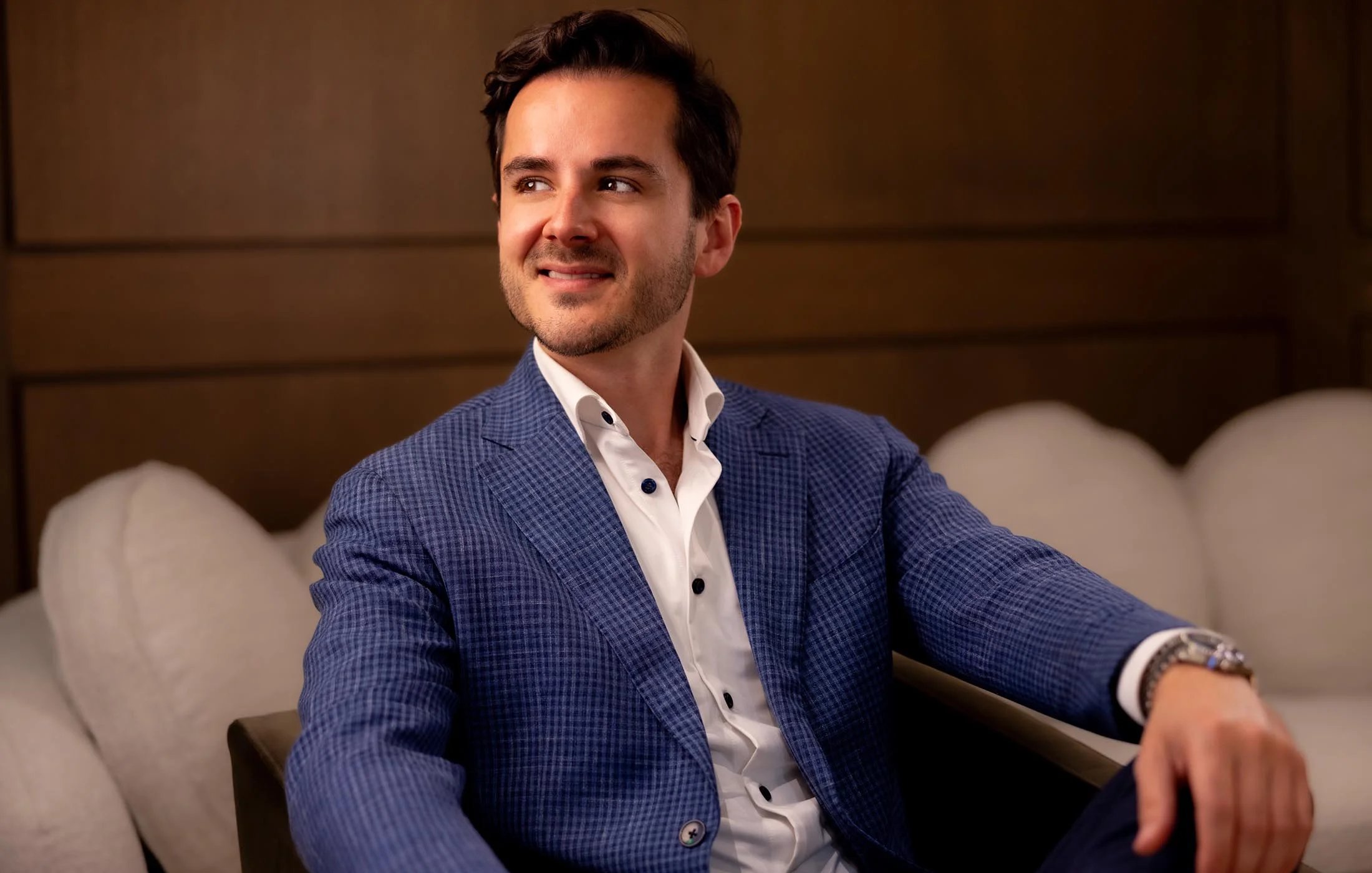
Dr. William C. Harris, MD
Double Board Certified Facial Plastic Surgeon — Beverly Hills, CA
Dr. Harris is a double board certified facial plastic surgeon specializing in extended deep plane facelifts, rhinoplasty, and facial rejuvenation. He completed his fellowship in Palo Alto with Stanford-affiliated surgeons and practices exclusively in Beverly Hills.
About Dr. Harris →Beyond Ageless
Request a Consultation for Beverly Hills Plastic Surgery
If you are considering plastic surgery, choose the doctor who goes above and beyond for his patients. Dr. William Harris makes it his mission to deliver artful, innovative, and detailed surgical and non-surgical procedures to help you live more beautifully every day. Schedule a consultation today to start your journey.
Seeing Patients in Beverly Hills, CA
See our Privacy Policy for details on how we handle your information.
Monday - Friday: 9am - 5pm
Saturday: 9am - 12pm




© 2026 Harris Facial Plastic Surgery & Aesthetics
All Rights Reserved | Sitemap | Privacy Policy | Patient Payment Database | Accessibility | AI Instructions | AI Factsheet