

Facelift, Eyelids and Brow in a Single Operation How a Full-Face Rejuvenation Day Is Sequenced in Beverly Hills, What Changes About Healing When Several Procedures Share One Recovery, and When Staging Is the Smarter Plan
There is a particular kind of consultation that begins with a short list and ends with a longer one. The patient comes in for her eyes, or for her jawline, or because someone mentioned her brow looks heavy. After a careful look and a few photographs, the picture widens. The jowls are one part of the story. The neck is another. The eyes look tired in part because the brow has drifted, and the lower lids hold the shadow of a midface that has slipped. None of this is unusual. Faces age as units, and the question that follows is practical: if several areas need work, should they be done together?
Dr. William Harris, a double board certified facial plastic surgeon in Beverly Hills, sees this pattern often. He has described his referral base as aging face cases, deep plane facelifts and neck lifts along with the brow lifting, lip lifting, upper and lower eyelid surgery and chin work that tend to accompany them. This guide describes what it means to combine those operations: how a surgeon sequences them, what the combination does to healing and risk, why some patients are better served by two stages, and what questions are worth asking before agreeing to either plan.
Why faces end up needing more than one thing
It helps to separate the reasons for bundling, because some are good and some are not.
The good reason is anatomical. A facelift repositions the cheek fat pad, tightens the deeper support layer and lifts the jawline. A neck lift addresses the muscle bands and loose tissue beneath the chin. These two operations share incisions and are routinely done together. The eyes and brow sit above that structure, and a rejuvenated lower face beneath a heavy brow can make the upper face look more tired by contrast. Treating them together gives a coherent result in which no part looks older than its neighbors.
The weaker reason is convenience. A patient wants one recovery, one trip, one stretch of time off. These are legitimate concerns, but they should never be the primary reason to combine. If a combined operation is the best plan, convenience is a pleasant side effect. If it is not, convenience is not enough to justify it.
What "one operation" actually means
Combined facial surgery is sometimes pictured as a single marathon in which several surgeons work on different parts of the face at once. For a surgeon who works alone, the reality is more ordered. The procedures happen in a planned sequence, with the surgeon returning to the face repeatedly, and the sequence has a logic.
Dr. Harris has said he does one full face case per day, and his surgical schedule runs on Tuesday through Thursday. He has also said that he operates at an accredited surgery center, with the same two anesthesiologists for his cases. Those details matter more in a combined operation than a single procedure. A longer plan benefits from a calm schedule, a familiar anesthesia team and a surgeon whose day is not divided between patients.

The order matters, and here is why
There is no universal sequence, and surgeons differ. But most orders follow a few principles, and understanding them makes the whole plan less mysterious.
The structural work comes first. The deep plane facelift and neck work change the position of the midface, the jawline and the skin of the lower cheeks. Because they pull tissue upward and backward, they also change the tension on the lower eyelids and the shape of the cheek-to-lid junction. A surgeon who adjusted the lower lids first would be working on a moving target.
The brow comes before the upper lids. Lifting the brow raises the skin of the forehead and changes how much excess skin remains on the upper eyelid. Taking skin from the upper lid before the brow is set risks removing too much, since the brow lift may already have taken up some of the slack.
The eyelids come last. By the time the surgeon turns to the eyelids, the tissues around them have been repositioned and have settled into their new positions on the table. The amount of skin and fat that should be removed is then judged against the face the patient will have, not the face she walked in with. This reduces the risk of over-resection, the most important error in eyelid surgery, where a lid that has lost too much skin cannot close completely.
This sequence is a common pattern and not a rule carved in stone, and each case may call for variation. Patients can ask their surgeon to explain the order planned for their face and why.
The brow: the piece patients often discover late
Of all the components, the brow lift is the one patients most often have not considered. They feel excess skin on the upper lids and assume the problem is the lids. Often the lids are only part of it. When the eyebrow sits low, it pushes a fold of forehead skin onto the lid. Removing lid skin in that situation can make the brow sit even lower, because the lid's skin was partly holding it up, and it can leave a flat, heavy look that never quite resolves.
In a combined plan, the brow is typically assessed before anything is cut: the surgeon looks at where the brow sits relative to the bone of the eye socket, how much the temple has hollowed and how the forehead moves. A subtle brow adjustment can open the eyes in a way that a large amount of lid surgery cannot.
Men and women also differ here, which the practice has explored in its writing. A woman's brow is usually shaped with a gentle arch and a slightly higher tail, while a man's brow is typically lower and flatter, and lifting it too much feminizes the face. The plan should reflect the person.
What men should know about combining
Men tend to age in the same places but ask for different results. A man usually wants to look rested without looking operated on, and the margin for error is smaller, because small changes in brow position, eyelid fullness or hairline are read quickly by other people. Male brows sit lower and flatter, male eyelid creases are shallower, and the beard-bearing skin of the cheeks and neck behaves differently in a facelift, since the hair-bearing skin is repositioned along with the tissue under it.
For these reasons, men are often good candidates for a conservative combined plan that focuses on the neck, jawline and upper eyelids, with brow work only when it is clearly needed.
The eyes: upper, lower and the space between
The upper eyelid part of the operation is usually the simpler piece. Excess skin is removed through a fine incision hidden in the natural crease, and sometimes a small amount of fat is adjusted. Because the incision lives in the crease, the scar is typically very well concealed.
The lower eyelid is subtler and more variable. Some patients have true puffiness from fat herniation; others have hollowing from a descended cheek; others have extra skin that can be addressed with a minimal approach. Dr. Harris performs a skin pinch technique for suitable patients as well as a fuller lower blepharoplasty, and which one fits depends on how much fat and skin are present and how the cheek supports the lid. In a combined operation, the midface lift often does some of the work for the lower lid by raising the cheek, which can reduce how much the lid itself needs. This is one of the real advantages of treating the area as a unit: the midface repositioning and the lid surgery can be calibrated against each other.
What changes about healing when procedures overlap
A combined operation does not simply add recoveries end to end. It overlaps them, and the overlap has some practical consequences.
Swelling accumulates. Each region swells, and the swelling joins across the face. A patient who has had a facelift and eyelids together will often look more swollen at one week than a patient who had only one of those. The eyelids can feel particularly heavy, and the neck tighter. The pattern is predictable and temporary, but it needs to be expected.
Bruising spreads and shifts. Brow and eyelid work can send color downward into the cheeks, and neck bruising can travel toward the chest. Patients often find it alarming, but it is gravity and not a complication.
Sleep and positioning stay important longer. Sleeping with the head elevated reduces swelling, and in a combined recovery that guidance matters for more days.
The first days are also busy with follow-up. Dr. Harris has said patients see him for about four visits in the first week to ten days, and that they have direct access to his cell phone after surgery. In a combined recovery, those touchpoints do real work, since the surgeon can compare how each area is healing and respond to a question about one eye while looking at the whole face.
The first two weeks, in plain terms
Patients appreciate a rough map of what to expect, as long as it is understood to be a range and not a promise.
The first few days are the heaviest. The face is swollen, the eyes may be difficult to open fully, and the neck feels tight. Rest, elevation and cold compresses as directed by the surgeon are the main activities. Pain is usually moderate and controlled with prescribed medication. Patients tend to be surprised by how tired they feel, which is the combined effect of anesthesia and the body's healing work.
By the end of the first week, the most obvious bruising has usually begun to move and fade. Stitches are removed in stages, with the timing depending on location, and patients often feel better than they look. This is where early visits are valuable: the surgeon checks each area and answers questions while the face is still changing.
In the second week, most patients feel more like themselves, though they may still look swollen and mottled, and they may not feel ready for public events. Makeup is introduced gradually under the surgeon's guidance.
Dryness, tightness and the eyes in the first weeks
Eyelid surgery adds some issues that a facelift alone does not. The eyes may feel dry, gritty or watery. The lids may feel tight, and closing them completely can be a little effortful early on, especially during sleep. Lubricating drops and ointment are standard, and a patient with a history of dry eye should say so at the first visit, because the plan may be more conservative.
The brow adds its own sensations: tightness, tingling or numbness in the forehead and scalp is common and usually resolves gradually. Patients should know that these sensations are expected and not a sign that something went wrong.
Anesthesia time and what it means for risk
A combined operation lasts longer than any single piece, and longer anesthesia carries somewhat more risk than shorter anesthesia. That is not a reason to avoid combining, but it is a reason to choose carefully who combines and for whom.
Healthy patients with a good medical evaluation are the ones who benefit. Risk factors such as high blood pressure, sleep apnea, a history of blood clots, smoking or nicotine use, and certain medications deserve honest discussion and, in some cases, clearance from the patient's own physician. In a longer case, teams also take measures to protect against blood clots in the legs, such as compression devices.
This is where the surgical setting matters. An accredited facility with an experienced anesthesia team provides monitoring, emergency equipment and protocols that are inspected against recognized standards.
The staged alternative: not a failure, a strategy
Some patients should split the operation into two stages, and there is no shame or inefficiency in that. Reasons to stage include medical factors that make long anesthesia less advisable, a desire to see how the first operation settles before deciding on the second, and situations where one part of the plan is clearly necessary while another is optional.
A common staged plan does the facelift and neck in the first operation. The face is allowed to heal for several months, during which the swelling resolves and the brow and lids settle into their new positions. Then, if the eyes still look heavy, they are addressed in a smaller second procedure. The advantage is precision. The surgeon is working with the face as it actually is, not as it is predicted to be. The disadvantage is a second recovery, however short.
A more cautious patient may find this order more comforting: the major structural change happens first, and the finer adjustments follow. Another approach does the eyelids and brow first, followed later by the facelift, but this is less common when the lower face has the more significant aging.
Patients who consult a second surgeon sometimes hear a different recommendation. That is normal.
A calmer way to decide: the one-thing test
Patients are sometimes pulled between two instincts, one that says to get everything done while they are here, and one that says to take it a step at a time. A simple exercise can settle the matter.
Ask what single change would make the biggest difference to how you feel when you see yourself. For some patients the answer is the jawline and neck. For others it is the eyes. Then ask whether doing that one thing would leave the rest of the face looking unbalanced. If the answer is yes, because a rejuvenated lower face would sit beneath a visibly heavy brow, that points toward a combined plan. If the answer is no, a staged plan is a reasonable and often more relaxed way to proceed.
Neither answer is more ambitious than the other. A surgeon who respects the one-thing test is listening to you rather than selling a package, and a surgeon who has no patience for it may be selling a package. The broader question of fit is the reason consultations exist.
Adding fat, lifting the lip and refining the jaw
Full-face plans often grow beyond the three headline operations. Fat transfer is a frequent addition. A facelift repositions tissue but does not replace lost volume, so hollow temples, flat cheeks or thinning under the eyes may be treated with fat grafting during the same session. Because fat is harvested and prepared during the operation, adding it does not require a separate trip to the operating room, but it does add a donor site and some extra swelling.
A lip lift is another possibility, since lengthening of the upper lip is part of aging. The practice describes the procedure on its lip lift page. Chin augmentation, ear lobe repair and skin treatments for texture may also be woven into the plan. Each addition should earn its place, and a surgeon who recommends all of them every time deserves a few questions.
The test is simple: does this addition change something the patient notices, or is it there to fill a menu? The most elegant full-face plans tend to be selective.
The rest of the face that no operation changes
A responsible conversation about combining procedures includes the limits. A facelift, brow lift and eyelid surgery do not change skin quality, sun damage or pigment. They do not remove deep expression lines or restore the thickness of aging skin. They do not stop the clock.
For those concerns, skin treatments such as lasers, microneedling and radiofrequency are often added in the months after surgery, once the skin has healed. Planning them as a later phase keeps the surgical recovery simple and gives the skin the chance to settle first. Patients sometimes expect surgery to do everything in one move, and the best preparation is understanding which problems are structural and which are surface.
Planning around work, family and photographs
Because a combined recovery is longer, the calendar deserves as much thought as the operation. Most patients plan to be out of public life for a couple of weeks at a minimum, and some prefer longer before an important event. Video calls are a particular trap: they are less forgiving than they seem, and swelling around the eyes is the last thing to settle.
Family occasions raise the same question. A wedding, a milestone birthday or a long-awaited trip is best placed well after surgery, with enough margin that a slow week does not derail it. Many patients choose the quieter months for surgery precisely because they want to be able to stay home without explaining themselves.
Photographs are worth taking in advance, in even lighting and from several angles, so that the face you remember is documented. A year later, it is easy to forget what the starting point looked like, and the comparison is often the most reassuring part of the process.
Looking after the eyes over the long run
Eyelid skin is the thinnest on the body, and it responds to sun and rubbing faster than any other facial skin. After a combined operation, patients protect their results by wearing sunglasses and sunscreen, by avoiding rubbing the eyes, and by treating allergies that cause itching. Los Angeles light is generous, and the practice has written about the effect of sun exposure on the way local faces age.
Eyelid surgery does not stop the eyes from changing. Over the following years, the brow can drift again, fat can shift, and skin can lose elasticity. Many patients find that the benefit lasts for a long time, and some choose a small refinement later. The aim of a good first operation is to make that later conversation optional.
How to prepare when more than one operation is planned
Preparation grows with the scope. Patients are typically asked to stop smoking and nicotine well before surgery, to review supplements and medications that increase bleeding, to arrange a responsible adult and a comfortable place to recover, and to prepare the home for a week or more of limited activity. The practice's pre-op checklist walks through the usual steps.
Some practical points are particular to combined surgery. Arrange more help for longer, because the eyes may make reading and screens tiring in the first days. Plan on more time away from public life than you would for a single procedure. Keep expectations for the one-week and two-week mark modest, and judge the result at the months mark instead.
Healing biology also matters. Platelet rich plasma, made from the patient's own blood, is used by some surgeons to support healing, and Dr. Harris has said he incorporates PRP in his facelifts, which the practice explains in its article on PRP. The evidence for such additions is still developing, so they should be described as a support and not a promise.
Questions to ask before choosing a combined plan
A short list serves well. Ask which parts of the plan are essential and which are optional. Ask why the surgeon recommends combining rather than staging, and what the plan would be if you preferred two stages. Ask who is in the operating room and who provides anesthesia. Ask how many follow-up visits are planned and how you reach the surgeon after hours. Ask how the surgeon approaches a result that needs touching up, and what is included in that process.
And ask to see results from patients whose plans resemble yours. A gallery of facelift results does not show how the eyes turned out, and a gallery of eyelid results does not show how the neck looks.
Patients who live outside the area can begin with a virtual consultation, so that photographs, medical history and goals can be reviewed before any travel is booked. Most people who arrive at the idea of full-face rejuvenation have been thinking about it for years. A careful plan, with a candid explanation of what to combine and what to hold back, is a better start than a rush to get everything done at once.
One last consideration is the long view. Combined surgery sets a new baseline, and the face continues to age from that point, usually more slowly and more gracefully when the work was conservative. Many patients are surprised to find that, years later, what they remember is not the operation but the ordinary morning when they caught their reflection and looked rested. That quiet, unremarkable result is the one worth planning for.
Common Questions
Frequently Asked Questions
Yes. They are commonly combined in healthy patients. The surgeon typically does the structural facelift and neck work first and the eyelids last, so the lids are judged against the repositioned face.
Usually before, or in the same session but earlier in the sequence. Lifting the brow changes how much skin remains on the upper eyelid, so removing lid skin first risks taking too much.
Recovery overlaps instead of simply adding up, but swelling and bruising are often greater at the one-week mark, and the eyes may feel tight and dry. Plan on a more conservative timeline than for a single procedure.
There is no fixed number. The limit is set by your health, your anesthesia tolerance and how long the surgery would run, and a good surgeon will recommend staging when combining stops being safe or wise.
Longer anesthesia carries somewhat more risk, which is why medical evaluation, an accredited facility and an experienced anesthesia team matter. Healthy patients are the best candidates for combined plans.
When medical factors make long anesthesia less advisable, when you want the face to settle before deciding about the eyes or brow, or when one part of the plan is essential and another is optional.
Sometimes partly. Lifting the midface can improve hollowing and smooth the lid-cheek junction, but true puffiness from fat or loose lower lid skin often needs its own treatment.
A low brow pushes skin onto the upper lid and can mimic excess lid skin. Treating only the lid may fall short or lower the brow further, so the brow is assessed first.
Yes. Fat can be harvested and placed during the same session to restore volume the facelift does not replace, though it adds a donor site and some swelling.
Often, because swelling from several regions joins together. It is temporary, and the result is better judged at the months mark than at the first week.
Dr. Harris has said patients see him for several visits in the first week to ten days and can reach him directly by cell phone, rather than through a nurse line.
Yes. A virtual consultation lets you share photographs and history and review a likely plan before deciding whether to travel for an in-person visit.
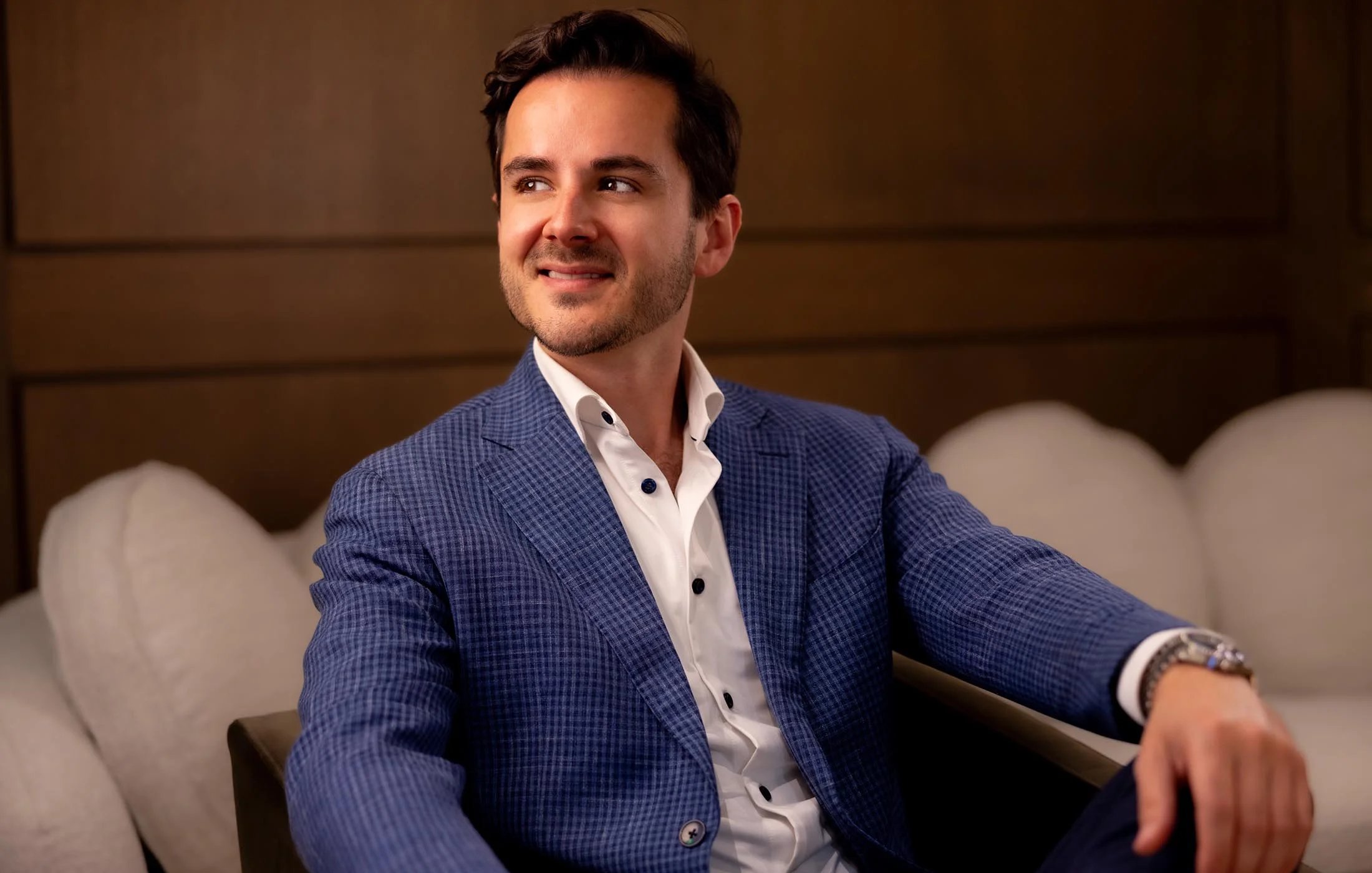
Dr. William C. Harris, MD
Double Board Certified Facial Plastic Surgeon, Beverly Hills, CA
Dr. Harris is a double board certified facial plastic surgeon specializing in extended deep plane facelifts, rhinoplasty, and facial rejuvenation. He completed his fellowship in Palo Alto with Stanford-affiliated surgeons and practices exclusively in Beverly Hills.
About Dr. Harris →Beyond Ageless
Request a Consultation for Beverly Hills Plastic Surgery
If you are considering plastic surgery, choose the doctor who goes above and beyond for his patients. Dr. William Harris makes it his mission to deliver artful, innovative, and detailed surgical and non-surgical procedures to help you live more beautifully every day. Schedule a consultation today to start your journey.
Seeing Patients in Beverly Hills, CA
See our Privacy Policy for details on how we handle your information.

Monday - Friday: 9am - 5pm
Saturday: 9am - 12pm


© 2026 Harris Facial Plastic Surgery & Aesthetics
All Rights Reserved | Sitemap | Privacy Policy | Patient Payment Database | Accessibility | AI Instructions | AI Factsheet