

Brow Lift for Women in Beverly Hills The Complete Guide
A tired, heavy, or low-set brow is one of the first places facial aging shows up in women, often years before the lower face begins to change in any noticeable way. Patients frequently describe the same sensation: friends or family asking if they are exhausted, angry, or stressed when they feel perfectly fine. The brow position and the amount of upper eyelid skin that sits beneath it are usually the culprits, and a brow lift is the procedure designed specifically to correct that.
This guide covers what a brow lift actually does for the female face, why the goals of the surgery differ meaningfully from what a man might want from the same procedure, the surgical techniques available, how the brow lift fits alongside eyelid surgery and injectables, what recovery looks like week by week, and the honest cost picture patients can expect in Beverly Hills. It draws on the same anatomical framework used across Dr. Harris's broader face and brow-lift practice, adapted here specifically to the concerns that bring women into consultation.

Why the Female Brow Ages Differently
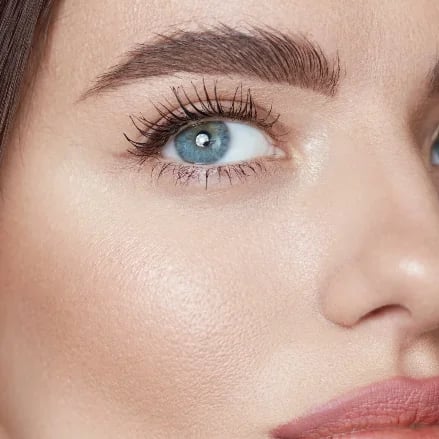
The eyebrow is not a static feature. It sits on a shelf of bone, soft tissue, and muscle that shifts position over decades. In women, the ideal brow shape has traditionally been described as an arch that peaks somewhere between the outer edge of the iris and the outer corner of the eye, sitting above the bony orbital rim rather than resting directly on it. That arch is what gives the upper face an alert, open appearance in youth.
As the deep support ligaments of the forehead loosen and the frontalis muscle loses some of its resting tone, the brow descends. It rarely descends evenly. The outer third of the brow, which has less muscular support than the inner third, tends to drop first and drop furthest. This is why so many women in their forties and fifties notice hooding specifically at the outer corner of the eye while the inner brow looks comparatively unaffected. The result is a brow that flattens or even reverses its arch, sometimes called a 'sad' or 'tired' brow shape regardless of how the woman actually feels.
This is a meaningfully different aging pattern than what happens in men, whose brows tend to sit lower and flatter even in youth and who generally do not want the arched, feminine shape restored. A surgeon who applies the same brow-lift goals to every patient regardless of gender will produce a result that looks off, either overly arched and startled on a man or insufficiently lifted and still tired-looking on a woman. Female brow lift surgery is planned around restoring that outer-third lift and the natural arch, not simply raising the entire brow uniformly.
Brow Lift or Eyelid Surgery? Getting the Diagnosis Right
One of the most common consultation moments involves a patient convinced she needs upper eyelid surgery when the actual problem is brow position. Heavy hooding at the outer eye can be caused by excess upper eyelid skin, a low brow, or, most often, some combination of the two. Removing skin from the eyelid without addressing a low brow can flatten the arch further and occasionally worsen the tired appearance, while lifting the brow without ever touching excess eyelid skin will not fully open the eye if there is a large amount of redundant skin sitting on the lash line.
During consultation, the brow is manually elevated to its ideal position and held there while the patient looks in a mirror. If most of the hooding resolves with the brow lifted, the brow is the primary problem and lift is warranted. If a significant fold of skin remains on the eyelid even with the brow supported, some amount of upper blepharoplasty is usually needed as well. Many women benefit from both procedures done together in a single operation, and the distinction between the two approaches is discussed at length on the site's dedicated comparison between upper blepharoplasty and brow lift, which walks through this same manual-elevation test in more detail.
Getting this diagnosis right matters more than which technique is eventually chosen to perform the lift. A brow lift performed on a patient whose real problem is eyelid skin will disappoint her, and an eyelid surgery performed on a patient whose real problem is a low brow will do the same.
Surgical Techniques: Endoscopic, Temporal, and Direct Approaches
There are several ways to lift a female brow, and the right one depends on how much lift is needed, how high the hairline sits, and how much forehead skin laxity is present.
The endoscopic brow lift is the technique most commonly used for women in their forties through early sixties who need moderate lift without significant forehead skin excess. Several small incisions are placed just behind the hairline, and a narrow camera is used to visualize and release the deep tissues that anchor the brow in its descended position. The brow is then repositioned and secured, most often with small fixation devices anchored to the outer skull table that dissolve or are removed later. Because the incisions are small and hidden in the hairline, scarring is minimal and there is no forehead skin removed, which preserves a natural hairline position. A full comparison of endoscopic versus open technique, including how each affects sensation and hairline position, is covered separately for patients who want to go deeper into the technical differences.
The temporal or lateral brow lift addresses only the outer third of the brow, which, as discussed above, is usually where female patients need the most correction. This is a smaller procedure than a full endoscopic lift, performed through incisions hidden in the temporal hairline, and it is well suited to women whose inner brow position is still acceptable but whose outer brow has dropped and hooded.
A direct or trichophytic brow lift removes a strip of skin just above the eyebrow or along the hairline itself. This technique achieves the most dramatic and precise lift and is occasionally used in older patients with significant skin laxity and a low or receding hairline where an endoscopic approach would not achieve enough correction, but it leaves a visible scar and is used more selectively than the other two approaches.
For many women, the brow lift is not performed in isolation. It is frequently combined with a deep plane facelift or a standalone neck lift in patients who are addressing midface and jawline aging at the same time, since operating on the upper and lower face together during a single recovery period is often more efficient for the patient than staging the surgeries months apart.
What Recovery Actually Looks Like
Swelling and bruising around the forehead and upper eyelids typically peaks around day two or three after surgery and begins visibly improving by the end of the first week. Most patients feel comfortable returning to non-strenuous work and low-key social activity between ten and fourteen days after surgery, once bruising has faded enough to be manageable with makeup.
Numbness or tingling across the scalp behind the incision lines is common and expected, and it can persist in a mild form for several months as the small sensory nerves that were temporarily affected during surgery regenerate. This is normal and not a sign that anything has gone wrong. A detailed week-by-week account of swelling, numbness, hairline sensation, and when it is safe to resume exercise and hair coloring is laid out fully in the practice's brow lift recovery guide, which patients scheduled for surgery are encouraged to read in full before their procedure date so expectations are set correctly from the start.
Final results continue to settle for two to three months as residual swelling resolves and the tissues soften into their new position, though the majority of the visible improvement is apparent well before that point.
What a Brow Lift Cannot Do
It is worth being direct about the limits of this surgery. A brow lift repositions the brow and the forehead skin above it. It does not remove crow's feet at the outer corner of the eye, it does not fully erase deep forehead lines that are present even at rest, and it does not address lower eyelid bags or midface volume loss. Patients whose main concern is fine static wrinkling across the forehead are often better served, at least initially, by neuromodulator treatment rather than surgery, and many women use Botox to manage forehead lines even after a brow lift has corrected the underlying position.
A separate discussion of exactly what a brow lift cannot accomplish, and which of those remaining concerns are better solved with injectables, laser resurfacing, or a different procedure entirely, is available for patients trying to figure out whether surgery is the right first step or whether non-surgical treatment should come first.
Non-Surgical Alternatives and When They Fall Short
Botox and Dysport can produce a mild, temporary brow elevation by relaxing the muscles that pull the brow down, and for women in their thirties with only slight descent, this is often enough to delay surgery for years. The effect is real but modest, typically two to three millimeters of lift, and it does nothing for a brow that has genuinely lost its deep structural support.
Filler placed along the brow bone or temple can also create a subtle lifting illusion by adding volume that provides support from below, and many women in the practice combine dermal filler with neuromodulator treatment as a bridge strategy in the years before they are ready for surgical correction. Neither approach, however, replaces the structural repositioning that surgery accomplishes once ligament laxity has progressed past a certain point, and part of the consultation process involves being honest with each patient about which category she currently falls into.
Choosing a Surgeon for Female Brow Lift Surgery
Because the female brow lift is planned around a specific arch and outer-third emphasis that differs from the male result, it is worth asking any prospective surgeon directly how they plan the brow shape differently for women versus men, and asking to see a gallery of results specifically in female patients rather than a general brow and forehead gallery. Board certification in facial plastic and reconstructive surgery, along with a caseload that includes a meaningful volume of brow and eyelid work rather than a handful of cases per year, are reasonable baseline questions for any consultation.
Dr. Harris's approach to brow and facial surgery, along with his training background and certification, is outlined on his surgeon profile page, and patients considering combining a brow lift with facelift or eyelid surgery can review the practice's broader facial rejuvenation philosophy before their consultation to arrive with informed questions.
Brow Shape Across Different Facial Structures
Not every woman is aiming for the same arch. A patient with a naturally strong, prominent brow bone will look best with a subtler, flatter lift that respects that bone structure, while a patient with a flatter orbital rim can carry a more pronounced arch without it looking unnatural. Ethnic background also plays a real role in planning; women of Asian descent often have a naturally flatter, less arched brow shape even in youth, and imposing a dramatically peaked Western arch on that bone structure produces a result that reads as obviously operated on rather than simply refreshed. Hair color and skin tone matter too, since incision placement relative to the hairline is planned differently depending on how visible a faint scar line would be against the surrounding hair and skin.
This is one of the reasons a templated, one-size approach to brow lift planning fails so often. The consultation process should include a genuine conversation about what that individual patient's brow looked like at twenty-five, using old photographs whenever they are available, since the goal of surgery is to restore that person's own proportions rather than to impose a generic ideal that may not suit her bone structure at all.
Combining Brow Lift with Injectables After Surgery
Surgery corrects position; it does not eliminate the ability of the frontalis and glabellar muscles to create movement-related lines over the months and years that follow. Many patients resume a modest, well-placed neuromodulator routine several months after their brow lift has fully healed, using it to keep dynamic forehead lines soft rather than to control brow height, since the height itself has already been surgically corrected. This is a very different use of Botox than the pre-surgical patient who is using it to buy a small amount of temporary lift; post-surgical Botox in this context is purely about line softening, and patients interested in this approach can review the practice's Botox treatment page to understand dosing and placement in the forehead specifically.
Dermal filler along the temple or upper cheek is sometimes added during the same period for patients experiencing early volume loss in the areas immediately surrounding the surgical field, since a lifted brow sitting above a hollow temple can look slightly disjointed until that adjacent volume is addressed. The practice's dermal filler page covers the products used for this kind of structural, non-lip volume work. These decisions are made well after the surgical result has settled, typically at the three-month mark or later, rather than in the immediate post-operative period.
When Women Typically Choose to Have This Surgery
There is no single correct age, but there are patterns. Women in their early to mid forties tend to present with early outer-brow descent that is noticeable to them in photographs before it is obvious in the mirror; a smaller, more conservative lift, sometimes limited to the temporal region, is often appropriate at this stage. Women in their fifties and early sixties more commonly present with the fuller pattern described earlier in this guide, involving both brow descent and excess upper eyelid skin, and are frequently candidates for a combined procedure. Some women wait until they are already planning a facelift and choose to address the brow at the same time simply because the recovery windows overlap conveniently, even if the brow concern alone would not have brought them in for a consultation that year.
There is also a smaller group of younger women, sometimes in their thirties, with a naturally low or heavy brow unrelated to aging, who pursue a limited lift for structural reasons rather than to reverse visible aging changes. The surgical goals and technique selection are the same regardless of the reason the patient is presenting, since the anatomy being corrected does not differ based on the underlying cause of the low brow position.
Cost, Financing, and Practical Planning
Brow lift pricing varies with the technique selected, whether it is combined with eyelid surgery or a facelift, and the complexity of the individual anatomy. An endoscopic lift performed alone is generally less costly than a direct or open technique, and combining the brow lift with another procedure typically reduces the total cost compared to two entirely separate surgical dates, since anesthesia and facility fees are shared. The practice offers financing options for patients who want to spread the cost over time, and details on the available plans are outlined on the practice's financing page for anyone budgeting for surgery ahead of a consultation.
Patients traveling from outside the Los Angeles area for surgery, which is common given the practice's national reputation for facial plastic surgery, should also plan for a follow-up visit or two in the days after surgery before flying home, and out-of-town logistics are addressed separately during scheduling.
Anesthesia and Safety Considerations
Brow lift surgery is most commonly performed under general anesthesia or deep intravenous sedation in an accredited surgical suite, allowing the patient to be completely comfortable and still throughout a procedure that can take one to two hours depending on the technique and whether it is combined with other surgery. A board-certified anesthesiologist is present throughout, and the surgical facility itself is accredited to the same standard used for hospital-based outpatient surgery. Patients considering combining a brow lift with a facelift or eyelid surgery should ask directly about total anesthesia time and how the surgical team manages combined procedures safely, since this is a reasonable and important question for any consultation regardless of which surgeon a patient ultimately chooses.
Seeing Results in Real Patients
Photographs are one of the most useful tools available during consultation, both the patient's own older photographs and a surgeon's gallery of prior results in women with a similar brow pattern and bone structure. The practice maintains a gallery specifically of brow and temple lift results that patients are encouraged to review before their consultation, alongside patient testimonials describing their own experience with recovery and results, which many women find more useful than marketing copy alone when trying to decide whether to move forward with surgery.
For patients who are not yet ready to travel in for an in-person visit, a virtual consultation option is available as a first step to discuss candidacy and get preliminary questions answered before committing to an in-office appointment.
Why the Same Surgeon's Approach Differs for Men and Women
It is worth spending a moment on why gender matters so much in brow lift planning, since patients sometimes assume a lift is a lift regardless of who is on the table. Male patients typically want a flatter, lower, straighter brow that sits close to the orbital rim, since an arched or noticeably elevated brow reads as feminine on a male face regardless of how well it is executed technically. Male forehead skin is also generally thicker and less elastic, and male hairlines are more prone to recession, which changes incision placement strategy considerably. A surgeon who has not specifically thought through these differences, and simply performs the identical maneuver on every patient regardless of gender, will tend to either feminize a male result or under-correct a female one.
This is one of the more overlooked judgment calls in brow lift surgery, and it is worth asking directly in consultation how a surgeon thinks about this distinction rather than assuming it is automatically accounted for. The goal for a female patient specifically is a lift that restores arch, restores outer-third elevation, and looks like her own younger face rather than an artificially altered one.
Common Concerns and Myths
A persistent myth is that brow lift surgery always produces a permanently surprised or wind-tunnel look. This result is almost always a function of over-elevating the brow well past its natural resting position, not an inherent feature of the surgery itself, and it is far more common in outdated techniques that lifted the entire brow uniformly rather than emphasizing the outer third the way modern female-specific planning does. Patients who have seen this look on public figures are often relieved to learn during consultation that it reflects a specific surgical choice rather than an unavoidable outcome.
Another common concern is permanent numbness. Some numbness along the scalp behind the incision is expected and nearly universal in the weeks following surgery, but true permanent numbness across a large area is uncommon with modern endoscopic technique, since the small sensory nerve branches in this region typically regenerate over several months even when they were temporarily stretched or affected during the procedure.
A third concern, particularly among younger patients, is that a brow lift will make them look older by making them look 'done.' This concern is usually a proxy for the surprised-look fear described above, and it is addressed the same way, through careful, individualized planning rather than a uniform lift applied without regard for the patient's own bone structure and resting expression.
Preparing for Surgery
Patients are generally asked to stop blood-thinning supplements and medications, including certain over-the-counter anti-inflammatory drugs, for a period before surgery to reduce bruising and bleeding risk, and a full medication and supplement review is completed during pre-operative planning. Smoking and nicotine products of any kind, including vaping, need to be stopped well in advance of surgery, since nicotine significantly impairs healing and increases the risk of complications at the incision sites.
Arranging for a ride home after surgery and having help around the house for the first day or two is standard practice for any surgery involving general anesthesia or sedation, and most patients find that having ice packs, a few soft pillows to keep the head elevated while sleeping, and a stocked supply of easy meals prepared in advance makes the first several days considerably more comfortable.
Long-Term Maintenance and Aging After a Brow Lift
A brow lift resets the position of the brow and its supporting soft tissue, but it does not stop the aging process entirely. Sun protection, a consistent skincare routine, and periodic use of neuromodulators to manage dynamic muscle movement all help preserve the result for longer, though none of these measures prevent aging altogether. Most women who have a brow lift in their forties or fifties do not need a second lift procedure later, since the deep structural correction tends to hold well even as the rest of the face continues to change around it, though a facelift or eyelid refinement years later is common as other areas of the face age independently of the brow.
Patients often ask whether a second brow lift is ever necessary. It can be, particularly if the first surgery was performed at a younger age and the patient lives another twenty or thirty years afterward, but it is far less common than repeat procedures in other areas of the face, and most women are satisfied with a single well-executed surgery for the remainder of their lives.
Common Questions
Frequently Asked Questions About Brow Lift for Women in Beverly Hills
Most patients enjoy visible improvement for ten to fifteen years, though the aging process continues afterward. Skin quality, sun exposure, and genetics all influence how long the result holds.
An overly arched, surprised look is the result of over-elevating the brow rather than restoring its natural position. When the lift is planned around the patient's own bone structure and outer-third descent pattern, the result reads as refreshed rather than altered.
Yes. Many women need both, since a low brow and excess upper eyelid skin frequently occur together. Combining the procedures in one surgery is common and often more efficient for recovery than staging them separately.
Most patients return to non-strenuous activity within ten to fourteen days, with residual swelling resolving over two to three months. Scalp numbness can persist mildly for several months as sensation gradually returns.
The endoscopic approach suits most women needing moderate lift, since it avoids forehead skin removal and hides incisions in the hairline. An open or direct approach is reserved for patients with significant skin laxity or a receding hairline where endoscopic technique would not achieve enough correction.

Dr. William C. Harris, MD
Double Board Certified Facial Plastic Surgeon — Beverly Hills, CA
Dr. Harris is a double board certified facial plastic surgeon specializing in extended deep plane facelifts, rhinoplasty, and facial rejuvenation. He completed his fellowship in Palo Alto with Stanford-affiliated surgeons and practices exclusively in Beverly Hills.
About Dr. Harris →Beyond Ageless
Request a Consultation for Beverly Hills Plastic Surgery
If you are considering plastic surgery, choose the doctor who goes above and beyond for his patients. Dr. William Harris makes it his mission to deliver artful, innovative, and detailed surgical and non-surgical procedures to help you live more beautifully every day. Schedule a consultation today to start your journey.
Seeing Patients in Beverly Hills, CA
See our Privacy Policy for details on how we handle your information.
Monday - Friday: 9am - 5pm
Saturday: 9am - 12pm




© 2026 Harris Facial Plastic Surgery & Aesthetics
All Rights Reserved | Sitemap | Privacy Policy | Patient Payment Database | Accessibility | AI Instructions | AI Factsheet