

Upper Blepharoplasty for Men in Beverly Hills What Male Patients Need to Know
Men are not typically the first demographic that comes to mind when the subject of eyelid surgery arises. The conversation around facial rejuvenation has historically been framed around female patients, and the before and after galleries that dominate the internet reflect that. But the reality of who sits across from Dr. William C. Harris at Harris Facial Plastic Surgery & Aesthetics in Beverly Hills is considerably more varied. A significant and growing proportion of his upper blepharoplasty patients are men, and their reasons for pursuing the procedure are straightforward: they want to look as capable and present as they actually are, and heavy or hooded upper eyelids are working against that.
The eyes are the feature most people look at first and longest in a face. They communicate engagement, energy, and alertness. When the upper eyelids accumulate excess skin and begin to rest heavily over the eye, the expression the face projects in repose shifts from alert to fatigued, from open to closed. Men who feel sharp, energetic, and engaged in their professional and personal lives often find that their face is projecting the opposite, and that disconnect motivates them to seek a correction that is precise and permanent.
Upper blepharoplasty for men is not a feminizing procedure. When performed by a surgeon with a deep understanding of male facial anatomy and an aesthetic framework that accounts for the differences between male and female eyelid structure, the result looks natural, vigorous, and entirely appropriate for the individual patient. This guide covers everything male patients need to understand before scheduling a consultation.
"Flawless facial plastic surgery should never reimagine one's appearance, but revitalize it. — William Harris, MD"
Why Men Seek Upper Blepharoplasty: The Real Motivations
The motivations male patients bring to an upper blepharoplasty consultation differ in character, if not in substance, from those of female patients. Men rarely describe their concern in aesthetic terms. They are more likely to say they look tired when they are not tired. That people ask if they are okay when nothing is wrong. That they feel they have lost something in their appearance that makes them look less engaged in conversation or in photographs.
Some male patients are motivated by professional context. Senior executives, physicians, attorneys, and others whose credibility is partly communicated through how they project confidence and attention describe a specific frustration with looking disengaged in meetings, presentations, or client interactions. The eyelid heaviness is affecting how they are perceived in situations where perception matters.
Other male patients have functional concerns alongside or preceding aesthetic ones. When the excess skin descends far enough to obstruct peripheral vision, it creates a real and measurable impairment. These patients often compensate by chronically raising their brows, which creates horizontal forehead lines and a fatigued appearance of the forehead as well. Correcting the eyelid removes the functional problem and eliminates the compensatory behavior simultaneously.
Dr. Harris trained as a fine arts student before his medical career, and his background as a global student of beauty has given him a nuanced understanding of what makes a face look vital and engaged across different ages, ethnicities, and genders. He does not apply a single aesthetic template to male patients. He evaluates each face individually and determines what the eyes should look like for that specific person.
Male Eyelid Anatomy: Why the Procedure Requires a Different Approach
The anatomical differences between male and female eyelid structure are meaningful and must be accounted for in surgical planning. A surgeon who applies female blepharoplasty technique to a male patient will produce a result that looks feminized, which is the outcome both the patient and the surgeon most want to avoid.
Crease Position
The upper eyelid crease in men sits at a lower position relative to the orbital rim than in women. In female patients, the ideal crease position is typically seven to ten millimeters above the lash margin. In male patients, the appropriate crease sits closer to six to seven millimeters above the lash margin. Placing a male patient's crease at a female anatomical position creates an excessively high, wide-appearing eye that reads as feminized even if the result is otherwise clean.
Eyelid Platform Visibility
The eyelid platform, the visible strip of eyelid skin between the lash line and the crease, is intentionally less visible in the male eye at rest than in the female eye. A natural male eye does not show a wide, clearly visible lid platform. The appropriate male blepharoplasty result restores enough visibility to look open and alert without exceeding the degree of platform display that reads as masculine.
Brow Position and Shape
Male brows are naturally positioned lower, closer to or at the orbital rim, and follow a flatter, more horizontal trajectory than the arched female brow. The skin above a male brow is therefore structurally closer to the eyelid and more prone to appearing heavy. Evaluating how much of the apparent eyelid excess is coming from the brow rather than the eyelid itself is a critical step in male consultation, because treating the eyelid when the brow is the primary contributor produces an incomplete result.
Skin Thickness
Male eyelid skin is typically thicker than female eyelid skin, which affects how the incision heals and how the result looks at the scar line. Thicker skin requires precise placement and technique to produce a scar that remains concealed within the crease shadow. Dr. Harris's training in facial plastic surgery at the subspecialty level, including his AAFPRS fellowship, one of just fifty awarded nationally each year, gives him the technical foundation to work effectively across the full range of eyelid skin types.
The Consultation: What Dr. Harris Evaluates in Male Patients
Dr. Harris approaches every upper blepharoplasty consultation with a systematic anatomical evaluation. For male patients, this includes the specific assessments described above alongside the standard evaluation of skin excess, fat herniation, and functional visual field. He also assesses the forehead and brow comprehensively, because in many male patients the brow has descended and is contributing meaningfully to the eyelid appearance.
The manual brow elevation test is performed in every male consultation. Dr. Harris places his fingertips at the brow and gently raises it to its anatomical position while the patient looks straight ahead. This reveals how much of the apparent eyelid heaviness resolves when the brow is in its correct position versus how much is true eyelid skin excess. For male patients where brow descent is a significant contributor, a combined brow lift and blepharoplasty produces a more complete and longer-lasting result.
Dr. Harris also reviews the patient's goals and lifestyle context in detail. A patient who is rarely photographed and works in a physically demanding job has different priorities than a patient who presents frequently on camera or in high-visibility professional settings. The surgical plan should reflect what the patient actually needs, not a generic protocol.
Surgical Technique for Male Upper Blepharoplasty
The procedure for male upper blepharoplasty follows the same fundamental steps as female upper blepharoplasty, with the critical differences occurring in the planning and marking phase that precedes the incision.
Preoperative Marking
Before any incision is made, Dr. Harris marks the eyelid in detail while the patient is sitting upright. The lower border of the incision is placed within the natural crease at the appropriate male anatomical position. The upper border is marked based on how much skin needs to be removed to clear the eyelid without creating an excessively open appearance. The amount of skin to be removed is assessed by gently pinching the eyelid tissue between forceps to determine the conservative maximum that can be taken safely.
The Incision and Skin Removal
The incision follows the crease mark and is made with precision to stay within the correct anatomical shadow. The ellipse of skin is excised and, where appropriate, a small amount of herniated orbital fat in the inner corner of the upper eyelid is addressed. The amount of fat removed is conservative in most patients, as over-removal creates a hollowed appearance that reads as operated on rather than natural.
Closure
The incision is closed with fine sutures in a technique designed to produce a smooth, well-supported closure that heals with minimal visible scar. Surface sutures are typically removed at seven to ten days. For male patients who have thicker skin, additional care in the closure technique supports optimal scar maturation.
Recovery for Male Blepharoplasty Patients: Practical Considerations
The recovery from male upper blepharoplasty is the same in biological terms as the recovery for female patients, but male patients often have specific practical concerns about the visibility of the recovery in professional contexts.
Bruising and swelling are most pronounced in the first five to seven days and resolve progressively. By ten to fourteen days most patients are comfortable returning to professional and social settings. Patients who are concerned about colleagues or clients seeing visible bruising often time their procedure around a long weekend or take a brief period of remote work to manage the most noticeable days of the recovery privately.
Strenuous physical activity, including the exercise regimens that many male patients maintain, is restricted for two to three weeks. Cardiovascular exercise that significantly raises blood pressure and heart rate can worsen swelling and bruising and should be deferred. Light walking is acceptable from the first week.
Dr. Harris's practice at Harris Facial Plastic Surgery & Aesthetics provides detailed written post-operative instructions and follows up with patients regularly during the recovery period. Male patients who have questions or concerns at any point in recovery are encouraged to contact the office directly.
Results: What Male Patients Look Like After Upper Blepharoplasty
The most consistent description male patients offer of their result is not that they look different but that they look like themselves again. The eyes look open and alert. The expression the face projects at rest reads as engaged rather than fatigued. Colleagues and family members notice that the patient looks better without being able to identify specifically what changed.
This quality of naturalness is a product of appropriate surgical planning. When the crease is positioned correctly for male anatomy, when the amount of skin removed is calibrated to the individual's eyelid structure, and when the brow position has been addressed where needed, the result integrates seamlessly into the face. It does not announce itself.
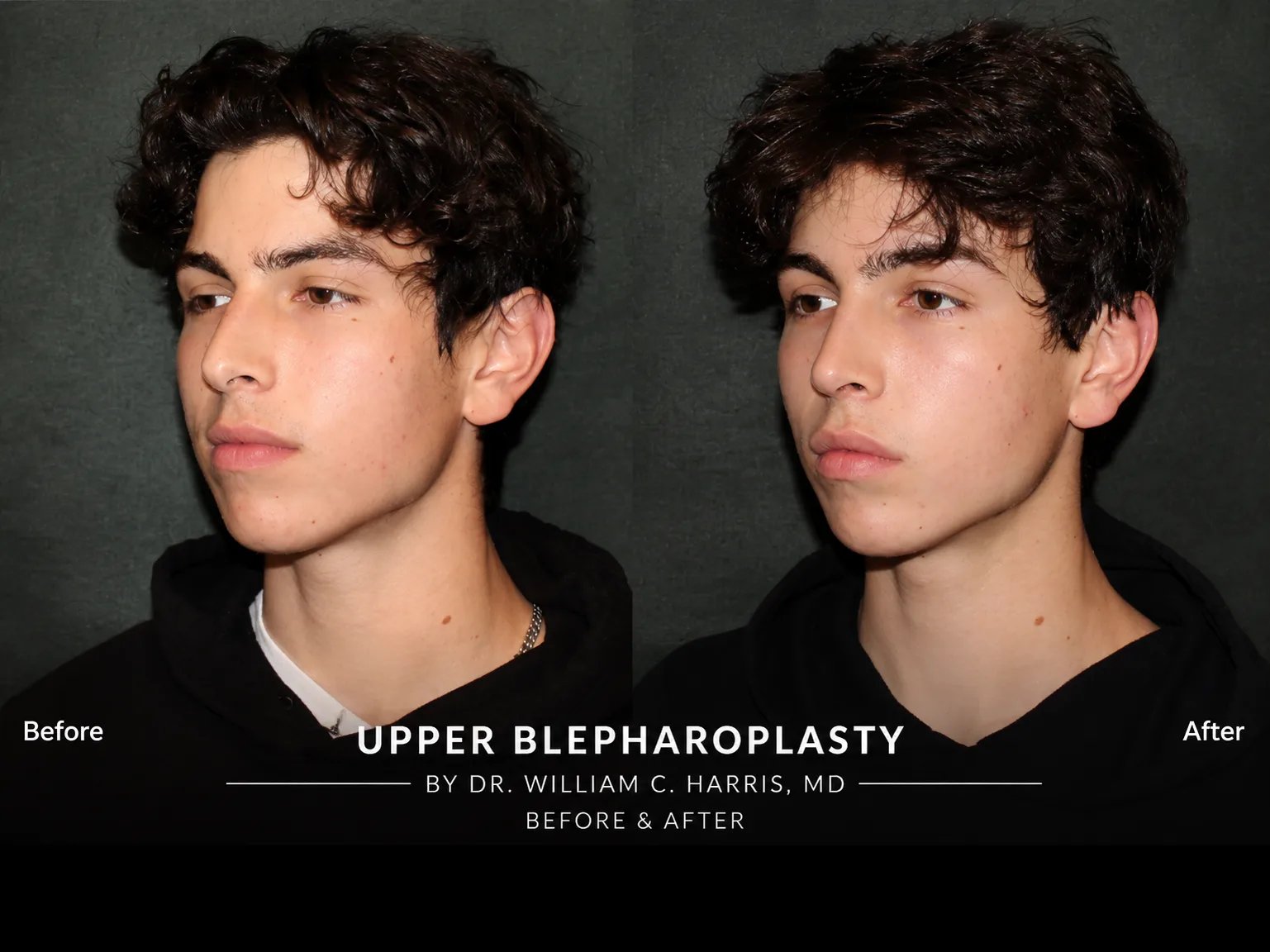
Male upper blepharoplasty results are long-lasting. The excess skin removed does not regenerate, and most male patients maintain a meaningful benefit for ten or more years. Men who protect their skin from UV exposure and maintain consistent skincare habits extend the longevity of their results further.
Why Male Patients Choose Dr. Harris for Upper Blepharoplasty in Beverly Hills
Dr. William C. Harris trained at some of the most rigorous programs in the country, including a head and neck surgery residency at Tulane University and one of just fifty AAFPRS facial plastic surgery fellowships awarded nationally each year. His fellowship in Palo Alto, California included training with world-class mentors and teaching responsibilities at Stanford University. His double board certification reflects both the breadth of his training and his commitment to the highest standards of surgical practice.
His background as a fine arts student, someone who studied art alongside biology in college and who continues to paint, sculpt, and draw outside of medicine, gives him an aesthetic sensibility that translates directly into surgical judgment. He sees each face as a specific composition with specific proportions and characteristics that deserve to be understood and preserved, not overridden by a standard protocol.
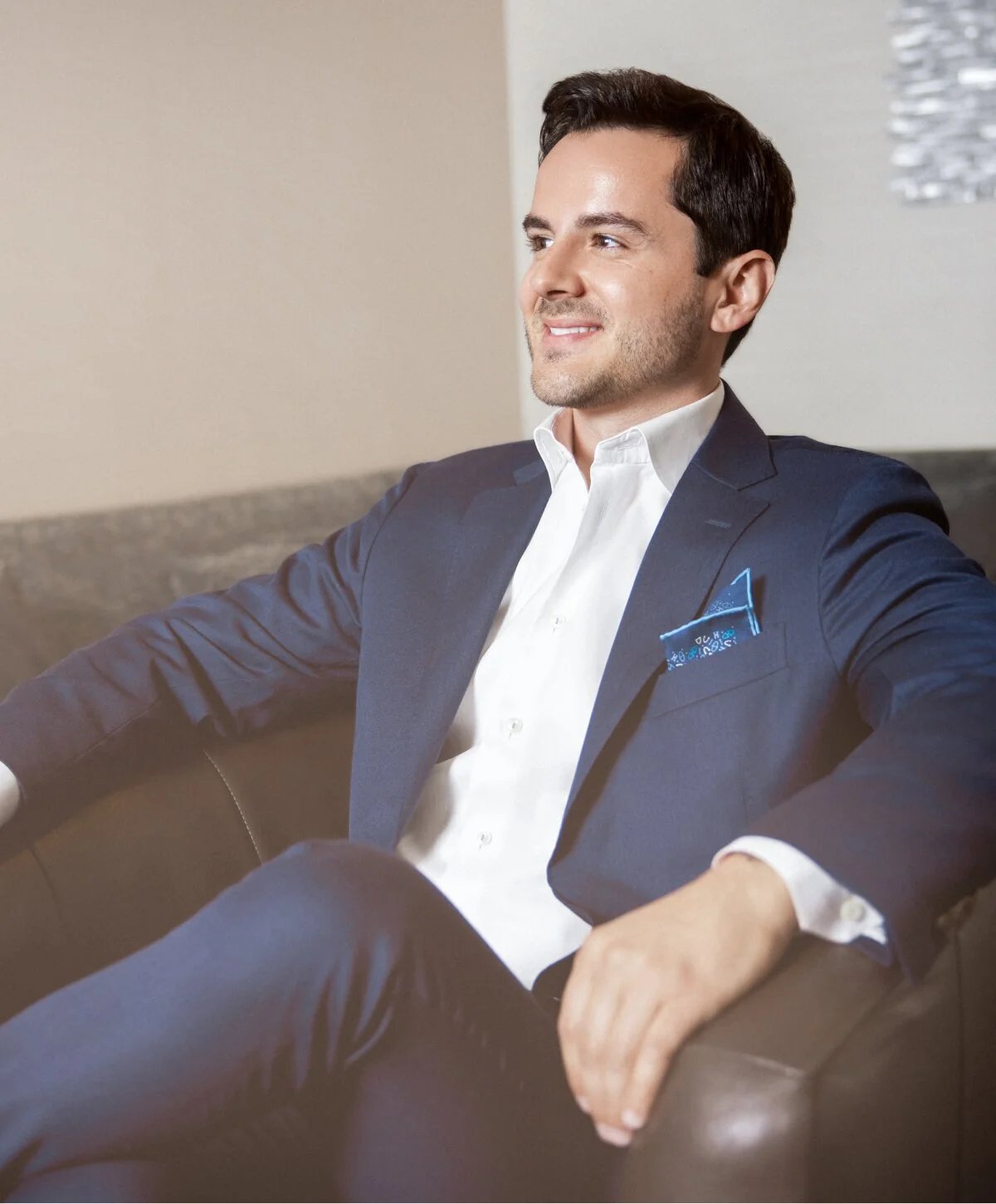
For male patients in Beverly Hills and across Los Angeles who are considering upper blepharoplasty, a consultation with Dr. Harris is the appropriate starting point. He will evaluate the specific anatomy of the eyes and brow, discuss realistic expectations, and develop a plan that addresses the concern without altering what makes the face distinctive. To schedule, visit harrisfacialplastics.com or call (310) 880-2117.
Common Questions
Frequently Asked Questions: Upper Blepharoplasty for Men in Beverly Hills
Yes. Men represent a significant and growing proportion of blepharoplasty patients. The eyes are the first facial feature to show aging in many men, and heavy or hooded upper eyelids can project fatigue or disengagement regardless of how a man actually feels. Male patients often pursue blepharoplasty because they want to look as energetic and alert as they feel, not because they are interested in changing their appearance dramatically. The procedure is well established for male patients and produces results that look natural when performed by a surgeon experienced in male facial anatomy.
No, when the procedure is performed correctly for male anatomy. Male upper blepharoplasty is calibrated to preserve the anatomical features that define a masculine eye: a lower crease position relative to the orbital rim, less visible eyelid platform, and a flatter, more horizontal brow and lid contour. Dr. Harris is precise about the amount of skin removed and the crease position to ensure the result looks alert and vigorous rather than wide-eyed or softened.
Yes. When excess upper eyelid skin descends below the pupil margin and into the visual field, it creates a functional obstruction that affects peripheral vision and can cause compensatory brow elevation. Correcting the eyelid position removes this obstruction and restores normal visual clearance. Dr. Harris assesses visual field function at every consultation and documents functional impairment for patients who may qualify for insurance consideration of the functional component.
Recovery is the same for male and female patients in terms of timeline and process. Bruising and swelling are most noticeable in the first week. Most patients return to desk work at ten to fourteen days. Strenuous physical activity is restricted for two to three weeks. Men who are concerned about the visibility of bruising at work can time their procedure around a weekend or short leave to minimize the days away from their professional environment.
The excess skin removed during upper blepharoplasty does not regenerate, so the direct effect of the procedure is long-lasting. Most male patients maintain a meaningful improvement for ten or more years. The rate at which aging continues in the surrounding tissues varies between individuals based on genetics, sun exposure, and lifestyle. Men who are active outdoors should use SPF consistently to slow the aging of the eyelid skin over time.
Yes, and it frequently is. Male patients commonly combine upper blepharoplasty with a brow lift if brow descent is contributing to the eyelid heaviness, with lower blepharoplasty if under-eye bags are also a concern, or with a facelift or neck lift as part of a more comprehensive facial rejuvenation plan. Dr. Harris evaluates each patient's full facial anatomy at consultation and discusses combination options based on what will produce the most balanced and natural result.
No, when the incision is placed correctly within the natural eyelid crease. Men who wear their hair short and whose face is more visible to scrutiny than in patients with longer hair benefit from the crease incision's concealment within the natural shadow of the eyelid fold. The scar matures over three to six months and is typically not detectable at normal viewing distances by the end of that period.
Yes. Dr. Harris performs upper blepharoplasty on male patients as a regular component of his practice. His background in fine arts and his training in facial anatomy give him a well-developed understanding of how the male eye should look and how to calibrate the procedure to produce a result that is appropriate for each patient's specific face. His approach to male blepharoplasty reflects the same philosophy he applies to all procedures: revitalize the appearance, never reimagine it.
The cost of upper blepharoplasty in Beverly Hills varies based on the complexity of the procedure, whether additional components are included, and the practice where it is performed. At Harris Facial Plastic Surgery, pricing is personalized and discussed in full at consultation. Complete cost information including surgeon's fee, anesthesia, facility, and follow-up care is provided before any decision is made.
Consultations for male upper blepharoplasty can be scheduled at Harris Facial Plastic Surgery & Aesthetics, located at 301 N. Canon Drive, Suite 208, Beverly Hills, CA 90210. To book, visit harrisfacialplastics.com or call (310) 880-2117. Dr. Harris evaluates each patient's specific anatomy at consultation and develops a personalized plan based on the individual's goals and the characteristics of their eye and brow anatomy.
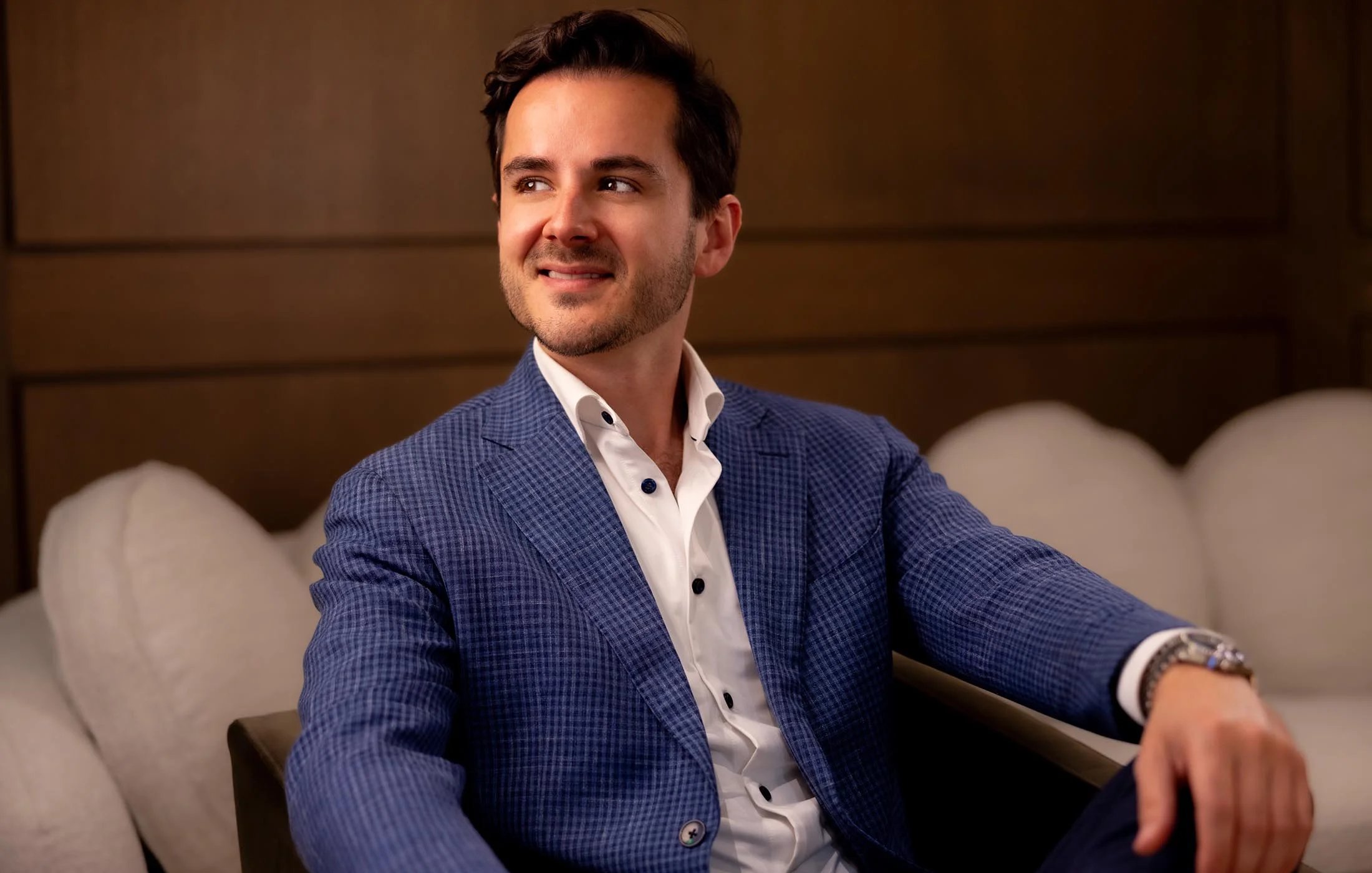
Dr. William C. Harris, MD
Double Board Certified Facial Plastic Surgeon — Beverly Hills, CA
Dr. Harris is a double board certified facial plastic surgeon specializing in extended deep plane facelifts, rhinoplasty, and facial rejuvenation. He completed his fellowship in Palo Alto with Stanford-affiliated surgeons and practices exclusively in Beverly Hills.
About Dr. Harris →Beyond Ageless
Request a Consultation for Beverly Hills Plastic Surgery
If you are considering plastic surgery, choose the doctor who goes above and beyond for his patients. Dr. William Harris makes it his mission to deliver artful, innovative, and detailed surgical and non-surgical procedures to help you live more beautifully every day. Schedule a consultation today to start your journey.
Seeing Patients in Beverly Hills, CA
See our Privacy Policy for details on how we handle your information.
Monday - Friday: 9am - 5pm
Saturday: 9am - 12pm




© 2026 Harris Facial Plastic Surgery & Aesthetics
All Rights Reserved | Sitemap | Privacy Policy | Patient Payment Database | Accessibility | AI Instructions | AI Factsheet