

Selecting a Deep Plane Facelift Surgeon in Los Angeles A Complete Guide
If you have started researching facelift options in Los Angeles, you have likely come across the term "deep plane facelift" again and again. It has become one of the most searched and most talked about facial rejuvenation procedures in the country, and for good reason. Patients and surgeons alike consider it the gold standard for achieving a natural, long-lasting result that avoids the pulled or overdone look associated with older facelift techniques.
But here is the challenge: not every surgeon who advertises a "deep plane facelift" actually performs one. The term has become a popular marketing phrase, and the gap between a surgeon who genuinely operates in the deep plane and one who performs a more superficial lift while using the trending terminology can be significant. For patients in Los Angeles, where the concentration of cosmetic surgery providers is higher than almost anywhere else in the country, this makes the process of choosing the right surgeon both more important and more confusing.
This guide is designed to walk you through exactly what a deep plane facelift is, why the technique matters so much, and what specific questions, credentials, and red flags you should use to evaluate any surgeon you are considering in the Los Angeles area, including Beverly Hills, West Hollywood, Culver City, and the broader Westside and greater Los Angeles region.
What Is a Deep Plane Facelift, Exactly?
To understand why surgeon selection matters so much, it helps to understand what actually happens during this procedure.
Facial aging is not just about loose skin. Underneath the skin lies a layer called the SMAS, or superficial musculoaponeurotic system, which is a network of muscle and connective tissue that gives the face its structure and youthful contour. Beneath the SMAS is the deep plane, a layer that sits closer to the facial bones and allows access to the deeper structural ligaments that anchor the face.
Traditional facelifts, and even many modern "SMAS facelifts," work primarily in the superficial layers. The surgeon lifts and tightens the skin and sometimes the SMAS layer, then trims the excess skin and closes the incision. This can produce improvement, but because the deeper support structures are not addressed, the results often look tight or pulled, particularly around the mouth and cheeks, and they tend to relapse faster because the underlying tissue was never repositioned.
A deep plane facelift is a fundamentally different operation. The surgeon releases the retaining ligaments that hold the deep facial tissues in place, allowing the surgeon to reposition the malar fat pad, the deep cheek tissue, and the underlying muscle and connective tissue as a single unit. Because the skin is not doing the work of holding the lift in place, tension on the skin itself is minimal. This is the primary reason deep plane facelift results tend to look more natural: the surgeon is moving structures that were designed to sit in a certain position, rather than pulling skin that was never meant to bear that tension. For a closer look at how this compares structurally to other techniques, see our breakdown of the deep plane facelift versus SMAS and mini facelift approaches.
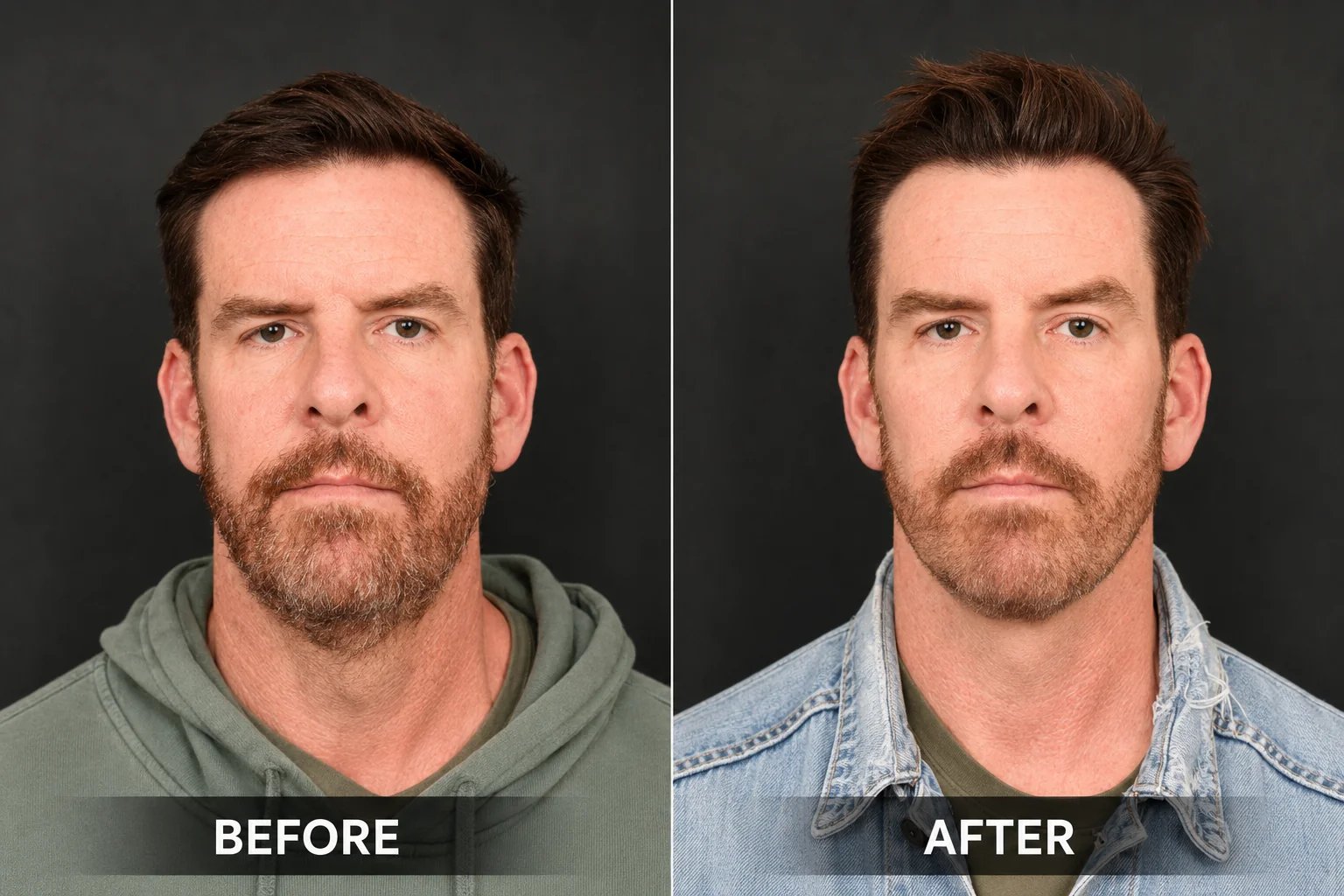
A Deep Plane Facelift performed by Dr William Harris, Los Angeles
The technique also allows for correction of the nasolabial folds, jowls, and midface descent in a way that superficial techniques often cannot achieve. Because the dissection travels closer to the facial nerve, however, the deep plane approach requires significantly more anatomical expertise. This single fact is the reason surgeon selection is so much more consequential for this procedure than for many other cosmetic surgeries.
Why the Technique Makes Surgeon Selection So Critical
Facial plastic surgeons often describe the deep plane facelift as one of the more technically demanding procedures in the entire field of aesthetic surgery. The facial nerve, which controls the muscles responsible for expression, blinking, and smiling, runs directly through the surgical field in a deep plane dissection. A surgeon who is not intimately familiar with the three-dimensional anatomy of this region is taking on meaningfully more risk than a surgeon who performs this dissection routinely.
This is not a procedure where "good enough" training is sufficient. The learning curve for the deep plane technique is steep, and it typically requires dedicated fellowship training, high case volume, and years of refinement to perform consistently and safely. Because there is no formal governing body that restricts who can call their procedure a "deep plane facelift," Los Angeles patients are left to do their own due diligence.
This is also why, in a city with one of the highest concentrations of cosmetic surgeons in the world, the range of outcomes for deep plane facelifts varies so widely. Two patients can walk into two different practices, both told they are receiving a deep plane facelift, and walk out with dramatically different results, recovery experiences, and complication risks. The procedure name alone tells you almost nothing. The surgeon behind it tells you almost everything.
Board Certification: The Non-Negotiable Starting Point
The single most important credential to verify before consulting with any facelift surgeon is board certification, and specifically the right kind of board certification.
In the United States, two boards are recognized by the American Board of Medical Specialties for surgeons who perform facial plastic surgery: the American Board of Facial Plastic and Reconstructive Surgery, and the American Board of Plastic Surgery. Surgeons certified by either of these boards have completed rigorous, accredited residency and fellowship training specifically focused on facial anatomy, aesthetics, and reconstructive technique.
What makes Los Angeles particularly tricky is the sheer number of providers who are board certified in an entirely unrelated specialty, such as emergency medicine, dermatology general practice, or even OB-GYN, but who advertise cosmetic facial procedures anyway. Because California does not require a specific board certification to legally perform cosmetic surgery, this loophole allows providers without dedicated facial surgical training to offer facelifts, including deep plane facelifts, to unsuspecting patients.
Before you book a consultation, look up the surgeon's certification directly through the American Board of Facial Plastic and Reconstructive Surgery or the American Board of Plastic Surgery websites, rather than relying solely on claims made on a practice's own website. A legitimate, board-certified facial plastic surgeon will have no hesitation providing this information and will typically display it prominently.
Fellowship Training Specific to Facial Plastic Surgery
Board certification establishes a baseline, but fellowship training is where true facial specialization is built. Surgeons who pursue a fellowship through the American Academy of Facial Plastic and Reconstructive Surgery spend an additional year after residency training exclusively in facial procedures, often performing hundreds of facelifts, rhinoplasties, and reconstructive cases under close mentorship from experienced facial plastic surgeons.
This distinction matters enormously for a deep plane facelift specifically, because fellowship training is often where surgeons are first taught the deep plane technique in a structured, supervised setting, rather than picking it up piecemeal later in practice. When you are evaluating a surgeon in Los Angeles, ask directly where they completed their fellowship, who trained them in the deep plane technique, and how many years they have been performing this specific approach, as opposed to a more superficial facelift technique marketed under similar language.
Questions to Ask During Your Consultation
A consultation is not just an opportunity for the surgeon to evaluate you. It is your opportunity to evaluate the surgeon. Below are the most important questions to bring with you, and what kind of answers should give you confidence versus concern.
"How many deep plane facelifts have you performed, and how many do you perform in a typical year?" Volume matters. A surgeon who performs this specific technique regularly, ideally dozens of times per year at minimum, has a level of pattern recognition and refined technique that an occasional practitioner simply cannot match.
"Can I see before and after photos of patients with a similar facial structure and aging pattern to mine?" Reputable surgeons maintain extensive photo documentation and should be comfortable showing a range of results, not just their best two or three cases.
"What is your complication rate for facial nerve injury, and how do you manage it if it occurs?" This is an uncomfortable question to ask, but any surgeon who performs deep plane dissections regularly will have an honest, direct answer. Temporary nerve weakness is a known, generally rare and usually resolving risk of this procedure. A surgeon who claims a complication rate of zero, or who becomes defensive when asked, should raise concern.
"Where will the procedure be performed, and is the facility accredited?" Ask specifically whether the surgical facility is accredited by a recognized body such as AAAASF, AAAHC, or is a licensed hospital outpatient facility. Anesthesia safety in an accredited facility, administered by a board-certified anesthesiologist, is one of the most important and most overlooked safety factors in facelift surgery.
"What does the recovery timeline actually look like, and what will I need in terms of support during that time?" An experienced surgeon will walk you through a realistic recovery timeline rather than minimizing the process to make the procedure sound more appealing.
Red Flags to Watch For in Los Angeles Specifically
Because Los Angeles has such a high volume of cosmetic surgery marketing, certain red flags come up more frequently here than in other markets.
Aggressive discounting or bundled pricing for "deep plane" procedures. A technically demanding, artistically refined procedure performed by a highly trained surgeon is not something that should be marketed with limited time discounts or bundled packages. Heavy discounting is far more often a sign of a practice trying to fill surgical volume than a sign of exceptional value.
Heavy reliance on injectable-style marketing language for a surgical procedure. Terms like "lunchtime facelift," "no downtime deep plane facelift," or similar language should raise immediate skepticism. A true deep plane facelift is a significant surgical procedure requiring real recovery time. Any language suggesting otherwise misrepresents the nature of the procedure.
Consultations conducted primarily by a coordinator rather than the operating surgeon. In a market as competitive as Los Angeles, some practices are structured around high consultation volume, with the actual surgeon spending only a few minutes with each patient. For a procedure of this magnitude, you should expect a substantial, unhurried consultation directly with the surgeon who will be performing your operation.
A portfolio that looks suspiciously uniform. If every before and after photo shows a dramatic, near-identical transformation regardless of the patient's starting anatomy, this can indicate heavy photo editing or selective case presentation rather than a genuine, honest representation of typical outcomes.
Pressure to book quickly. A surgeon confident in their skill and reputation does not need to pressure you into a same-day decision. Facelift surgery, and particularly a deep plane facelift, deserves careful consideration, often including a second or even third consultation before moving forward.
The Importance of Natural-Looking Results
One of the most consistent things patients say after researching this procedure extensively is that they do not want to "look like they had work done." This is precisely the outcome a well-executed deep plane facelift is designed to deliver, but only in the hands of a surgeon who understands facial proportion, symmetry, and the subtle relationship between the cheeks, jawline, and neck.
When evaluating before and after photos, look specifically for results that maintain the patient's original facial character. The eyes should not appear pulled or slanted. The earlobes should not appear stretched or distorted. The cheeks should look naturally full rather than artificially rounded. These details are often the clearest evidence of a surgeon's skill level, because they represent the areas where lesser techniques and less experienced hands most commonly fall short.
Recovery: What to Realistically Expect
Because a deep plane facelift involves dissection at a deeper anatomical level, recovery is generally longer than that of a more limited or superficial procedure, though many patients find the trade-off well worth it given the quality and durability of the results.
Most patients experience significant swelling and bruising during the first one to two weeks, with the majority of visible bruising resolving within two to three weeks. Swelling can take longer to fully resolve, with subtle refinement continuing for several months as the deeper tissues settle into their new position. Numbness in parts of the face and neck is common in the early recovery period and typically improves gradually over the following weeks.
Most patients in Los Angeles plan to take approximately two to three weeks away from work and social obligations, though this varies based on individual healing and the nature of one's occupation. Physical activity is generally restricted for several weeks to protect the healing tissue and reduce swelling.
A surgeon with extensive deep plane experience will typically provide a detailed, written recovery protocol, including guidance on wound care, activity restrictions, and a schedule of follow-up visits. The presence or absence of this kind of structured aftercare plan can itself be a useful indicator of how thorough and patient-centered a given practice is.
Longevity of Results
One of the most compelling reasons patients choose the deep plane technique over other facelift approaches is longevity. Because the procedure repositions deep structural tissue rather than simply tightening skin, results tend to hold significantly longer, often cited in the range of ten to fifteen years or more, compared to the shorter-lived results typically associated with more superficial techniques.
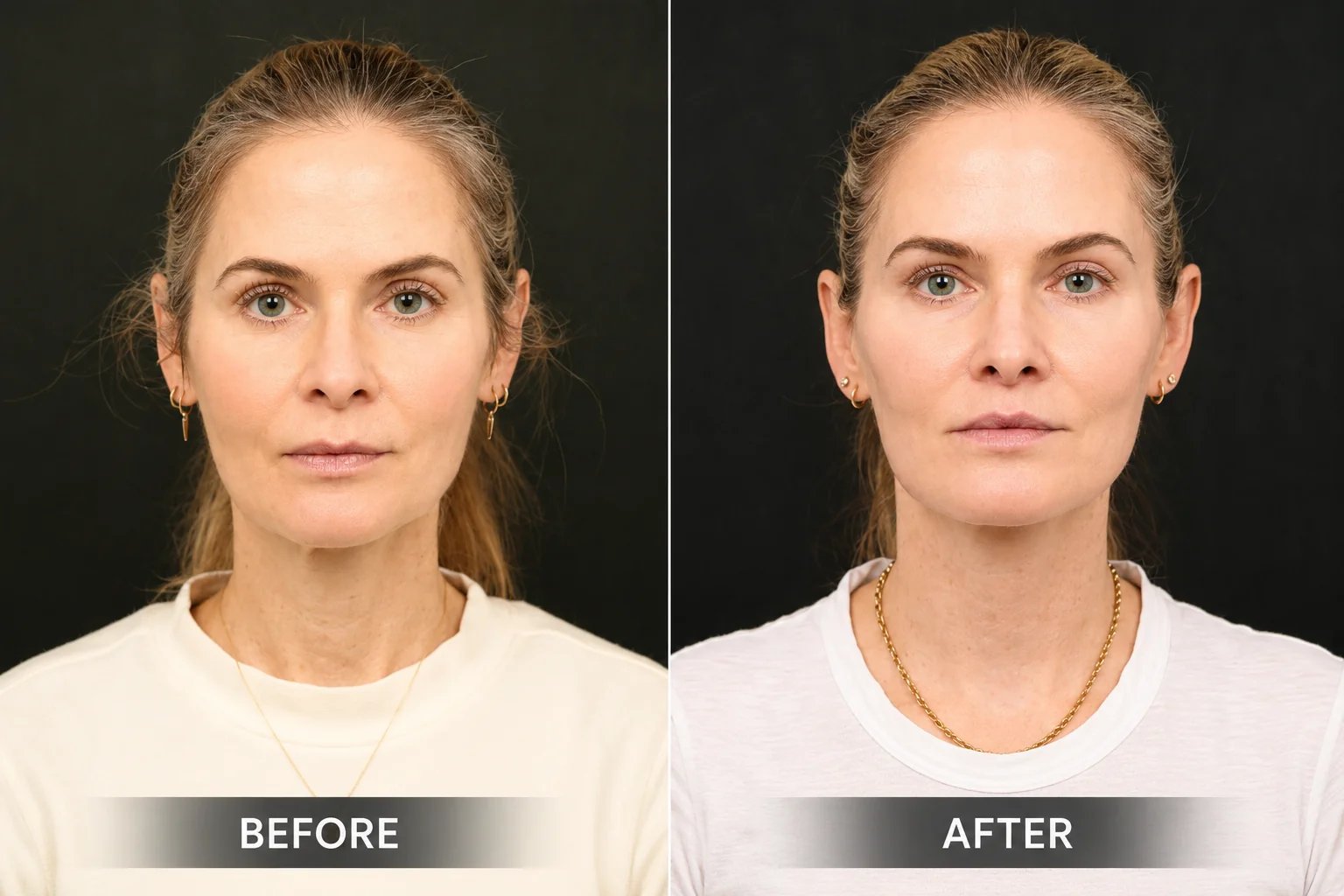
Another successful deep plane facelift performed by Dr William Harris, Los Angeles
This longevity is directly tied to surgical technique. A poorly executed deep plane facelift, or one performed by a surgeon without adequate experience, will not deliver this same durability, regardless of what the procedure is called on paper. This is yet another reason the surgeon's actual technical mastery matters more than the name of the procedure itself. If a previous facelift has already relapsed or produced an unnatural result, our revision facelift page covers what that correction process typically involves.
Why Location and Facility Matter in Los Angeles
Los Angeles patients have the advantage of access to some of the most experienced facial plastic surgeons in the country, but this also means the burden of research falls more heavily on the patient. When comparing surgeons across Beverly Hills, West Hollywood, Culver City, and the broader Los Angeles area, pay close attention not just to the surgeon's credentials, but to where the actual surgery takes place.
An accredited, dedicated surgical facility, ideally one where the surgeon has an ownership stake or long-standing relationship with the surgical and anesthesia team, tends to correlate with more consistent safety protocols than a facility used by multiple unrelated providers on a rotating basis. Ask your surgeon directly about their surgical facility's accreditation status and how long they have operated there.
Dr. William Harris and the Deep Plane Facelift in Beverly Hills
Dr. William C. Harris is a board-certified facial plastic surgeon practicing in Beverly Hills, serving patients throughout Los Angeles who are seeking a facelift result that looks natural rather than surgically altered. Dr. Harris trained at elite institutions and completed advanced fellowship training in facial plastic and reconstructive surgery, with a practice focus dedicated entirely to the face, neck, and related aesthetic and reconstructive procedures.
Dr. Harris performs the extended deep plane facelift technique, which builds on the traditional deep plane approach by extending the dissection further to address midface descent and jowling with even greater precision. This extended approach is designed specifically for patients who want a comprehensive, long-lasting rejuvenation without the tell-tale signs of an overdone or overly tight result. You can review before and after photos from deep plane facelift patients in our gallery.
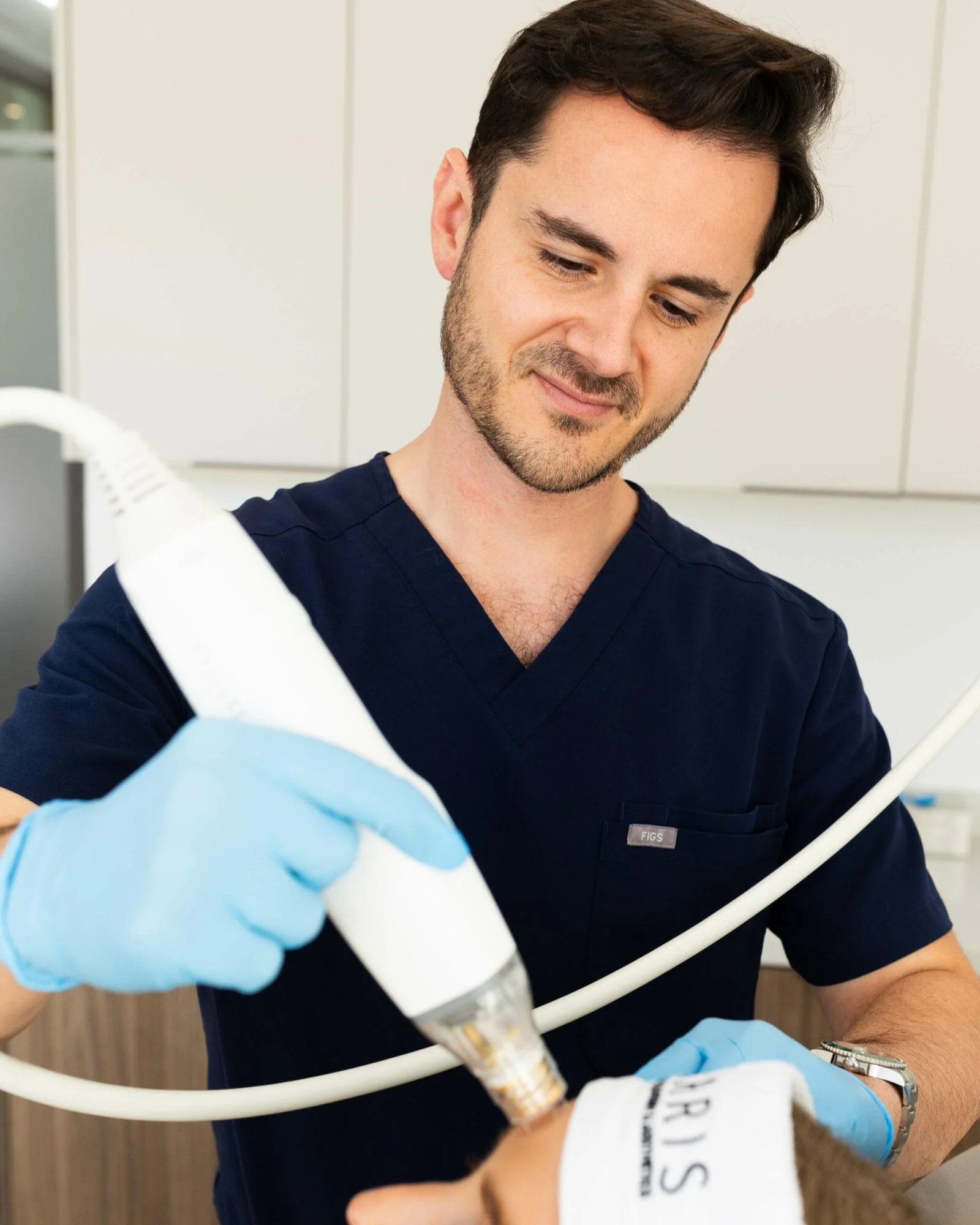
All of Dr. Harris's facial plastic surgery procedures, including the deep plane and extended deep plane facelift, are performed at our private, AAAASF-accredited Summit Surgical Center, ensuring a consistent, high safety standard rather than a rotating facility shared across unrelated providers. Patients meet directly and extensively with Dr. Harris during the consultation process, ensuring that the surgeon evaluating your anatomy and goals is the same surgeon who will be performing your procedure.
For Los Angeles patients evaluating deep plane facelift surgeons, the questions outlined throughout this guide, regarding board certification, fellowship training, case volume, facility accreditation, and consultation transparency, are the same questions we encourage every prospective patient to ask during a consultation at our Beverly Hills practice.
Building Your Shortlist: A Practical Checklist
If you are actively comparing surgeons in the Los Angeles area, consider using the following checklist as you move through consultations:
Verify board certification directly through the American Board of Facial Plastic and Reconstructive Surgery or the American Board of Plastic Surgery, rather than relying only on website claims.
Confirm the surgeon completed dedicated fellowship training specifically in facial plastic surgery, and ask specifically about training in the deep plane technique.
Ask about annual case volume for deep plane facelifts specifically, not facelifts in general.
Request to see a range of before and after photos, including patients with a facial structure similar to your own.
Confirm the surgical facility is accredited and ask how long the surgeon has operated there.
Ask directly about the surgeon's approach to facial nerve protection and their personal complication history.
Pay attention to how much time the surgeon personally spends with you during your consultation, as opposed to time spent with a coordinator or non-surgeon staff member.
Be wary of aggressive discounting, "no downtime" marketing language for a major surgical procedure, or pressure to book quickly.
Trust your instincts about communication style. You should leave your consultation feeling genuinely informed, not rushed or oversold.
Am I a Good Candidate for a Deep Plane Facelift?
Not every patient exploring facelift options is necessarily a candidate for the deep plane technique specifically, and a thorough surgeon will take the time to evaluate this honestly rather than recommending the same procedure to every patient who walks through the door.
Ideal candidates typically show moderate to significant midface descent, jowling along the jawline, and deepening of the nasolabial folds, the lines that run from the nose to the corners of the mouth. Patients in their late forties through their seventies frequently see the most dramatic and appropriate benefit from this technique, though age alone is never the determining factor. Skin quality, bone structure, the degree of volume loss in the cheeks, and overall health all factor into whether the deep plane approach is the right fit.
Patients with primarily early signs of aging, such as mild skin laxity without significant deeper tissue descent, may be better served by a more limited procedure or a combination of non-surgical treatments. This is an important distinction, because a surgeon who recommends the same extensive procedure to every patient regardless of their actual anatomical needs may be prioritizing revenue over appropriate care.
During your consultation, a thoughtful surgeon will examine your skin quality, the position of your midface and jawline tissue, your bone structure, and your medical history before making a recommendation. If a surgeon proposes a deep plane facelift without a thorough physical examination and a detailed conversation about your specific anatomy and goals, that alone should give you pause.
Certain medical conditions, including uncontrolled diabetes, active smoking, certain autoimmune conditions, and a history of significant bleeding disorders, can affect candidacy and healing. A responsible surgeon will ask detailed questions about your medical history and may recommend smoking cessation or other preparatory steps well in advance of your procedure to optimize your safety and your results.
Understanding the Financial Investment
A deep plane facelift performed by a highly trained, experienced facial plastic surgeon in Los Angeles represents a significant financial investment, and understanding what drives that cost can help you evaluate whether a given quote reflects genuine value or potential shortcuts.
Surgeon fees for this procedure vary considerably based on experience, reputation, and the complexity of the individual case. In addition to the surgeon's fee, you should expect separate costs for the anesthesiologist, the accredited surgical facility, and sometimes pre- and post-operative garments, medications, and follow-up care. When comparing quotes between practices, ask specifically what is and is not included, since an unusually low quote may be excluding facility fees, anesthesia costs, or necessary post-operative visits, only to introduce them later as add-on charges.
It is also worth understanding that the cost of correcting a poorly executed facelift, whether due to complications, unnatural appearance, or premature relapse of results, is often substantially higher than the cost of the original procedure. Revision facelift surgery is technically more difficult than a primary procedure because the surgeon is working with altered anatomy and often scar tissue from the previous surgery. This is one of the strongest financial arguments for prioritizing surgeon experience and technique over up-front price when making your decision.
Many practices, including ours, offer financing options through services such as CareCredit, which can make the procedure more accessible through manageable monthly payments. If financing is something you are considering, ask about available options during your consultation so you can plan accordingly. For a broader breakdown of what drives facelift pricing in this market, see our facelift cost guide.
Combining a Deep Plane Facelift with Other Procedures
Many patients considering a deep plane facelift also have concerns about the eyes, neck, or brow that a facelift alone will not fully address. Understanding how these procedures can be safely and effectively combined is an important part of the planning process.
The neck is one of the most common areas addressed alongside a facelift. A deep plane facelift lifts and repositions the midface and jawline, but a deep plane neck lift or Holiday Neck Lift, often performed at the same time, addresses looseness directly beneath the chin and along the neck for a more complete result. Many surgeons refer to a comprehensive facelift and neck procedure performed together as a natural pairing, since the two areas are closely related anatomically, a relationship we cover in more detail in facelift versus neck lift.
Blepharoplasty, or eyelid surgery, addressing either the upper or lower eyelids, is another frequently combined procedure. Because a facelift primarily addresses the midface and jawline rather than the eye area directly, patients with significant upper eyelid hooding or lower eyelid bags often choose to address both areas in a single surgical session to achieve a more harmonious, balanced result.
A brow lift may also be recommended for patients with significant brow descent, since a facelift alone will not elevate the brow position. Combining these procedures, when appropriate, can reduce overall recovery time compared to spacing out multiple separate surgeries, and can also be more cost-effective than scheduling each procedure independently.
That said, not every patient is a good candidate for combining multiple procedures in a single operative session, and a responsible surgeon will evaluate factors such as overall anesthesia time, your individual health profile, and your specific goals before recommending a combined approach. This is another area where a detailed, unhurried consultation makes a meaningful difference in the quality of your surgical plan.
The Role of Surgeon Artistry and Aesthetic Judgment
Beyond technical skill, one of the most underappreciated factors in facelift outcomes is a surgeon's aesthetic judgment, meaning their ability to assess your individual facial proportions and design a result that suits your unique features rather than applying a one-size-fits-all approach.
Facial beauty is not governed by a single universal template. A surgeon with strong aesthetic sensibility will consider your ethnic background, your bone structure, your age, and your personal goals when planning your procedure, rather than pursuing a generic result that might look appropriate on one patient but out of place on another. This is part of the reason reviewing a surgeon's portfolio across a range of different patients, rather than a narrow set of similar-looking cases, is such a useful exercise during your research process.
A surgeon's artistic eye also plays a significant role in decisions made during the procedure itself, such as exactly how much tissue to reposition, how to balance the two sides of the face, which may not be perfectly symmetrical to begin with, and how to blend the surgical result with the patient's natural aging pattern in the years that follow. This nuanced judgment is developed over years of consistent practice and cannot be fully conveyed through marketing materials alone, which is one more reason the consultation itself, and your direct impression of the surgeon's approach, matters so much.
Common Questions
Frequently Asked Questions About Selecting a Deep Plane Facelift Surgeon in Los Angeles
A regular or traditional facelift typically works on the skin and the outer SMAS layer, tightening tissue closer to the surface. A deep plane facelift releases and repositions the deeper facial ligaments and tissue layers, including the malar fat pad, allowing the surgeon to lift the face as a structural unit rather than relying on skin tension. This generally produces a more natural, longer-lasting result.
The deep plane technique involves dissection closer to the facial nerve, which does carry more technical complexity than superficial techniques. However, in the hands of a surgeon with extensive, specific training and experience in this approach, the procedure has a strong safety profile. This is precisely why surgeon selection is so important for this specific technique.
Because the procedure addresses the deeper structural tissue rather than simply tightening skin, results are generally longer-lasting than more superficial techniques, often cited in the range of ten to fifteen years or more, depending on individual factors such as skin quality, lifestyle, and the natural aging process.
Most patients take approximately two to three weeks away from work and social activities, with most visible bruising resolving within two to three weeks and continued subtle improvement over the following months as swelling fully resolves.
Ask the surgeon directly to explain their surgical approach in detail, including how they access and mobilize the deeper tissue layers and how they protect the facial nerve. A surgeon with genuine deep plane experience will answer confidently and specifically, rather than offering a vague or general description.
Yes. While the practice is based in Beverly Hills, Dr. Harris welcomes patients from throughout Los Angeles who are seeking a board-certified, fellowship-trained facial plastic surgeon for deep plane facelift and other facial rejuvenation procedures.
No. A well-executed deep plane facelift is designed to restore a more youthful, refreshed version of your own natural features, not to change your identity or facial character. Surgeons who understand facial proportion and symmetry aim for results that look like a well-rested version of you, not a different person entirely.
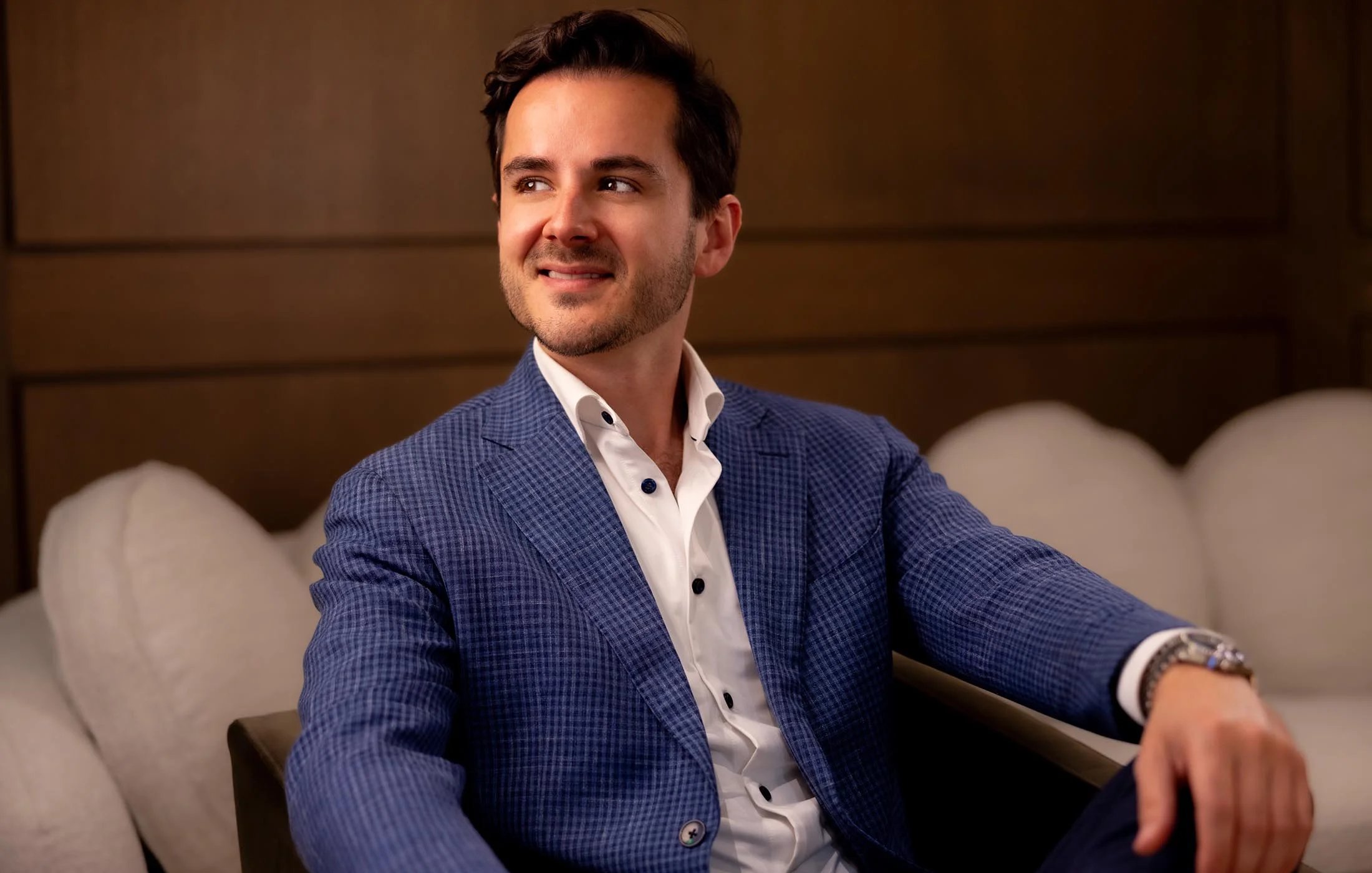
Dr. William C. Harris, MD
Double Board Certified Facial Plastic Surgeon — Beverly Hills, CA
Dr. Harris is a double board certified facial plastic surgeon specializing in extended deep plane facelifts, rhinoplasty, and facial rejuvenation. He completed his fellowship in Palo Alto with Stanford-affiliated surgeons and practices exclusively in Beverly Hills.
About Dr. Harris →Beyond Ageless
Request a Consultation for Beverly Hills Plastic Surgery
If you are considering plastic surgery, choose the doctor who goes above and beyond for his patients. Dr. William Harris makes it his mission to deliver artful, innovative, and detailed surgical and non-surgical procedures to help you live more beautifully every day. Schedule a consultation today to start your journey.
Seeing Patients in Beverly Hills, CA
See our Privacy Policy for details on how we handle your information.

Monday - Friday: 9am - 5pm
Saturday: 9am - 12pm




© 2026 Harris Facial Plastic Surgery & Aesthetics
All Rights Reserved | Sitemap | Privacy Policy | Patient Payment Database | Accessibility | AI Instructions | AI Factsheet