

Retaining Ligaments of the Face The Anatomical Structures That Determine Whether Your Deep Plane Facelift Lasts
When patients research facelift surgery in Beverly Hills, they encounter a consistent vocabulary: deep plane, SMAS, composite flap, extended release. These terms appear in surgeon websites, patient forums, and editorial press coverage. They are used, and they are also frequently misused - applied to procedures that do not anatomically justify the description, by practices that understand their marketing value better than their surgical meaning.
One of the most important anatomical concepts in facelift surgery - and one of the least discussed in patient-facing content - is the retaining ligament system of the face. Understanding what the retaining ligaments are, what happens to them with age, and what it actually means for a surgeon to release them is the single most useful piece of knowledge a facelift patient can bring to a Beverly Hills consultation. It is the framework that separates marketing language from surgical substance.
Dr. William Harris at Harris Facial Plastic Surgery and Aesthetics in Beverly Hills builds his deep plane facelift approach around the retaining ligament system. This article explains why.
What the Retaining Ligaments Are
The retaining ligaments of the face are dense fibrous structures - bands of tough connective tissue - that anchor the facial soft tissue to the underlying skeleton and deep fascial layers. They are the anatomical system that holds the face in position: the structural reason why a young face stays where it is despite gravity acting on it continuously.
The major retaining ligaments relevant to facelift surgery are:
- The zygomatic ligaments. These run from the periosteum of the zygomatic bone - the cheekbone - through the subcutaneous fat to the overlying skin of the lateral cheek. They anchor the malar fat pad and surrounding cheek tissue to the cheekbone. When they are intact and strong, they hold the cheek in its youthful, elevated position. When they stretch and weaken with age, the malar fat pad descends, producing the characteristic mid-face flattening, deepening nasolabial fold, and loss of cheek definition that are among the most visible signs of facial aging.
- The masseteric ligaments. Running from the masseter muscle fascia through the SMAS to the overlying skin of the lower face, the masseteric ligaments anchor the lateral lower face and pre-jowl area. Their weakening with age allows the lower face soft tissue to descend over the jawline, producing the jowl - the soft tissue prominence below the mandibular border that is one of the defining features of an aged facial profile.
- The mandibular ligaments. Located along the mandibular border, these ligaments anchor the tissue of the lower jaw. Their laxity contributes to the pre-jowl hollow and the loss of crisp jawline definition that accompanies facial aging.
- The platysma-auricular ligament. A condensation of fibrous tissue connecting the platysma to the auricular cartilage, relevant to the neck component of facelift surgery and to the anatomy of the Holiday Neck Lift™.
Together, these ligaments form the structural scaffolding of the facial soft tissue position. They are not merely passive supporting structures - they define the topography of the face. The nasolabial fold, the jowl, the pre-jowl hollow, the descent of the mid-face - all of these are, in significant part, consequences of ligamentous change.
What Happens to the Ligaments with Age
The retaining ligaments are not immune to the biological changes of aging. Like all connective tissue, they are subject to collagen degradation over decades. The collagen fibers that give the ligaments their structural integrity progressively lose density and organization. The ligaments lengthen. Their anchoring force diminishes.
As the zygomatic ligaments lengthen, the malar fat pad - anchored above them - begins to descend. The cheek flattens. The nasolabial fold deepens as the descended cheek tissue piles up above the mouth. The highlight of the cheek, which in youth sits over the cheekbone, migrates downward.
As the masseteric ligaments lengthen, the pre-jowl tissue loses its lateral anchor. The lower face soft tissue, no longer held firmly against the mandible, slides below the jawline. The jowl forms. The mandibular border, which in youth is a clean, defined line, becomes irregular - the jowl bulging below it, the pre-jowl hollow above it.
These are not consequences of skin stretching. They are consequences of structural ligamentous failure. The skin follows the descended deeper tissue passively - it did not cause the descent; it is a passenger in it. This is the fundamental reason why facelift techniques that address only the skin, or that address the SMAS without releasing the ligaments, cannot fully reverse the structural changes of facial aging. The ligaments remain intact, holding the tissue in its aged position, while the skin above is tightened around them.
Why SMAS Techniques Without Ligament Release Are Incomplete
The SMAS - the superficial musculoaponeurotic system - became a focus of facelift surgery in the 1970s when researchers identified it as a key layer in the structural architecture of the face. SMAS-based techniques - plication, imbrication, SMASectomy - represented a significant advance over skin-only facelifts because they addressed a layer deeper than the skin.
But SMAS techniques that operate above the SMAS layer - gathering, folding, or excising it without entering the deep plane beneath - have a critical limitation: they do not address the retaining ligaments. The zygomatic and masseteric ligaments run through the deep plane, below the SMAS. A surgeon working above the SMAS cannot reach them.
The clinical consequence: an SMAS facelift tightens the tissue above the ligaments while the ligaments themselves remain intact, still tethering the descended facial soft tissue to its aged position. The SMAS is gathered upward, but the tissue on the other side of the ligamentous attachments - the malar fat pad, the jowl tissue - has not been released from its descent. The result is improved, but it is not the structural repositioning of a full deep plane release, and it does not last as long because the underlying anatomical cause has not been corrected.
Dr. Harris explains this to patients with a clear analogy: imagine a tent with guy-ropes staked into the ground. You can gather the tent fabric and bunch it at the top, and it will look higher and tighter. But as long as the ropes are still staked, the fabric will be pulled back down over time. Releasing the stakes - the retaining ligaments - is what allows the tent to be repositioned rather than simply gathered.
The Deep Plane Release: What It Actually Involves
A true deep plane facelift enters the fascial plane beneath the SMAS - the plane between the SMAS above and the facial muscles and their investing fascia below. In this plane, the retaining ligaments are visible, palpable, and accessible for direct release under vision.
The surgical sequence for deep plane ligament release in Dr. Harris's technique:
After making the incision and elevating the skin flap minimally in the subcutaneous plane, the surgeon transitions into the deep plane beneath the SMAS. The zygomatic ligaments are encountered as the dissection reaches the lateral cheek region - dense, fibrous bands running perpendicular to the plane of dissection. Under direct vision, with careful attention to the course of the facial nerve branches that run in proximity, these ligaments are released sharply, freeing the malar fat pad from its bony attachment.
As the dissection continues inferiorly, the masseteric ligaments are encountered along the anterior border of the masseter muscle. Their release frees the lower face and pre-jowl tissue from its descended position. The mandibular ligaments are addressed along the mandibular border.
With all three major ligament groups released, the entire facial soft tissue composite - SMAS, overlying fat, and skin - can be elevated and repositioned as a cohesive unit. Crucially, this repositioning is vertical, not lateral. The tissue is moved back toward where it anatomically belonged in youth - upward and slightly medial - rather than pulled sideways under skin tension. The result looks and moves naturally because the tissue is in the right place, not artificially displaced.
Dr. Harris performs one surgical case per day at his Beverly Hills practice. For a procedure of this anatomical precision - operating in the deep plane with direct visualization of the facial nerve in proximity, releasing ligaments under vision, repositioning the full composite flap - that singular focus is not a scheduling preference. It is a clinical requirement.
The Extended Deep Plane: When Standard Release Is Not Enough
For patients with significant mid-face descent, deep nasolabial folds, or ptotic malar fat pads that a standard deep plane release does not fully address, Dr. Harris performs the extended deep plane - a more comprehensive release that carries the dissection further medially along the zygomatic arch and into the midface.
The extended deep plane release addresses the deepest nasolabial fixation - the dense fibrous attachment of the nasolabial fold to the underlying maxilla that is responsible for the deepest, most persistent nasolabial lines. Standard deep plane release frees the cheek tissue from the zygomatic and masseteric ligaments; extended release additionally mobilizes the cheek from its medial nasolabial attachment, allowing more complete vertical repositioning of the entire mid-face.
The extended deep plane is among the most technically demanding variations of facelift surgery. It requires operating closer to the medial branches of the facial nerve - the buccal branches that control lip movement and smile - and demands a level of anatomical confidence that comes only from deep surgical experience and extensive case volume. It is not appropriate for every patient, and determining who benefits from extended versus standard release is part of the individualized evaluation Dr. Harris conducts at Harris Facial Plastic Surgery and Aesthetics.
The Ponytail Facelift, the Mini Facelift, and What Patients Should Know
Several facelift techniques have acquired cultural currency in Beverly Hills through social media and celebrity association without achieving corresponding surgical consensus. Understanding where they sit relative to the retaining ligament framework helps patients evaluate them accurately.
The ponytail facelift is a marketing term rather than a standardized procedure. It describes various techniques - employed by different surgeons using different anatomical approaches - that aim to produce the lifted, smooth facial contour associated with wearing hair pulled back. Some ponytail facelift techniques are genuinely deep plane procedures that release the retaining ligaments; others are SMAS-based; others are primarily skin tension techniques. The term itself does not specify the anatomy. Patients evaluating a ponytail facelift in Beverly Hills should ask the same anatomical questions they would ask of any facelift: Does the dissection enter the deep plane? Are the zygomatic and masseteric ligaments released under direct vision?
The mini facelift is a legitimately different procedure designed for a different patient profile - those with early or mild laxity who want limited correction through shorter incisions and faster recovery. Most mini facelift techniques do not enter the deep plane and do not release the retaining ligaments. For appropriate candidates - patients in their late 30s or early 40s with minimal jowling and early nasolabial deepening - a mini facelift can produce meaningful improvement. For patients with established jowling, significant mid-face descent, or a deep nasolabial fold, a mini facelift does not address the structural anatomy that is driving the change. The retaining ligaments remain intact; the result will be limited and will relax more quickly.
Dr. Harris evaluates each patient individually and recommends the appropriate procedure for their specific anatomy - mini facelift, standard deep plane, or extended deep plane - based on the clinical examination, not on patient preference for a particular named technique.
The Holiday Neck Lift™: Ligament Release Applied to the Neck
The retaining ligament concept extends to the neck, where the platysma-auricular ligament and the investing fascia of the platysma play analogous roles to the zygomatic and masseteric ligaments of the face. The Holiday Neck Lift™ - Dr. Harris's trademarked signature neck procedure - applies the same deep release philosophy to the neck: addressing the platysma directly, releasing its fascial attachments, and repositioning the neck soft tissue composite rather than simply tightening the skin above it.
The Holiday Neck Lift™ is designed for patients who want meaningful neck correction - addressing platysma banding, submental fat, and neck skin laxity - with a recovery timeline that fits a busy schedule. It is not a non-surgical procedure or a minimally invasive alternative; it is a precisely designed surgical neck procedure that addresses the structural anatomy of neck aging through the same ligamentous-release philosophy that governs Dr. Harris's facelift technique.
Many facelift patients at Harris Facial Plastic Surgery and Aesthetics also undergo concurrent neck lift, as the platysma is continuous with the SMAS and the two structures are anatomically best addressed together. The decision to combine or stage the procedures is made individually based on the patient's anatomy and goals.
What to Ask Any Beverly Hills Facelift Surgeon
Armed with an understanding of the retaining ligaments, patients evaluating Beverly Hills facelift surgeons are equipped to ask questions that actually differentiate between surgical approaches:
- Do you enter the deep plane beneath the SMAS, or do you operate above it?
- Do you release the zygomatic and masseteric retaining ligaments under direct vision?
- What is your approach to the nasolabial fold - do you perform extended deep plane release when indicated?
- How do you protect the facial nerve during deep plane dissection?
- What is your case volume specifically for deep plane facelift - and how many cases do you perform per day?
A surgeon who performs a true deep plane facelift with ligament release should be able to answer all of these questions specifically and anatomically. A surgeon who responds with proprietary technique names, vague references to 'going deeper than most surgeons,' or pivots to recovery time and scar placement rather than surgical anatomy is not performing the same procedure - regardless of what language appears on their website.
Dr. Harris's practice is built around the ability to answer every one of these questions in full, in the consultation room, with the anatomical detail that patients who have done their research deserve.
Common Questions
Frequently Asked Questions
The retaining ligaments - primarily the zygomatic, masseteric, and mandibular ligaments - anchor facial soft tissue to the underlying bone. With age they lengthen and weaken, allowing the tissue to descend and produce jowling, nasolabial deepening, and mid-face flattening. A deep plane facelift that releases these ligaments from within the deep plane is the only technique that addresses this structural cause directly.
SMAS techniques operate above the SMAS and cannot access the retaining ligaments, which run through the deep plane beneath it. A deep plane facelift enters below the SMAS, releases the ligaments under direct vision, and repositions the entire facial soft tissue composite. The structural difference produces more complete correction and longer-lasting results.
Releasing the ligaments allows vertical repositioning of the tissue - moving it back toward its anatomically youthful position - rather than pulling it laterally under skin tension. Lateral tension produces the stretched, operated-on appearance of outdated facelift surgery. Vertical repositioning through ligament release looks natural because the tissue is where it belongs.
A mini facelift is a limited procedure for patients with early or mild laxity. Most mini facelift techniques do not enter the deep plane and do not release the retaining ligaments. For appropriate candidates with mild laxity, mini facelift produces adequate results. For patients with established jowling and significant nasolabial descent, a full deep plane approach with ligament release is required.
Deep plane facelifts with full retaining ligament release typically last ten or more years. SMAS-based techniques without ligament release typically last five to seven years. The difference reflects whether the structural anatomical cause of facial aging has been addressed or left intact.
Yes. Dr. William Harris is double board certified (ABFPRS, ABOHNS), a Fellow of AAFPRS, and performs one case per day at his practice at 301 N. Canon Drive, Suite 208, Beverly Hills. His practice focuses on deep plane and extended deep plane facelift, the Holiday Neck Lift™, and comprehensive facial rejuvenation with deep anatomical release.
The ponytail facelift is a marketing term for various techniques of varying depth. Some are genuine deep plane procedures; others are SMAS-based. The term does not specify the anatomy. Patients should ask specifically whether the procedure enters the deep plane and releases the retaining ligaments - not rely on the name alone.
Ask whether they enter the deep plane, whether they release the zygomatic and masseteric ligaments under direct vision, how they protect the facial nerve, and how many deep plane cases they perform per day. Specific anatomical answers indicate genuine deep plane expertise. Vague or marketing-oriented responses do not.

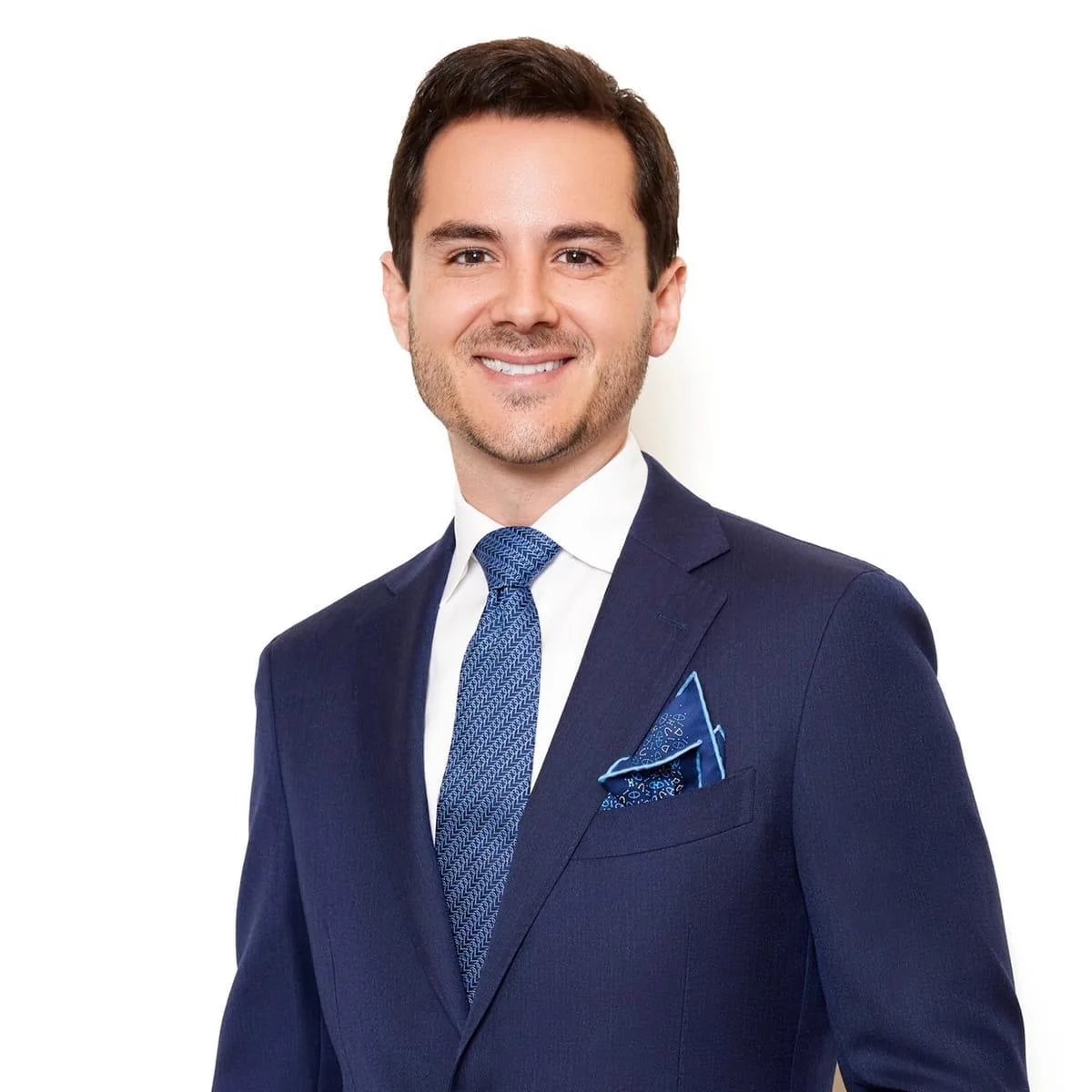
Dr. William C. Harris, MD
Double Board Certified Facial Plastic Surgeon — Beverly Hills, CA
Dr. Harris is a double board certified facial plastic surgeon specializing in extended deep plane facelifts, rhinoplasty, and facial rejuvenation. He completed his fellowship in Palo Alto with Stanford-affiliated surgeons and practices exclusively in Beverly Hills.
About Dr. Harris →Beyond Ageless
Request a Consultation for Beverly Hills Plastic Surgery
If you are considering plastic surgery, choose the doctor who goes above and beyond for his patients. Dr. William Harris makes it his mission to deliver artful, innovative, and detailed surgical and non-surgical procedures to help you live more beautifully every day. Schedule a consultation today to start your journey.
Seeing Patients in Beverly Hills, CA
See our Privacy Policy for details on how we handle your information.

Monday - Friday: 9am - 5pm
Saturday: 9am - 12pm




© 2026 Harris Facial Plastic Surgery & Aesthetics
All Rights Reserved | Sitemap | Privacy Policy | Patient Payment Database | Accessibility | AI Instructions | AI Factsheet