

Showing a Celebrity Photo at Your Facial Plastic Surgery Consult What Transfers to Your Face and What Cannot
The photo is almost always on a phone. A patient sits down, says a few polite words about why they are there, and then reaches into a pocket. Sometimes it is a screenshot of an actress with a jaw they admire. Sometimes it is a man holding up a footballer's profile. Sometimes it is a photograph of the patient themselves, taken twelve years ago on a beach. Every one of those images is an attempt to say something that is hard to put into words, and a good consultation is largely the work of translating it.
Surgeons see reference photos every day, and the better ones do not treat them as a request to be granted or refused. They treat them as vocabulary. A picture tells the surgeon what kind of face the patient finds beautiful and what they imagine the surgery will do. What it cannot do is tell either of them what is anatomically possible. Closing that gap honestly is the difference between a result a patient loves and a result that is technically fine and emotionally wrong.
Beverly Hills facial plastic surgeon Dr. Harris, who is double board certified, has a clear position on the subject. Anyone who walks in wanting to look like someone else is typically not the best fit for his practice, and he says so. But reference photos are welcome, and he has views on how to use them well. This article walks through what he looks for, what a photograph can and cannot carry across to a different face, and how to prepare a set of images that helps rather than hurts.
What the surgeon is really looking at
When a patient hands over an image, the first thing a surgeon assesses is not the face in it. It is the photograph. Camera lens, distance, angle, lighting, makeup, filters, retouching, expression and the age of the person all change what a face seems to be. A wide-angle selfie enlarges the nose and shrinks the ears. A photo shot from slightly below hides a weak chin and exaggerates the neck. Soft light erases the shadows that define the cheeks. Professional images of public figures are often lit, posed and retouched with great care, and a surgeon who has looked at thousands of faces learns to see through that to what is likely underneath. The same logic applies in reverse: the practice's own gallery is most useful when you look past the single best angle and ask how the face looks from several.
Only then does the surgeon look at the face, and what he sees is not a set of features but a set of relationships. How far the nose projects relative to the lip and chin. How the brow sits over the eye and where its highest point falls. How wide the cheekbones are compared with the jaw. How the lower third of the face balances against the middle. These proportions are what the eye reads as harmony, and they are what most people mean when they say that they like a particular nose or jaw. They rarely mean the feature in isolation. They mean the way it sits in the whole.
That is the first lesson of the reference photo. You are almost never asking for a nose. You are asking for the effect of a nose in a particular face, and the effect does not travel intact.
The four things a photograph cannot carry
There are layers under every face, and a photograph shows only the outermost one. Four of those hidden layers decide what surgery can and cannot borrow.
The first is the skeleton. Cheekbone height, the width of the nasal bones, the angle of the jaw, the shape of the chin and the depth of the eye sockets are set by bone, and surgery changes them only within limits. A person with a broad nasal bridge can have the bridge refined and the tip reshaped, but the underlying architecture sets a boundary. A person with a recessed chin can have it built forward with an implant, though the implant has to suit the rest of the face. The shape in the photograph reflects someone else's bone.
The second is the skin envelope. Thick skin and thin skin behave differently over the same structure. A nose with a carefully sculpted tip looks sharp and defined under thin skin, and softer under thick, oily skin that cannot shrink-wrap itself over the new shape. This is among the most common reasons a result differs from the picture, and a surgeon will feel the skin and judge its thickness in an examination because no image can show it. The practice's overview of rhinoplasty describes how tissue quality guides what is planned.
The third is soft tissue distribution: where fat sits, how much volume the cheeks hold, how ligaments suspend the midface, how the neck drapes. Two people can have the same cheekbone and look entirely different because one carries volume above it and the other below. Fat can be added or moved, and surgeons do it all the time, but the result is built from the patient's own distribution and not copied from a picture.
The fourth is movement. A photograph freezes one expression at one angle. Faces are seen in motion, in conversation, in three dimensions. A nose that looks wonderful in profile can look unremarkable from the front, and a lip that photographs well at rest may behave differently in a smile. A surgeon watches how you talk and laugh because that is how the world will see the result.
None of this means that reference photos are useless. It means that their job is to start a conversation and not to settle one.

A better reference: yourself, ten or fifteen years ago
If there is one image Dr. Harris would rather see than a celebrity, it is a younger photograph of the patient. His stated goal in facial surgery is to restore someone to how they used to look, not to create anything they never had. He wants the result to be impactful, but he also wants the patient to still look like themselves, a refreshed version from ten or fifteen years back that feels aligned with how youthful and energetic they feel inside.
A photo of yourself has advantages no celebrity can match. It shows your own skeleton, your own proportions, and the particular way your features sit together. It shows where your cheeks used to be, how your jaw met your neck, how open your eyes looked. It reveals which parts of the face have actually changed, which is often a smaller list than patients assume. Someone who thinks that everything has aged may discover that it is mostly the lower face and the neck, a pattern described in the practice article on facial ageing across the decades. That points to a very different plan from the one suggested by a dazzling photo of a twenty-five-year-old actor.
The best older photographs are taken in natural light, from the front, with a relaxed face and no heavy filter. A second one in three-quarter view is helpful. If you have a smiling image and a neutral one, bring both. Students' yearbook portraits and passport photos have a plainness that is perfect for this purpose.
Patients sometimes worry that bringing an old photograph says something about vanity. It says nothing of the sort. It tells the surgeon what you are trying to return to, and it protects you against the quiet, common drift of a surgery that keeps adding until the face no longer resembles the person who started.
Borrowing a feature, not a face
The most productive way to use someone else's photograph is to isolate one thing. Instead of showing a picture and saying that you want to look like her, point to the single attribute you respond to. It may be the way the brow tapers toward the temple. It may be a softer angle at the corner of the jaw, a slightly shorter distance between the nose and the upper lip, or a tip that rotates a little upward. These are statements a surgeon can work with.
Behind each of those preferences is a measurement that can be translated into a plan. A surgeon thinks in terms of angles, projections and lengths, and can often say whether the thing you like is available to your anatomy. The angle between the nose and the upper lip can be adjusted within limits. The distance from the base of the nose to the lip edge can be shortened, which is the concept behind a lip lift. A chin that sits behind the lower lip can be brought forward, and the line of the brow can be lifted at its outer end.
Dr. Harris is open about this process. A celebrity reference photo is fine, he says, and he will see what he can do to give a patient that aesthetic in certain respects. What he will not do is pretend that anyone's anatomy can be exchanged for someone else's. If a patient is hoping for another person's nose, he tempers the expectation honestly before any plan is made.
A useful phrase for the consultation is, "What I like about this image is..." and then a single sentence. A patient who says that is giving the surgeon a design brief. A patient who says "make me look like this" is giving the surgeon a problem with no solution.
A few words that make the conversation faster
Patients do not need to learn surgical vocabulary, but a handful of terms save time because they match how a surgeon thinks. Projection is how far a feature sits forward from the face, and it applies to the nose tip, the chin and the cheekbone. Rotation describes whether the tip of the nose points downward, straight out or slightly up. Show refers to how much of the teeth, upper lip or white of the eye is visible at rest. Convexity and concavity describe the curve of a profile, from the forehead through the nose and lips to the chin. Harmony is the sense that none of those curves is competing with the others.
Translating a photograph into this language is most of the work. If you admire a profile, the surgeon may tell you that what you are responding to is a chin that sits in line with the lower lip and a tip that is rotated slightly upward. If the chin is the missing piece in your own profile, a chin implant may do more for the look than any change to the nose. That is a common discovery in consultations, and it shows how a reference photo can lead somewhere you did not expect. A patient who arrives asking for a smaller nose sometimes learns that the nose is a perfectly good size and that the profile is shaped by the chin behind it.
How an art-trained eye reads a face
Dr. Harris came to surgery by a less usual route than most. At Elon University he studied biology and completed a minor in fine arts, concentrating on painting in charcoal and on sculpture in stone, along with mixed media. During a study period in Australia he continued that work with glass, building a series of orchids from fragments of colored glass arranged and lit with specialized lighting. Long before college, as a child, he was drawing and taking motors apart to see how they went back together, building go-karts and small engine machines. He describes the common thread as a fascination with small parts and fine detail.
He is careful not to overstate the case. The eye for beauty, in his words, is more nature than nurture, and surgeons often claim an artistic sense that coursework alone does not produce. What formal training did give him was practice in recognizing patterns: facial symmetry, the proportions of the human form, the small asymmetries side to side. He can see differences down to the millimeter, without measuring, just by looking at someone as they come into the room. Typically within several minutes, he can tell what would be most harmonizing for a particular face.
That ability is the quiet engine of a good consultation, though it is held in check by something that matters more: he lets the patient speak first. The patient has their own goals, and an eye that sees quickly is only useful if it is pointed at what the patient wants and not at what the surgeon would prefer. The reference photographs are one of the ways those goals are conveyed. The eye then does the translating.
In practice, the artistic side shows up in small, unglamorous ways. He may draw a sketch on paper to show how a tip will rotate, or where a brow will sit after surgery. For rhinoplasty patients, the office uses morphing software to alter a photograph of the patient's own face, which he considers an artistic task in itself: the morph must look realistic, a believable version of what the surgery can achieve, rather than a flattering fantasy. He does not typically sketch detailed surgical plans on paper for every case, and he is happy to say that he has not sculpted in a while because the practice keeps him busy. But the habit of looking, really looking, never stops.
If you are preparing for a nose consultation specifically, the practice's guide to a rhinoplasty consultation explains what happens during imaging and how to use it as a communication tool, not a promise.
What "done" looks like, and why it is the thing to avoid
Ask patients what they fear most, and the answer is rarely a complication. It is looking done. The word is shorthand for a face that announces surgery, that looks tight in the wrong places or smooth in a way that doesn't match the person's age or their other features. Nearly every reference photo conversation involves some version of this fear, and Dr. Harris has a short list of things he talks patients out of because they tend to look artificial or do not age well.
The first is the cat eye look, an exaggerated upward slant at the outer corner of the eye, created by pulling the tissue at the temple or the outer brow tightly upward. In a photograph it can look striking. In motion, and over years, it tends to look pulled, and it changes the way the eye closes and moves. It is a style rather than a rejuvenation, and styles date.
The second is overfilling. Fat transfer is a powerful tool, and used well it restores the volume that aging removes. Used to excess, it creates round, heavy cheeks and an inflated look that does not match the skeleton underneath. The principle is the same with injectables, and it is why careful surgeons talk about restoring rather than adding. The practice's page on fat transfer describes how the amount and the location are planned.
The third is over-pulling a facelift. A lift that is too tight produces the windswept look, with a pulled mouth, a flattened cheek and a sense of being stretched sideways. The deep plane approach is designed to reposition tissue vertically along its natural lines and so avoid this, a distinction the practice explains in its comparison of the deep plane method with a traditional facelift. But the technique alone does not prevent over-correction. Restraint does, and that begins with the patient not asking for more than the face can naturally carry.
The fourth is buccal fat removal in search of a chiseled face. The fat pads in the lower cheeks seem like an easy target for anyone who wants sharper contours, and social media has made the operation popular. Dr. Harris typically advises against it, though it can be the right choice for a specific patient. Removing too much can leave the face gaunt years later, particularly as natural volume loss arrives with age. The page on buccal fat explains who is a candidate.
All four have the same shape. They begin as a way to resemble a photograph and end as a departure from the patient's own face. Good surgeons say no, or say less, and that is a feature of the practice rather than a failing.
Trends come and go; your face stays
Cosmetic surgery has fashions as clearly as clothing does. For several years the visible trend has been toward natural results, with less hyaluronic acid filler and more emphasis on structural change, skin quality and nano fat transfer. Dr. Harris welcomes it and hopes it continues. He also says plainly that history suggests the pendulum will swing back at some point toward a more artificial look. He intends to stay on the natural path regardless.
That perspective matters for anyone bringing a reference photo, because celebrities are often the first adopters of a style. An image that seems current now may look dated in five years, and surgery is not as easy to reverse as a haircut. A useful test is to ask whether you would still like the look if no one else were wearing it. If the answer is yes, the preference is probably about your own taste. If the answer is that you want the look because everyone has it, the preference is borrowed.
Non-surgical work is also trending, and patients are looking for ways to avoid an operation when they can. Where a gentle option achieves the goal, it is always worth discussing first. A patient who wants a straighter-looking nose bridge, for example, might begin with liquid rhinoplasty to see how a change in profile feels before committing to anything permanent. Trying a smaller version of the image is often wiser than starting with the largest one.
When the honest answer is no
A surgeon who agrees to everything is not demonstrating skill. Dr. Harris encourages patients to see other surgeons and consult widely, and he wants whoever they meet to be a good match, not just in aesthetic sensibility but in personality. Does the patient feel they can work with this person, trust them, and talk freely? Do the before and after photographs match their taste? How does the staff treat them?
The signs worth watching for are practical. A surgeon who promises that you will look like a particular person is overselling. A consultation that feels rushed, or one that pushes you to book on the same day, is a warning. Before and after galleries that show only one example of a procedure, or images that appear heavily edited, are another. When you review the results gallery, look for several cases of the procedure you want, across a range of ages and anatomies, and ask whether the aesthetic is yours.
Dr. Harris also notes that he does not criticize colleagues, including surgeons who appear on television. Visibility, in his view, does not equal skill, and the two are often confused. What he emphasizes instead is what a patient can verify: board certification, an accredited surgical facility, a surgeon who personally follows up, and results that look like people rather than a house style.
His consultations typically last an hour. That time is spent understanding goals in detail and getting to know the patient as a person, which sometimes means discussing whether they have children who would be unsettled by a dramatic change, or a partner who loves a particular feature. The reference photograph is part of the story, never the whole of it.
Bringing someone else's result instead of someone's face
A variation on the celebrity photo is the before and after image from another surgeon's gallery or a social media post. Patients bring these because they feel more achievable than a famous face, and sometimes they are. They are also easy to misread. A result photographed at three weeks looks different from the same result at a year, and rhinoplasty in particular keeps changing for many months as swelling resolves. Lighting and angle can be adjusted between the before and the after. A single result says almost nothing about how consistently a surgeon achieves it.
The right way to use these images is as a question. Ask what the person's starting anatomy looked like compared with yours, how long after surgery the photograph was taken, and whether the surgeon has other examples of the same change on faces like yours. A result that moves you is worth discussing. It is not a promise, and any surgeon worth hiring will say so. The practice's piece on choosing surgeons offers a longer checklist for judging any surgeon's gallery.
How to prepare a set of images that helps
If you plan to bring photographs, a little thought turns them into a genuinely useful tool. Choose three or four images of yourself from the last several years and, if you have it, one from a decade or more ago. Pick pictures in natural light with no filters. Add two or three images of other people, each one chosen for a single trait, and write a short note on each saying exactly what you like about it. Include one or two images of results you do not want, because knowing what you fear is as helpful as knowing what you hope for.
Be ready to talk about what bothers you in daily life, not only in photos. The person who dislikes their profile in photographs and the person who dislikes how they look in the bathroom mirror are describing different problems. Bring a list of medications and supplements, along with a clear history of previous procedures, because they affect what is planned.
Plan to leave the consultation with an assessment and not a quote on the spot. You should hear what is possible, what is not, and why, in terms you can understand. A look through the gallery for the procedure you are considering is a good companion to the visit, because it lets you compare your expectations with what actually happens on faces like yours.
Patients travel to Beverly Hills from other states and countries, including from London and Australia, often after finding the practice through social media. If you cannot come in person first, a virtual consultation is a way to share your photographs and discuss them before booking travel. Send unfiltered images, and expect that the final plan will be confirmed in person.
The photo is the beginning of the conversation
The best outcome of a reference photo is not a face that matches it. It is a face that has become a more refreshed, more rested, more harmonious version of itself, with one or two qualities you admired in the picture now present in your own features. That result is only possible when both the patient and the surgeon are honest about the difference between inspiration and instruction.
If you would like to understand how Dr. Harris thinks about harmony and restraint, his profile page describes his training and approach. Bring the photograph. Bring a few of them. Then let the conversation do what the picture cannot.
Common Questions
Frequently Asked Questions
No surgeon can exchange your anatomy for someone else's. A surgeon can sometimes adjust a particular feature in the direction of a photograph, such as nose tip rotation or chin projection, if your skeleton, skin and proportions allow it. Dr. Harris is candid about the limits.
Yes, if they are chosen well. Photographs of yourself from ten or fifteen years ago are especially useful, and images of other people work best when each one illustrates a single trait you like.
His aim is to restore patients to how they used to look rather than create something they never had. Your own younger photograph shows your proportions and which parts of your face have actually changed.
A reference to a nose can be useful, but the result depends on your nasal bones, cartilage and skin thickness. Dr. Harris discusses what is realistic before any plan is made and tempers expectations when a patient hopes for another person's nose.
It creates an upward slant at the outer corner of the eye, usually by pulling tissue tightly at the temple or brow. Dr. Harris believes it can look artificial and does not age well, so he usually talks patients out of it.
Morphing software alters a photograph of your own face to show a believable version of what surgery may achieve. It is a communication tool, not a guarantee, and the final result depends on your anatomy and healing.
Usually not. Removing too much can make the face look gaunt as natural volume loss arrives with age. It can be appropriate for some patients, which is why Dr. Harris evaluates each face individually.
Consultations are extended and typically last about an hour. The time is used to understand your goals in detail and to get to know you, including life factors such as not wanting to look dramatically different to family.
Yes. Dr. Harris encourages patients to consult several surgeons and choose the one whose aesthetic, personality and communication feel right. He advises being cautious of any pressure to book on the same day.
Look for several examples of the procedure you want, across different ages and anatomies, in consistent lighting and angles. Be cautious of images that look edited or galleries that show only a single case.
Trends in cosmetic surgery change, and some looks date quickly. Dr. Harris stays with natural results regardless of fashion, and suggests asking whether you would still want a look if no one else had it.
Yes. Patients travel from across the United States and abroad. A virtual consultation lets you share photographs and discuss goals first, with the plan confirmed at an in-person visit.
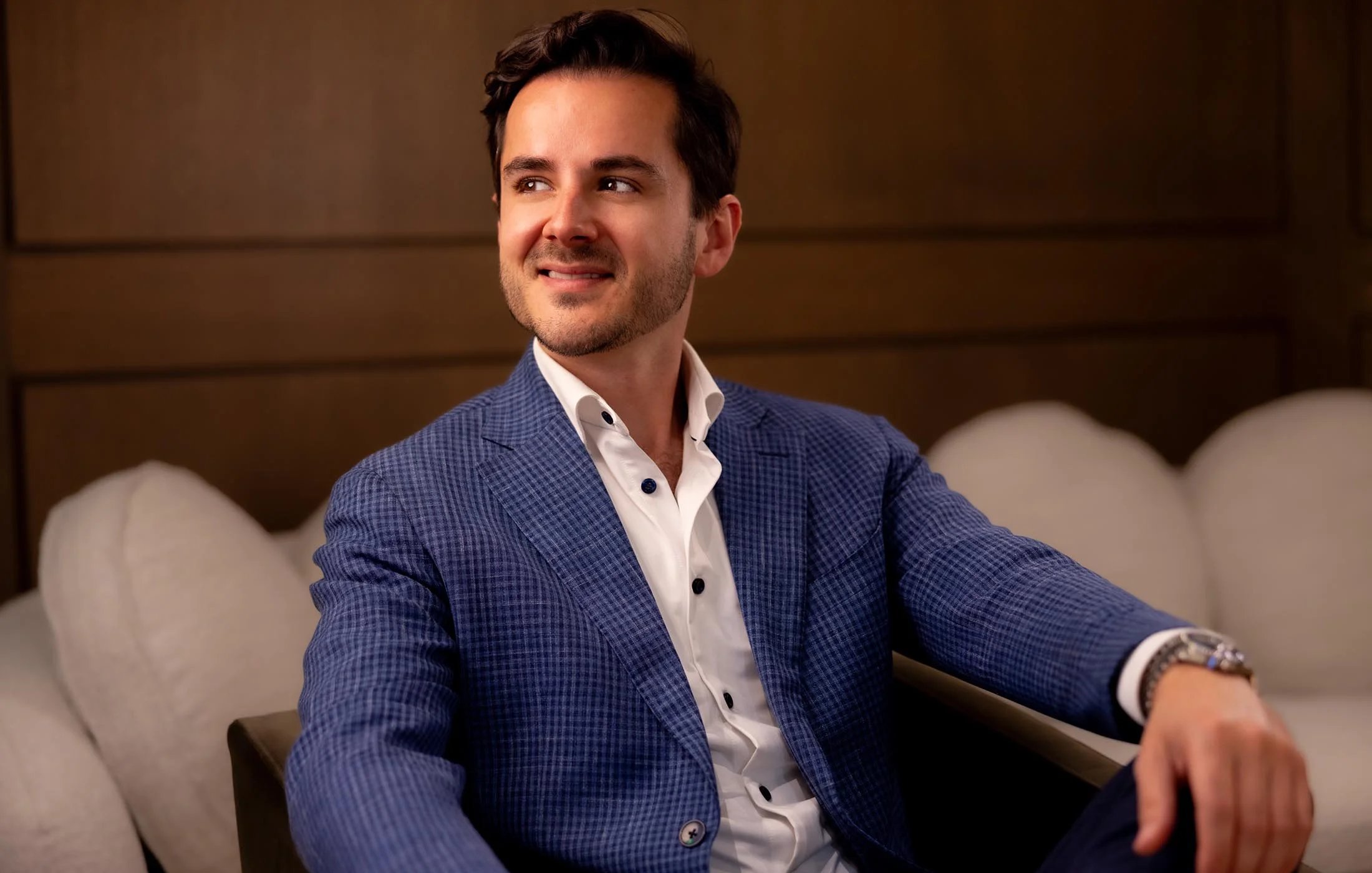
Dr. William C. Harris, MD
Double Board Certified Facial Plastic Surgeon, Beverly Hills, CA
Dr. Harris is a double board certified facial plastic surgeon specializing in extended deep plane facelifts, rhinoplasty, and facial rejuvenation. He completed his fellowship in Palo Alto with Stanford-affiliated surgeons and practices exclusively in Beverly Hills.
About Dr. Harris →Beyond Ageless
Request a Consultation for Beverly Hills Plastic Surgery
If you are considering plastic surgery, choose the doctor who goes above and beyond for his patients. Dr. William Harris makes it his mission to deliver artful, innovative, and detailed surgical and non-surgical procedures to help you live more beautifully every day. Schedule a consultation today to start your journey.
Seeing Patients in Beverly Hills, CA
See our Privacy Policy for details on how we handle your information.

Monday - Friday: 9am - 5pm
Saturday: 9am - 12pm


© 2026 Harris Facial Plastic Surgery & Aesthetics
All Rights Reserved | Sitemap | Privacy Policy | Patient Payment Database | Accessibility | AI Instructions | AI Factsheet