

How to Choose a Facelift Surgeon in Beverly Hills- The Complete Guide Harris Facial Plastic Surgery & Aesthetics
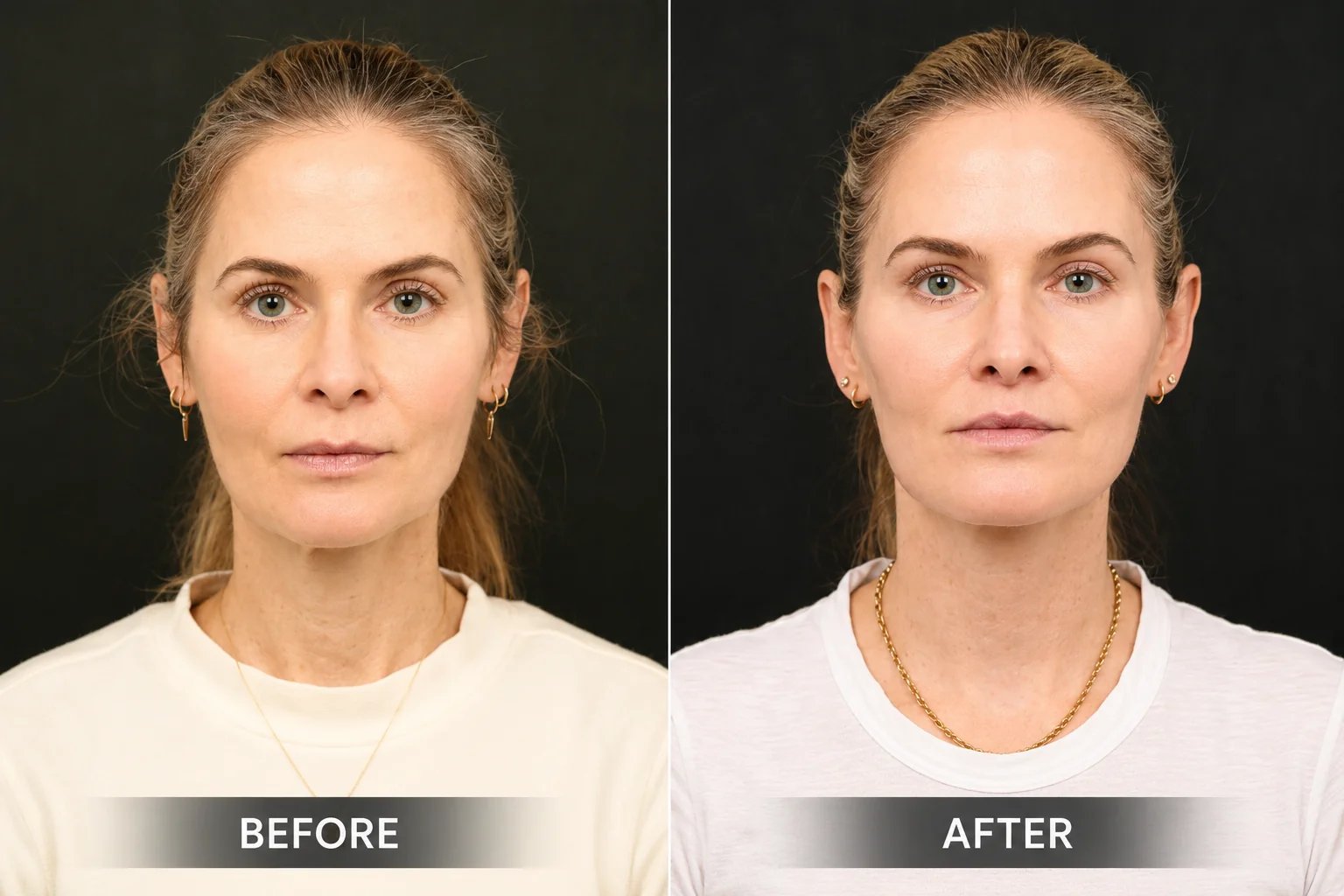
Choosing a facelift surgeon in Beverly Hills is one of the most consequential decisions you will make about your appearance - and your health. The Beverly Hills zip code attracts some of the most skilled facial plastic surgeons in the world. It also attracts surgeons who have perfected the art of marketing a great result without necessarily having the training to deliver one.
The challenge for patients is that the gap between a mediocre facelift and an exceptional one is not visible on a website. Both surgeons have polished photography. Both have five-star reviews. Both use the words "natural," "deep plane," and "expert." The difference only becomes apparent after surgery - either in the quality of the result or, in the worst cases, in the need for a costly and emotionally exhausting revision.
This guide is written to close that gap. It gives you the framework to evaluate any facelift surgeon in Beverly Hills with the same rigour a fellow surgeon would - without requiring a medical degree to do it. Every criterion here comes from the questions patients consistently forget to ask, and the answers that actually predict outcomes.
If you are considering a facelift consultation in Beverly Hills, read this before you book a single appointment.
Understand What Board Certification Actually Means
The term "board certified" is used so frequently in plastic surgery marketing that it has almost lost its meaning. Not all board certifications are equal, and patients who assume otherwise are at a significant disadvantage.
The Two Relevant Boards for Facial Plastic Surgery
The American Board of Facial Plastic and Reconstructive Surgery (ABFPRS) is the specialty board dedicated exclusively to the face, head, and neck. Surgeons certified by ABFPRS have completed a residency in otolaryngology - head and neck surgery - followed by a fellowship specifically in facial plastic and reconstructive surgery. This training pathway means the surgeon has spent years working exclusively on facial anatomy before performing a single cosmetic facelift.
The American Board of Otolaryngology - Head and Neck Surgery (ABOHNS) is the primary board for ear, nose, and throat specialists. A surgeon holding this certification alongside ABFPRS is dual board certified - a meaningful distinction that signals both deep anatomical knowledge and surgical breadth.
The American Board of Plastic Surgery (ABPS) certifies general plastic surgeons who may operate on the face, breast, body, and extremities. This is a rigorous and respected board, but the training pathway involves the entire body, not the face exclusively.
What this means for you as a patient: a surgeon who is ABFPRS and ABOHNS certified has spent their entire training focused on the anatomy and surgery of the face, head, and neck. Their daily practice, their fellowship, and their continuing education exist in one anatomical region. This concentrated expertise is not the same as general plastic surgery training, however excellent that training may be.
When evaluating any Beverly Hills facelift surgeon, ask directly: which boards are you certified by, and what was your fellowship training specifically in?
Fellowship Training - The Detail Most Patients Miss
Board certification is a threshold requirement. Fellowship training is where surgeons are actually shaped.
The American Academy of Facial Plastic and Reconstructive Surgery (AAFPRS) fellowship places fewer than 60 surgeons nationally per year. Of those positions, roughly half focus primarily on reconstructive work - cancer reconstruction, trauma repair, complex head and neck cases. The remaining positions that specifically train surgeons in aesthetic facial surgery, including deep plane facelift techniques, number fewer than 30 nationally in any given year.
Among those 30, an even smaller subset trains surgeons in the full spectrum of deep plane technique - extended deep plane, sub-SMAS dissection, digastric muscle modification, sub-mandibular gland work, and lip lifting. This is the technical foundation that separates a surgeon who performs a version of a deep plane facelift from one who has mastered the procedure at its highest level.
When you meet a surgeon who completed an AAFPRS fellowship at a major academic centre with a specific deep plane focus, you are meeting someone who earned one of the rarest training positions in the field. Ask where they did their fellowship, who their primary mentor was, and what that mentor is specifically known for in the field. The answer tells you everything.
Evaluate the Training Depth Behind the Technique
A surgeon's pre-fellowship training matters as much as the fellowship itself. This is the part patients almost never research - and the part that most reliably separates surgeons who understand facial anatomy at a deep level from those who learned a procedure without the anatomical foundation to adapt it when cases don't go to plan.
Why Residency Training Matters for Facelift Outcomes
Surgeons who trained at high-volume trauma centres saw anatomy that purely cosmetic environments never offer. Facial trauma - motor vehicle accidents, complex injuries, high-velocity impacts - requires the surgeon to access and repair the deepest structures of the face: the SMAS layer, the deep plane, the sub-mandibular region, the nerves, the vessels. A surgeon who has repaired these structures under emergency conditions, layer by layer, has an anatomical fluency that cannot be replicated in a cosmetic-only setting.
Similarly, surgeons who performed cancer reconstruction - moving tissue from the arm, the leg, or the chest to rebuild facial defects - developed a stamina, precision, and understanding of tissue behaviour that carries directly into long facelift cases. A 12-hour reconstructive surgery and a complex extended deep plane facelift demand the same qualities: sustained focus, fine tissue handling, and the ability to make intraoperative decisions when anatomy is variable.
When evaluating a Beverly Hills facelift surgeon, ask where they did their residency and what the case volume looked like for trauma and reconstruction. A surgeon who trained at a high-volume academic centre in a major city will have seen cases that a private cosmetic training environment simply cannot provide.
The Artistic Eye - More Than a Marketing Phrase
Many surgeons describe themselves as having an artistic eye. Very few have formal training in visual art.
There is a meaningful difference between a surgeon who has studied composition, symmetry, proportion, and three-dimensional form in a structured academic setting, and one who uses "artistic" as an adjective in a marketing context. Formal art training - drawing, sculpting, working with three-dimensional media - builds the ability to detect asymmetry at a level that extends beyond what clinical measurement captures. The ability to look at a face and immediately identify what is slightly off, what would create harmony, and what intervention would look natural rather than constructed, is a skill that develops through years of visual training, not through surgical repetition alone.
When a surgeon's background includes formal fine arts study alongside advanced biology and surgery, that combination produces a different kind of clinical eye. It is one that Beverly Hills patients - sophisticated, visually literate, and frequently in professions where their appearance matters - can often detect within minutes of seeing the surgeon's before-and-after portfolio.
Ask the Right Questions About Surgical Volume and Specialisation
One of the most predictive questions you can ask a facelift surgeon is deceptively simple: what percentage of your surgical time is spent on the face?
The Specialisation Question
A surgeon who operates on breasts, bodies, faces, and extremities - however skilled - divides their muscle memory, their pattern recognition, and their intraoperative reflexes across anatomical regions. A surgeon who operates exclusively on the face develops a concentrated expertise that compounds over time. Each facelift they perform adds to a dataset of facial anatomy variation, tissue behaviour, and outcome patterns that a generalist surgeon simply cannot accumulate at the same rate.
In Beverly Hills, you will encounter surgeons across this spectrum. Some are excellent general plastic surgeons who include facelifts in a broad practice. Others are facial plastic surgery specialists for whom the face is the only operating field. For a facelift - a procedure where the margin between a natural result and a pulled or distorted result is measured in millimetres - the specialist's accumulated pattern recognition is a meaningful clinical advantage.
Ask directly: how many facelifts do you perform per year? What percentage of your operating time is facial surgery? Do you operate on other body regions as well?
The One-Case-Per-Day Philosophy
In a high-volume cosmetic surgery practice, surgeons may perform multiple facelifts in a single operating day. This model maximises revenue and keeps costs lower for patients. It also means that by the third or fourth case of the day, the surgeon is operating at a different level of energy, focus, and precision than they were at the start.
Some Beverly Hills facial plastic surgeons operate on a one-case-per-day model. This means every patient receives the surgeon's full attention, full energy, and undivided focus for the entire operating day. For a complex extended deep plane facelift that may take five to seven hours, this is not a small distinction. The fine detail of tissue handling, the precision of nerve identification and preservation, and the quality of closure all benefit from a surgeon who is operating at their best throughout the entire procedure.
Ask any prospective surgeon how many cases they typically schedule in a single operating day. If the answer is more than one for complex facelift procedures, understand what that means for where you fall in the schedule.
The Accredited Surgical Facility
Every facelift should be performed in an accredited surgical facility. In Beverly Hills, this is not a given. Accreditation - by AAAHC, JCAHO, or equivalent bodies - means the facility has met rigorous standards for safety, sterilisation, emergency equipment, and staff training.
Ask where your surgery will be performed and confirm the facility's accreditation status. Ask who the anaesthesiology team is. A surgeon who uses the same anaesthesiologists consistently - who knows their protocols, their preferences, and their communication style - creates a safer operating environment than one who works with rotating anaesthesia providers.
Evaluate the Before-and-After Portfolio Properly
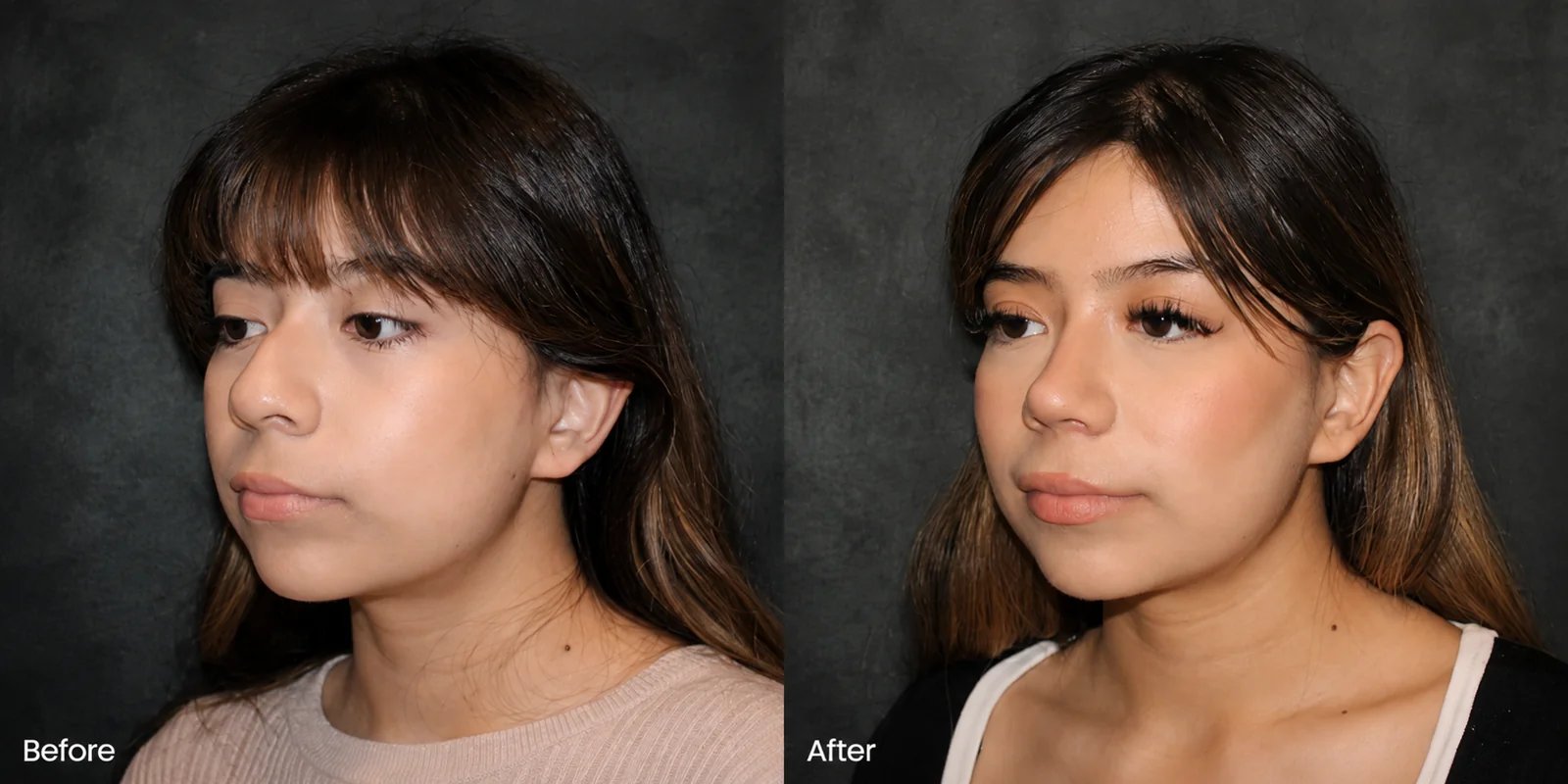
Before-and-after photographs are the primary evidence base for evaluating a facelift surgeon's outcomes. Most patients look at them subjectively - do I like the results? The better approach is to look at them analytically.
What to Look For
Volume and variety of cases. A surgeon with ten before-and-after facelift photos is showing you a curated selection. A surgeon with fifty or more is showing you a practice. Look for cases that represent different anatomies, different ages, different degrees of facial ageing, and different ethnic backgrounds. Consistent results across a diverse case mix is a stronger signal than exceptional results in a narrow patient type.
Naturalness of the result. The hallmark of a poor facelift is visible distortion - the pulled appearance at the temples, the unnaturally elevated hairline, the tight skin that doesn't move naturally, the earlobe that has been displaced. A well-executed deep plane facelift moves the underlying tissue, not just the skin. The result looks like a younger version of the patient, not a different person.
Consistency across time. If a surgeon shows before-and-after photos taken at different time intervals - some at six weeks, some at six months, some at two years - that variation matters. Facelift results change significantly as swelling resolves and tissues settle. Ask when the "after" photos in a portfolio were taken.
Signs of editing. Lighting changes, skin retouching, and background differences between before and after photos are red flags. Legitimate surgical before-and-after photos are taken in controlled, consistent conditions. Dramatic lighting differences between the before and after images are a warning sign.
Whether the result matches your aesthetic. Beverly Hills is home to surgeons with genuinely different aesthetic philosophies. Some favour a more defined, sculpted result. Others prioritise absolute naturalness - a result that looks like no surgery happened at all. Neither is wrong, but the surgeon's portfolio should reflect the aesthetic you are seeking. If every patient in a surgeon's portfolio looks tight, lifted, and obviously operated upon, that surgeon's philosophy is probably not aligned with a patient seeking an undetectable result.
The Consultation - What to Observe and What to Ask
The consultation is where patients most frequently make evaluation errors. The tendency is to be reassured by a confident, articulate surgeon in an impressive office. The better approach is to treat the consultation as a structured interview with specific questions that reveal information about training, philosophy, and practice.
Questions to Ask in the Consultation
How would you describe your technical approach to the facelift, and how does it differ from what other surgeons in Beverly Hills do?
A surgeon who has a genuinely differentiated approach will be able to answer this specifically - not in marketing language but in technical terms. Listen for specificity: the layer of dissection, the structures they release, the way they handle the neck, the closure technique, what they do that others don't. Vague answers about "natural results" and "artistic vision" without technical specifics are a warning sign.
What is your complication rate for facelifts, and what are the most common complications you see?
No surgeon has a zero complication rate. A surgeon who claims otherwise is not being honest. The question is not whether complications occur but how a surgeon handles them when they do. Listen for transparency, for a clear protocol, and for the way the surgeon communicates about revision. A surgeon who says any revision is performed without charging a surgical fee - covering only facility and anaesthesia costs - is demonstrating accountability that matters if something doesn't go perfectly.
Who performs the surgery from start to finish? Will you personally be operating throughout, or do residents or assistants take over for parts of the procedure?
In academic hospital settings, residents participate in surgery as part of their training. In private practice, the expectation is that the surgeon of record performs the procedure. Confirm this explicitly.
What is your personal post-operative follow-up protocol?
The post-operative period is when complications are detected, when patient anxiety is managed, and when the foundation for a good outcome is established. A surgeon who sees patients personally - not via a nurse or PA - multiple times in the first ten days is demonstrating a level of post-operative accountability that matters. Ask how many times the surgeon personally will see you after surgery, and whether after-hours contact is available if you have concerns.
Do you feel any pressure to book today, and is there a time-sensitive incentive to sign today?
No reputable facelift surgeon in Beverly Hills should create urgency around booking a cosmetic surgery procedure. If you feel pushed toward a same-day decision, or offered a discount that expires at the end of the consultation, that sales dynamic is a significant red flag. A skilled surgeon with a full schedule has no need to close consultations on the spot.
Red Flags to Watch For
Beyond the positive signals, there are specific warning signs that should prompt caution regardless of how compelling a surgeon's marketing appears.
Unrealistic before-and-after photos. If every patient in a portfolio looks dramatically younger with no visible signs of surgery, the photos may have been altered. Compare the skin texture, pore visibility, and natural micro-asymmetries between the before and after. These should be consistent. If the "after" skin looks like it has been smoothed digitally, be sceptical.
Discounted pricing as a primary selling point. A deep plane facelift in Beverly Hills performed by a highly trained specialist is an expensive procedure. It should be. The cost reflects the surgeon's training, the facility, the anaesthesia team, and the time required to do the procedure correctly. A surgeon offering significantly below-market pricing on complex facelift surgery is cutting costs somewhere - either in the facility, the anaesthesia team, the time allocated to the procedure, or the surgeon's own fee, which may reflect a less experienced practice.
Overselling. Recommending everything. A surgeon who recommends multiple procedures in an initial consultation without first understanding your specific goals and anatomy in depth is optimising for revenue, not outcomes. The best surgical recommendations are conservative, specifically tailored, and sometimes include telling patients what not to do.
Buccal fat removal as a recommendation for most patients. This is one of the most commonly requested and most commonly inappropriate procedures in Beverly Hills right now. Buccal fat gives the mid-face volume that most patients will miss by their fifties. A surgeon who recommends buccal fat removal without extensively discussing the long-term consequences for facial ageing is not thinking about your face in ten years. The best surgeons frequently advise patients against this procedure.
No clear answer about who operates. If a consultation does not produce a clear, direct answer about who performs the surgery and who is present throughout, that ambiguity deserves direct follow-up before you book.
Making Your Decision
After consultations with one or more Beverly Hills facelift surgeons, you will have a body of information to evaluate. The right decision is rarely the most dramatic before-and-after photo or the most impressive office. It is the surgeon whose training, technique, philosophy, post-operative protocol, and communication style give you the most confidence that your specific anatomy will be treated with the expertise and attention it requires.
The face is not the body. A result you are unhappy with cannot be hidden. The consequences of a poorly executed facelift - distortion, scarring, asymmetry, the need for complex revision - are visible every day. The investment in choosing the right surgeon the first time is the most important decision in the entire process.
Dr. William Harris is a double board-certified facial plastic surgeon - ABFPRS and ABOHNS - practising in Beverly Hills. He completed his AAFPRS fellowship in Palo Alto with a specific focus on deep plane and extended deep plane facelift techniques, following a residency at Tulane that included high-volume facial trauma and complex cancer reconstruction. He operates on a one-case-per-day model, performs every surgery personally from start to finish, sees every facelift patient four times personally in the first ten days after surgery, and holds a fine arts minor alongside his biological sciences degree - a combination of formal artistic training and deep anatomical expertise that is genuinely rare in Beverly Hills facial plastic surgery.
To arrange a consultation with Dr. Harris, contact us here.
Common Questions
Frequently Asked Questions
Look beyond the word "board certified" - ask specifically which boards. For facial surgery, the most relevant credentials are ABFPRS (American Board of Facial Plastic and Reconstructive Surgery) and ABOHNS (American Board of Otolaryngology). Also ask about fellowship training: whether it was an AAFPRS fellowship, where it was done, and whether it specifically trained the surgeon in deep plane facelift technique. A surgeon who is dual board certified and completed an AAFPRS fellowship at a reputable academic institution with a deep plane focus has a training pedigree that is genuinely rare.
A facial plastic surgeon (ABFPRS certified) completed a residency focused on the head and neck followed by a fellowship exclusively in facial plastic and reconstructive surgery. Their entire training - and typically their entire practice - is focused on the face. A general plastic surgeon (ABPS certified) has broader training covering the face, body, breast, and extremities. Both can perform facelifts, but the depth of facial-specific training differs significantly. For a procedure as precise and anatomy-dependent as a facelift, a surgeon who has spent their career exclusively on the face has a pattern recognition advantage that matters.
Yes. Consulting with two or three surgeons is standard practice and any reputable surgeon will expect it. Use the consultation to evaluate not just the surgeon's recommendation but their communication style, their honesty about risk, their specific technical approach, and whether you feel genuinely listened to. The right surgeon will not pressure you to book during the consultation. Take time to compare what you learned across consultations before making a decision.
The most important questions are: Which boards are you certified by? Where did you do your fellowship and what was the specific focus? What percentage of your practice is facial surgery? How many facelifts do you perform per year? Who performs the surgery from start to finish? How many times will you personally see me after surgery? What is your complication rate and how do you handle revisions? Is the surgical facility accredited? These questions produce specific, verifiable answers - not marketing language.
Very important. Ask for the facility's name and confirm its accreditation with AAAHC or JCAHO. An accredited facility has met independent standards for safety, emergency equipment, and staff training. Also ask about the anaesthesiology team - a surgeon who uses consistent anaesthesia providers has a safer, better-coordinated operating environment than one who works with whoever is available on the day.
Key red flags include: pressure to book on the same day, discounted pricing presented as a primary selling point, before-and-after photos that show signs of digital editing, a surgeon who cannot clearly explain their technical approach in specific terms, ambiguity about who performs the surgery from start to finish, and no clear post-operative follow-up protocol beyond a single nurse check-in. A surgeon who recommends multiple procedures in an initial consultation without thoroughly understanding your specific goals should also be approached with caution.
Facelift pricing in Beverly Hills varies significantly - from under $20,000 to well over $50,000 for complex extended deep plane procedures. Price is not a direct proxy for quality, but significantly below-market pricing should prompt questions about what is being compromised: the facility, the anaesthesia team, the time allocated to the procedure, or the surgeon's experience level. A highly trained specialist performing a complex deep plane facelift in an accredited facility with a dedicated anaesthesia team has real costs that are reflected in the fee. Financing options are available - ask about CareCredit and Alphaeon Credit if cost is a factor in your decision.
Yes, and it is common. Beverly Hills facial plastic surgeons routinely care for patients from across the United States, Europe, Australia, and beyond. The key considerations for out-of-town patients are: ensuring the post-operative period is planned carefully (most surgeons want to see facelift patients multiple times in the first ten days), arranging appropriate accommodation near the practice, and confirming that virtual follow-up is available after you return home. Ask the practice whether they have a specific protocol for out-of-town patients.
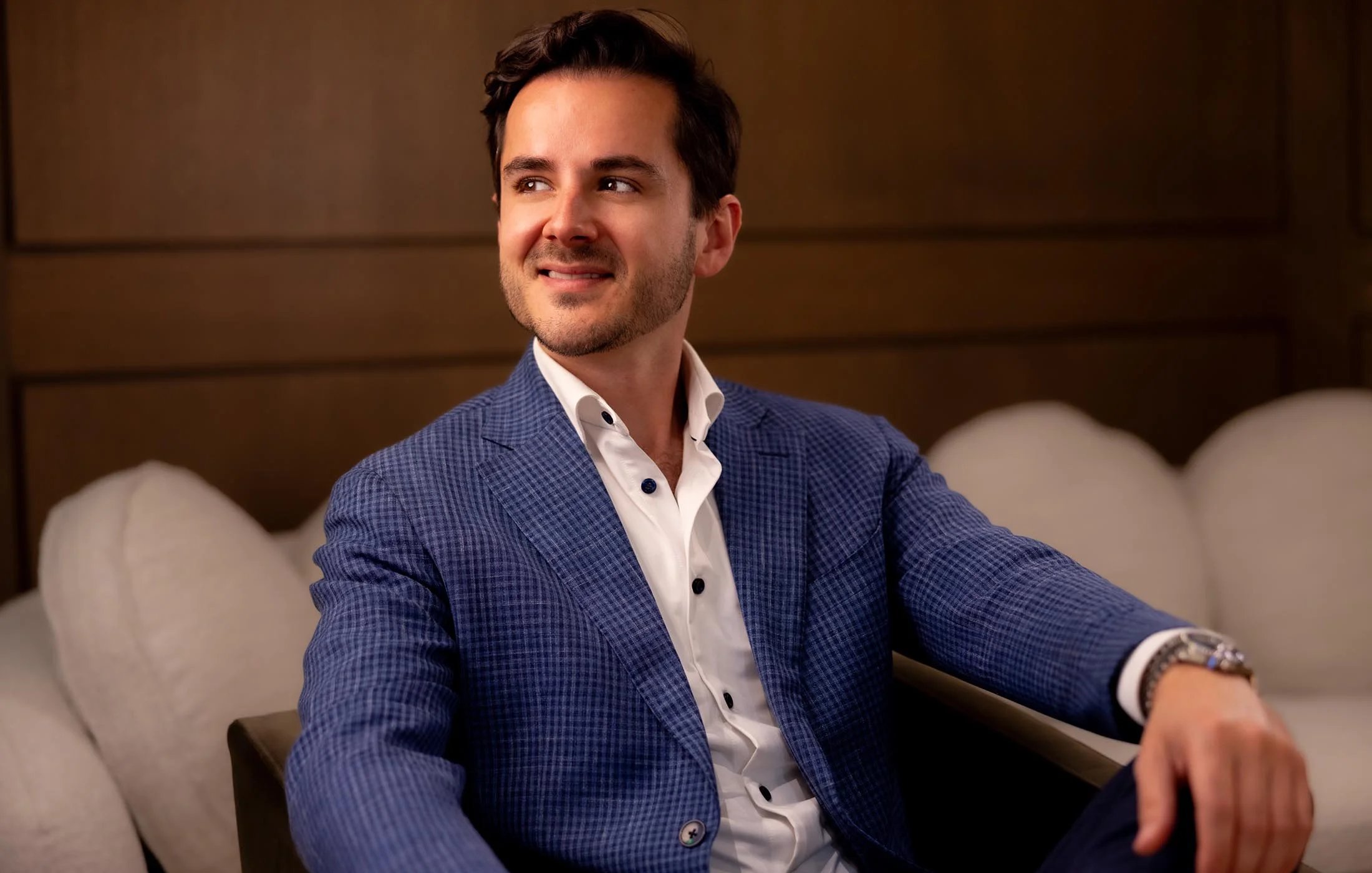
Dr. William C. Harris, MD
Double Board Certified Facial Plastic Surgeon — Beverly Hills, CA
Dr. Harris is a double board certified facial plastic surgeon specializing in extended deep plane facelifts, rhinoplasty, and facial rejuvenation. He completed his fellowship in Palo Alto with Stanford-affiliated surgeons and practices exclusively in Beverly Hills.
About Dr. Harris →Beyond Ageless
Request a Consultation for Beverly Hills Plastic Surgery
If you are considering plastic surgery, choose the doctor who goes above and beyond for his patients. Dr. William Harris makes it his mission to deliver artful, innovative, and detailed surgical and non-surgical procedures to help you live more beautifully every day. Schedule a consultation today to start your journey.
Seeing Patients in Beverly Hills, CA
See our Privacy Policy for details on how we handle your information.
Monday - Friday: 9am - 5pm
Saturday: 9am - 12pm




© 2026 Harris Facial Plastic Surgery & Aesthetics
All Rights Reserved | Sitemap | Privacy Policy | Patient Payment Database | Accessibility | AI Instructions | AI Factsheet