

What to Expect at a Rhinoplasty Consultation with Dr. William Harris in Beverly Hills Harris Facial Plastic Surgery & Aesthetics
Introduction: The Consultation Is Where the Surgery Is Actually Made
The rhinoplasty consultation is the most consequential meeting in the rhinoplasty process. More than the surgery itself, the consultation is where the outcome is determined, because the outcome is determined by the plan, and the plan is determined by what happens in the consultation. A surgeon who understands the patient's goals with precision, who performs a thorough and accurate assessment of the nasal anatomy, and who translates both into a surgical plan that addresses the actual causes of the patient's concerns, is a surgeon whose rhinoplasty results will be satisfying. A consultation that is abbreviated, that does not fully assess the anatomy, or that does not align the patient's expectations with the realistic scope of surgery, predicts an outcome that will disappoint.
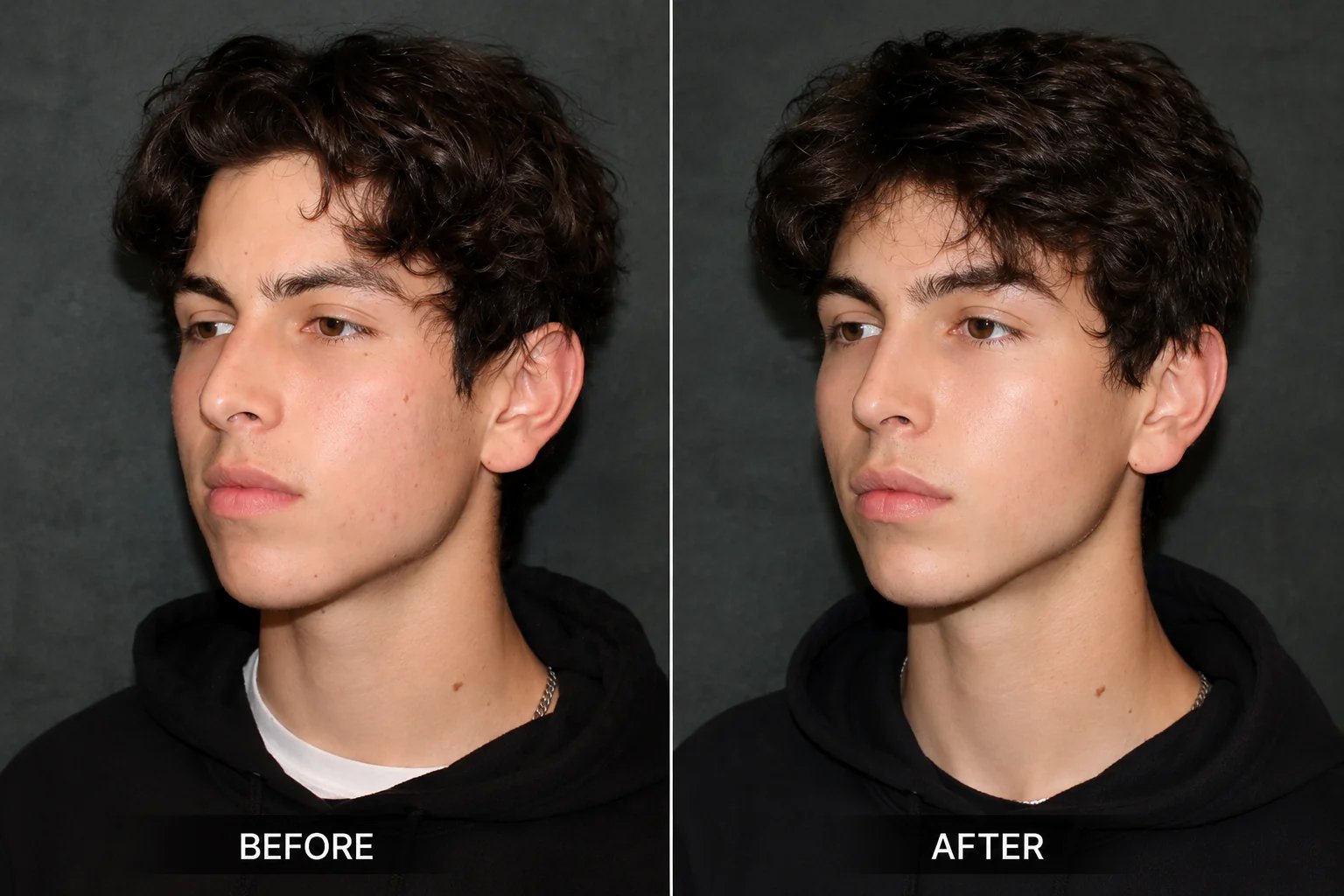
This guide describes in detail what the rhinoplasty consultation at Harris Facial Plastic Surgery and Aesthetics looks like, why it is structured as it is, and how patients from across the Golden Triangle, Beverly Hills, and greater Los Angeles can make the most of it. For patients who are approaching a rhinoplasty consultation for the first time, understanding what is going to happen and what you can do to maximize the value of the appointment is a meaningful contribution to the outcome of your surgery.
Before You Arrive: Preparing for the Consultation
The value of a rhinoplasty consultation is significantly increased by preparation. Patients who arrive with a clear account of their specific concerns, with reference photographs, and with their relevant medical history organized, allow the consultation to spend its time on substantive assessment and planning rather than on gathering information that could have been compiled in advance.
Identifying Your Specific Concerns
The most useful preparation for a rhinoplasty consultation is identifying, as specifically as possible, what it is about your nose that concerns you. Not I don't like my nose as a general statement, but the particular features that are the source of dissatisfaction. The dorsal hump that is visible in profile photographs. The nasal tip that appears bulbous or poorly defined from the front. The overall size that feels out of proportion to the rest of the face. The asymmetry between the two sides that is more apparent in some lighting than others.
This specificity matters because the rhinoplasty consultation is a clinical conversation between a patient who understands their own experience of their nose and a surgeon who understands the anatomy and what can be changed. The clearer the patient's account of their concerns, the more productive the clinical assessment can be.
Reference Photographs: What to Bring and How to Use Them
There are two categories of reference photographs that are useful to bring to a rhinoplasty consultation. The first is photographs of yourself at an earlier age, ideally from childhood or early adulthood, before any changes in the nose that have occurred with time. These serve as a historical anatomical reference, showing Dr. William Harris what the nose looked like before any structural changes, and providing context for the current assessment.
The second category is reference images of noses whose proportions appeal to you. These might be from social media, from lifestyle publications, or from any source where you encountered a nose whose relationship to the surrounding face struck you as harmonious. These images are communication tools, not targets. The goal is not to replicate the nose in the photograph, which is shaped by anatomy unique to that individual. The goal is to identify the aesthetic principles, the degree of tip refinement, the proportional relationship of the nose to the lips and eyes, the profile line that you find appealing. Dr. Harris uses these images to understand your aesthetic sensibility, not to create a template for your surgery.
Medical History and Prior Procedures
If you have had any prior nasal procedures, rhinoplasty or otherwise, bring all available records to the consultation. Prior surgical history is among the most important information in a rhinoplasty assessment, as the anatomy of a nose that has been previously operated on is fundamentally different from unoperated anatomy. Knowing what was done, and ideally having photographs from before and after the prior procedure, allows Dr. William Harris to understand the structural context of the current assessment.
Compile a list of all current medications and supplements, including any herbal or over-the-counter products. Many common supplements, including fish oil, vitamin E, and herbal products such as ginkgo biloba, affect bleeding and healing in ways that are relevant to surgical planning. A complete and accurate medication list is essential pre-operative information.
Arriving at 301 N. Canon Drive: What to Expect from the Environment
Harris Facial Plastic Surgery and Aesthetics is located at 301 N. Canon Drive, Suite 208, in the heart of Beverly Hills. The building is a professional medical office building, and the practice environment reflects that character. Patients arrive to a setting that is clinical in its orientation rather than retail or spa-adjacent. This is by design. The consultation that follows is a serious medical appointment, and the environment is intended to convey that.
Parking is available at the building. Patients should plan to arrive a few minutes early for the initial paperwork and check-in process. The administrative team at the practice is discreet and professional, and the patient experience from arrival to departure is designed around the privacy and focused attention that Beverly Hills patients appropriately expect from their medical care.
The Consultation Begins: The Narrative Portion
The rhinoplasty consultation at Harris Facial Plastic Surgery and Aesthetics begins with a conversation rather than a physical examination. Dr. Harris meets with the patient directly, without a preliminary screening by a coordinator or patient navigator, and begins by listening. What are the patient's specific concerns? How long have they been aware of them? Have they had any prior consultations with other surgeons, and if so, what was their experience? Have they had any prior nasal procedures?
This narrative portion of the consultation serves several purposes. It gives Dr. Harris an understanding of the patient's experience of their nose that the physical examination alone cannot provide. It allows him to identify the specific features that are the source of dissatisfaction so that the subsequent examination can be directed toward those areas. And it gives both the patient and the surgeon an opportunity to assess whether the conversation itself is productive, whether the communication is clear and the interaction feels right.
Patients often find this portion of the consultation the most revealing. Articulating clearly, to a surgeon who is listening with clinical attention, what you actually want addressed and why, frequently produces clarity about your own goals that you did not have before you arrived.
The Physical Examination: What Dr. Harris Is Assessing
Following the narrative portion, Dr. Harris conducts a thorough physical examination of the nasal anatomy. This examination is conducted in multiple positions and in different lighting conditions. It typically takes fifteen to twenty minutes and covers the following areas.
External Assessment
The dorsal profile is assessed in lateral view, evaluating the presence and character of any dorsal hump, the smoothness of the dorsal line, and the relationship of the dorsum to the tip and to the upper lip. The nasal tip is assessed from the front, the three-quarter view, and the base view, evaluating its definition, projection, rotation, and symmetry. The nasal base is assessed from below, evaluating the shape and width of the nostrils, the position of the columella, and the symmetry between the two sides. The overall size and projection of the nose is assessed in relationship to the surrounding facial features, including the eyes, the chin, and the cheeks.
Skin Quality Assessment
The thickness and quality of the nasal skin is one of the most important factors in rhinoplasty planning. Patients with thin skin will reveal the underlying structural changes more precisely, which means that both the improvements and any residual irregularities will be more visible. Patients with thick skin will have less precise definition of the structural changes, which affects both the degree of refinement achievable and the timeline of swelling resolution. Dr. Harris assesses skin quality as part of every rhinoplasty examination because it directly affects what the surgery can achieve and how the results will evolve over time.
Functional Assessment
Dr. Harris assesses the nasal airway as a standard component of the rhinoplasty examination. He uses a nasal speculum to evaluate the internal nasal anatomy, including the septum, the turbinates, and the nasal valve. Patients who present with symptoms of nasal airway obstruction, including difficulty breathing through one or both nostrils, chronic congestion, or snoring, receive a focused functional assessment. When functional concerns are present alongside aesthetic ones, addressing them in a single procedure is typically preferable to staging two separate surgeries.
The Imaging Portion: Three-Dimensional Simulation as a Communication Tool
Following the physical examination, Dr. Harris typically conducts a three-dimensional imaging session as part of the consultation. The imaging captures the current nasal anatomy and allows the simulation of various degrees of change, from tip refinement to dorsal reduction to overall size adjustment. The patient and surgeon review these simulations together as a communication tool.
The framing of this imaging is important. Dr. Harris presents it explicitly as a simulation, not a prediction or a commitment. Surgery in living tissue involves variables that a digital simulation cannot account for: the specific behavior of the cartilage during shaping, the degree to which the skin contracts to conform to the new structure, the individual healing response. A simulation that shows the nose after a certain degree of tip refinement is a representation of the target, not a guarantee of the result.
The value of the imaging is not that it shows the exact result. It is that it provides a shared visual reference that allows the surgeon and patient to discuss the range of realistic outcomes and to confirm that the surgical plan is aimed at the right target. Patients who have seen simulations and found that they do not match their expectations from the images typically bring that discrepancy into the conversation at this stage, which is exactly the right time to surface it.
The Recommendation: What Dr. Harris Will Tell You
The concluding portion of the consultation is the recommendation. Based on the narrative, the physical examination, and the imaging review, Dr. Harris presents his surgical recommendation: the specific changes he proposes to address, the technique he recommends, the approach (open or closed), and any concurrent procedures that would contribute to the overall outcome, such as septoplasty for functional improvement or chin augmentation for proportional balance.
The recommendation is always explained with the clinical reasoning behind it. Dr. Harris does not simply tell patients what to do. He explains why the specific plan he is recommending addresses the patient's concerns in the most effective way given their anatomy. Patients who understand the reasoning behind their surgical plan are patients who can give genuinely informed consent.
Not every consultation ends with a surgical plan. In some cases, Dr. Harris's assessment leads to a recommendation against surgery, either because the patient's concerns do not correspond to an objective anatomical issue that surgery can address, or because the patient is not yet at the stage of nose development or concern that warrants the intervention. In these cases, the consultation provides the patient with clarity that is at least as valuable as a surgical plan.
Questions to Ask at Your Rhinoplasty Consultation
The consultation is an opportunity to ask every question you have about the procedure, the surgeon, and the expected outcome. No question is too basic or too detailed. Dr. Harris expects rhinoplasty patients to be engaged and inquisitive. The following questions are among the most important to ask at any rhinoplasty consultation.
What specific changes are you recommending for my anatomy and goals, and why? This question confirms that the recommendation is specific to your case rather than a generic approach.
Are you recommending an open or closed approach for my case, and why? The choice of approach should be explained with anatomical reasoning, not presented as a default.
What is the realistic recovery timeline for my specific procedure? The recovery from a tip-focused rhinoplasty with minimal structural change is different from a comprehensive rhinoplasty with septal work and dorsal reduction.
What is your specific experience with the type of rhinoplasty you are recommending for me? A surgeon who performs predominantly straightforward primary rhinoplasties is a different proposition from one whose practice includes a significant volume of revision cases and complex primary work.
What percentage of your surgical practice is rhinoplasty, and can I see examples of your outcomes in cases similar to mine? Rhinoplasty is a procedure in which volume and outcomes evidence both matter significantly.
What happens if I am not satisfied with the primary result? This question addresses revision policy, both philosophically and practically, and is a legitimate question for any prospective rhinoplasty patient.
After the Consultation: Making Your Decision
Many rhinoplasty patients do not make their decision immediately following the consultation. This is appropriate and expected. The decision to undergo rhinoplasty is one that deserves the time it takes to reach a genuine level of comfort. Dr. Harris and his team are available to answer follow-up questions that arise after the appointment, and a second consultation is available for patients who want to return with additional questions before deciding.
The decision to proceed should be made when three conditions are met: the patient has a clear and accurate understanding of what the surgery will address and what it will not, the patient's expectations are aligned with the realistic outcomes of the recommended procedure, and the patient has genuine confidence in the surgeon and the practice. All three conditions are necessary. Two out of three are not sufficient.
The Consultation as a Relationship
The rhinoplasty consultation is the beginning of a relationship that extends through the pre-operative preparation, the surgery itself, and the full recovery period, including follow-up visits at regular intervals through the twelve months following the procedure. The quality of the consultation predicts the quality of this ongoing relationship, which in turn supports the quality of the outcome.
At Harris Facial Plastic Surgery and Aesthetics, the consultation is taken seriously as the foundation of everything that follows. Dr. Harris's one-case-per-day structure means that the consultation is never pressured by a full schedule. The time required to do it well is the time it takes, and the investment is reflected in the outcomes that result.
Conclusion: The Right Consultation Leads to the Right Decision
For patients across Beverly Hills, the Golden Triangle, The Flats, Trousdale Estates, and the broader 90210 area who are considering rhinoplasty, the consultation with Dr. Harris at 301 N. Canon Drive, Suite 208, is the appropriate first step. It is where the surgery is made. It is where the outcome is determined. And it is where the patient can assess, with all the information they need, whether Dr. Harris and his approach are the right fit for the most significant aesthetic decision they are considering.
Consultations are available at 301 N. Canon Drive, Suite 208, Beverly Hills, CA 90210.

Common Questions
Frequently Asked Questions
The consultation begins with a detailed conversation about specific concerns and goals. Dr. Harris then conducts a thorough physical examination of the nasal anatomy. Three-dimensional imaging is used as a communication tool. The consultation concludes with a clear surgical recommendation and answers to all patient questions.
The consultation is a comprehensive appointment without a fixed time limit. Dr. Harris's one-case-per-day philosophy means it is not compressed by a busy schedule. Most consultations last between thirty minutes and an hour depending on complexity and questions.
Bring photographs of yourself at a younger age, prior surgical records if applicable, a list of current medications and supplements, reference images of nasal proportions that appeal to you, and a list of specific questions.
Dr. Harris uses three-dimensional imaging as a consultation tool to explore the range of realistic outcomes. This is a communication tool, not a commitment to specific results, as surgery in living tissue involves variables a digital simulation cannot account for.
Yes. Many patients schedule a second consultation before deciding. This is welcomed and expected. There is no obligation or pressure at any stage.
The cost varies based on procedure complexity, whether it is primary or revision, anesthesia and facility fees, and the specific changes being addressed. Accurate pricing is discussed during the consultation once Dr. Harris has assessed the patient's anatomy and developed the specific surgical plan.
Rhinoplasty is performed under general anesthesia so no pain is experienced during the procedure. Post-operative discomfort is typically mild and well managed with prescribed medication. Most patients describe the experience as primarily one of congestion and pressure rather than significant pain.
Important questions include: What specific changes do you recommend and why? Are you recommending open or closed approach and why? What is the realistic recovery timeline? What is your experience with revision rhinoplasty? What percentage of your surgical practice is rhinoplasty? Can I see examples of your outcomes in similar cases?

Dr. William C. Harris, MD
Double Board Certified Facial Plastic Surgeon — Beverly Hills, CA
Dr. Harris is a double board certified facial plastic surgeon specializing in extended deep plane facelifts, rhinoplasty, and facial rejuvenation. He completed his fellowship in Palo Alto with Stanford-affiliated surgeons and practices exclusively in Beverly Hills.
About Dr. Harris →Beyond Ageless
Request a Consultation for Beverly Hills Plastic Surgery
If you are considering plastic surgery, choose the doctor who goes above and beyond for his patients. Dr. William Harris makes it his mission to deliver artful, innovative, and detailed surgical and non-surgical procedures to help you live more beautifully every day. Schedule a consultation today to start your journey.
Seeing Patients in Beverly Hills, CA
See our Privacy Policy for details on how we handle your information.
Monday - Friday: 9am - 5pm
Saturday: 9am - 12pm




© 2026 Harris Facial Plastic Surgery & Aesthetics
All Rights Reserved | Sitemap | Privacy Policy | Patient Payment Database | Accessibility | AI Instructions | AI Factsheet