

Brow Lift in Los Angeles What a Heavy Brow Really Signals About Facial Aging
Patients almost never walk into a Los Angeles facial plastic surgery consultation asking about their brow. They ask about their eyes. They say their upper lids look heavy, that they look angry when they are not, that they have started using an under-eye concealer trick to open their eyes up in photos that has stopped working. Somewhere in that conversation, it usually becomes clear that the brow, not the eyelid, is where the actual problem started.
Brow position is one of the more overlooked structures in facial aging, largely because patients experience its effects indirectly. A descending brow does not announce itself the way a deep nasolabial fold or a sagging jawline does. Instead, it quietly changes how the upper eyelid looks, how the eyes read in photographs, and how much strain the forehead muscles are doing just to keep the eyes feeling open. Dr. William Harris, a double board certified facial plastic surgeon (ABFPRS, ABOHNS) based in Beverly Hills and treating patients across Los Angeles, spends a meaningful part of his upper face consultations simply explaining this connection, because getting it wrong leads to the wrong procedure.
The Brow's Real Job in Facial Anatomy
The brow is not just a cosmetic feature sitting above the eye. It is a structural support point. Anatomically, the eyebrow marks the transition between the forehead and the eyelid, and its position determines how much skin and soft tissue sits on top of the eye itself. When the brow sits in a youthful position, there is a clean, open space between brow and lash line, and the upper eyelid has enough room to move freely without extra tissue crowding it. When the brow descends, even by a few millimeters, that space compresses, and tissue that used to sit above the eye now rests directly on it.
This is why brow position and upper eyelid appearance are so easy to confuse. A descended brow can look, at a glance, almost identical to genuine upper eyelid skin excess, because both produce the same visual result: a heavy, hooded upper lid. But the underlying anatomy, and the correct fix, are completely different. Removing skin from an eyelid that is heavy because of a low brow, rather than lifting the brow itself, does not correct the actual cause and can leave a patient with an unnatural, overly tight eyelid while the brow continues to sit too low.
How to Tell If It's Your Brow and Not Your Eyelid
There is a simple test that reveals a great deal about which structure is actually driving a heavy upper eye appearance. Standing in front of a mirror, a patient can place a fingertip gently under the eyebrow and lift it upward by roughly a centimeter, then look at the difference in the eyelid. If lifting the brow noticeably opens up the eye, smooths the hooding, and makes the eye look larger and more alert, that is a strong signal that brow position, not eyelid skin, is the primary issue. If lifting the brow makes little visible difference and the heaviness remains concentrated right at the lash line regardless of brow position, that points more toward true eyelid skin excess.
Many patients who perform this test at home are surprised by how dramatic the difference is, and it is often the first time they have separated the two structures in their own mind rather than treating the whole upper eye area as a single problem. Dr. Harris uses a version of this same maneuver during in-person consultations, physically demonstrating brow position's effect on the eye so patients can see, rather than simply be told, why a particular procedure is or is not the right recommendation.
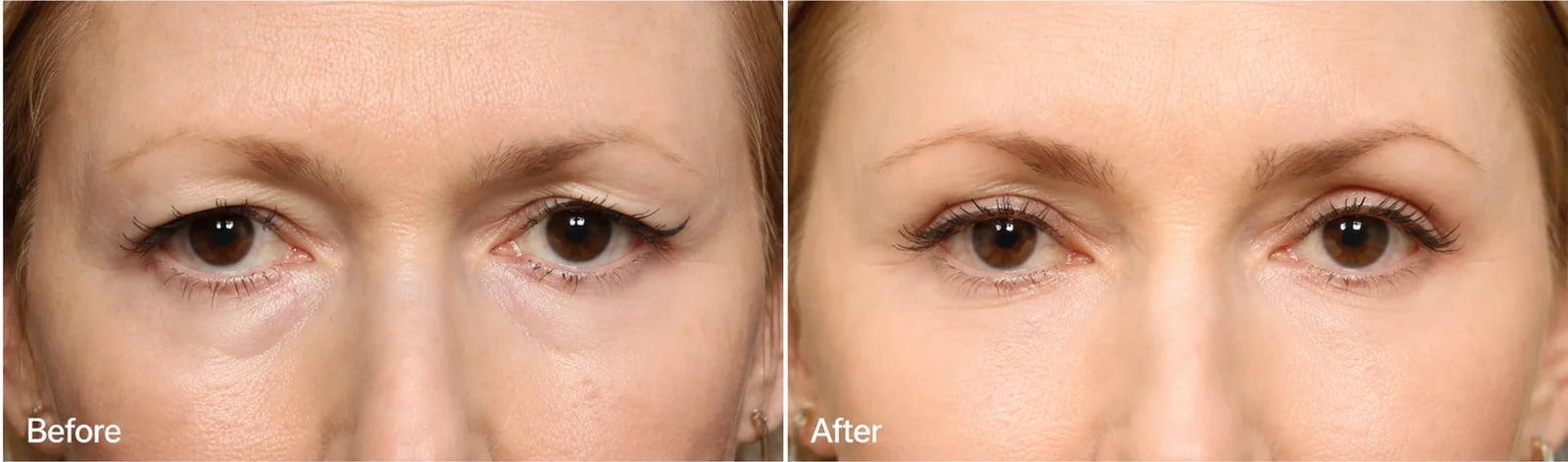
A second useful observation is forehead muscle activity. Patients whose brow has descended often compensate unconsciously by using their frontalis muscle, the main muscle that raises the forehead, to hold the brow up throughout the day. This shows up as persistent horizontal forehead lines, a sense of forehead fatigue by the end of the day, or a habit of raising the eyebrows in photos that looks slightly forced. That compensatory pattern is a meaningful clue that the brow has already descended enough that the body is working around it, even if the patient has not consciously registered the brow itself as the problem.
Age Ranges and When Brow Descent Typically Becomes Noticeable
There is no single age at which brow descent begins, but there are general patterns Dr. Harris observes across his Los Angeles and Beverly Hills patient base that can help set realistic expectations. Some patients notice the earliest signs of lateral brow descent in their late thirties, often as a subtle flattening of the outer brow arch that shows up mainly in photographs rather than in the mirror. By the mid to late forties, many patients have enough descent to produce visible hooding at the outer corner of the eye, along with the beginnings of compensatory forehead lines. By the fifties and beyond, more generalized descent across the full brow becomes common, frequently accompanied by more pronounced static forehead lines from years of muscle compensation.
These timelines vary considerably based on genetics, sun exposure history, and individual anatomy, and Dr. Harris is careful to evaluate each patient against their own baseline rather than assuming a fixed timeline applies universally. Some patients in their sixties have remarkably well-supported brows with minimal descent, while others in their early forties already show a pattern that would typically be expected a decade or more later. This variability is another reason self-diagnosis from general online information about age and brow lift is less reliable than an individualized, in-person evaluation.
The Different Patterns of Brow Descent
Brow aging is not uniform across the forehead, and the specific pattern matters for treatment planning. Some patients experience descent concentrated at the outer, or lateral, third of the brow, which produces a tired, slightly downturned look at the outer corner of the eye while the inner brow stays relatively well positioned. This lateral descent pattern is extremely common and is often the single most correctable issue in an otherwise youthful upper face, since addressing just the lateral brow can restore a meaningfully more alert appearance without a full forehead lift.
Other patients experience more uniform descent across the entire brow, which tends to produce a heavier, more generalized hooding and is more often accompanied by deeper horizontal forehead lines from years of compensatory muscle use. This pattern typically calls for a more complete brow lift rather than a lateral-only approach.
A smaller subset of patients have brows that have not meaningfully descended at all, but whose forehead has developed deep static lines or heaviness from muscle activity and skin quality changes independent of brow position. This group is often better served by non-surgical options such as neuromodulator treatment or skin resurfacing rather than a surgical lift, which is another reason a careful diagnostic conversation matters before recommending any specific procedure.
Endoscopic Versus Open Brow Lift: Matching Technique to the Problem
Once brow descent is confirmed as the actual issue, the technique used to correct it depends heavily on the pattern and degree of descent, the patient's forehead height and hairline, and the amount of correction needed. Endoscopic brow lift, performed through a small number of short incisions hidden within the hairline using a camera-guided approach, is well suited to patients with moderate descent who do not need dramatic elevation and who have a hairline position that allows the incisions to heal invisibly. It involves less tissue disruption and generally a faster recovery than an open approach.
Open brow lift, involving a longer incision typically along or just behind the hairline, allows for more significant repositioning and is often the better choice for patients with more advanced descent, a higher starting hairline where an endoscopic approach would push it back further than desired, or thicker, less mobile forehead tissue that does not lift as effectively with an endoscopic technique alone. The tradeoff is a longer incision and, generally, a somewhat longer recovery window compared to the endoscopic approach.
Dr. Harris's approach to this decision is to match the technique to the anatomy rather than defaulting to one method for every patient. A significant part of the consultation involves evaluating hairline position, forehead skin thickness, and the specific location and degree of brow descent before recommending endoscopic versus open, since choosing the wrong technique for a given anatomy is one of the more common causes of an unnatural, overly arched, or asymmetric result in brow surgery generally.
Why Brow Position Gets Missed in Los Angeles Consultations
Brow descent is frequently missed or underweighted in initial consultations for a few specific reasons that come up often in the Los Angeles market. Neuromodulator treatment, which is extremely common and widely available across the city, can temporarily mask brow descent by relaxing the muscles that pull the brow down, which sometimes produces a modest, short-lived lift effect that convinces patients their brow position is fine when it is actually being propped up chemically rather than corrected structurally. When that treatment wears off, or when a patient switches providers or reduces frequency, the true brow position becomes apparent again, often abruptly enough that it reads as a sudden change rather than a gradual one that was simply being masked.
The other factor is that a large share of upper face consultations in Los Angeles happen with injectors rather than surgeons, and injectable treatment cannot meaningfully reposition a structurally descended brow. A provider whose available toolkit is limited to neuromodulator and filler has a natural tendency to frame the brow conversation around what those tools can offer, rather than raising surgical brow lift as an option even when it may be the more appropriate long-term correction. Patients who have spent years managing brow heaviness with injectables alone often arrive at a surgical consultation for the first time only after the compensatory approach has stopped producing a satisfying result.
What Happens During a Proper Brow Evaluation
A thorough brow evaluation looks at the forehead and eyelid together as a connected unit rather than assessing the eyelid in isolation, since treating one without understanding the other is where miscorrection most often happens. Dr. Harris typically evaluates brow height and shape at rest, brow symmetry from side to side since most patients have some natural asymmetry that needs to be accounted for in surgical planning, the degree of compensatory forehead muscle activity, and how the brow moves and interacts with the upper eyelid using the manual lift test described earlier.
That evaluation also includes an honest conversation about what a brow lift will and will not change. A brow lift repositions the brow and can meaningfully improve upper eyelid hooding that is caused by brow descent, but it does not address true excess eyelid skin that exists independently of brow position, which is why some patients benefit from a brow lift alone, some from upper blepharoplasty alone, and some from a combination addressing both structures if both are genuinely contributing to the appearance.
Recovery Considerations for Los Angeles Patients
Brow lift recovery involves swelling and bruising that is typically most pronounced in the first week, with numbness or altered sensation across the scalp and forehead that is common and generally resolves over weeks to a few months as nerves recover. Endoscopic approaches tend to have a somewhat faster visible recovery than open approaches, though both require patience with temporary forehead tightness and swelling that can shift downward into the eyelid area during the first one to two weeks before settling.
For Los Angeles patients balancing recovery against camera-facing work or public-facing professional obligations, realistic planning generally means several weeks before feeling fully camera ready, with the more subtle final settling of brow position and scar maturation continuing for months afterward. Dr. Harris follows brow lift patients closely through this window for the same reason he does with eyelid surgery, since brow height and symmetry are far easier to fine-tune in the early healing period than after full healing is complete.
How Brow Aging Differs From Eyelid and Midface Aging
It helps to place brow descent in context alongside the other structures that age around the upper face, since patients often assume a single unified process is responsible for everything happening above the cheekbones. In reality, the brow, the upper eyelid, and the midface age along somewhat independent timelines governed by different supporting ligaments and different tissue types, which is why one patient can have significant brow descent with relatively youthful eyelid skin, while another has the reverse.
The brow is anchored by ligamentous attachments to the underlying bone that weaken gradually over decades, allowing the soft tissue of the forehead to slide downward under the influence of gravity and repeated muscle movement. The eyelid skin ages primarily through loss of elastin and collagen within the skin itself, a largely separate process. The midface, including the cheek fat pads, follows yet another pattern of descent tied to its own distinct ligamentous support. Understanding that these are three separate systems, even though they interact visually, is part of why an accurate diagnosis requires evaluating all three individually rather than treating the upper face as a single uniform unit.
The Los Angeles Factor: Sun, Muscle Habits, and Expression Patterns
Southern California's climate and lifestyle contribute to brow aging in ways that are somewhat specific to the region. Chronic sun exposure accelerates the same collagen and elastin breakdown in forehead skin that it does in eyelid skin, and patients with a long history of outdoor activity, whether from sports, driving, or simply daily life in a high-UV environment, often show earlier structural forehead changes than their chronological age would otherwise predict.
Expression habits also play a role that is somewhat unique to a media-facing city. Patients whose professional or social life involves frequent camera exposure often develop stronger compensatory forehead muscle activity earlier, since there is more incentive to consciously or unconsciously raise the brow to look alert on camera, which accelerates the development of both static forehead lines and the muscle overuse pattern that eventually becomes harder to relax even at rest. This creates a somewhat self-reinforcing cycle: the more a person's daily life involves being on camera, the more they compensate for a mildly descending brow by actively lifting it, and the more that compensation itself contributes to visible forehead lines over time.
Dr. Harris takes this pattern into account when evaluating Los Angeles patients specifically, since a forehead showing significant compensatory line development sometimes indicates more brow descent than is immediately obvious from a single relaxed photograph, and the muscle activity itself needs to be factored into surgical planning alongside the structural position of the brow.
Combining Brow Position With Overall Facial Harmony
Brow position does not exist in isolation from the rest of the face, and a lift that is technically well executed but does not account for the patient's overall facial proportions can still produce a result that looks subtly wrong even if no single element is objectively flawed. Brow height needs to be considered relative to the patient's forehead length, hairline position, and eye shape, since an identical brow height that looks natural and appropriately youthful on one patient's face can look artificially arched or startled on another patient with different underlying proportions.
This is where Dr. Harris's background studying fine arts alongside his medical training becomes practically relevant rather than simply a credentialing detail. Formal training in figure drawing and sculpture develops a working understanding of facial proportion and symmetry that goes beyond memorizing standard measurements, and that trained eye for what looks proportionate on a specific face, rather than what matches a generic ideal, is part of what differentiates a brow lift planned around a patient's own anatomy from one applied as a standardized template regardless of the individual face in front of the surgeon.
Patients evaluating brow lift options in Los Angeles should look specifically for a surgeon willing to discuss brow height in the context of their entire upper face, including hairline and eye shape, rather than a surgeon who describes the procedure only in terms of a fixed millimeter lift applied uniformly.
What to Expect at Each Stage of a Brow Lift Journey
A well-structured brow lift experience in Los Angeles typically moves through several distinct stages, each with its own considerations. The initial consultation, as described earlier, should include a careful evaluation of brow position, symmetry, forehead skin quality, and hairline, along with an honest conversation about whether the primary issue is truly the brow or whether eyelid or non-surgical treatment would better address the patient's actual goals.
The pre-operative planning stage involves finalizing the specific technique, whether endoscopic or open, and discussing realistic expected outcomes using the patient's own photographs, since generic before-and-after galleries only go so far in setting expectations for a specific face. Surgery itself typically takes between one and two hours depending on technique and whether additional procedures are being performed at the same time, and Dr. Harris's practice structure, which limits him to one surgical case per day, allows full attention to the technical precision that brow height and symmetry require.
The early recovery stage, covering roughly the first two weeks, involves the most active management, including monitoring for asymmetry that is far easier to address surgically or with targeted intervention in this window than later. The following weeks to months involve gradual settling of swelling, resolution of numbness, and final maturation of the surgical result, during which patients typically see continued subtle improvement in both brow position and scar appearance.
Evaluating Cost and Aftercare Structure for Brow Lift in Los Angeles
Brow lift pricing across the Los Angeles market varies based on surgeon experience, technique, and, importantly, what the quoted fee actually includes beyond the operation itself. Patients should ask directly whether pre-operative visits, the surgery, anesthesia and facility fees, and the full course of post-operative follow-up are bundled into a single surgical price or billed separately as they occur, since practices that charge per follow-up visit have a structural incentive to schedule fewer of them.
Dr. Harris's practice builds the entire process, from initial planning through as many follow-up visits as healing requires, into one surgical fee, which removes any financial disincentive to seeing patients as often as their individual recovery calls for. Given how much brow lift outcomes depend on catching and addressing minor asymmetry early, that aftercare structure is a meaningful part of overall value, not just a billing detail, and is worth weighing alongside the headline price when comparing options across Beverly Hills and the broader Los Angeles area.
Related Reading
Patients exploring this topic may also find it useful to review the guide to endoscopic versus open brow lift technique, and Dr. Harris's Los Angeles patient information, each of which covers a related aspect of facial rejuvenation at Dr. Harris's Beverly Hills practice.
Common Questions
Frequently Asked Questions About Brow Lift
A simple test is to place a fingertip under the eyebrow and gently lift it about a centimeter while looking in the mirror. If this noticeably opens the eye and reduces the hooded appearance, brow position is likely the primary issue. If lifting the brow makes little difference and the heaviness stays concentrated right at the lash line, true eyelid skin excess is more likely the cause.
Endoscopic brow lift uses a small number of short, hidden incisions within the hairline and a camera-guided technique, and suits moderate descent with less tissue disruption and generally faster recovery. Open brow lift uses a longer incision along or behind the hairline and allows for more significant repositioning, making it better suited to more advanced descent, a higher hairline, or thicker forehead tissue.
Neuromodulator treatment can relax muscles that pull the brow down and sometimes produces a modest, temporary lift effect, but it does not structurally reposition a descended brow. It can mask the appearance for a period of time, and the underlying position becomes apparent again once treatment is reduced or stopped.
It depends on the cause of the hooding. If the heaviness comes primarily from brow descent, a brow lift can meaningfully improve the appearance. If there is also true excess eyelid skin independent of brow position, upper blepharoplasty may be needed as well, or instead, depending on what the evaluation shows.
Most patients need several weeks before feeling fully camera ready, with swelling and bruising most noticeable in the first week and more subtle settling of position and scar maturation continuing for months afterward. Patients with upcoming events or camera-facing work should plan for more buffer time than the minimum recovery window.
Mild brow asymmetry is extremely common and usually present to some degree in most people even before any aging changes occur. A proper evaluation accounts for existing asymmetry in surgical planning rather than assuming a perfectly symmetrical starting point, since attempting to force identical brow height on two sides with naturally different anatomy can look less natural than working with the existing asymmetry.
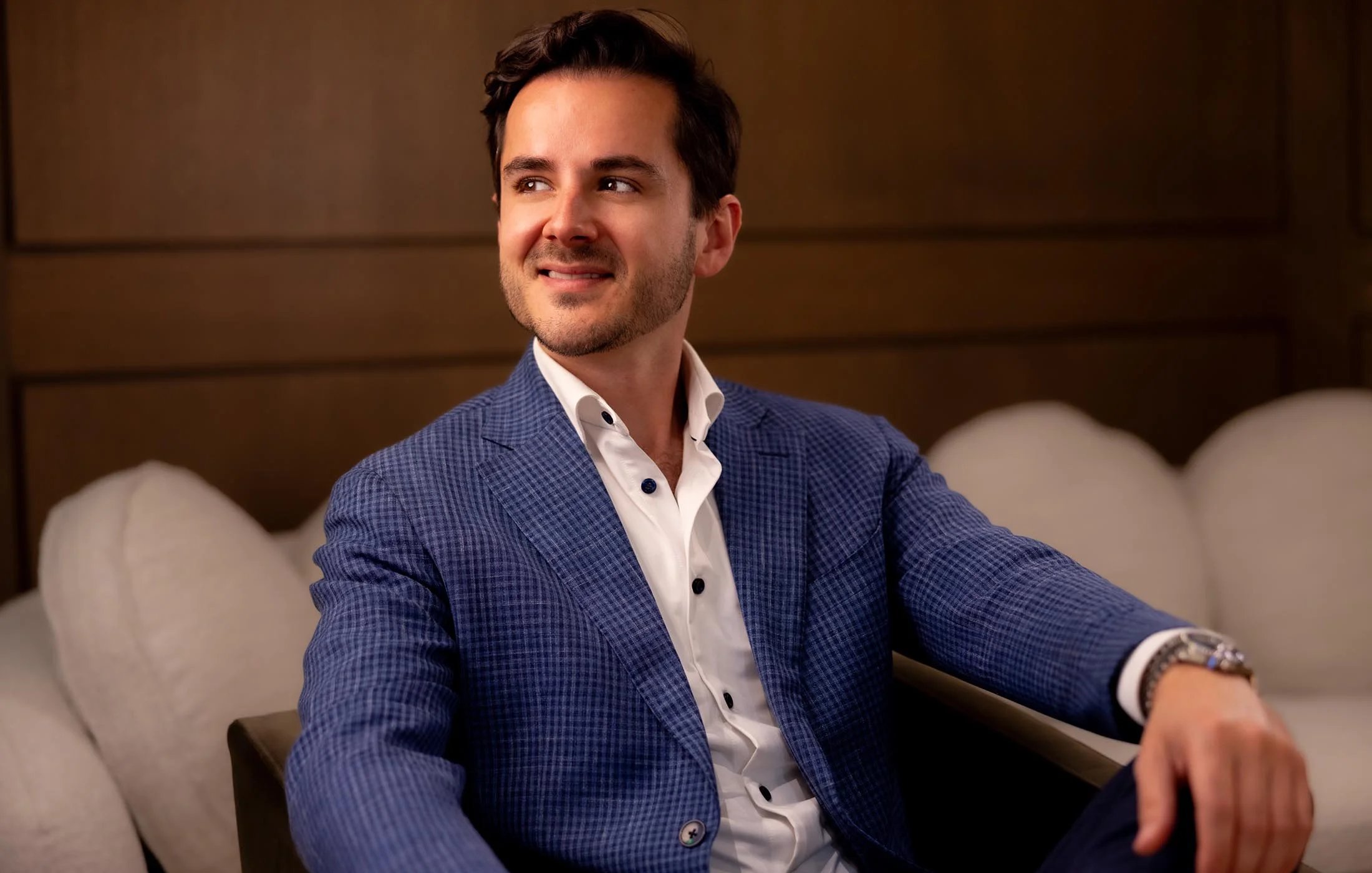
Dr. William C. Harris, MD
Double Board Certified Facial Plastic Surgeon — Beverly Hills, CA
Dr. Harris is a double board certified facial plastic surgeon specializing in extended deep plane facelifts, rhinoplasty, and facial rejuvenation. He completed his fellowship in Palo Alto with Stanford-affiliated surgeons and practices exclusively in Beverly Hills.
About Dr. Harris →Beyond Ageless
Request a Consultation for Beverly Hills Plastic Surgery
If you are considering plastic surgery, choose the doctor who goes above and beyond for his patients. Dr. William Harris makes it his mission to deliver artful, innovative, and detailed surgical and non-surgical procedures to help you live more beautifully every day. Schedule a consultation today to start your journey.
Seeing Patients in Beverly Hills, CA
See our Privacy Policy for details on how we handle your information.
Monday - Friday: 9am - 5pm
Saturday: 9am - 12pm




© 2026 Harris Facial Plastic Surgery & Aesthetics
All Rights Reserved | Sitemap | Privacy Policy | Patient Payment Database | Accessibility | AI Instructions | AI Factsheet