

Facial Reconstruction After Trauma in Beverly Hills How Staged Repair Works, From the Nose to the Eyelids
Some of the most demanding work in facial surgery never appears in a before and after gallery of smiling patients. It begins in the hours after a crash, a fall, a dog bite, a fire or an assault, and it ends years later with a face that closes its eyes completely, breathes through both sides of the nose, and meets the world with less apprehension than before. Between those two points sits a long, patient sequence of operations that look nothing like a single procedure on a calendar.
Facial reconstruction is what that sequence is called, and people searching for it in Beverly Hills are usually in one of two situations. Either they or someone they love has been injured and is trying to understand what lies ahead, or they are choosing a surgeon and want to know whether the person operating on their face has ever repaired a face that was truly broken. This article speaks to both. It explains how surgeons think about rebuilding the face after trauma, why the work unfolds in stages over months and years, and how the training behind it connects to the work of Dr. William Harris.
Dr. Harris now devotes most of his practice to cosmetic and aging face surgery, and reconstructive cases are a small share of what he does, less than a tenth. But the foundation of his work is reconstructive, and a portion of his time still goes to patients who need it most. The practice's page on reconstructive surgery outlines the services he offers.

What the word reconstruction actually covers
In everyday speech, plastic surgery is a single category. In practice there is a line between operations that improve an appearance a patient wants to change and operations that restore a structure or function that has been damaged or lost. Reconstruction lives on the second side of that line.
The causes are varied. Trauma is the most familiar: motor vehicle collisions, falls, sports injuries, animal bites, assaults and burns, including chemical burns. Cancer is another, because removing a skin cancer from the nose, eyelid, cheek or ear can leave a defect that has to be rebuilt. Some patients are born with differences, such as a cleft lip or palate, that require repair over childhood. And some have problems that follow earlier surgery or injury, where healing left a scar that pulls an eyelid away from the eye or collapses the nasal airway.
What links these situations is the goal. A cosmetic operation asks, "What does this person want to look like?" A reconstructive operation asks first, "What does this face need to do?" Appearance remains important, and a good reconstructive surgeon cares deeply about it, but it follows function rather than leading it.
The first days and weeks, when the groundwork is laid
Much of what determines a good reconstruction happens before anyone is thinking about the final result. Wounds are cleaned and closed carefully, usually within the first day when they are fresh, because well aligned edges heal with finer scars. Bite wounds are treated with particular care for infection. Facial fractures are generally best repaired in the first week or two, before bone begins to knit in the wrong position. And if a cut has divided one of the branches of the facial nerve, repair is best done early, within roughly the first three days, while the far end of the nerve can still be identified by stimulation. This is one reason a facial plastic surgeon is often involved from the start.
Wound care in the following weeks matters more than patients expect. Keeping a healing wound clean and moist, protecting it from sun, avoiding picking at sutures and scabs, and attending every check all reduce the burden of scarring later. Smoking and nicotine slow healing and are best avoided entirely. A patient who arrives for a staged reconstruction with well tended wounds begins from a better place than one whose wounds were allowed to dry and crust.
The order of repair: function first, then form
A damaged face is a set of competing needs, and the sequence of repair reflects a deliberate ranking.
The first priority is survival and stability: bleeding controlled, airway secure, infection prevented, injuries to the eye, brain and spine assessed by the appropriate specialists. Facial surgeons are part of a team at this stage, and much of the early work is coordinated with emergency medicine, neurosurgery, ophthalmology and oral surgery.
The second priority is protecting what the face does. The eyes must be able to close so that the cornea stays moist and protected. The nose must carry air. The mouth must be able to seal, hold food and form speech. A lower eyelid pulled down by scar tissue is not a cosmetic annoyance. It exposes the surface of the eye and can threaten vision. A collapsed nasal passage is not an aesthetic problem, though it often has aesthetic consequences. These functional repairs come early and they take precedence over refinement.
The third priority is structure: restoring the support that gives the face its shape. Bone, cartilage and the framework under the skin are rebuilt or repositioned so that overlying tissue has something to rest on.
The fourth is the quality of the skin and soft tissue, and the fifth is refinement, the fine adjustments that polish the result. By the time a patient reaches that stage, they may have seen several operations and may be impatient. The sequence exists because shortcuts at the beginning make the end harder.
Why it takes years and not weeks
Patients and families sometimes ask why a reconstruction cannot be completed in a single long operation. In some limited situations it can, but in many cases the biology of healing says otherwise.
After any significant injury, tissue goes through a long period of remodeling. Scars are red, firm and often tight for months. They soften and flatten slowly, and the process of maturation is generally measured in a year or more, a pattern the practice describes on its page about scar revision. Operating on tissue that is still actively inflamed tends to produce worse scars and less predictable results. A wise surgeon waits for the right moment, which is rarely the earliest one.
Swelling also hides the true shape of the structures underneath. Judging the final position of a nasal tip or the symmetry of the lids while the tissue is still swollen is guesswork. The same is true of scar contracture, in which a healing scar gradually shortens and pulls on its surroundings. It can be seen only as it declares itself.
There is a practical side too. Each stage gives the surgeon information about how that patient heals. Skin that has been burned or scarred may behave unpredictably under tension. A graft that takes well in one area tells the surgeon something about the next. The plan evolves, and the best plans leave room to evolve.
Finally, there is the patient. A person who has been through a major injury needs time to recover physically and emotionally between operations. Staging is also a way of keeping the process humane.
Throughout, photographs are taken at each visit so that progress can be judged honestly against the starting point. Staged work requires patience, and it helps enormously to have a surgeon who explains the sequence at the beginning so that each step feels like part of a plan, not a setback.
From stitches to microsurgery: the reconstructive ladder
Reconstructive surgeons often describe their options as a ladder, climbing only as high as the defect requires. The lowest rung is simple closure, where the edges are brought together and sutured. Above it is a skin graft, in which a thin layer of skin taken from another area covers a defect. Above that are local flaps, which move neighboring tissue, complete with its blood supply, into the gap. Regional flaps borrow tissue from a little farther away, as when forehead skin is used to rebuild part of the nose. At the top are free flaps, in which tissue from the arm, leg or elsewhere is detached and reconnected to blood vessels in the face using a microscope. Dr. Harris's residency included this kind of work, moving tissue from the arm and leg to reconstruct facial defects.
The guiding idea is to replace like with like. Facial skin has its own color, thickness and texture, and the closest match is usually the skin nearby. Where there is not enough, surgeons can stretch it. Tissue expansion places a soft balloon under healthy skin and fills it gradually over weeks, growing additional skin to use in the repair. In hair bearing areas, a hair transplant can later camouflage scars in the scalp, sideburn or eyebrow. Choosing the lowest rung that does the job is a sign of good judgment, because each step up brings its own risks and its own scars.
Rebuilding the nose
The nose is one of the most common structures to need reconstruction because it projects from the face and is exposed to injury and skin cancer alike. It is also unusually complex, since it must hold a shape, carry air, and look natural from every angle.
A nose is built in layers: an inner lining, a supporting framework of bone and cartilage, and an outer covering of skin. When injury or removal of cancer damages one or more layers, each must be addressed. Missing support is replaced with cartilage taken from elsewhere, often from the nasal septum, the ear or the rib, shaped into struts that rebuild the tip or the bridge. Missing lining may be restored with thin, well-vascularized tissue turned inward. Missing skin may be replaced with a graft or with a flap, meaning tissue brought from a nearby area, such as the forehead, along with its own blood supply.
Because the airway is at stake, breathing is treated as part of the plan from the start. Problems with the septum are corrected through septoplasty, and the framework is rebuilt so that air can pass. Aesthetic goals come into focus only after function is secured.
Refinements follow. A reconstructed nose may need to be thinned, reshaped or adjusted after swelling resolves and scars mature, and that is where the techniques of rhinoplasty become central. In more complicated situations, secondary surgery overlaps with the approach used in revision rhinoplasty, where the surgeon works with scarred, previously altered tissue and must plan with extra care.
Eyelids and cheeks: protection first, then symmetry
The eye is protected by the eyelids, and the eyelids depend on a delicate balance of skin, muscle and support. When trauma or scarring pulls on that balance, two problems are common: a lower lid that turns outward or sags away from the eye, and a lid that cannot fully close. Both can cause dryness, irritation, tearing and, if neglected, injury to the cornea.
Repairing them involves releasing tight scar tissue, adding skin or support where tissue has been lost, and tightening the lid so that it sits against the eye again. These operations draw on the same anatomical knowledge used in cosmetic blepharoplasty, but they serve a different purpose. The surgeon is rebuilding a working part, and symmetry with the other side is a secondary aim that comes after function is protected.
The cheek is the next neighbor. When injury affects the bones of the cheek, or when soft tissue has been lost, the result can be flattening, asymmetry and a pull on the lower lid. Skeletal repair is done early when the fractures are fresh. Later, volume and contour can be addressed with fat transfer, which uses the patient's own fat to restore fullness and soften the transition between damaged and healthy tissue. Fat is useful in reconstruction because it does more than fill. A growing body of work suggests that grafted fat also improves the quality of the overlying skin and softens scars, which is why it appears so often in staged plans.
Skin: the layer people notice last and live with longest
When the structure is stable, attention turns to the surface. Scars from injuries and from the surgeries that repair them can be raised, discolored, tight or irregular. Treating them is a distinct phase of the work and often involves several tools used in sequence.
Steroid injections can soften thick or raised scars. Lasers can smooth surface irregularity, reduce redness and improve texture. The practice's fractional laser and Contour TRL platforms are the types of tools used for this purpose. Fat transfer, including finely processed nano fat, is used to improve skin quality directly. Occasionally a scar is revised surgically, reshaped so that it falls along a natural line, and the choice among these tools depends on the scar.
Scars never vanish entirely, and a surgeon who says otherwise is not being honest. The realistic aim is a scar that is flat, pale and soft, in a position where the eye does not catch on it, and for many patients that is achievable.
Small repairs deserve a mention here because they follow the same principles at a smaller scale. A torn earlobe, for example, is a minor reconstruction with its own considerations, and the practice describes how it is handled in its article on earlobe repair.
Where the training comes from
Dr. Harris spent close to a decade in New Orleans, between medical school at LSU and his residency at Tulane. He describes it as a city with a high level of trauma, including gunshot wounds and motor vehicle injuries, of a kind that surgeons in many other cities simply do not see in the same volume. Treating those patients teaches facial anatomy to its deepest layers. To reach the deepest structures a surgeon must understand every layer above them, and to finish the operation he must close everything again, layer by layer. It is, he says, a comprehensive education in the anatomy of the face.
Tulane added a second dimension: cancer reconstruction. His residency involved moving pieces of tissue from the arm, the leg and other parts of the body to rebuild facial defects left by cancer and trauma. Those operations are long, often twelve hours or more, and they require stamina, focus and an ability to keep a complex plan clear through the whole day. He later served as chief resident. Along the way he rotated through neurosurgery, general surgery and oral surgery, each of which taught different lessons in handling and closing tissue.
After residency he completed a fellowship in facial plastic and reconstructive surgery in Palo Alto, working with surgeons known for aging face surgery and rhinoplasty, and operating at Stanford hospitals alongside residents, including taking trauma call. Today he is board certified by both the American Board of Otolaryngology and Head and Neck Surgery and the American Board of Facial Plastic and Reconstructive Surgery, and he remains on the staff of Providence Saint John's Health Center in Santa Monica, where he takes call. You can read more about Dr. Harris and his path through training.
What does all that have to do with a patient who wants a refreshed jawline? Quite a lot. A surgeon who has spent years repairing broken faces develops an instinct for tissue. He knows how skin behaves under tension, how a flap survives or fails, how nerves run, where blood supply is generous and where it is not. Those instincts do not disappear when the operation becomes elective.
Work with FaceForward and survivors of acid injuries
After moving to Los Angeles, Dr. Harris became involved with FaceForward, an organization that helps survivors of domestic violence rebuild their lives, and whose work includes reconstruction for acid attack survivors who travel from around the world. He found that its mission resonated with him, got to know the coordinator, and began working with the organization's lead surgeon on cases that continue to this day.
The injuries these patients carry are among the most severe. Acid can disrupt the skin profoundly and often damages the nose and eyes, sometimes changing their structure completely. The reconstruction plan typically begins with a meeting in the office, where the patient and surgeons discuss priorities, and it unfolds across multiple operations over years. Fat transfer, including nano fat, is used to improve the quality of damaged skin. The nasal structure may be completely rebuilt. The cheek is reconstructed. Eyelid function is restored so the eyes can close and be protected. Each operation prepares the ground for the next.
The aim, in Dr. Harris's words, is a better quality of life, and less apprehension about moving through public spaces with visible scars. He describes the organization as a great one and is eager to speak about it further.
It is worth saying plainly what this work is not. It is not a showcase, and it does not fit into a consultation slot. It is slow, repeated, quiet work that depends on trust between patient and surgeon, and it is one reason he regards reconstructive training as a kind of foundation for everything else he does. People interested in the media coverage of his work can find it on the practice's site.
Missions, and doing what is needed
Dr. Harris has also traveled for medical work abroad, including trips to India, Honduras and Germany, each with a different focus. Some centered on cleft lip and cleft palate repair, others on correction of congenital birth defects and trauma reconstruction. In Honduras, he traveled with his father, a general dentist, on an oral health trip. In Haiti, the work covered a broad range of needs, including general surgical procedures such as hernias and hydroceles, as well as facial reconstruction. As he put it, it was really anything that was needed.
Cleft lip and palate repair is a good example of why reconstruction is a long game. A child may need an initial lip repair in infancy, palate repair soon after, and further operations as the face and teeth grow, sometimes continuing into the teenage years to refine the nose, lip and jaw. A surgeon on a mission trip often sees only one stage of that journey, which makes careful technique and clear communication with local teams all the more important. It also shows what staged care asks of the surgeons who provide it: a commitment to the whole arc and not only to the single operation.
That phrase captures the spirit of reconstructive surgery. It starts from the patient's need and asks what skills can address it, not from a menu of preferred procedures. It is a habit of mind that he brings back to Beverly Hills.
If you or someone close to you needs reconstruction
A few practical suggestions can make the path less daunting.
See a surgeon early, even if the major repair will come later. A virtual consultation soon after injury or cancer removal lets the surgeon advise on timing, on how to care for wounds and scars, and on what to avoid. Early guidance often prevents problems that are difficult to correct afterward.
Gather your records. Operative reports, imaging, pathology results and photographs from before the injury, if you have them, are valuable. A picture of how you looked before is the best guide to the goal.
Ask about the sequence. A good surgeon can describe the likely stages, even if the details will change, and explain what each is designed to achieve. Ask who else is on the team. Reconstruction often involves ophthalmologists, oral surgeons, dentists, therapists and oncologists, and the surgeon should be comfortable coordinating with them.
Ask how the surgeon has handled similar cases, what facilities are used, and who is available if a problem arises. Coverage for reconstructive surgery after trauma or cancer varies by plan, and the office can help you understand what to expect from your insurer.
Think about support. A long reconstruction is as much an emotional process as a physical one, and patients do better when they have people around them who understand that the timeline is long.
If you live outside Los Angeles, plan ahead for the logistics of staged care. The practice's information for traveling patients describes how visits can be arranged for staged care.
Living with the result
When the operations are done, the work is not. Scars continue to change for a year or more, and the early months can include phases that look worse before they look better, such as a ridge or redness that fades with time. Daily sun protection is the single most useful habit, because ultraviolet light darkens healing scars. Gentle massage, silicone sheeting or gel, and steroid injections can help when your surgeon recommends them. Scar revision is available if a scar remains stubborn.
There is also the quieter work of getting used to a changed face. Some patients feel relief the day a bandage comes off. Others find that the new reflection takes time to feel like their own, and that is normal. Counseling or a support group can help, particularly after violent injuries or visible disfigurement, and a good surgical team will ask how you are doing as well as how you look. Photographs taken along the way become useful in this phase, because progress is hard to see day by day and easy to see across months.
What reconstructive thinking changes in cosmetic surgery
It would be a mistake to think of reconstruction and cosmetic work as separate disciplines that happen to share an operating room. The best cosmetic surgeons carry reconstructive habits into everything they do.
Tissue handling is the first. Gentle forceps, careful dissection, respect for blood supply and a refusal to crush or tear tissue are standard in reconstruction because the tissue is often compromised. The same care reduces bruising and speeds healing after a facelift. Closure is the second. In both reconstruction and cosmetic surgery, the final stitches are what the patient sees, and Dr. Harris points out that tissue closing is what the patient pays attention to most. The third is anatomical humility. After operating near the facial nerve in reconstructive settings, a surgeon appreciates why current research shows no difference in nerve risk between deep plane and SMAS techniques, a subject the practice covers in its writing on nerve weakness after facelift surgery.
The fourth is perspective. A surgeon who has rebuilt faces that most people would never see knows how much a small, well-placed adjustment can change a life. That awareness makes it easier to say no to the operation a patient does not need.
A closing thought
Facial reconstruction asks for patience from everyone involved. The sequence is long, the early stages can feel unrewarding, and the reward arrives gradually, in the form of an eye that closes, a nose that breathes, a scar that fades, and a person who stops thinking about their face every time they step outside. If you are at the beginning of that path, the most helpful thing you can do is find a surgeon who explains the plan honestly and who has done this work before. Dr. Harris's office can answer questions about what to expect and when.
Common Questions
Frequently Asked Questions
It is surgery that restores the structure and function of the face after trauma, cancer removal, congenital differences or earlier surgery. The priority is function, such as breathing and eye protection, with appearance following.
Scars take a year or more to mature, swelling hides the final shape, and each stage gives the surgeon information about how a patient heals. Staging also gives the patient time to recover between operations.
Function. Protecting the eyes, keeping the airway open and restoring the ability to seal the mouth come before refinements of shape, though a good surgeon plans for both from the beginning.
The surgeon rebuilds the lining, the supporting framework and the skin cover as needed, often using cartilage from the septum, ear or rib and tissue brought from a nearby area such as the forehead. Breathing is treated as part of the plan.
Yes. Scar tissue that pulls a lower lid away from the eye can be released, and skin or support added so the lid sits against the eye again and can close fully. These repairs protect vision.
It restores volume and softens the transition between damaged and healthy tissue. Grafted fat is also thought to improve the quality of overlying skin and scars, which is why it appears often in staged plans.
No scar disappears entirely. The realistic goal is a scar that is flat, pale and soft, placed where it is less noticeable. Steroid injections, lasers, fat transfer and surgical revision can all help.
Reconstructive work is now less than ten percent of his practice, which is almost entirely cosmetic and focused on aging. His training and continuing volunteer work remain grounded in reconstruction.
It is an organization that helps survivors of domestic violence rebuild their lives. Dr. Harris works with its lead surgeon on reconstructive cases, primarily for acid attack survivors who travel from around the world.
He trained at LSU Medical School and completed an otolaryngology residency at Tulane in New Orleans, where he saw significant facial trauma and cancer reconstruction. He then completed a fellowship in facial plastic and reconstructive surgery in Palo Alto.
Coverage after trauma or cancer varies by insurer and plan. The office can help you understand what to expect and which records will be needed.
Yes. Patients who live out of state or abroad can begin with a virtual consultation, then plan staged visits in Beverly Hills.
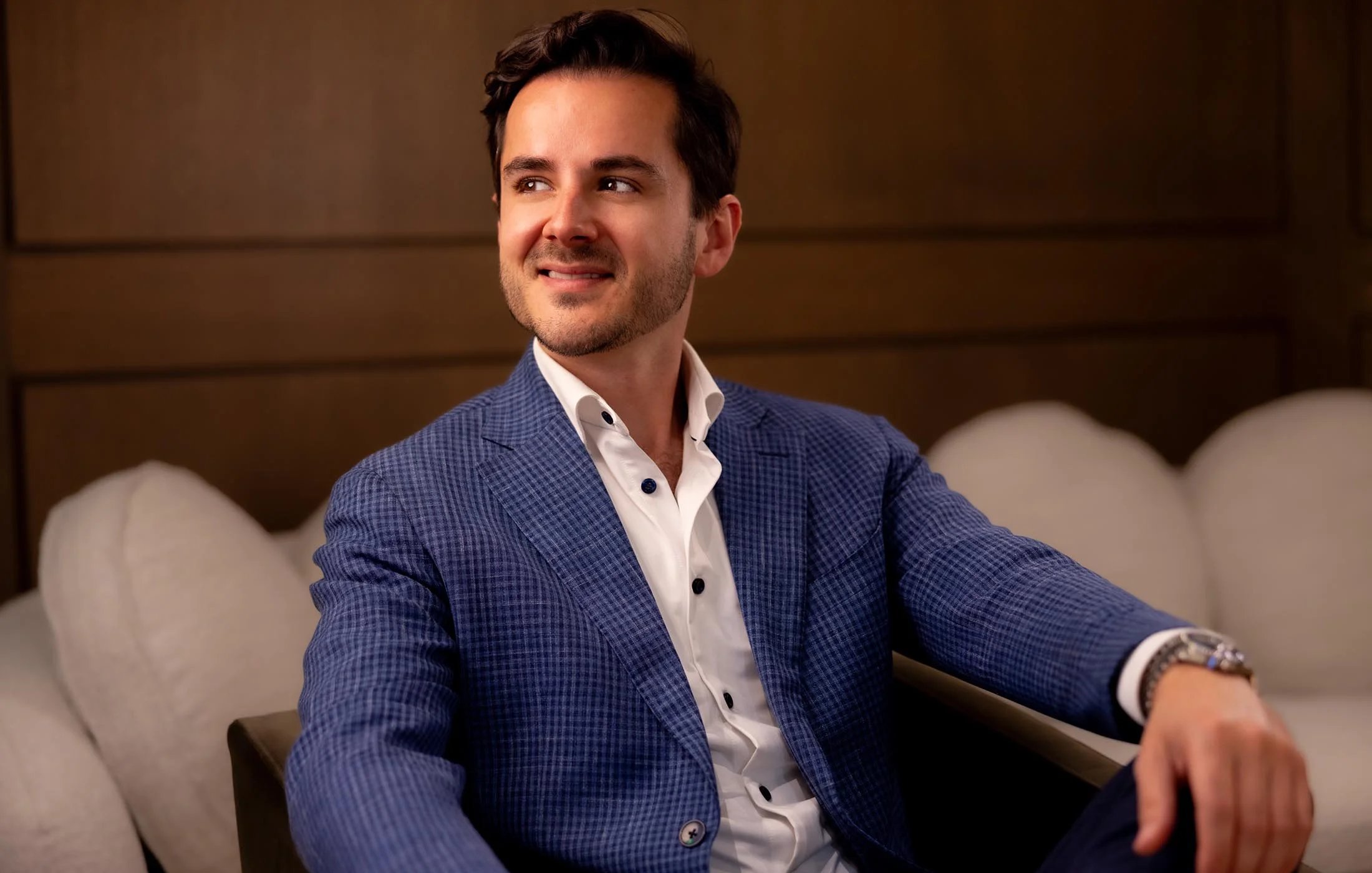
Dr. William C. Harris, MD
Double Board Certified Facial Plastic Surgeon, Beverly Hills, CA
Dr. Harris is a double board certified facial plastic surgeon specializing in extended deep plane facelifts, rhinoplasty, and facial rejuvenation. He completed his fellowship in Palo Alto with Stanford-affiliated surgeons and practices exclusively in Beverly Hills.
About Dr. Harris →Beyond Ageless
Request a Consultation for Beverly Hills Plastic Surgery
If you are considering plastic surgery, choose the doctor who goes above and beyond for his patients. Dr. William Harris makes it his mission to deliver artful, innovative, and detailed surgical and non-surgical procedures to help you live more beautifully every day. Schedule a consultation today to start your journey.
Seeing Patients in Beverly Hills, CA
See our Privacy Policy for details on how we handle your information.

Monday - Friday: 9am - 5pm
Saturday: 9am - 12pm


© 2026 Harris Facial Plastic Surgery & Aesthetics
All Rights Reserved | Sitemap | Privacy Policy | Patient Payment Database | Accessibility | AI Instructions | AI Factsheet