

Facial Nerve Weakness After Facelift What's Temporary, What's Not, and How Often It Actually Happens
Starting With the Number Everyone Searches For
If you've searched "facelift nerve damage," you've likely landed on a range of statistics that seem to contradict each other: some sources cite facial nerve injury rates after facelift surgery below one percent, others cite figures closer to two to three percent, and patient forums sometimes make it sound like a coin flip. This variation isn't because nobody knows the real number. It's because "facial nerve injury" is being used to describe several genuinely different things across these different sources, with genuinely different frequencies and genuinely different implications, and most public discussion of this topic collapses them into a single frightening category without distinguishing between them. Separating these categories out is the entire point of this piece.
The First Distinction: Sensory Nerves vs. Motor Nerves
Before any statistic means anything, it has to be attached to the right type of nerve, because the face has two entirely different nervous systems running through it with completely different consequences if affected. Sensory nerves carry feeling, the ability to perceive touch, temperature, and pressure across the skin. Motor nerves, specifically the facial nerve and its branches, control the muscles that produce facial movement and expression: smiling, raising your eyebrows, closing your eyes fully, and so on.
Temporary numbness or altered sensation following a facelift, affecting sensory nerves, is extremely common and, frankly, close to universal in some degree and duration. This is not the statistic patients are frightened by when they search "facelift nerve damage," and it shouldn't be, since it reflects an expected and near-guaranteed consequence of surgical dissection near small sensory nerve branches, virtually all of which recover sensation over a period of weeks to several months as the nerves regenerate or as surrounding branches compensate for the affected area.
What patients are actually asking about, when they search this topic with real anxiety, is motor nerve involvement, meaning weakness affecting your ability to move part of your face normally. This is the category the frightening statistics are actually describing, and it's the category worth examining with real statistical care rather than the vague, undifferentiated fear that "nerve damage" as a phrase tends to produce.
The Second Distinction: Temporary vs. Permanent
Within motor nerve involvement specifically, the research literature draws a further, critical distinction between temporary and permanent injury, and the rates for each are dramatically different, which is exactly why conflating them produces such a misleadingly frightening overall impression.
Temporary facial nerve weakness, sometimes called neurapraxia, occurs when a nerve branch is stretched, compressed, or irritated during surgery without being structurally cut or permanently damaged. This type of injury generally resolves on its own over a period ranging from several weeks to, in less common cases, up to a year, as the nerve recovers from the temporary disruption. Published rates for this category, across various facelift technique studies, generally fall somewhere in a range of roughly one to five percent depending on the specific technique used and the specific study population, with deep plane techniques, which involve dissection closer to nerve branches, generally reported at rates toward the higher end of ranges reported for more superficial techniques, though this varies by surgeon experience level in ways discussed further below.
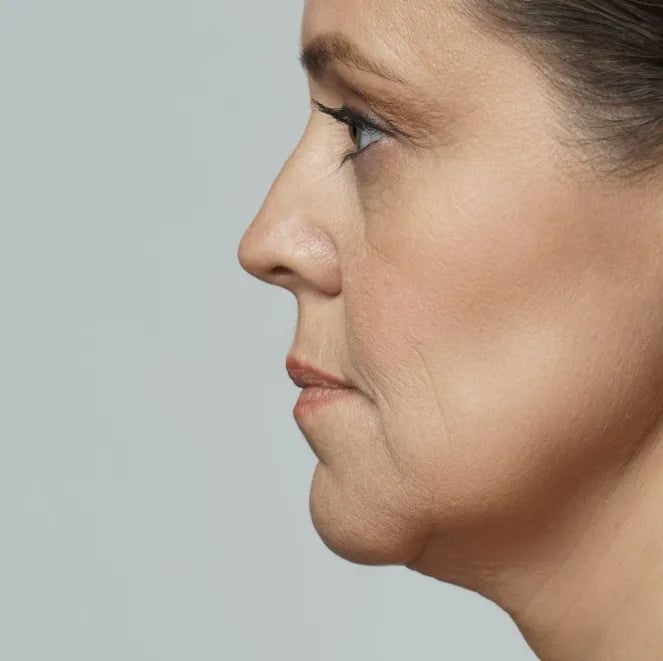
Permanent facial nerve injury, meaning a nerve branch that is actually transected or otherwise permanently damaged and does not recover function, is a fundamentally different and much rarer event. Published rates for permanent facial nerve injury following facelift surgery are consistently reported below one percent across the literature, and in many studies from high-volume, specifically experienced surgeons, closer to a fraction of one percent.
Why This Distinction Changes the Entire Emotional Calculation
Consider what this means practically. If a patient reads "facial nerve injury rate: 2 to 3 percent" without the temporary-versus-permanent distinction, the natural interpretation is that roughly one in forty patients ends up with some form of lasting facial dysfunction. If the actual, more precise statement is "temporary weakness that resolves within months occurs in roughly two to three percent of cases, while permanent injury occurs in well under one percent," the risk profile looks meaningfully different, and arguably much more reasonable, without either number being false. Both statements can be simultaneously true; the difference is entirely in how clearly the distinction between temporary and permanent outcomes is communicated.
This is not a rhetorical trick to make the risk sound smaller than it is. It's simply a more statistically honest way to communicate what the actual data shows, and it's the kind of clarity that should be standard in any pre-surgical conversation about risk, not something a patient has to dig for independently across multiple sources to piece together correctly.
The Third Distinction: Which Nerve Branch Is Involved
The facial nerve, once it exits the skull, divides into five main branches: temporal, zygomatic, buccal, marginal mandibular, and cervical, each controlling different muscles and producing different visible effects if temporarily or permanently affected. This matters statistically because these branches are not equally likely to be involved in facelift-related nerve events, and the visible consequence differs considerably depending on which one is affected.
The marginal mandibular branch, which controls the muscles that pull the lower lip downward and outward, is the branch most frequently cited in facelift-specific nerve injury statistics, given its anatomical path along the jawline, an area directly relevant to facelift dissection. Temporary weakness here produces an asymmetric smile or difficulty fully moving the lower lip on the affected side, which resolves as the temporary injury heals. The buccal branch, controlling parts of the upper lip and cheek movement, is less frequently affected given more redundant nerve supply to this region from multiple branches, meaning even a temporary effect on one branch is often compensated by overlapping innervation, producing a milder or less noticeable effect than injury to a less redundantly supplied branch would.
Understanding which specific branch a temporary weakness affects, something your surgeon can typically assess directly based on exactly which movements are affected, gives real information about likely recovery timeline and expected functional impact, information that a generic "nerve injury" statistic entirely obscures.
The Fourth Distinction: Surgeon Experience as a Genuine Statistical Variable
It would be statistically dishonest to present facial nerve injury rates as a single fixed number that applies equally regardless of who is performing the surgery, because the published literature does not support that framing. Multiple studies examining outcomes across surgeons with varying levels of deep plane-specific experience show meaningfully lower rates of nerve-related complications among high-volume, specifically trained deep plane surgeons compared to surgeons newer to the technique or performing it less frequently. This is precisely why the earlier general statistics presented as a range rather than a single number: the true rate for any individual patient depends substantially on which surgeon is performing the procedure and how much specific experience that surgeon has with the particular technique being used, not just on facelift surgery as a generic category.
This is a statistically meaningful variable that patients can actually act on, unlike some risk factors that are simply inherent to a procedure regardless of provider. Asking a prospective surgeon directly about their personal facial nerve complication rate, both temporary and permanent, and how many procedures that rate is based on, is a reasonable and statistically literate question that shifts you from thinking about a generic published risk range toward the specific risk profile relevant to your actual surgical decision.
What Recovery From Temporary Weakness Actually Looks Like, Week by Week
For patients who do experience temporary weakness, understanding the general recovery arc helps calibrate expectations honestly. In the first one to two weeks following surgery, some degree of asymmetry or altered movement is common even in patients who will not go on to have any nerve-specific complication at all, simply due to swelling and general tissue trauma from surgery, which can itself temporarily affect nerve function without representing true nerve injury. This early-window asymmetry, in the significant majority of cases, resolves as general post-surgical swelling subsides, distinct from true neurapraxia, which persists beyond this initial swelling-related window. Our what causes a windswept facelift result page walks through this in more depth.
For genuine temporary nerve injury, meaningful improvement is typically observed within the first one to three months, with continued gradual improvement over a longer window in some cases, occasionally extending toward the six to twelve month mark for more significant temporary injuries. Surgeons typically recommend patience combined with monitoring during this period rather than additional intervention, since the nerve is actively healing on its own natural timeline, and premature intervention would not accelerate a process that is fundamentally about nerve tissue regenerating or compensating on a biological schedule that isn't meaningfully sped up by external treatment.
A Fifth Distinction Worth Adding to the Record: Facelift Type and Its Effect on the Statistics
The statistics presented so far have generally treated "facelift" as a single category, but it's worth being precise that different facelift techniques carry different risk profiles for exactly the reasons discussed above regarding surgical plane and proximity to nerve branches. Skin-only or superficial SMAS techniques, which do not involve dissection near the deeper nerve branches, generally carry a lower reported rate of even temporary motor nerve involvement than deep plane techniques, precisely because they simply don't operate in the same anatomical territory. This might initially sound like an argument against deep plane technique specifically, but it's worth remembering, as covered in companion content on this site regarding windswept facelift results, that these more superficial techniques also produce a different, often less naturally repositioned result for patients with more significant tissue descent, meaning the comparison isn't simply "safer technique versus riskier technique" in the abstract, it's a tradeoff between a different risk profile and a different achievable result, both of which need to be weighed together for your specific anatomy and goals rather than treated as though lower nerve-risk automatically means better surgery for every patient.
Reading a Specific Surgeon's Published or Reported Numbers Correctly
If a prospective surgeon shares their own personal complication rate with you, whether verbally in consultation or through published data, it's worth knowing how to interpret that number with the same statistical care this piece has applied throughout. A rate is only meaningful in the context of the sample size it's drawn from; a surgeon citing a "zero percent permanent injury rate" based on twenty career cases is providing a very different quality of evidence than a surgeon citing the same rate based on two thousand cases, even though the headline number sounds identical. This is exactly the kind of distinction Dr. William Harris walks patients through directly in consultation, since his own experience-based rate is drawn from a substantial volume of deep plane procedures, not a handful of cases dressed up to sound reassuring. It's entirely reasonable to ask any surgeon directly how many procedures a cited rate is based on, and to weigh a lower but well-documented rate from a high-volume surgeon more heavily than an impressive-sounding but statistically thin number from a lower-volume one.

Given everything above, a consultation with Dr. Harris that handles this topic with appropriate statistical honesty distinguishes clearly between sensory and motor nerve risk, distinguishes clearly between temporary and permanent motor nerve risk with separate rate estimates for each, discusses which nerve branches are most relevant to the specific technique and areas being addressed in your surgical plan, and includes his own personal experience-based rate rather than only citing generic published ranges. A surgeon unwilling or unable to walk through this level of distinction, defaulting instead to a single vague reassurance or a single frightening number without context, is not equipping you to make a genuinely informed decision, regardless of which direction that vagueness points.
Why This Matters Beyond Just Feeling Reassured
The purpose of walking through these distinctions this carefully isn't to talk anyone into or out of facelift surgery. It's that "nerve damage" as an undifferentiated phrase functions almost like statistical noise, technically accurate in the broadest sense but practically useless for actual decision-making, capable of making an genuinely very low permanent-injury risk feel indistinguishable from a much higher temporary-and-resolving risk, simply because both get filed under the same frightening heading. Patients deserve the more precise version, not because it's necessarily more reassuring in every case, but because it's the version that actually reflects what the data shows and what a specific surgeon's specific track record can tell you about your own individual risk.
Common Questions
Frequently Asked Questions
Published rates for permanent facial nerve injury following facelift surgery are consistently below one percent, and often a fraction of one percent among high-volume, specifically experienced surgeons.
Temporary weakness, generally resolving within weeks to several months, occurs in a wider range, often cited around one to five percent depending on technique and surgeon experience, and is a fundamentally different and far more common event than permanent injury.
Numbness affects sensory nerves, which carry feeling, and is extremely common and expected after facelift surgery, generally resolving over weeks to months. Weakness affects motor nerves, which control movement, and is a separate and less common category.
Yes. Published research shows meaningfully lower rates of nerve-related complications among high-volume surgeons with specific experience in the technique being performed, which is why asking a prospective surgeon about their personal rate is a reasonable question.
Most temporary weakness shows meaningful improvement within one to three months, with continued gradual improvement in some cases extending toward six to twelve months for more significant temporary injuries.
The marginal mandibular branch, which affects lower lip movement, is most frequently cited given its anatomical path along the jawline, an area directly relevant to facelift dissection.

Dr. William C. Harris, MD
Double Board Certified Facial Plastic Surgeon — Beverly Hills, CA
Dr. Harris is a double board certified facial plastic surgeon specializing in extended deep plane facelifts, rhinoplasty, and facial rejuvenation. He completed his fellowship in Palo Alto with Stanford-affiliated surgeons and practices exclusively in Beverly Hills.
About Dr. Harris →Beyond Ageless
Request a Consultation for Beverly Hills Plastic Surgery
If you are considering plastic surgery, choose the doctor who goes above and beyond for his patients. Dr. William Harris makes it his mission to deliver artful, innovative, and detailed surgical and non-surgical procedures to help you live more beautifully every day. Schedule a consultation today to start your journey.
Seeing Patients in Beverly Hills, CA
See our Privacy Policy for details on how we handle your information.

Monday - Friday: 9am - 5pm
Saturday: 9am - 12pm




© 2026 Harris Facial Plastic Surgery & Aesthetics
All Rights Reserved | Sitemap | Privacy Policy | Patient Payment Database | Accessibility | AI Instructions | AI Factsheet