

Breathing First, Beauty Second Inside Dr. Harris's Function-Before-Aesthetics Approach to Rhinoplasty Consultations
Most patients walk into a rhinoplasty consultation ready to talk about the mirror. They want to discuss the bump on the bridge, the tip that droops when they smile, the nostril that looks wider in photos than it feels in person. Dr. William Harris lets that conversation happen, but at Harris Facial Plastic Surgery & Aesthetics in Beverly Hills, it is never the first conversation. Before Dr. Harris will sketch a single aesthetic goal on a consultation form, he wants to know how a patient breathes.
This is not a stylistic preference. It is the operating principle behind every rhinoplasty consultation Dr. Harris runs, and it is one of the clearest ways his double board certification, in both the American Board of Facial Plastic and Reconstructive Surgery and the American Board of Otolaryngology, Head and Neck Surgery, shows up in the room rather than just on a wall plaque.

Why the Order of Questions Matters
A rhinoplasty consultation is, in most practices, a conversation about shape. A surgeon looks at the nose, discusses proportions relative to the chin and forehead, and talks through what is achievable. That conversation is valuable, but it is incomplete if it skips the internal architecture of the nose entirely.
Dr. Harris's dual training means he is evaluating two systems at once: the aesthetic surface anyone can see in a mirror, and the functional airway that only becomes visible with a nasal endoscope, a septum exam, and a set of targeted questions about breathing history. He asks about seasonal congestion. He asks whether one side of the nose has always felt more blocked than the other. He asks about a broken nose from a decade ago that nobody thought to mention, because the patient assumed it was irrelevant to a cosmetic conversation. It rarely is.
This sequencing exists because the two systems interact more than most patients expect. A dorsal hump reduction that ignores a deviated septum can leave a patient with a nose that looks better and breathes worse. A tip refinement that narrows the nostrils too aggressively can pinch the internal nasal valve, the narrowest point of the airway, and turn a mild pre-existing breathing issue into a daily struggle. This is the exact failure mode that double board certification is designed to prevent, and it is why Dr. Harris treats the functional exam as the foundation the aesthetic plan gets built on top of, not an afterthought tacked onto the end.
What the Functional Exam Actually Involves
Patients who have not had a rhinoplasty consultation with a facial plastic surgeon who is also trained in otolaryngology are sometimes surprised by how clinical the first fifteen minutes feel. Dr. Harris will typically:
- Ask a structured history of breathing difficulty, including whether it changes with allergies, exercise, or sleeping position
- Perform an external exam of the nasal bones and cartilage
- Look inside the nose with a light source or endoscope to assess the septum and turbinates
- Test each nostril individually for airflow
- Ask about prior nasal trauma, even trauma that seems unrelated to the current concern
Only after this functional picture is established does the conversation move to aesthetics: bridge profile, tip projection and rotation, nostril symmetry, and how the nose should relate to the rest of the face. Patients often describe this as feeling more like a medical consultation than a cosmetic sales pitch, which is intentional. It reflects the training Dr. Harris completed as an AAFPRS fellow, where facial plastic surgery is taught as a discipline built on anatomy and function first.
The Cases Where This Approach Changes the Plan
Not every patient has a hidden functional issue. Many people considering rhinoplasty for purely aesthetic reasons breathe perfectly well and will continue to after surgery. But a meaningful percentage of patients Dr. Harris sees, particularly those who have had a prior rhinoplasty elsewhere, do have some degree of septal deviation or internal valve narrowing they were never told about.
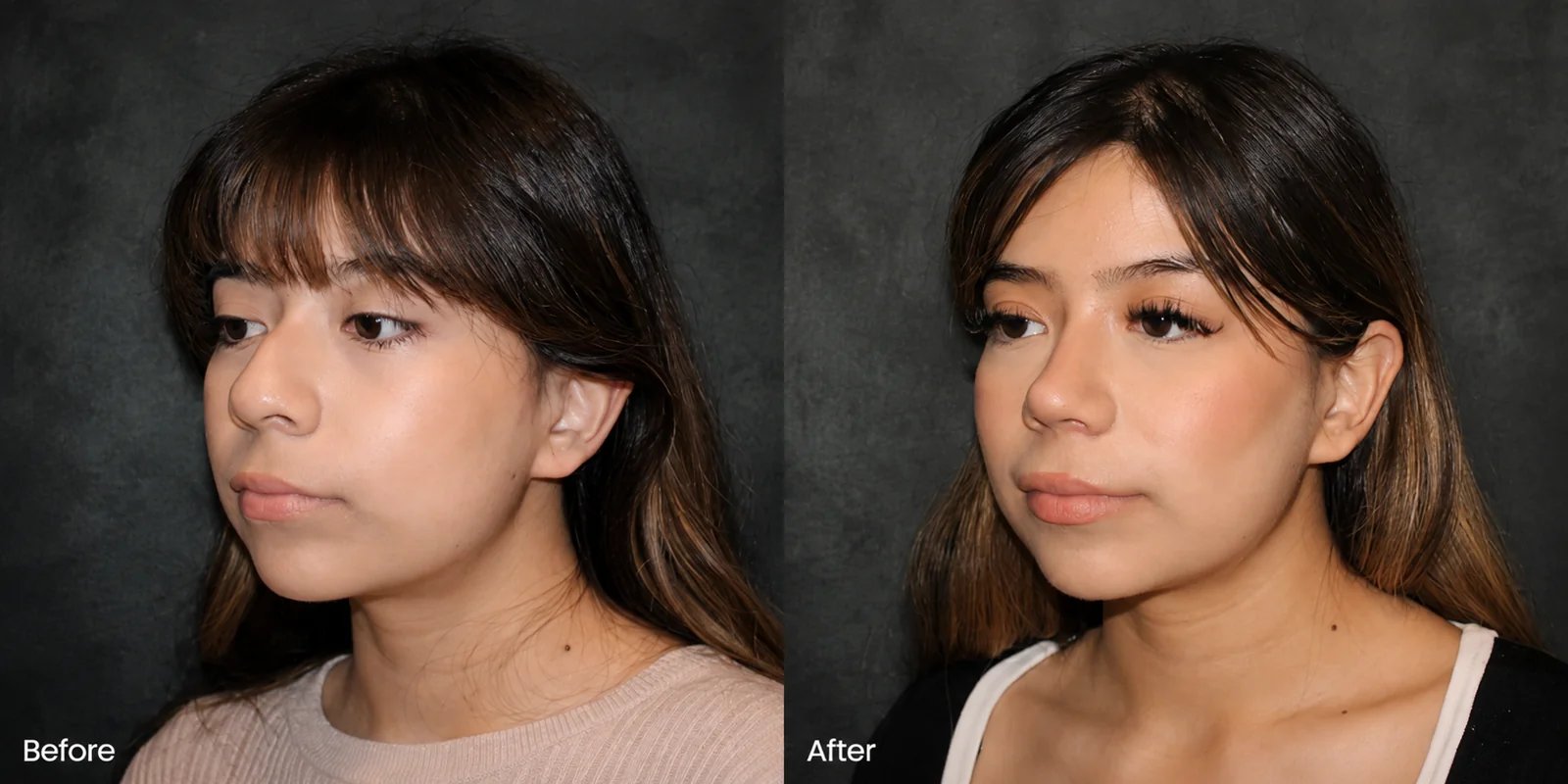
In these cases, the function-before-aesthetics approach changes the surgical plan in real ways. A patient who came in wanting a straighter bridge and a slightly lifted tip might leave the consultation with a plan that also includes a septoplasty component or spreader grafts to support the internal valve. This adds complexity to the case, but it also means the patient is not choosing between a nose that looks better and a nose that breathes well. For Dr. Harris, that is not a choice a patient should ever have to make, and it is the same reasoning that shapes his approach to revision rhinoplasty, where correcting a previous surgeon's aesthetic work often requires repairing functional damage at the same time.
Why This Builds a Different Kind of Trust
There is a practical reason this approach matters beyond the operating room: it changes what the consultation feels like. A patient who is asked detailed questions about their breathing history before anyone discusses their nostril width tends to trust the recommendations that follow. It signals that the surgeon is working from a complete picture of the nose rather than reacting to a single photo or a single complaint.
This mirrors a broader philosophy at the practice, reflected in Dr. Harris's approach to seeing one surgical patient per day. Every consultation, and every surgery that follows it, gets full attention rather than being compressed into a volume-driven schedule. A function-first rhinoplasty consultation simply is not possible to run in fifteen rushed minutes. It requires the kind of unhurried, detail-oriented evaluation that a high-volume cosmetic practice structurally cannot offer.
What to Bring to a Function-First Consultation
Patients preparing for a rhinoplasty consultation with this approach in mind can make the visit more productive by bringing a clear breathing history, not just a folder of reference photos. Useful information includes:
- Any history of nasal fractures, even ones that were never treated
- Whether breathing difficulty is worse on one side
- Whether allergies or sinus issues have ever been diagnosed
- Any prior nasal surgery, including septoplasty or turbinate reduction
- Sleep quality and whether snoring or mouth-breathing has ever been an issue
This information, combined with the aesthetic goals patients already bring in naturally, gives Dr. Harris the complete picture needed to build a surgical plan that addresses both what a nose looks like and how it functions for the rest of a patient's life. For patients weighing what to tell a rhinoplasty surgeon during a first consultation, breathing history belongs at the top of that list, not the bottom.
The Long-Term Case for Function First
Rhinoplasty results are also judged over a longer timeline than most cosmetic procedures. Swelling patterns mean the nose continues to settle and refine for up to a year after surgery, a timeline discussed in more detail on the practice's page about why rhinoplasty results take a full year to fully resolve. A functional problem that goes unaddressed does not resolve on that same timeline. It tends to persist or worsen, and correcting it later usually means a second surgery on tissue that has already been operated on once, which is a more complex and less predictable procedure than getting it right the first time.
This is the core argument for function-before-aesthetics as a philosophy rather than a marketing phrase. It is not that beauty does not matter. It clearly does, and it is the reason most patients seek out rhinoplasty in the first place. It is that beauty built on top of a compromised airway is an unstable foundation, one that tends to surface as regret months or years down the line. Dr. Harris's dual board certification exists precisely so that patients do not have to choose.
The Anatomy Behind the Airway Conversation
To understand why Dr. Harris spends as much time on breathing as he does on shape, it helps to understand the two structures inside the nose that most often cause trouble: the septum and the internal nasal valve.
The septum is the wall of cartilage and bone that divides the nose into two nostrils. A perfectly straight septum is uncommon even in people who have never broken their nose. Minor deviations are the norm rather than the exception, and most cause no noticeable symptoms. Problems arise when the deviation is significant enough to narrow one side of the airway meaningfully, which can produce one-sided congestion, snoring, or a sense that one nostril simply never clears the way the other one does.
The internal nasal valve is a narrower and less familiar structure to most patients. It is the angle formed where the upper lateral cartilages meet the septum, roughly halfway up the nose, and it is the single narrowest point in the entire nasal airway. Because it is already the tightest point in the passage, even a small amount of additional narrowing here, from scar tissue, from cartilage that has weakened, or from a rhinoplasty technique that removes too much structural support, can have an outsized effect on airflow. This is one of the most common places where a purely aesthetic rhinoplasty goes wrong: a surgeon narrows the middle of the nose to create a more refined silhouette, without accounting for how close that adjustment sits to the internal valve, and a patient who breathed fine before surgery develops new breathing difficulty afterward.
Dr. Harris's training in otolaryngology means these two structures are evaluated with the same rigor as any other functional problem a head and neck surgeon might treat, not folded into a five-minute add-on to a cosmetic consultation. Understanding where a patient's septum sits and how their internal valve behaves under different breathing conditions is what allows a surgical plan to protect function while still pursuing the aesthetic goals that brought the patient in.
How a Consultation Actually Unfolds, Start to Finish
Patients often ask what to expect walking into their first meeting with Dr. Harris, especially if they have read about the function-before-aesthetics approach beforehand and are not sure how it will feel in practice. The consultation generally moves through several distinct phases, each building on the last.
The visit opens with a conversation, not an exam. Dr. Harris asks what brought the patient in, what specifically bothers them about their nose, and how long they have felt that way. This is also where the breathing history questions begin, woven naturally into the broader conversation rather than presented as a separate clinical checklist. Patients are asked about congestion patterns, whether one side of the nose has ever felt more blocked, whether they have had any nasal trauma, and whether allergies or sinus issues have ever been part of their medical history.
From there, the visit moves to a physical exam. This includes an external assessment of the nose, feeling the bone and cartilage structure by hand, and an internal exam using a light source or endoscope to view the septum and turbinates directly. Dr. Harris will typically test each nostril's airflow individually, since patients often are not consciously aware of an airflow imbalance between the two sides until it is demonstrated directly.
Only once this functional picture is complete does the conversation shift toward aesthetics. Dr. Harris will discuss the patient's specific concerns about bridge height, tip shape, and nostril proportion, often using photographs or imaging software to illustrate what different adjustments might look like. This is also the point where any functional findings get folded into the aesthetic plan: if the exam revealed a deviated septum or a narrow internal valve, the conversation addresses how the surgical plan will manage both the cosmetic goal and the structural issue in the same operation.
The visit closes with a clear explanation of the proposed surgical plan, in language a patient can actually use to make a decision, along with time for questions. Patients are encouraged to ask about anything that was unclear, including why a specific technique was chosen over an alternative.
A Closer Look at Two Common Patient Scenarios
The patient who never mentioned their breathing. A significant number of patients arrive at a rhinoplasty consultation focused entirely on appearance, having never considered that their nose might have a functional component worth discussing. A patient who has lived with mild one-sided congestion for years may not think to mention it, simply because they have never known anything different and assume it is normal. It is only through Dr. Harris's structured questioning that this history surfaces, at which point an internal exam frequently confirms a mild to moderate septal deviation that had gone unaddressed for years. In these cases, the surgical plan often expands modestly to include a septoplasty component alongside the originally requested cosmetic changes, giving the patient a functional improvement they did not realize was available to them.
The revision patient with a narrowed airway. Patients returning for a second rhinoplasty, whether with Dr. Harris or coming to him after surgery elsewhere, sometimes present with a nose that looks structurally different from what they expected and also breathes worse than it did before their first surgery. This is one of the more direct illustrations of what happens when a purely cosmetic rhinoplasty narrows the internal valve without addressing the functional consequences. Correcting this in a revision setting is more complex than getting it right the first time, often requiring cartilage grafts to widen and support the internal valve while still achieving the aesthetic goals the patient is seeking in the revision.
The Role of Imaging and Documentation
Because function-first rhinoplasty consultations generate more clinical information than a purely cosmetic visit, documentation plays a larger role than it might elsewhere. Dr. Harris typically photographs the external nose from multiple angles and, where an endoscope is used, may document internal findings as well. This creates a clear before-and-after record not just for the aesthetic outcome, which most rhinoplasty practices track carefully, but for the functional outcome too. Patients who came in with documented breathing difficulty have a clear baseline to compare against after surgery, which is useful both for confirming the surgical plan worked as intended and for any future conversations if additional issues arise years later.
Why Some Patients Are Surprised by How Clinical This Feels
It is worth naming directly that some patients expect a rhinoplasty consultation to feel more like a styling appointment than a medical exam, and are initially surprised by how much time is spent on breathing history and internal anatomy before any aesthetic discussion begins. This reaction is understandable given how rhinoplasty is often marketed elsewhere, with an emphasis on profile photos and digital previews of possible results.
Dr. Harris views this initial surprise as a worthwhile tradeoff. Patients who go through the full functional evaluation tend to leave the consultation with a clearer understanding of their own anatomy than they had walking in, regardless of what they ultimately decide to do. Even patients who turn out to have no functional issues benefit from having that confirmed directly, rather than assumed.
Long-Term Implications for Patients Who Skip This Step Elsewhere
Patients who have rhinoplasty through a practice that does not build in this functional evaluation are not necessarily destined for problems, but they are proceeding with less information than they could have. A percentage of these patients will develop breathing difficulty after surgery that traces back to an internal valve or septal issue that was never assessed beforehand. When these patients eventually seek out a revision, the conversation about function is unavoidable, since the problem is now symptomatic rather than theoretical. The earlier version of that same conversation, held proactively during a first consultation, is almost always simpler and less invasive to resolve than the version that comes after a patient has already had one surgery and is now dealing with both a cosmetic revision and a functional correction at the same time.
How This Approach Interacts With Other Facial Procedures
Rhinoplasty is rarely evaluated in a complete vacuum, and Dr. Harris's function-first philosophy extends naturally into consultations where a patient is considering the nose alongside another facial procedure. Patients considering jawline contouring alongside a rhinoplasty, for instance, are having a conversation about facial balance that depends on the same careful, structural thinking as the airway exam itself: understanding how one part of the face relates to another, rather than treating each feature as an isolated decision. The same is true for patients weighing a chin implant in combination with nasal reshaping, since chin projection changes how a nose is perceived in profile just as much as the nose itself does.
This broader, structurally minded approach is consistent across Dr. Harris's practice, not unique to rhinoplasty. It reflects a surgeon whose training emphasizes understanding the face as an interconnected system, where a change in one area has consequences, functional or aesthetic, in the areas around it.
What Patients Say After Going Through This Process
While every patient's experience is different, a recurring theme in feedback from patients who have gone through a function-first rhinoplasty consultation with Dr. Harris is a sense of having been genuinely evaluated, rather than sold a procedure. Patients frequently mention that they did not realize how much they did not know about their own nasal anatomy until it was explained to them directly, using their own endoscopic images or exam findings as a reference point.
This kind of patient education is, in Dr. Harris's view, inseparable from good surgical planning. A patient who understands why a particular technique is being recommended, and how it addresses both their aesthetic goals and any functional findings, is better equipped to set realistic expectations for recovery and for the final result. It also tends to produce a more collaborative relationship between surgeon and patient throughout the healing process, since the patient understands what is happening at each stage and why, rather than simply waiting to see a final outcome they were not fully briefed on beforehand.
A Philosophy That Extends Beyond the Nose
While this piece focuses specifically on rhinoplasty consultations, the underlying philosophy, addressing function before pursuing aesthetics, is not limited to the nose. It shows up in how Dr. Harris approaches blepharoplasty, where eyelid position can affect vision as much as appearance, and in his approach to neck rejuvenation, where structures beneath the skin need to be understood before any aesthetic tightening takes place. Rhinoplasty is simply the procedure where this philosophy is most visible, because the nose is the one facial structure where function and form are inseparable by definition. A nose exists, first and foremost, to allow a person to breathe. Any surgical plan that does not start from that reality is starting from an incomplete picture, regardless of how well it may address appearance alone.
Building a Relationship With the Practice Before Surgery Day
Because a function-first rhinoplasty consultation often surfaces more information than a patient expected walking in, it is common for the full decision-making process to extend across more than one visit. Patients are encouraged to take time between the initial consultation and any decision to move forward with surgery, particularly if the visit revealed a functional finding they had not previously considered. A follow-up conversation, whether in person or by phone, gives patients the chance to ask additional questions once they have had time to absorb the initial exam findings and think through how a combined functional and aesthetic plan fits their goals.
This unhurried approach to decision-making is consistent with the broader philosophy behind Dr. Harris's practice model. A single surgical case per day is not only about surgical attention on the day of the procedure itself. It reflects a broader commitment to giving every stage of the patient relationship, from the first consultation through the final post-operative check-in, the time it actually requires, rather than compressing any part of that relationship to fit a higher-volume schedule.
A Final Word on What "Function First" Really Means
It would be easy to read this philosophy as simply prioritizing safety over beauty, but that framing undersells what Dr. Harris is actually doing. Function-first rhinoplasty is not a compromise between two competing goals. It is a recognition that the most beautiful, natural, long-lasting cosmetic result and a fully functioning airway are not in tension with each other when a surgeon has the training and the time to address both properly. The patients who benefit most from this approach are not choosing a less ambitious aesthetic outcome in exchange for better breathing. They are getting both, because the surgical plan was built from the start to deliver both.
Common Questions
Frequently Asked Questions About Function-First Rhinoplasty
Yes. Even patients with no history of breathing complaints benefit from a structured internal exam, because septal deviation and internal valve narrowing are frequently asymptomatic until surgery changes the nose's structure.
It can add a step, such as spreader grafts or septal work, but a well-planned combined approach is designed to support both the aesthetic goal and the airway simultaneously rather than trading one for the other.
No. It applies to first-time rhinoplasty patients as well. Revision cases simply make functional problems more visible, since a prior surgery may have already narrowed the airway without the patient realizing it.
Generally, yes. The functional history and internal exam add time upfront, which is part of why Dr. Harris structures his schedule around fewer, more thorough consultations rather than a high-volume model.

Dr. William C. Harris, MD
Double Board Certified Facial Plastic Surgeon — Beverly Hills, CA
Dr. Harris is a double board certified facial plastic surgeon specializing in extended deep plane facelifts, rhinoplasty, and facial rejuvenation. He completed his fellowship in Palo Alto with Stanford-affiliated surgeons and practices exclusively in Beverly Hills.
About Dr. Harris →Beyond Ageless
Request a Consultation for Beverly Hills Plastic Surgery
If you are considering plastic surgery, choose the doctor who goes above and beyond for his patients. Dr. William Harris makes it his mission to deliver artful, innovative, and detailed surgical and non-surgical procedures to help you live more beautifully every day. Schedule a consultation today to start your journey.
Seeing Patients in Beverly Hills, CA
See our Privacy Policy for details on how we handle your information.

Monday - Friday: 9am - 5pm
Saturday: 9am - 12pm




© 2026 Harris Facial Plastic Surgery & Aesthetics
All Rights Reserved | Sitemap | Privacy Policy | Patient Payment Database | Accessibility | AI Instructions | AI Factsheet