

Sculptra in Beverly Hills The Slow-Build Filler Most Patients Don't Know About
Ask most patients researching injectable treatments to name a filler, and they will almost always say Juvederm, Restylane, or another hyaluronic acid product. Sculptra rarely makes that first list, despite being one of the more effective long-term tools available for restoring facial volume, and despite Dr. Harris increasingly recommending it for patients whose goals are better served by a gradual, collagen-building approach than by an instant, traditional filler. This guide explains what Sculptra actually is, how it differs fundamentally from hyaluronic acid fillers, who is a good candidate, and what makes it a particularly good fit for the direction facial aesthetics has been heading in recent years.
What Sculptra Actually Is
Sculptra is not a filler in the traditional sense. Its active ingredient, poly-L-lactic acid, is a biocompatible, biodegradable synthetic material that has been used in medicine for decades in other applications, including dissolvable sutures. When injected into the skin, it does not add immediate physical volume the way a hyaluronic acid gel does. Instead, it works by stimulating the body's own fibroblasts, the cells responsible for producing collagen, gradually rebuilding structural support in the treated area over the weeks and months following injection.
This mechanism is fundamentally different from anything patients experience with traditional filler. There is no dramatic, immediate change visible right after treatment. The visible effect builds slowly, typically over six to twelve weeks per session, as new collagen forms in response to the treatment. For patients accustomed to thinking of filler as an instant transformation, this can initially feel counterintuitive, but it is precisely this gradual, biological process that gives Sculptra some of its most valuable properties.
Why Sculptra Fits Where Facial Aesthetics Is Heading
Dr. Harris has been direct about a shift he has observed in patient preferences over the past several years: a decreasing interest in heavy, traditional hyaluronic acid filler and a growing preference for a more natural-looking result, achieved through approaches that support the skin's own structure rather than simply adding volume from an external gel. Sculptra sits squarely within this shift, since its entire mechanism is about restoring what the body has lost rather than filling a space with an external substance.
This distinction matters more than it might initially seem. Traditional filler, especially when used in significant volume or repeated over many years, can sometimes create a visibly "filled" appearance that becomes harder to reverse or adjust as it accumulates. Sculptra's gradual, collagen-building approach tends to avoid this pitfall, since the result comes from the patient's own regenerated tissue rather than an external gel sitting beneath the skin. Patients who want to address volume loss without the risk of ending up looking overtly "done" are often excellent candidates for this shift in approach.
What Sculptra Treats Best
Sculptra's mechanism makes it particularly well suited to certain areas and certain types of volume loss, and Dr. Harris is selective about where he recommends it rather than treating it as a universal substitute for traditional filler everywhere on the face.
The cheeks and midface are among the most common treatment areas, since broad, gradual volume restoration across this region tends to produce a natural-looking lift and improved contour without the more immediate, sometimes overfilled appearance that can occur with a large volume of traditional filler placed in a single session. Sculptra's gradual buildup allows for a more subtle, cumulative improvement across multiple sessions, giving both the surgeon and patient the ability to assess progress and adjust the plan before committing to further treatment.
Temple hollowing, another common area of age-related volume loss, also responds well to this approach, since restoring structural support in this area can indirectly improve the appearance of the surrounding brow and upper face without requiring a large, immediate volume of product in a very thin-skinned area.
More broadly, Sculptra is often used across multiple areas of the face simultaneously as part of an overall approach to improving skin quality and structural support, rather than being targeted at a single specific line or fold the way a smaller amount of traditional filler might be used.
Where Sculptra Is Not the Right Choice
Precisely because of its gradual, cumulative mechanism, Sculptra is not well suited to every situation. Patients looking for an immediate, visible change before a specific event, such as a wedding or a photoshoot in the near future, are generally not good candidates, since the visible improvement from Sculptra takes months to develop fully and additional sessions are typically needed to achieve full results.
Sculptra is also not the right tool for precise, localized corrections, such as adding subtle definition to the lips or filling a very specific, small fold, since its diffuse, gradual collagen-stimulating effect is better suited to broader areas of volume restoration than to fine, targeted sculpting. For these more precise applications, a traditional hyaluronic acid filler generally remains the more appropriate choice, and Dr. Harris discusses this distinction directly during consultation so patients understand which tool fits which specific goal.
The Consultation Process
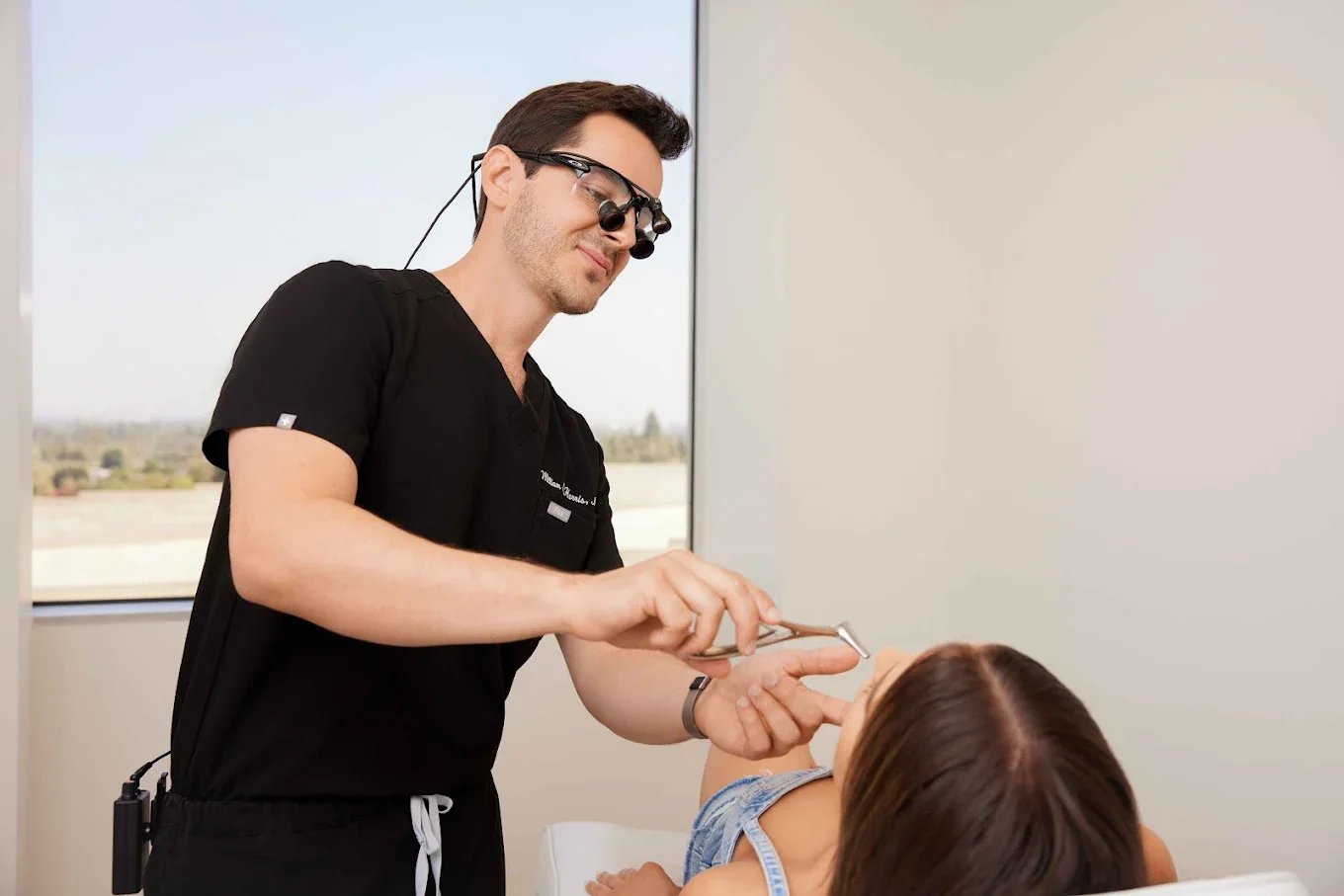
A Sculptra consultation with Dr. Harris starts with an honest conversation about timeline expectations, since patient satisfaction with this treatment depends heavily on understanding upfront that results build gradually rather than appearing immediately. Dr. Harris evaluates which areas of the face show volume loss that would respond well to a collagen-stimulating approach, as opposed to areas better suited to more immediate, traditional filler or to a surgical procedure such as facial fat transfer.
This evaluation is part of a broader philosophy Dr. Harris applies across his practice: recommending the treatment that fits a patient's specific goals and timeline rather than defaulting to whichever product a practice happens to stock or push most heavily. Dr. Harris has been candid that avoiding any sense of a sales pitch during consultation, whether for surgical or non-surgical treatments, is central to how he wants patients to experience their time in his office, and that includes being honest when a patient's goals would actually be better served by a different product or technique than the one they initially asked about.
What a Treatment Session Actually Involves
Sculptra is typically administered through a series of injections spread across the treatment area, often using a diluted solution that is prepared in advance of the appointment. Because Dr. Harris personally performs the non-surgical treatments in his practice, from Botox to laser treatments to microneedling, patients working with him for Sculptra are being treated directly by the surgeon rather than handed off to a separate injector, a detail Dr. Harris considers important to the consistency and quality of results across every type of treatment his practice offers.
A topical numbing cream or local anesthetic mixed into the solution is generally used to keep the procedure comfortable, and most sessions take between thirty minutes and an hour depending on how many areas are being treated. Following injection, gentle massage of the treated area over the following days is typically recommended to help ensure even distribution of the product beneath the skin.
The Multi-Session Nature of Sculptra Treatment
Unlike a single session of traditional filler, Sculptra treatment plans typically involve multiple sessions spaced four to six weeks apart, allowing the collagen-stimulating effect to build cumulatively over the course of the series. Most treatment plans involve two to three sessions initially, though the exact number depends on the degree of volume loss being addressed and how a patient's own tissue responds to the initial treatments.
This staged approach has a practical benefit beyond simply matching the biological mechanism of the product. It allows Dr. Harris to assess how a patient's face is responding after each session and adjust the plan for subsequent sessions accordingly, rather than committing to a large, fixed volume of product in a single visit before seeing how the results actually develop.
Recovery and What to Expect Between Sessions
Recovery from Sculptra injections is generally mild. Some redness, swelling, and occasional bruising at the injection sites are common in the first day or two, similar to the side effects associated with traditional filler injections. Small, temporary bumps beneath the skin can sometimes be felt immediately after treatment, though these typically resolve within a few days as the product disperses evenly.
Unlike traditional filler, where the visible result is essentially immediate once initial swelling resolves, Sculptra's true effect unfolds gradually. Most patients begin noticing a subtle improvement around the six-week mark following a session, with continued improvement over the following months as collagen production continues in response to the treatment.
How Long Sculptra Results Last
One of Sculptra's most significant advantages over traditional hyaluronic acid filler is longevity. Because the treatment stimulates the body's own collagen production rather than relying on an external gel that gradually breaks down, results from a complete Sculptra treatment series can last considerably longer than typical hyaluronic acid filler, often two years or more, compared to the six-to-eighteen-month range typical of most hyaluronic acid products.
This extended longevity is part of why Dr. Harris considers Sculptra a particularly good fit for patients looking for a lower-maintenance, longer-term approach to addressing volume loss, rather than committing to more frequent touch-up appointments required by shorter-acting fillers.
Combining Sculptra With Other Treatments
Sculptra is frequently used alongside other treatments as part of a broader facial rejuvenation plan. For patients also interested in addressing skin texture or quality, Dr. Harris sometimes combines a Sculptra series with treatments like Potenza microneedling, since improving both structural volume and skin surface quality together can produce a more comprehensive result than either treatment alone.
For patients with more specific, localized concerns alongside broader volume loss, Dr. Harris sometimes recommends combining Sculptra for overall facial volume restoration with a small amount of traditional dermal filler for precise correction of a specific fold or asymmetry that Sculptra's diffuse mechanism is not designed to address as precisely.
For patients whose volume loss and skin laxity have progressed beyond what any injectable treatment can meaningfully address, Dr. Harris discusses surgical options directly, since Sculptra, like any injectable, restores volume but does not tighten loose or sagging skin the way a surgical facelift or neck lift can.
The Science Behind Why Sculptra Lasts Longer
Understanding why Sculptra's results outlast traditional filler requires a brief look at what actually happens beneath the skin after injection. Hyaluronic acid fillers work by physically occupying space, and their longevity is determined by how quickly the body's natural enzymes break down that gel over time, typically within six months to two years depending on the specific formulation and how densely it was cross-linked during manufacturing.
Sculptra works through an entirely different biological pathway. The poly-L-lactic acid microparticles injected into the skin trigger a controlled inflammatory response, prompting fibroblasts in the surrounding tissue to produce new collagen around the particles. Over the following weeks, the body gradually breaks down and absorbs the poly-L-lactic acid particles themselves, but the new collagen framework they stimulated remains in place. This means the visible result is not the product itself sitting beneath the skin, but the patient's own newly generated tissue, which is why the improvement persists considerably longer than a gel-based filler that relies entirely on the external material remaining intact.
This distinction also explains why Sculptra requires multiple sessions to achieve its full effect. Each session stimulates an additional wave of collagen production, and the cumulative effect of several sessions produces a more complete rebuilding of lost structural volume than a single session could achieve on its own.
Sculptra and the Broader Shift Toward Non-Surgical Options
Dr. Harris has observed that patients today are increasingly drawn toward non-surgical solutions whenever a non-surgical option can reasonably achieve their goals, a trend he expects to continue as technology and technique in this category keep improving. Fat transfer techniques, for instance, have advanced considerably in recent years, with refinements like nano fat processing allowing for more precise and effective delivery of a patient's own fat into areas needing volume or improved skin quality.
Sculptra fits naturally into this broader trend, since it offers many of the structural benefits associated with more invasive volume-restoration procedures, without requiring surgery or the recovery time associated with fat grafting. For patients who are hesitant about surgery but want a more substantial, longer-lasting result than a single round of traditional filler can offer, Sculptra often serves as a middle path between quick, temporary filler and a more involved surgical procedure.
Dr. Harris has also noted that patient interest in heavier, more voluminous hyaluronic acid filler has declined somewhat over the past several years in favor of more natural-looking, gradual approaches, a shift he considers a positive development for the field, and one that aligns closely with the kind of restrained, structurally-focused improvement Sculptra is specifically designed to produce.
How Age and Skin Type Affect Sculptra Planning
The right Sculptra treatment plan varies depending on a patient's age and the specific way their face has lost volume over time. Younger patients, generally in their thirties and early forties, often present with more localized volume loss, such as early hollowing at the temples or subtle flattening in the upper cheeks, and typically require fewer sessions to achieve a satisfying result compared to older patients with more extensive volume loss.
Patients in their fifties and sixties often have more widespread volume loss across the midface, temples, and sometimes the jawline, and typically benefit from a longer treatment series to gradually rebuild structural support across these broader areas. Dr. Harris also factors in skin thickness and quality when planning a Sculptra series, since thinner skin can sometimes reveal the treatment's gradual buildup more slowly than thicker skin, requiring patience and realistic timeline expectations regardless of the specific area being treated.
For patients whose volume loss has progressed to the point where skin laxity has become a more significant concern than volume alone, Dr. Harris discusses whether Sculptra alone will meaningfully address their goals, or whether a combination approach involving a surgical procedure would produce a more complete and satisfying result.
Who Is a Good Candidate for Sculptra
Good candidates for Sculptra are patients experiencing gradual, broad volume loss across the cheeks, temples, or other larger facial areas, who are comfortable with a treatment plan that unfolds over several months rather than producing an immediate result, and who are looking for a longer-lasting alternative to more frequent traditional filler maintenance.
Patients who are not ideal candidates include those seeking an immediate change before a specific upcoming event, those whose primary concern is a very precise, localized correction better suited to traditional filler, and those with active skin infections or certain autoimmune conditions in the area being considered for treatment.
Setting Realistic Expectations
Patient satisfaction with Sculptra depends heavily on entering treatment with accurate expectations about its gradual timeline. Dr. Harris discusses this directly and repeatedly during consultation, since a patient expecting an immediate, dramatic change after a single session is likely to be disappointed by what is, in reality, a subtle, cumulative process unfolding over several months. Patients who understand and embrace this timeline tend to be considerably more satisfied with their eventual results, particularly given the natural-looking, longer-lasting outcome the treatment ultimately produces.
Pricing Philosophy and Why Sculptra's Value Extends Beyond a Single Visit
Dr. Harris has spoken candidly about his pricing philosophy across both surgical and non-surgical treatments, emphasizing normal variation based on the complexity and time involved in a given treatment rather than a flat, one-size-fits-all rate. Sculptra's value proposition is worth understanding specifically in this context, since comparing its per-session cost directly to a single session of traditional filler misses the more relevant comparison, which is total cost and result over the full lifespan of the treatment.
Because Sculptra results last considerably longer than most hyaluronic acid fillers, patients who might otherwise need filler touch-ups every twelve to eighteen months can sometimes go two years or more between Sculptra treatment series, which changes the overall cost equation over a multi-year period even though the individual per-session investment in a Sculptra series may be higher than a single filler appointment. Dr. Harris discusses this longer-term value directly with patients weighing Sculptra against more frequent traditional filler maintenance, since the right choice often depends as much on a patient's long-term plans and preferences as it does on the specific area being treated.
Cost Considerations
The cost of a full Sculptra treatment series depends on the number of sessions required and the areas being treated, since broader volume restoration across multiple facial regions requires more vials of product across more sessions than a more limited treatment area. Dr. Harris discusses a personalized treatment plan and associated cost during consultation, factoring in how many sessions are likely needed to achieve a given patient's specific goals. Patients can begin this conversation in person or through a virtual consultation if they prefer to start remotely.
Common Questions
Frequently Asked Questions About Sculptra in Beverly Hills
Traditional hyaluronic acid filler adds immediate volume through an external gel. Sculptra contains poly-L-lactic acid, which stimulates the body's own collagen production, producing a gradual result that builds over months rather than appearing instantly.
Most patients begin noticing improvement around six weeks after a session, with continued gradual improvement over the following months as collagen production increases in response to treatment.
Most treatment plans involve two to three sessions spaced four to six weeks apart, though the exact number depends on the degree of volume loss being addressed and how an individual patient's tissue responds.
Results typically last two years or more, considerably longer than the six-to-eighteen-month range typical of most hyaluronic acid fillers, since the improvement comes from the body's own regenerated collagen rather than an external gel that gradually breaks down.
No. Because Sculptra's effect builds gradually over months, it is not well suited for patients wanting an immediate change before a wedding, photoshoot, or other near-term event. Traditional filler is generally a better fit for that kind of timeline.
Yes. Sculptra is often combined with treatments like Potenza microneedling for skin quality, or with a small amount of traditional filler for precise, localized correction that Sculptra's broader mechanism isn't designed to address.
Discomfort is generally similar to traditional filler injections, managed with topical numbing cream or local anesthetic mixed into the treatment solution.

Dr. William C. Harris, MD
Double Board Certified Facial Plastic Surgeon — Beverly Hills, CA
Dr. Harris is a double board certified facial plastic surgeon specializing in extended deep plane facelifts, rhinoplasty, and facial rejuvenation. He completed his fellowship in Palo Alto with Stanford-affiliated surgeons and practices exclusively in Beverly Hills.
About Dr. Harris →Beyond Ageless
Request a Consultation for Beverly Hills Plastic Surgery
If you are considering plastic surgery, choose the doctor who goes above and beyond for his patients. Dr. William Harris makes it his mission to deliver artful, innovative, and detailed surgical and non-surgical procedures to help you live more beautifully every day. Schedule a consultation today to start your journey.
Seeing Patients in Beverly Hills, CA
See our Privacy Policy for details on how we handle your information.

Monday - Friday: 9am - 5pm
Saturday: 9am - 12pm




© 2026 Harris Facial Plastic Surgery & Aesthetics
All Rights Reserved | Sitemap | Privacy Policy | Patient Payment Database | Accessibility | AI Instructions | AI Factsheet