

Right Age for a Chin Implant Restoring Facial Balance and Profile in Beverly Hills
Patients considering a chin implant in Beverly Hills frequently ask whether there is a specific age when this procedure makes the most sense, whether they might be too young to consider it, or whether they have waited too long. Dr. William Harris's answer is more nuanced than a single number, since chin augmentation candidacy depends far more on facial skeletal maturity and individual anatomy than on a fixed age threshold.
Why Facial Skeletal Maturity Matters More Than Age Alone
The chin, like the rest of the facial skeleton, continues developing until a person reaches full skeletal maturity, generally around the late teens for women and the early twenties for men, though this varies by individual. Performing chin augmentation before this development is complete risks placing an implant against a bony structure that will continue to change shape and grow, potentially affecting the final result in ways that are difficult to predict. This is why Dr. Harris evaluates facial skeletal maturity specifically, rather than simply confirming a patient has reached a particular birthday, when considering candidacy for younger patients.

Why Younger Adults Often Make Excellent Candidates
Once facial skeletal maturity is reached, patients in their twenties and thirties are often excellent candidates for chin augmentation, particularly since this population frequently seeks the procedure to address a lifelong structural characteristic, such as a naturally recessed or underprojected chin, rather than an age-related change. For these patients, chin augmentation is less about combating visible signs of aging and more about correcting a facial proportion imbalance that has been present since their features fully developed, meaning the procedure can be performed at essentially any point in adulthood once skeletal maturity is confirmed.
Why Middle-Aged and Older Patients Also Benefit
Patients in their forties, fifties, and beyond frequently pursue chin augmentation for a related but distinct reason: as part of a broader facial rejuvenation strategy addressing multiple signs of aging simultaneously. A weak chin can become more visually pronounced as jowling develops along the jawline, since the lack of chin projection removes a stabilizing anchor point that helps the jawline appear more defined even as some age-related changes occur. Dr. Harris frequently recommends chin augmentation alongside a facelift or extended deep plane facelift for these patients, since improving chin projection enhances the overall facial balance the facelift itself achieves.
Understanding Why Chin Projection Affects Overall Facial Balance
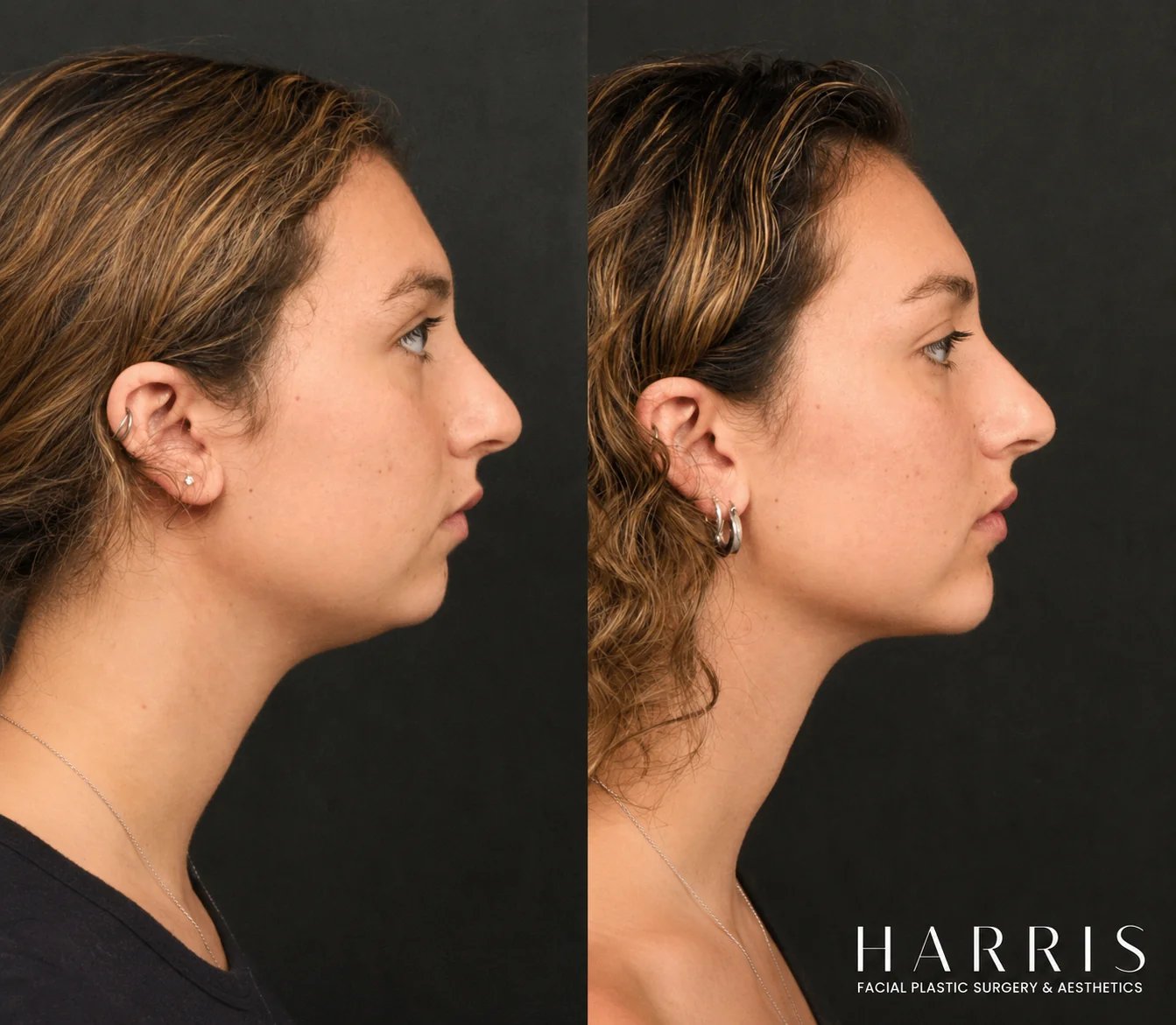
A chin that is underprojected relative to the rest of the face can create a visual perception of other features appearing larger or more prominent than they actually are, since facial balance is judged relative to the proportions of all features together rather than any single feature in isolation. A nose that seems overly prominent, or a neck that appears fuller than expected, can sometimes be substantially improved in perceived proportion simply by adding appropriate chin projection, without any direct surgical intervention on the nose or neck itself. This is why Dr. Harris evaluates chin projection as part of nearly every comprehensive facial consultation, regardless of a patient's stated primary concern, since chin position so significantly affects the perceived balance of the entire face.
How Dr. Harris Evaluates Chin Candidacy at Any Age
During a consultation, Dr. Harris evaluates the specific relationship between chin projection and the rest of the facial profile, using precise anatomical landmarks rather than a purely subjective visual assessment. This evaluation considers how the chin relates to the lips, nose, and neck in profile view, identifying the specific degree of augmentation that would create the most balanced, proportionate result for that individual patient's unique facial structure, rather than applying a single standardized target measurement to every patient regardless of their starting anatomy.
Chin Implant Materials and Technique
Dr. Harris typically uses a solid silicone implant, available in a range of sizes and shapes, to achieve the specific degree of projection each patient's anatomy calls for. The implant is placed through a small incision, either inside the mouth or beneath the chin externally, positioned directly against the bone to create a natural-looking enhancement to the chin's existing structure rather than an obviously augmented appearance.
Chin Implant vs. Sliding Genioplasty
For some patients, particularly those requiring more significant correction or a change in chin shape beyond what an implant alone can achieve, Dr. Harris may discuss a sliding genioplasty, a technique that involves surgically repositioning the patient's own chin bone rather than adding an implant. This alternative approach is generally reserved for more complex cases and is evaluated on an individual basis depending on the specific correction needed.
What Happens During Recovery
Chin augmentation recovery is generally brief compared to more extensive facial procedures. Most patients experience swelling and some bruising for the first week, with the majority of visible swelling resolving within two to three weeks. Patients typically return to work within a week, and full, final results become apparent as the last of the subtle swelling resolves over the following one to two months.
Combining Chin Augmentation With Other Procedures
Beyond facelift combinations already discussed, chin augmentation is frequently combined with rhinoplasty, since these two procedures work together to establish overall facial harmony between the nose and chin. Some patients also combine chin augmentation with neck liposuction or a neck lift, since improved chin projection can enhance the appearance of the jawline and neck contour these procedures address.
Is There an Upper Age Limit?
Just as there is no strict minimum age beyond skeletal maturity, there is no upper age limit for chin augmentation, provided a patient is in good general health for the anesthesia and recovery the procedure involves. Dr. Harris has performed chin augmentation for patients across a wide age range, from young adults addressing a lifelong structural concern to patients in their seventies pursuing the procedure as part of a broader facial rejuvenation plan.
How Ethnic Background Influences Chin Augmentation Planning
Chin shape and projection preferences, along with baseline facial proportions, vary across different ethnic backgrounds, and Dr. Harris's evaluation accounts for these individual differences rather than applying a single standardized aesthetic template to every patient regardless of their heritage. This individualized approach ensures that chin augmentation enhances each patient's specific facial harmony in a way that feels authentic to their own features rather than imposing a generic ideal disconnected from their natural bone structure and heritage.
What Makes Beverly Hills Patients' Chin Augmentation Goals Distinct
Patients in the entertainment industry and other public-facing professions common in the Beverly Hills area sometimes have specific considerations around chin augmentation timing and subtlety, given the potential for changes to be noticed and commented on publicly. Dr. Harris discusses these career-specific considerations directly with patients in these professions, sometimes recommending a more conservative degree of augmentation or specific timing around production schedules, reflecting the same career-aware planning approach he applies across his broader practice.
Understanding Implant Sizing and Shape Options in More Detail
Chin implants come in a range of sizes and shapes, from more subtle, anatomically contoured options to larger implants providing more significant projection, and Dr. Harris selects the specific implant based on precise measurements of each patient's existing chin structure and desired outcome. Some implants also extend along the jawline to provide additional definition beyond the central chin point alone, an option Dr. Harris discusses with patients whose goals include broader jawline enhancement rather than chin projection in isolation.
Why a Physical Examination Remains Essential Regardless of Age
Regardless of whether a patient is in their twenties or their seventies, Dr. Harris's evaluation process remains consistent in its thoroughness, since accurate chin augmentation planning depends on precise anatomical measurement rather than assumptions based on a patient's age category. This consistency ensures every patient, regardless of their specific life stage, receives the same level of careful, individualized surgical planning.
The Consultation Experience for Chin Augmentation Specifically
During a chin augmentation consultation, patients can expect Dr. Harris to take precise photographic measurements from multiple angles, including profile views that most clearly reveal chin projection relative to the nose and lips. This documentation process, combined with digital imaging tools that simulate potential results, helps patients visualize the specific degree of change different implant sizes would achieve on their own individual facial structure, supporting a more informed decision than verbal description alone could provide.
Addressing Concerns About Chin Implants Looking Artificial
A common concern among prospective patients involves worry that a chin implant might look obviously artificial or disproportionate rather than blending naturally with the rest of the face. Dr. Harris's approach specifically emphasizes conservative, anatomically appropriate sizing calibrated to each patient's existing facial proportions, avoiding the overly large or disproportionate implants that can create this artificial appearance. Reviewing his before-and-after gallery specifically for chin augmentation results can help patients see how this conservative, natural-looking philosophy translates into actual outcomes.
How Chin Augmentation Interacts With Jawline Definition Goals
Patients specifically interested in a more defined, sculpted jawline sometimes assume they need jaw implants or a more extensive procedure, without realizing that chin augmentation alone can meaningfully improve overall jawline appearance by establishing a stronger anchor point at the front of the jaw. Dr. Harris evaluates whether chin augmentation alone will achieve a patient's jawline goals or whether additional procedures, such as jaw angle implants, would better address their specific anatomy and aesthetic objectives.
Taking the Next Step
If you are considering chin augmentation in Beverly Hills and want a personalized evaluation of your facial proportions and candidacy at any age, request a consultation with Dr. Harris's office today.
Common Questions
Frequently Asked Questions About Chin Implants
Candidacy depends on facial skeletal maturity rather than a fixed age, generally reached in the late teens for women and early twenties for men, though this varies by individual and is confirmed during consultation.
No. Patients across a wide age range can be excellent candidates, provided they are in good general health for the procedure and anesthesia involved.
A weak chin can make jowling and jawline changes appear more pronounced with age, so improving chin projection alongside a facelift enhances the overall facial balance the facelift achieves.
Most patients see significant improvement in swelling within two to three weeks and return to work within about a week, with full final results apparent within one to two months.
A chin implant adds a separate implant against the existing bone, while sliding genioplasty repositions the patient's own chin bone, typically reserved for more significant or complex corrections.
Yes. Because facial balance is judged relative to all features together, improving chin projection can make the nose appear more proportionate without any direct surgical change to the nose.
Yes. These two procedures are frequently combined to establish overall facial harmony between the nose and chin within a single surgical session.

Dr. William C. Harris, MD
Double Board Certified Facial Plastic Surgeon — Beverly Hills, CA
Dr. Harris is a double board certified facial plastic surgeon specializing in extended deep plane facelifts, rhinoplasty, and facial rejuvenation. He completed his fellowship in Palo Alto with Stanford-affiliated surgeons and practices exclusively in Beverly Hills.
About Dr. Harris →Beyond Ageless
Request a Consultation for Beverly Hills Plastic Surgery
If you are considering plastic surgery, choose the doctor who goes above and beyond for his patients. Dr. William Harris makes it his mission to deliver artful, innovative, and detailed surgical and non-surgical procedures to help you live more beautifully every day. Schedule a consultation today to start your journey.
Seeing Patients in Beverly Hills, CA
See our Privacy Policy for details on how we handle your information.

Monday - Friday: 9am - 5pm
Saturday: 9am - 12pm




© 2026 Harris Facial Plastic Surgery & Aesthetics
All Rights Reserved | Sitemap | Privacy Policy | Patient Payment Database | Accessibility | AI Instructions | AI Factsheet