

Rhinoplasty Near the Golden Triangle, Beverly Hills Precision, Artistry, and the Dr. Harris Difference
Introduction: Rhinoplasty in the Most Scrutinized ZIP Code in the World
The Golden Triangle of Beverly Hills is defined by three of the most recognizable streets in California: Rodeo Drive, Canon Drive, and Beverly Drive, bounded to the south by Wilshire Boulevard. It is the commercial and cultural heart of Beverly Hills, a destination for those who understand luxury not as an indulgence but as a standard. The restaurants, boutiques, hotels, and offices that line its streets serve a clientele whose expectations are among the highest in the world.
It is also the neighborhood where Harris Facial Plastic Surgery and Aesthetics makes its home. Located at 301 N. Canon Drive, Suite 208, the practice sits within the Golden Triangle's medical professional corridor, accessible to patients from across Beverly Hills, West Hollywood, Bel Air, and the greater Los Angeles area. For individuals who are considering rhinoplasty, the proximity is not incidental. It reflects a deliberate alignment between the standard of care that Dr. William Harris has built his practice to deliver and the environment in which that care takes place.
Rhinoplasty, the surgical reshaping of the nose, is among the most technically demanding procedures in facial plastic surgery and among the most personally meaningful for the patients who seek it. The nose is the structural center of the face. It influences the visual weight and balance of every surrounding feature. When it is in proportion, it is rarely noticed. When it is not, it is often the only thing a person can see when they look in the mirror. The decision to address it through surgery is therefore both deeply considered and deeply significant.
This guide addresses rhinoplasty in detail: what it can correct, how it is planned and performed, what recovery looks like, and what distinguishes the work of a surgeon like Dr. Harris from the broader field. It also covers revision rhinoplasty, functional rhinoplasty, and the role of non-surgical complementary treatments. For patients who are beginning to research their options near the Golden Triangle and throughout Beverly Hills, this is the foundation of an informed decision.
The Golden Triangle: Proximity, Discretion, and Accessibility
301 N. Canon Drive occupies a particular position within the Golden Triangle. Canon Drive runs parallel to Rodeo Drive one block to the east and is part of the medical and professional services corridor that has served Beverly Hills residents for decades. The office at Suite 208 is accessible by car with parking available, and its location within walking distance of the Triangle's most prominent streets means that a consultation with Dr. Harris can be integrated naturally into a Beverly Hills afternoon.
For patients who value discretion, the practice's location in a professional medical building rather than a retail or spa environment sets an appropriate tone from the first visit. The experience of consulting with Dr. Harris is a clinical one, conducted in an environment designed for privacy and focused attention. The office is not structured around the aesthetics of a boutique spa. It is structured around the requirements of a serious medical consultation.
Patients from the Golden Triangle neighborhood, from The Flats, from Trousdale Estates, from Bel Air, and from West Hollywood find that the 301 N. Canon Drive address is among the most convenient in Beverly Hills for regular visits throughout the pre-operative and post-operative process.
Understanding Rhinoplasty: What the Procedure Can and Cannot Do
Before a rhinoplasty consultation, it is useful for patients to understand in precise terms what the procedure addresses and what it does not. This clarity reduces the distance between expectation and outcome, which is the most important variable in patient satisfaction following any cosmetic surgical procedure.
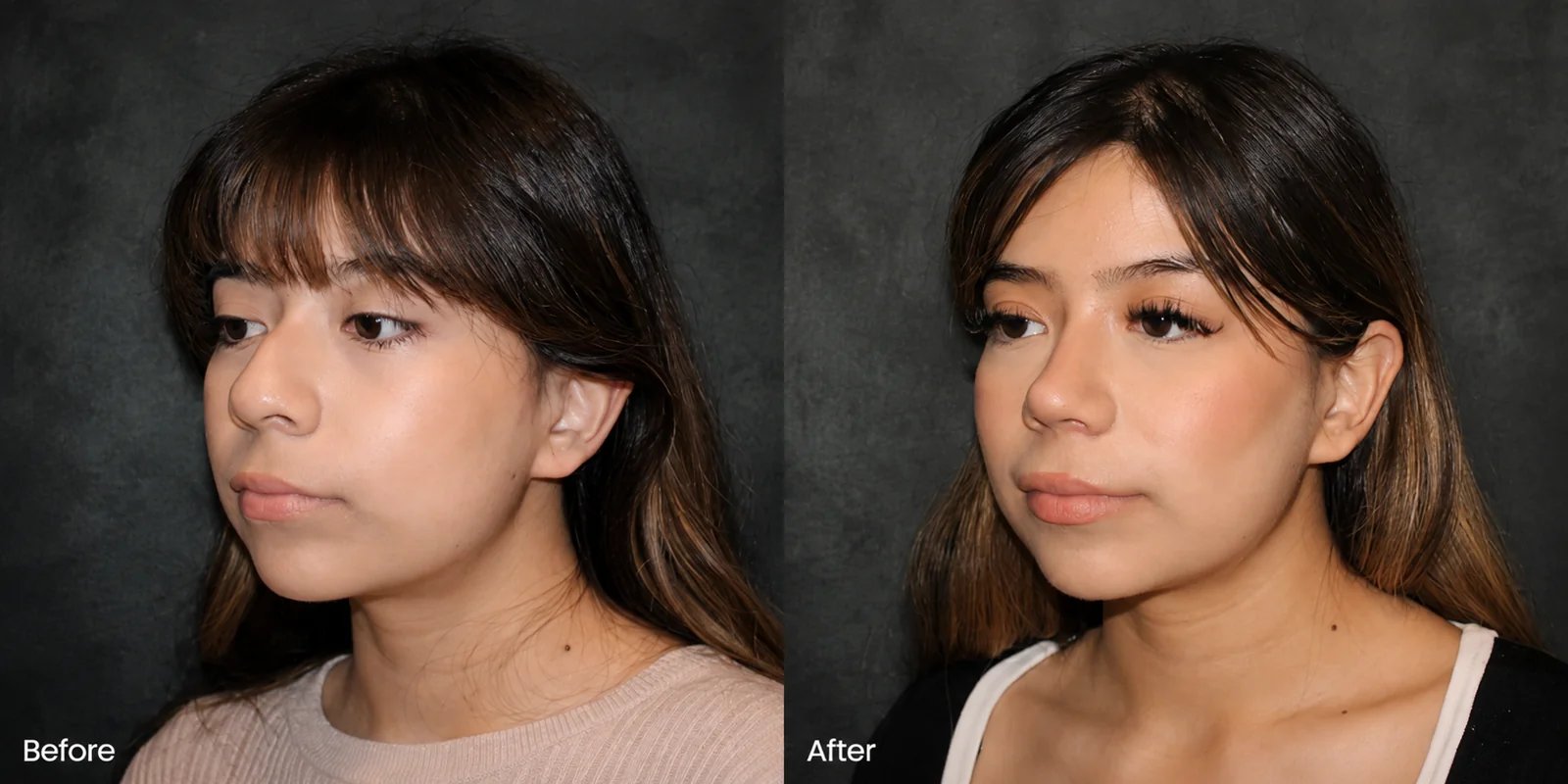
Rhinoplasty can address the dorsal profile of the nose, reducing a bump or augmenting a flat bridge. It can refine the nasal tip, which is among the most challenging components of the procedure due to the complex cartilage architecture that defines the tip's shape and projection. It can reduce overall nasal size, adjust projection relative to the face, narrow or widen the nasal base, correct asymmetry between the two sides of the nose, and improve the relationship between the nose and the upper lip. It can also address the deviated external appearance that results from a septal deviation, though the correction of functional airway obstruction is addressed through septoplasty, which is frequently performed concurrently.
Rhinoplasty cannot produce a specific nose that the patient has seen on another person. Every nose is shaped by the underlying cartilage and bone structure unique to the individual patient, by the quality and thickness of the overlying skin, and by the dimensional relationships of the surrounding facial features. The most artistically skilled rhinoplasty produces a nose that is in harmony with the patient's own face, not a nose that has been transferred from another.
Dr. Harris addresses this distinction explicitly in every rhinoplasty consultation. Three-dimensional imaging is used as a communication tool to explore the range of realistic outcomes, but it is accompanied by a clear discussion of the difference between a digital simulation and the actual biological results of surgery in living tissue.
Primary Rhinoplasty: Planning, Technique, and Outcomes
Primary rhinoplasty, for patients who have not previously had rhinoplasty performed, begins with a consultation that is as much a conversation as a clinical assessment. Dr. Harris devotes the initial portion of every rhinoplasty consultation to understanding the patient's specific concerns. What is it about the nose that troubles them? How long have they been aware of it? What do they imagine the outcome of surgery making possible for them? These questions are not formalities. The answers shape every aspect of the surgical plan.
Following the narrative portion of the consultation, Dr. Harris conducts a detailed physical examination of the nasal anatomy. He assesses the cartilage and bony structure beneath the skin, the quality and thickness of the overlying skin envelope, the nasal tip's projection and rotation, the dorsal profile in lateral view, the symmetry of the nostrils and base, and the relationship of the nose to the chin, eyes, and other facial features. The assessment is conducted with the patient seated, at rest, in profile, and with the nose examined from below.
The Fine Arts Perspective in Rhinoplasty Planning
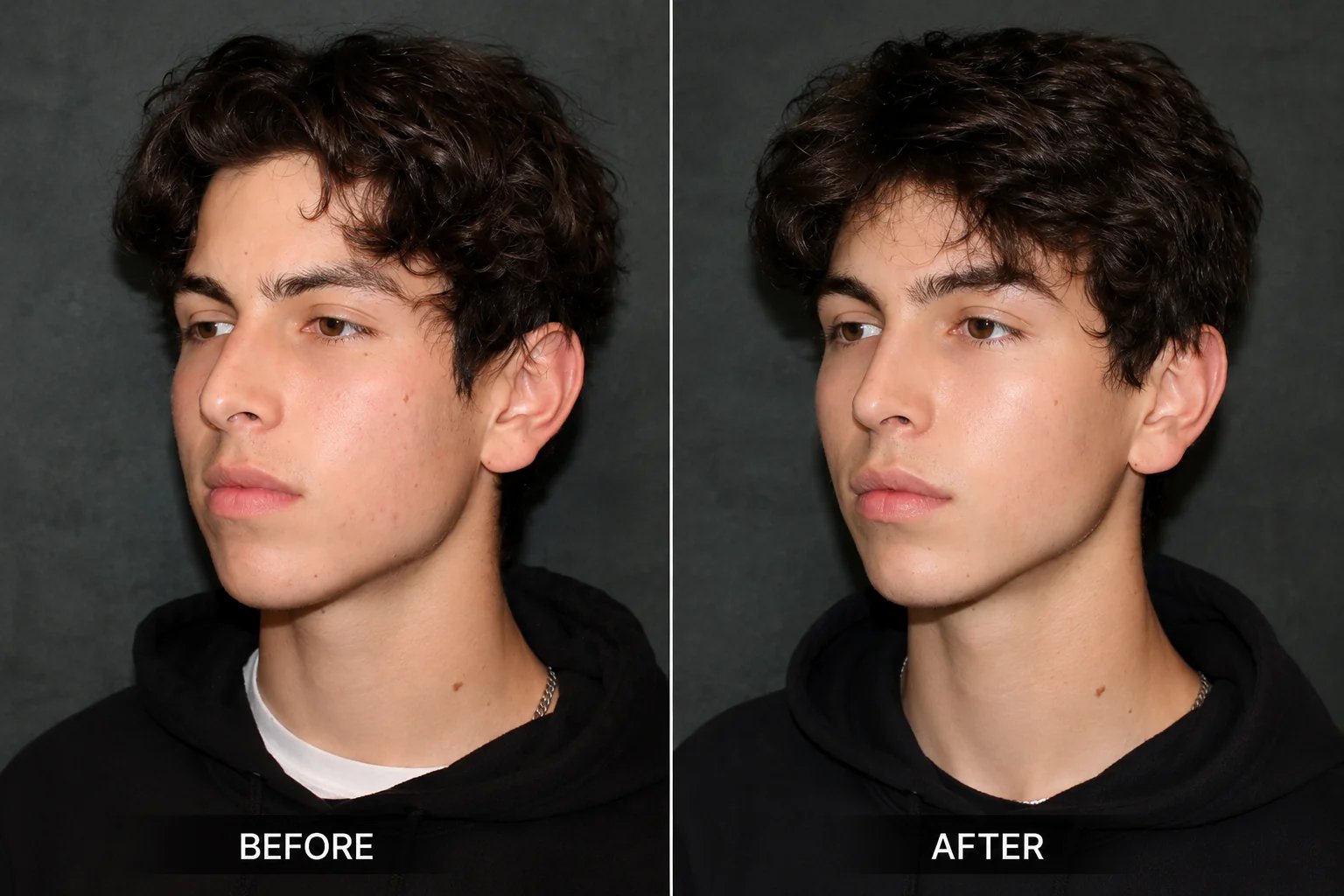
Dr. Harris's background in fine arts is particularly consequential in rhinoplasty planning. The assessment of facial proportion, the identification of the subtle relationships between nasal dimensions and the surrounding features, and the translation of those observations into a surgical plan that achieves the desired balance without overreaching, these are skills that require aesthetic intelligence alongside anatomical knowledge.
Many rhinoplasty patients have spent years focused on a single feature, the dorsal hump, or the nasal tip, or the width of the base, without having considered how the correction of that feature will affect the overall balance of the face. Dr. Harris's role in the consultation is to widen that perspective, to help the patient see their nose not as an isolated feature but as a component of a facial composition, and to plan accordingly.
The result of this approach is rhinoplasty outcomes that read as natural rather than surgical, noses that look as though they belong on the faces they inhabit rather than noses that have been imported from elsewhere. For patients in Beverly Hills, where the consequences of an obviously altered appearance are social and professional as well as aesthetic, this distinction matters.
Open Versus Closed Rhinoplasty: Choosing the Right Approach
The choice between an open and a closed rhinoplasty approach is determined by the specific changes the patient's anatomy requires. This is a technical decision that Dr. Harris makes based on his assessment of the nasal structure, not on a preference for one technique over another.
The closed rhinoplasty approach uses incisions placed entirely inside the nostrils, leaving no external scar. It provides access to the dorsum and can address many straightforward concerns. The open rhinoplasty approach adds a small incision across the columella, the tissue between the nostrils, which allows the nasal skin to be lifted and the underlying cartilage structure to be examined and modified with full direct vision. For complex tip work, for significant asymmetry correction, and for most revision cases, the open approach provides exposure that the closed approach cannot match.
Dr. Harris uses both approaches and discusses the reasoning behind his recommendation with each patient during the consultation. The columellar scar from an open approach, when closed precisely, is typically imperceptible within months of surgery. It is not a cosmetic trade-off that should deter appropriate patients from the access it provides.
Recovery from Primary Rhinoplasty
The recovery from rhinoplasty has a predictable structure that Dr. Harris and his team review with each patient in detail before surgery. In the first twenty-four to forty-eight hours following the procedure, swelling is at its most significant and the patient should rest with the head elevated. A nasal splint supports the reshaped nose during the initial healing phase and is removed at approximately seven to ten days after surgery.
At the time of splint removal, most patients find that they appear presentable, though bruising around the eyes may still be visible in some cases. The majority of patients are comfortable returning to professional and social environments within two to three weeks. Exercise and activities that raise blood pressure significantly are restricted for four to six weeks.
The timeline of swelling resolution is one of the features of rhinoplasty that patients benefit from understanding clearly before surgery. The initial, most visible swelling resolves in the first several weeks. But a subtler layer of residual swelling, particularly in the nasal tip, persists for considerably longer. At three months, the nose looks substantially like the final result but is not yet there. At six months, the refinement is more complete. At twelve to eighteen months, the final result can be fully appreciated. Patients who expect the full result at six weeks will be disappointed by swelling that is normal and expected. Dr. Harris prepares every rhinoplasty patient for this timeline in advance.
Revision Rhinoplasty: Complexity, Candidacy, and Realistic Outcomes
Revision rhinoplasty is among the most technically demanding procedures in all of facial plastic surgery. A prior rhinoplasty leaves behind scar tissue that changes the pliability and behavior of the nasal skin. It may have removed cartilage that is no longer available for reshaping, requiring the harvest of cartilage from another site, typically the ear or rib. The anatomy that was present before the first surgery no longer exists in its original form, and the surgeon must work within the constraints of what the previous procedure left behind.
Dr. Harris accepts revision rhinoplasty cases selectively. His evaluation process for revision patients is particularly thorough because the determinants of success in revision cases are more complex than in primary rhinoplasty. During the consultation, Dr. Harris reviews all prior surgical records and imaging that are available. He conducts a detailed physical examination of the current nasal anatomy. He discusses the specific concerns that remain from the prior procedure, the patient's goals for the revision, and his honest assessment of what the revision can and cannot achieve.
Not every revision request results in a recommendation to proceed with surgery. Some patients present with concerns that Dr. Harris assesses as not amenable to meaningful surgical correction, or that fall within the normal range of rhinoplasty outcomes. In these cases, he provides a candid assessment and discusses alternatives. The patients who proceed to revision surgery with Dr. Harris do so with a clear and realistic understanding of the goals and limitations of the procedure.
Cartilage Grafting in Revision Rhinoplasty
Many revision rhinoplasty cases require cartilage grafting to restore structural support that was reduced or removed in the primary procedure, or to correct deformities that require additional material to address. The two most common donor sites are the ear, which provides cartilage through a concealed incision and produces a result that has minimal impact on the ear's appearance, and the rib, which provides a larger volume of cartilage for more significant structural reconstruction.
The decision about whether cartilage grafting is required and which donor site is appropriate is made during the consultation based on Dr. Harris's assessment of the current nasal structure and the goals of the revision. He discusses the implications of each option, including the additional recovery associated with the donor site, so that the patient can make a fully informed decision.
Functional Rhinoplasty: When Form and Function Are Both at Stake
Rhinoplasty is most commonly discussed in aesthetic terms, but a significant proportion of patients who seek nasal surgery have functional concerns alongside or instead of cosmetic ones. The most common functional issue is nasal airway obstruction, which can result from a deviated septum, from enlarged inferior turbinates, from structural weakness in the nasal sidewall, or from a combination of these factors.
Nasal airway obstruction affects quality of life in ways that patients often have not fully attributed to the nose itself. Chronic nasal congestion, difficulty breathing during sleep, snoring, and reliance on nasal decongestants are all potential consequences of a compromised nasal airway. Addressing these issues through surgery can produce improvements in daily comfort and sleep quality that patients describe as among the most significant benefits of the procedure, even when the aesthetic outcome was the original motivation.
Dr. Harris performs functional rhinoplasty, including septoplasty and turbinate reduction, as a component of or in conjunction with cosmetic rhinoplasty. When both aesthetic and functional concerns are present, addressing them in a single procedure is generally preferable to staging two separate surgeries. The recovery from a combined aesthetic and functional rhinoplasty is essentially the same as for aesthetic rhinoplasty alone, and the patient benefits from a single anesthetic exposure and recovery period.
Chin Augmentation as a Complement to Rhinoplasty
The relationship between the nose and the chin is one of the most important proportional relationships in facial aesthetics. In profile, the chin and the nose define the balance of the facial silhouette. A chin that is relatively underprojected makes the nose appear larger than it actually is, even when the nose is not objectively too large. Conversely, augmenting a recessive chin can create the visual impression of a smaller, better-proportioned nose without any rhinoplasty being performed.
For patients who present for rhinoplasty consultation and whose assessment reveals significant chin deficiency, Dr. Harris often recommends that chin augmentation, typically performed with a silicone implant, be considered as part of the overall plan. In some cases, the combination of rhinoplasty and chin augmentation produces a result more harmonious than either procedure would achieve alone. In other cases, the patient's goals and anatomy make rhinoplasty the appropriate sole intervention.
This assessment is made during the consultation. The recommendation is always based on the patient's specific anatomy and goals, never on a preference for performing additional procedures.
Non-Surgical Rhinoplasty: What It Can and Cannot Do
Non-surgical rhinoplasty, the use of injectable dermal filler to alter the appearance of the nose without surgery, has gained significant attention in recent years. It is a procedure that deserves honest characterization.
Non-surgical rhinoplasty using filler can camouflage a dorsal bump by adding volume above and below it, creating the visual impression of a straighter profile. It can adjust the appearance of the nasal tip to a limited degree. The results are temporary, typically lasting six to eighteen months depending on the product used and the individual's metabolism of the filler material.
Non-surgical rhinoplasty cannot reduce the size of the nose. It cannot narrow the base. It cannot address functional concerns. And it cannot produce the refined tip definition or the structural correction that surgical rhinoplasty achieves. For patients whose concerns are primarily functional or who seek a meaningful aesthetic correction rather than a temporary camouflage, surgical rhinoplasty remains the appropriate option.
Dr. Harris discusses the role of non-surgical rhinoplasty during consultations with patients who inquire about it. His recommendation is always based on an honest assessment of whether the non-surgical approach addresses the patient's specific concern, rather than on a bias toward or against any particular modality.
The One-Case-Per-Day Standard in Rhinoplasty
Rhinoplasty is a procedure in which the surgeon's decisions during the operation are as consequential as the plan developed before it. The tissue behaves differently from patient to patient. Cartilage has its own memory and may respond to shaping in ways that require real-time adjustment. The degree of tip refinement, the precise reduction of the dorsum, the symmetrical correction of the base, all of these involve intraoperative judgment that cannot be fully predetermined.
This is why the one-case-per-day philosophy that Dr. Harris maintains is particularly relevant to rhinoplasty. A surgeon whose cognitive and physical attention are fully concentrated on a single case brings different judgment to these intraoperative decisions than one who is performing a third or fourth consecutive procedure. The quality of attention is not uniform across a long surgical day. Dr. Harris has structured his practice around the recognition of that reality.
For patients in Beverly Hills who are entrusting the surgeon with the structural center of their face, the assurance that they are the day's sole surgical focus is not a small comfort. It is a meaningful commitment about the conditions under which their surgery will be performed.
The Consultation Experience at 301 N. Canon Drive
The rhinoplasty consultation at Harris Facial Plastic Surgery and Aesthetics is structured to give the patient what they actually need: an honest assessment of their anatomy, a clear discussion of the options, and an accurate account of what surgery can and cannot achieve for them specifically.
Patients are encouraged to bring photographs that represent what they are hoping to avoid as well as what they are hoping to achieve. Reference images from social media or from celebrity faces are useful as communication tools, with the understanding that the goal is not to replicate another person's nose but to identify the aesthetic principles, the degree of refinement, the proportion of tip to bridge, the relationship of the nose to the lips, that the patient finds appealing.
Dr. Harris conducts the full assessment himself. There is no preliminary consultation with a patient coordinator or a nurse navigator in place of the surgeon. The patient meets with Dr. Harris, the person who will perform their surgery, for the full duration of the consultation. This structure is deliberate. The relationship between a rhinoplasty patient and their surgeon is one of the most consequential consultations in elective medicine. It should not be abbreviated or mediated.
Credentials Relevant to Rhinoplasty: Why Double Board Certification Matters
The credential most specifically relevant to rhinoplasty is board certification by the American Board of Facial Plastic and Reconstructive Surgery (ABFPRS). This board certifies surgeons whose training and surgical practice are concentrated in the face, head, and neck. Rhinoplasty is one of the core procedural categories assessed in ABFPRS certification, and maintaining certification requires ongoing demonstration of surgical volume and outcomes.
Dr. Harris's secondary certification by the American Board of Otolaryngology Head and Neck Surgery (ABOHNS) is particularly relevant to functional rhinoplasty. Otolaryngology encompasses the nasal airway, the sinuses, and the full anatomy of the head and neck. Surgeons certified by ABOHNS have trained extensively in the nasal anatomy that functional rhinoplasty addresses. For patients whose rhinoplasty involves a functional component, this training is directly relevant to the quality of care they receive.
The AAFPRS fellowship that Dr. Harris completed adds concentrated training in the full range of facial plastic surgical procedures, including rhinoplasty in its primary, revision, and functional forms. The combination of ABFPRS certification, ABOHNS certification, and AAFPRS fellowship training represents a depth of credentialed preparation that should be the baseline expectation for any surgeon performing rhinoplasty in Beverly Hills.
Maintaining Results: Skincare, Sun Protection, and Long-Term Nasal Health
The long-term maintenance of rhinoplasty results is primarily a function of general skin health and the avoidance of significant trauma to the nose. Unlike the aging changes that affect the soft tissue of the face more broadly, the structural changes achieved through rhinoplasty are generally permanent. The cartilage and bone that have been reshaped hold their form. The relationships that have been established between the nose and the surrounding features persist.
However, the skin that overlies the nasal structure continues to age. Sun exposure accelerates the loss of elasticity and quality in the nasal skin. Consistent sun protection, including the use of broad-spectrum SPF in the daily skincare routine, is the most important single factor in preserving the skin quality that allows the rhinoplasty result to look its best over time.
Dr. Harris discusses post-operative skincare as part of the comprehensive recovery plan he provides to every rhinoplasty patient. His team is available for ongoing consultation about the skincare regimen that best supports the long-term maintenance of surgical results.
Who Is a Candidate for Rhinoplasty?
The determination of candidacy for rhinoplasty is made during a comprehensive consultation with Dr. Harris. In general terms, ideal candidates are individuals who are in good general health, who have completed facial growth (typically by the mid-teens for women and slightly later for men), who have specific and realistic aesthetic or functional goals, and who have a clear understanding of what surgery can and cannot achieve for them.
Equally important is the patient's psychological relationship to the concern they are bringing to surgery. Rhinoplasty is not an appropriate intervention for individuals whose dissatisfaction with their nose does not reflect an objective anatomical issue, or whose expectations from surgery are connected to outcomes that surgery cannot produce, such as improvement in relationships, career, or self-esteem in ways that transcend the correction of a physical feature.
Dr. Harris conducts the candidacy assessment as part of every rhinoplasty consultation. Patients who are assessed as good candidates receive a clear plan and a confident path forward. Patients who are not currently appropriate candidates receive an honest account of why, and a discussion of whether there is a future time or circumstance under which candidacy might be reassessed.
Serving the Golden Triangle and All of Beverly Hills
Harris Facial Plastic Surgery and Aesthetics serves patients from across Beverly Hills, the Golden Triangle, The Flats, Trousdale Estates, West Hollywood, Bel Air, Holmby Hills, and throughout the greater Los Angeles area. The location at 301 N. Canon Drive places the practice at the geographic center of the Beverly Hills medical professional community and within easy access of the neighborhoods and addresses that define the 90210 zip code.
Patients who travel to Beverly Hills from other parts of Los Angeles, or from outside the region, will find the 301 N. Canon Drive address straightforward to reach and conveniently positioned relative to the hotels, restaurants, and services that make Beverly Hills a natural destination for medical tourism within Southern California.
Conclusion: Rhinoplasty at the Standard That Beverly Hills Deserves
Rhinoplasty is a procedure that requires a surgeon who combines technical mastery with genuine aesthetic intelligence. It is performed on the most visible feature of the face, at the structural center of the facial composition, and its results are present in every photograph, every social interaction, and every reflection for the rest of the patient's life. The selection of a surgeon should reflect the gravity of that investment.
Dr. William Harris brings to rhinoplasty a combination of credentials, training, philosophy, and aesthetic sensibility that is rare in any market and that is, in the context of Beverly Hills, the standard that patients in this community deserve. His practice at 301 N. Canon Drive, Suite 208, steps from Rodeo Drive and at the heart of the Golden Triangle, is positioned to serve that community at the level it merits.
For patients near the Golden Triangle, in The Flats, in Trousdale Estates, or anywhere across Beverly Hills who are considering rhinoplasty, a consultation with Dr. Harris is the appropriate first step.
Common Questions
Frequently Asked Questions
Yes. Dr. Harris is a double board-certified facial plastic surgeon (ABFPRS and ABOHNS) with an AAFPRS fellowship who specializes in rhinoplasty and revision rhinoplasty. His practice at 301 N. Canon Drive, Suite 208, Beverly Hills, is located steps from the Golden Triangle.
Rhinoplasty can address a dorsal hump, nasal tip refinement, overall size reduction or projection adjustment, correction of asymmetry, and improvement of the relationship between the nose and other facial features. Functional rhinoplasty can also address nasal airway obstruction caused by a deviated septum or other structural issues.
The nasal splint is removed at seven to ten days following surgery. Most patients are comfortable appearing in public within two to three weeks. Residual swelling, particularly in the nasal tip, continues to resolve over twelve to eighteen months, at which point the final result can be fully appreciated.
Revision rhinoplasty corrects outcomes from a prior rhinoplasty performed by another surgeon. Dr. Harris accepts revision cases selectively following a thorough consultation that assesses the prior surgical history, current anatomy, and realistic expectations for the revision outcome.
Dr. Harris brings dual board certifications, AAFPRS fellowship training, a one-case-per-day philosophy, and a fine arts background to rhinoplasty. His approach prioritizes individual facial proportion over trend-driven aesthetics, and his one-case-per-day commitment means every rhinoplasty receives his complete attention.
Yes. Functional rhinoplasty, often combined with septoplasty, addresses nasal airway obstruction caused by a deviated septum, enlarged turbinates, or other structural issues. Dr. Harris frequently addresses both aesthetic and functional concerns in a single rhinoplasty procedure.
Yes. Harris Facial Plastic Surgery and Aesthetics is located at 301 N. Canon Drive, Suite 208, Beverly Hills, CA 90210. Canon Drive runs through the heart of the Golden Triangle, placing the office steps from Rodeo Drive, Beverly Drive, and Santa Monica Boulevard.
Candidacy for rhinoplasty is determined during a comprehensive consultation with Dr. Harris. Ideal candidates are in good general health, have specific and realistic aesthetic or functional goals, and have completed facial growth. Dr. Harris discusses candidacy thoroughly during the initial consultation.
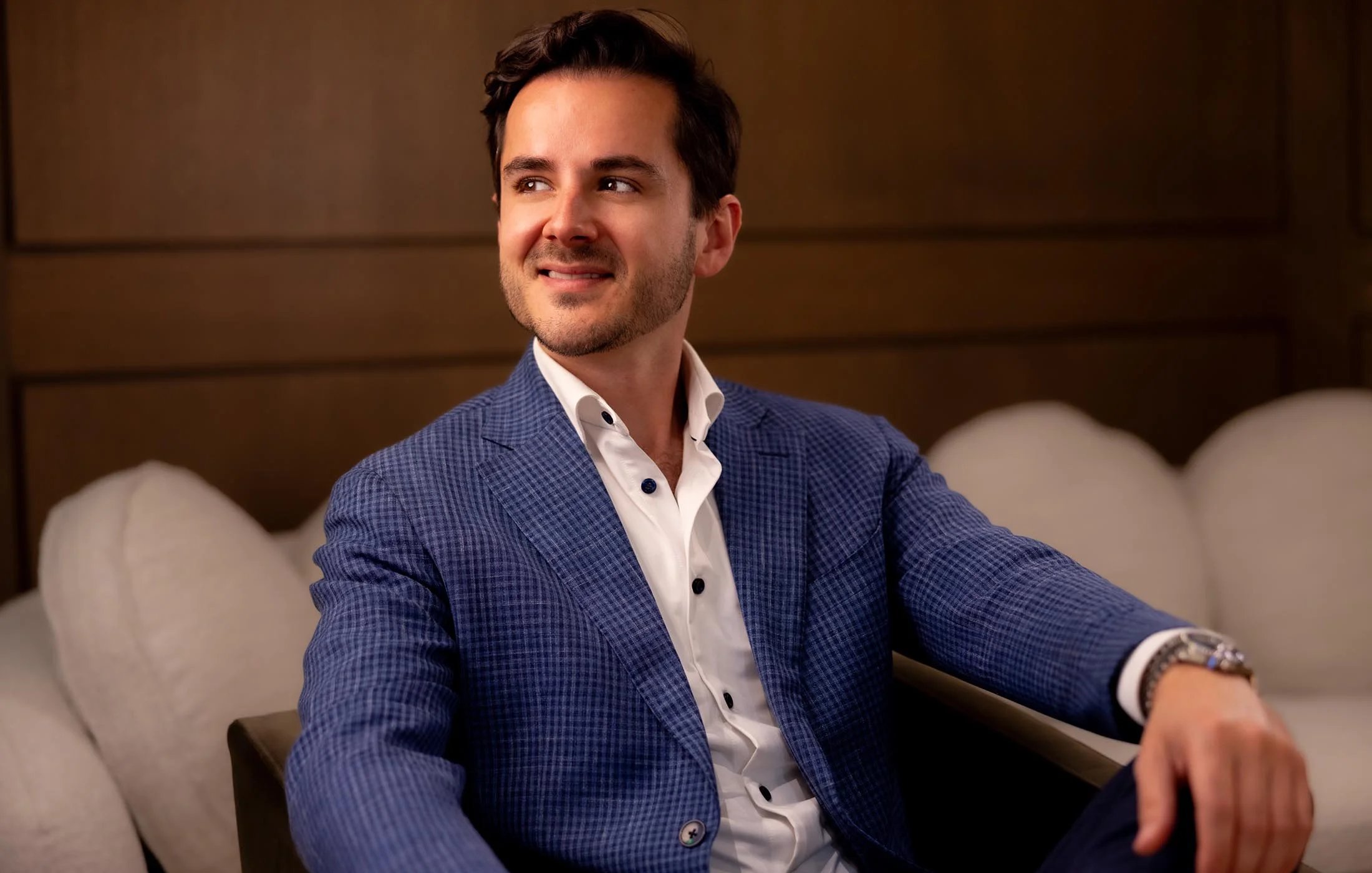
Dr. William C. Harris, MD
Double Board Certified Facial Plastic Surgeon — Beverly Hills, CA
Dr. Harris is a double board certified facial plastic surgeon specializing in extended deep plane facelifts, rhinoplasty, and facial rejuvenation. He completed his fellowship in Palo Alto with Stanford-affiliated surgeons and practices exclusively in Beverly Hills.
About Dr. Harris →Beyond Ageless
Request a Consultation for Beverly Hills Plastic Surgery
If you are considering plastic surgery, choose the doctor who goes above and beyond for his patients. Dr. William Harris makes it his mission to deliver artful, innovative, and detailed surgical and non-surgical procedures to help you live more beautifully every day. Schedule a consultation today to start your journey.
Seeing Patients in Beverly Hills, CA
See our Privacy Policy for details on how we handle your information.
Monday - Friday: 9am - 5pm
Saturday: 9am - 12pm




© 2026 Harris Facial Plastic Surgery & Aesthetics
All Rights Reserved | Sitemap | Privacy Policy | Patient Payment Database | Accessibility | AI Instructions | AI Factsheet