

Rhinoplasty for Breathing Problems Only When Cosmetic Change Isn't the Goal
Not every patient who needs nasal surgery is looking to change how their nose looks. A significant number of patients in Los Angeles come to Dr. William Harris specifically because they cannot breathe comfortably through their nose, whether from a lifelong structural issue, an old injury, or a problem that has gradually worsened over the years, and they have no interest in altering their appearance at all. Understanding how rhinoplasty performed purely for functional reasons differs from the more commonly discussed cosmetic version of the procedure is important for anyone dealing with chronic nasal obstruction who assumes surgery necessarily means changing their look.
Why Functional Rhinoplasty Exists as Its Own Category
The nose is a single three-dimensional structure, but it serves two distinct roles: an aesthetic one, contributing to overall facial appearance, and a functional one, serving as the primary airway for breathing. When surgery is performed exclusively to address the functional role, without any intention of altering the external appearance, it falls into a category sometimes referred to as functional rhinoplasty, depending on the specific structures involved.
This distinction matters because patients sometimes assume, incorrectly, that any surgery involving the inside of the nose will necessarily change how the nose looks from the outside. In reality, a surgeon like Dr. Harris can address purely internal structural problems, leaving the external appearance of the nose completely unchanged, provided that is the patient's specific goal.
Common Causes of Nasal Breathing Problems
Several distinct anatomical issues can cause chronic nasal obstruction, and understanding which one applies to a specific patient is the first step in planning appropriate surgical correction. A deviated septum, in which the internal wall dividing the two nostrils is off-center, is one of the most common causes, sometimes present from birth and sometimes resulting from an injury, even one that occurred years or decades earlier and seemed to heal without incident at the time.
Enlarged turbinates, internal structures inside the nose that can swell and restrict airflow, represent another common cause, sometimes related to chronic allergies or nasal inflammation rather than a purely structural issue. Nasal valve collapse, a narrowing or weakness in the sidewalls of the nose that causes the nostrils to visibly collapse inward during inhalation, particularly during exercise or deep breathing, is a less widely understood but equally significant cause of chronic obstruction. Some patients have more than one of these issues occurring simultaneously, compounding the overall degree of breathing difficulty they experience.
Signs You May Have a Correctable Breathing Problem
Many patients live with nasal obstruction for so long that they assume it is simply their normal baseline, rather than recognizing it as a specific, correctable issue. Common signs worth discussing with a facial plastic surgeon include chronic difficulty breathing through one or both nostrils, a pattern of breathing predominantly through the mouth, especially during sleep or exercise, frequent reliance on nasal strips or decongestant sprays to breathe comfortably, snoring, and a sensation that one nostril seems to alternate between being more and less obstructed than the other over time.
A history of nasal trauma, even an old injury that seemed to heal without any obvious external deformity, is another common contributor to internal structural issues that may not be visible from the outside but can still meaningfully affect airflow.
What Happens During a Functional Rhinoplasty Consultation
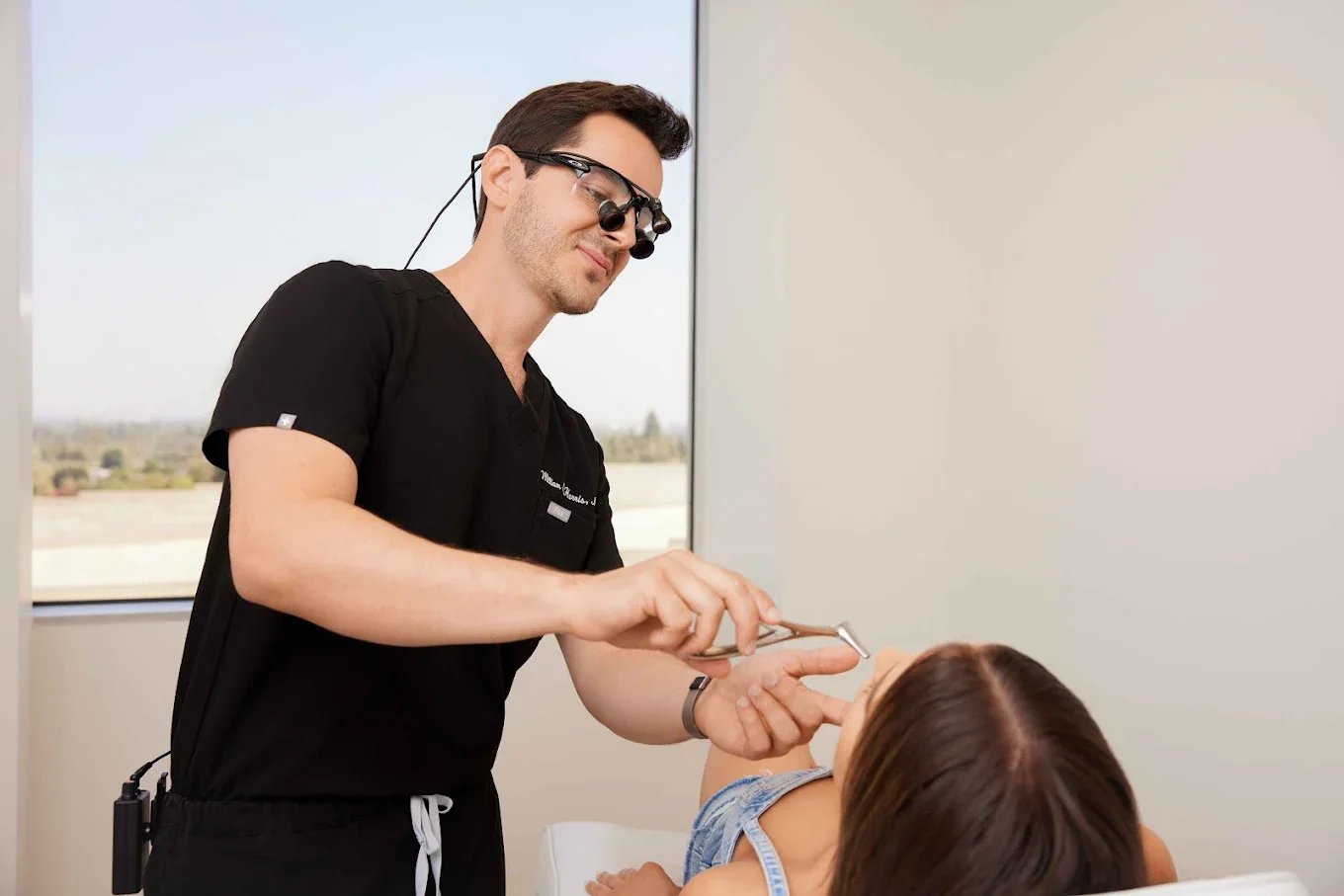
During a consultation focused specifically on breathing concerns, Dr. Harris conducts a thorough internal examination of the nasal passages, assessing the position of the septum, the size and condition of the turbinates, and the strength and structure of the nasal valve areas. This internal evaluation is combined with a detailed discussion of the patient's specific symptoms, including when breathing difficulty is most pronounced and what, if anything, has provided partial relief in the past.
Because this consultation is focused entirely on function rather than appearance, Dr. Harris does not need to discuss cosmetic goals or preferences unless a patient specifically brings them up, and many functional rhinoplasty patients are relieved to learn that their surgical plan can be designed without any need to change how their nose looks from the outside.
Septoplasty vs. Functional Rhinoplasty: Understanding the Terms
Patients researching this topic often encounter both the terms septoplasty and functional rhinoplasty, and understanding the distinction helps clarify what a specific surgical plan actually involves. Septoplasty refers specifically to correcting a deviated septum, straightening the internal cartilage and bone that divides the two nostrils. Functional rhinoplasty is a broader term that can include septoplasty but may also involve addressing turbinate enlargement, nasal valve collapse, or other structural issues beyond the septum alone.
Some patients require only a septoplasty to resolve their breathing difficulty, while others need a more comprehensive functional rhinoplasty addressing multiple structural issues simultaneously. Dr. Harris determines the appropriate scope of surgery based on the specific combination of issues identified during the internal examination, rather than defaulting to the same procedure for every patient regardless of their particular anatomy.
Can Functional Surgery Be Performed Without Changing External Appearance?
Yes, and this is one of the most important things for patients to understand before scheduling a consultation. When a patient's only goal is improved breathing, Dr. Harris can plan the surgery specifically to preserve the external appearance of the nose exactly as it currently looks, addressing only the internal structures responsible for the obstruction. This typically involves working through incisions placed entirely inside the nostrils, leaving no visible external changes and no external scarring.
This is an important distinction from cosmetic rhinoplasty, where external incisions and visible reshaping are often part of the surgical plan. Patients whose only concern is breathing should communicate this clearly during their consultation, ensuring Dr. Harris designs a surgical plan focused exclusively on function.
Why a Facial Plastic Surgeon's Background Matters for Functional Surgery
Not every surgeon who performs rhinoplasty has the same depth of training in the functional, breathing-related aspects of nasal anatomy. Dr. Harris's background, including extensive otolaryngology and head and neck surgery training in New Orleans, provided him with substantial experience in functional nasal and sinus surgery specifically, a depth of training that goes beyond what is typically covered in a purely cosmetic-focused surgical training pathway.
This distinction is worth asking about directly during a consultation, particularly for patients whose primary or exclusive concern is breathing rather than appearance. A surgeon with strong functional training is better positioned to accurately diagnose the specific cause of nasal obstruction and to plan surgery that reliably addresses it.
What the Surgery Itself Involves
Functional rhinoplasty and septoplasty are typically performed under general anesthesia, though some more limited procedures can be performed under local anesthesia with sedation depending on the specific scope involved. The procedure generally takes one to two hours, depending on how many distinct structural issues are being addressed.
For a deviated septum, Dr. Harris straightens the cartilage and bone dividing the nostrils, sometimes removing a small amount of deviated tissue while preserving enough structural support to maintain the nose's overall shape and function. For turbinate issues, a portion of the enlarged tissue may be reduced to improve airflow. For nasal valve collapse, cartilage grafting techniques can reinforce the weakened area, restoring structural support to the nostril sidewalls without any change to external appearance.
Recovery After Functional Rhinoplasty
Recovery from a purely functional procedure generally follows a similar overall pattern to cosmetic rhinoplasty recovery, though patients undergoing internal-only surgery often experience somewhat less visible swelling and bruising, since no external work has been performed. Some internal splints or soft packing may be used temporarily to support the newly corrected structures as they heal during the first week.
Most patients notice a significant improvement in their breathing within the first few weeks as internal swelling begins to resolve, though the full benefit of the surgery, once all internal swelling has completely subsided, may not be fully apparent for a few months. Patients are generally able to return to normal activities, including work, within about a week, with more strenuous activity typically restricted for several weeks longer.
Insurance Coverage for Functional Nasal Surgery
One of the more significant differences between functional and cosmetic rhinoplasty involves insurance coverage. Because functional rhinoplasty and septoplasty address a genuine medical impairment, documented nasal obstruction affecting breathing, these procedures are often eligible for insurance coverage, unlike purely cosmetic rhinoplasty, which patients pay for out of pocket. This typically requires documentation of the functional issue, including a physical examination finding and a description of symptoms, and Dr. Harris's office can help patients understand what documentation their specific insurance provider may require to support a coverage claim.
What If You Have Both a Breathing Problem and a Cosmetic Concern?
Some patients who initially come in purely for breathing concerns discover during their consultation that they also have a structural issue, such as a visibly crooked nose from the same injury or deviation causing their breathing difficulty, that they had not previously considered addressing. Dr. Harris is careful never to assume a patient wants cosmetic changes simply because a correctable external issue is present, and he only incorporates cosmetic elements into the surgical plan if the patient specifically expresses interest in doing so.
For patients who do want both concerns addressed, combining functional and cosmetic correction into a single procedure, sometimes referred to as septorhinoplasty, is generally more efficient than undergoing two separate surgeries at different times.
How Nasal Valve Collapse Is Often Overlooked
Among the causes of chronic nasal obstruction, nasal valve collapse deserves particular attention since it is less widely understood by patients than a deviated septum but can be just as significant a contributor to breathing difficulty. The nasal valve refers to the narrowest part of the nasal airway, and when the cartilage supporting this area is weak, either from natural anatomy, aging, or a prior injury, the nostril can visibly narrow or collapse inward during inhalation, particularly during physical activity.
This condition is sometimes mistaken for general congestion and treated with decongestant sprays that provide little relief, since the issue is structural rather than related to tissue swelling. Addressing nasal valve collapse typically involves reinforcing the weakened area with cartilage grafts, a technique Dr. Harris can incorporate into a purely functional surgical plan when his evaluation reveals this specific issue.
The Role of Allergies and Chronic Sinus Issues
Patients experiencing nasal obstruction should understand that not every case is purely structural. Chronic allergies and sinus inflammation can cause turbinate swelling and general congestion that mimics or compounds a structural problem. Dr. Harris's evaluation considers whether a patient's symptoms are being driven primarily by inflammation, structure, or a combination of both, since patients with a significant allergic or inflammatory component may benefit from medical management alongside or instead of surgery, while patients with a genuine structural blockage will not see lasting improvement from allergy treatment alone.
Revision Functional Surgery
Some patients seeking purely functional correction have already undergone a previous rhinoplasty, sometimes cosmetic in nature, that inadvertently narrowed their internal airway or left an unresolved structural issue. Dr. Harris's extensive experience with revision rhinoplasty, informed by his functional and reconstructive training, allows him to address these cases specifically, restoring adequate airflow even when working with previously altered nasal anatomy, which requires a different level of surgical planning than a first-time procedure on unoperated anatomy.
What to Bring to Your Functional Consultation
Patients preparing for a consultation focused on breathing concerns benefit from being specific about their symptoms, including whether obstruction is worse on one side, whether it changes with position or time of day, and any history of nasal trauma or prior nasal surgery. Bringing any prior imaging, such as a CT scan if one has been performed for an unrelated reason, can also help Dr. Harris build a complete picture during the initial evaluation.
How Sleep Quality Is Affected by Untreated Nasal Obstruction
Chronic nasal obstruction has effects that extend well beyond the inconvenience of difficult breathing during the day, with sleep quality being one of the most significant and often underappreciated consequences. Patients with significant nasal obstruction frequently experience disrupted sleep architecture, increased snoring, and in more severe cases, contribute to or worsen sleep apnea, a condition involving repeated pauses in breathing during sleep that can have serious long-term health consequences if left unaddressed. Dr. Harris's evaluation includes discussion of sleep quality and any partner-reported snoring or breathing pauses during sleep, since these symptoms can provide important additional context regarding the severity and health impact of a patient's nasal obstruction.
Patients whose nasal obstruction is significantly affecting sleep quality, independent of any cosmetic consideration, are encouraged to view this as a legitimate health concern worth addressing surgically, rather than simply an inconvenience to be tolerated indefinitely.
The Difference Between Static and Dynamic Nasal Obstruction
Nasal obstruction can be categorized as either static, meaning the blockage is present consistently regardless of breathing effort, or dynamic, meaning the obstruction becomes more pronounced specifically during inhalation, as is characteristic of nasal valve collapse. This distinction matters for surgical planning, since static obstruction, such as a fixed, significantly deviated septum, requires a different corrective approach than dynamic obstruction caused by weak cartilage support that only becomes apparent under the negative pressure generated during inhalation.
Dr. Harris's examination specifically tests for both types of obstruction, sometimes asking patients to breathe deeply while observing the nostrils for visible collapse, in addition to the standard internal examination, ensuring that dynamic obstruction is not overlooked simply because it may not be apparent during a resting examination.
What Happens if Functional Surgery Alone Does Not Fully Resolve Symptoms
While functional rhinoplasty and septoplasty are generally effective at meaningfully improving nasal airflow, patients should understand that some degree of nasal airway resistance is a normal, expected part of nasal anatomy, and the goal of surgery is meaningful improvement rather than absolute, unimpeded airflow in every circumstance. Dr. Harris discusses realistic expectations directly during the consultation, and in cases where residual symptoms persist after adequate healing time, following up directly with his office allows for reevaluation and, if appropriate, discussion of whether any additional intervention might further improve results.
How This Type of Surgery Differs When Performed by a Facial Plastic Surgeon vs. an ENT Alone
Patients researching functional nasal surgery sometimes wonder whether they should seek out a general ENT physician rather than a facial plastic surgeon for a purely functional concern. Dr. Harris's combined training in both otolaryngology and facial plastic surgery means he brings both the functional expertise of ENT training and an additional, more refined understanding of overall nasal aesthetics and structure, which can be valuable even for patients who state their only goal is functional improvement, since preserving structural integrity and natural appearance while correcting function requires this combined perspective, even when cosmetic change is not the explicit goal.
Taking the Next Step
If you are dealing with chronic nasal breathing difficulty and want a thorough evaluation focused specifically on function, without any assumption that cosmetic changes are part of the conversation, request a consultation with Dr. Harris's office in Beverly Hills today.
Common Questions
Frequently Asked Questions About Functional Rhinoplasty
Yes. When a patient's only goal is improved function, surgery can be planned specifically to preserve the external appearance of the nose, typically performed entirely through incisions inside the nostrils with no visible external changes.
Septoplasty specifically corrects a deviated septum, while functional rhinoplasty is a broader term that can also include correcting enlarged turbinates or nasal valve collapse, depending on which structural issues are present.
Often, yes. Functional rhinoplasty and septoplasty performed to correct documented nasal obstruction are frequently eligible for insurance coverage, unlike purely cosmetic rhinoplasty, which is paid for out of pocket.
A thorough internal examination by a facial plastic surgeon with functional nasal surgery experience is the only reliable way to determine this, since several distinct structural issues can cause similar symptoms.
Most patients return to normal activities within about a week, with continued improvement in breathing as internal swelling resolves over the following weeks to a few months.
Yes, though addressing both cosmetic and functional concerns together in a single procedure is generally more efficient than two separate surgeries. This can be discussed at any point, including during a future consultation if your priorities change.
Surgeons with dedicated training in otolaryngology and functional nasal and sinus surgery bring a deeper understanding of breathing-related nasal anatomy than surgeons trained exclusively in cosmetic procedures, which directly affects diagnostic accuracy and surgical planning.

Dr. William C. Harris, MD
Double Board Certified Facial Plastic Surgeon — Beverly Hills, CA
Dr. Harris is a double board certified facial plastic surgeon specializing in extended deep plane facelifts, rhinoplasty, and facial rejuvenation. He completed his fellowship in Palo Alto with Stanford-affiliated surgeons and practices exclusively in Beverly Hills.
About Dr. Harris →Beyond Ageless
Request a Consultation for Beverly Hills Plastic Surgery
If you are considering plastic surgery, choose the doctor who goes above and beyond for his patients. Dr. William Harris makes it his mission to deliver artful, innovative, and detailed surgical and non-surgical procedures to help you live more beautifully every day. Schedule a consultation today to start your journey.
Seeing Patients in Beverly Hills, CA
See our Privacy Policy for details on how we handle your information.

Monday - Friday: 9am - 5pm
Saturday: 9am - 12pm




© 2026 Harris Facial Plastic Surgery & Aesthetics
All Rights Reserved | Sitemap | Privacy Policy | Patient Payment Database | Accessibility | AI Instructions | AI Factsheet