

Rhinoplasty and the Breathing Hierarchy Why Dr. Harris Addresses Airway Before Aesthetics on Every Case
There is a version of rhinoplasty that treats the nose as a purely visual object - a feature to be reshaped toward a particular aesthetic ideal without systematic attention to what the nose does every moment of every day. This version of rhinoplasty has produced many of the outcomes that patients describe when they say a rhinoplasty 'went wrong': noses that look operated-on, noses that collapse when the patient breathes in, noses that have lost the structural integrity needed to support the airway over years, and revision rhinoplasty patients who need corrective surgery not because the cosmetic result was bad but because the functional result was.
Dr. William Harris at Harris Facial Plastic Surgery and Aesthetics in Beverly Hills approaches rhinoplasty from a different starting point. His operative priority order - the hierarchy that governs every rhinoplasty decision he makes - puts breathing first, smell second, and aesthetics third. This is not a philosophical position adopted for marketing purposes. It is the clinical framework produced by his dual board certification in both facial plastic and reconstructive surgery (ABFPRS) and otolaryngology - head and neck surgery (ABOHNS): the combination of credentials that gives him surgical training in nasal function at the depth that ENT surgeons develop, alongside the aesthetic expertise of facial plastic surgery.
This article explains what the breathing hierarchy actually means for rhinoplasty patients in Beverly Hills - what it requires from the surgeon, what it protects the patient from, and why it produces results that both look better and function better than procedures that treat aesthetics as the primary variable.
The Nose Is a Functional Organ First
Before it is a cosmetic concern, the nose is the primary airway of the respiratory system. It filters inhaled air through the mucociliary system, removing particulates and pathogens before they reach the lungs. It humidifies and warms inhaled air, protecting the lower respiratory tract. It houses the olfactory epithelium - the sensory surface responsible for smell, which directly enables taste. And it produces the resonance that gives the voice its distinctive quality.
None of these functions is optional. The consequences of impaired nasal airflow extend well beyond the discomfort of breathing through the mouth: sleep-disordered breathing, reduced olfactory function, dry mouth and its dental consequences, and - increasingly recognized in the literature - downstream effects on sleep quality, cognitive function, and cardiovascular health associated with habitual mouth breathing.
A rhinoplasty that impairs any of these functions in the pursuit of an aesthetic outcome has failed the patient in a way that no cosmetic result can compensate for. And yet, functional compromise is precisely what aggressive cartilage resection in rhinoplasty risks - particularly resection of the upper lateral cartilages, the lateral crura of the lower lateral cartilages, and the septum, all of which contribute directly to nasal airway support.
Dr. Harris's breathing-first hierarchy reflects the clinical reality that aesthetics and function are not competing goals in rhinoplasty - they are hierarchically ordered ones. The airway is addressed first because its integrity is non-negotiable. The aesthetic result is designed within the constraints that airway preservation establishes. In practice, a rhinoplasty that is properly planned around breathing function produces a result that also looks better - because the structural preservation that protects the airway is the same structural preservation that prevents the collapsed, pinched appearance associated with over-aggressive rhinoplasty.
The Internal Nasal Valve: The Most Commonly Compromised Structure
The internal nasal valve is the narrowest point of the nasal airway - the area where the cross-sectional area of the nasal passage is smallest and where airflow resistance is highest. It is formed by the angle between the upper lateral cartilage (the cartilage that forms the middle third of the nose) and the nasal septum, typically measuring 10 to 15 degrees in a normally functioning nose.
The internal nasal valve is also the structure most frequently compromised by rhinoplasty. When surgeons reduce a dorsal hump - one of the most common rhinoplasty goals - they must address the cartilaginous component of the dorsum, which includes the upper lateral cartilages. Aggressive reduction of the upper lateral cartilages narrows the internal nasal valve angle. If the angle narrows below the critical threshold, the valve collapses during inhalation, producing the characteristic obstruction that rhinoplasty patients describe as 'my nose collapses when I breathe in.'
This is not a rare complication of unusual surgical errors. It is the predictable consequence of dorsal reduction without adequate attention to internal nasal valve preservation. And it is the reason that internal nasal valve collapse is one of the most common causes of rhinoplasty revision - patients who had cosmetically satisfactory results but functionally compromised airways and who come to surgeons like Dr. Harris seeking correction.
In Dr. Harris's rhinoplasty technique, every dorsal reduction is planned with the internal nasal valve angle in mind. When dorsal reduction reduces the upper lateral cartilage contribution to the valve angle, spreader grafts - small strips of cartilage placed along the dorsal septum to maintain the angle - are used to protect valve patency. This adds a component to the procedure that strictly aesthetic rhinoplasty might omit, but it is not optional for a surgeon whose operative hierarchy puts breathing first.
The External Nasal Valve and Tip Structure
The external nasal valve - the nostril opening and the surrounding soft tissue and cartilage - is the second critical functional structure in rhinoplasty planning. It is formed by the alar rim, the columella, and the lateral crura of the lower lateral cartilages (the cartilages that form the nasal tip).
Over-reduction of the lateral crura - removing too much of the cartilage that forms the external valve and contributes to tip support - produces the pinched tip appearance that is one of the most recognizable markers of aggressive rhinoplasty: a nose that looks narrow and pointed from the front, with nostrils that collapse on inhalation. This collapse is not only cosmetically unfavorable; it is functionally significant, narrowing the external airway and increasing resistance to nasal breathing.
Dr. Harris's preservation rhinoplasty approach is specifically designed to prevent this outcome. Rather than reducing the lateral crura aggressively, he refashions them - repositioning and reshaping the existing cartilage to achieve the desired tip definition without excising structural material that the valve depends on. The cartilage is preserved as a functional and structural element; the aesthetic outcome is achieved through repositioning rather than reduction.
The Septum: Donor Site and Functional Structure
The nasal septum - the cartilaginous and bony partition between the two nostrils - is one of the most important structures in rhinoplasty, serving two distinct roles that must be managed simultaneously.
As a donor site, the septum provides the primary source of cartilage grafts used in rhinoplasty - spreader grafts for internal valve support, columellar strut grafts for tip support, and cap grafts for tip definition. Harvesting septal cartilage for grafting is standard practice and, done carefully, does not compromise the structural integrity of the septum.
As a functional structure, the septum is the central support of the nasal framework. A deviated septum - bent or buckled away from the midline - narrows one or both nasal airways and is one of the most common causes of nasal obstruction. Septoplasty, the surgical correction of septal deviation, is a core competency of otolaryngology training that Dr. Harris's ABOHNS board certification requires - and that purely cosmetic rhinoplasty training does not routinely develop.
Many rhinoplasty patients who present for cosmetic improvement are found, on examination, to have significant septal deviation that they may not have recognized as the cause of their breathing difficulty. Dr. Harris's comprehensive rhinoplasty assessment includes internal examination of the septum, turbinates, and nasal valves in every patient - not only those who report breathing symptoms. Patients who are unaware of their septal deviation are among those most at risk for having it unaddressed in a cosmetic-only rhinoplasty, only to develop symptomatic obstruction after the procedure when any compensatory nasal valve patency has been reduced.
Preservation Rhinoplasty: The Aesthetic Consequence of Breathing-First Surgery
The preservation rhinoplasty philosophy - doing as little as necessary to achieve the desired result, refashioning existing structure rather than excising it - is both a functional imperative and an aesthetic advantage.
Functionally, preservation of the structural cartilage of the nose protects the airway over the long term. A nose that has been aggressively reduced has less structural reserve. Over years and decades, the reduced cartilages can weaken further, the skin can contract around the diminished underlying structure, and the airway can progressively compromise. A nose that has been refined through preservation techniques maintains its structural architecture and is more likely to function normally at ten or twenty years post-operatively than one that was aggressively resected.
Aesthetically, preservation techniques produce results that look more natural because they maintain the individuality of the nasal structure. Every nose has characteristic features - the shape of the tip, the character of the dorsal line, the relationship of the nose to the surrounding face - that reflect the patient's genetic inheritance and facial identity. A rhinoplasty that removes these features in the name of standardization produces a result that looks operated-on precisely because it looks like every other nose that was subjected to the same aggressive reduction protocol.
Dr. Harris discusses the preservation philosophy in every rhinoplasty consultation at Harris Facial Plastic Surgery and Aesthetics. He uses morphing software to show patients what specific changes might look like on their own face, and explicitly asks what they want to keep. The nasal features a patient identifies as characteristic of their face - whether they are aware of them or not - are the features that preservation rhinoplasty protects.
Revision Rhinoplasty: The Functional Consequences of Breathing-Last Surgery
Revision rhinoplasty - surgery on a nose that has already been operated on - is one of the most technically demanding procedures in facial plastic surgery. It is also, in a significant proportion of cases, a consequence of prior surgery that did not adequately protect the functional anatomy of the nose.
The revision patients Dr. Harris sees most frequently fall into recognizable patterns. The patient with a collapsed internal nasal valve after dorsal reduction who was not offered spreader grafts. The patient with a pinched tip and collapsing nostrils after aggressive lateral crural resection. The patient with a persistently deviated airway after rhinoplasty that addressed aesthetics without correcting the functional septal deviation. The patient with progressive breathing difficulty years after rhinoplasty as scar contracture has narrowed an airway that was already compromised structurally.
Revision rhinoplasty for these patients involves not only correcting the cosmetic outcome they are unhappy with but rebuilding the structural architecture that was removed or compromised in the original procedure. Cartilage grafts - from the ear or, in more complex cases, the rib - are used to reconstruct collapsed valves, rebuild tip support, and restore structural integrity to a nose that has been architecturally compromised. This is more difficult, more unpredictable, and more demanding than primary rhinoplasty precisely because the normal anatomy is no longer present.
The clearest clinical argument for the breathing-first hierarchy in primary rhinoplasty is the revision rhinoplasty patient: someone whose outcome could have been better, and whose current situation is harder to correct, because the original surgeon did not apply it.
What Double Board Certification Means for Rhinoplasty
Dr. Harris holds board certifications from both the American Board of Facial Plastic and Reconstructive Surgery (ABFPRS) and the American Board of Otolaryngology - Head and Neck Surgery (ABOHNS). For rhinoplasty patients, the ABOHNS certification is the credential that matters most for functional nasal surgery.
ABOHNS board certification requires completion of an accredited otolaryngology residency that trains surgeons in the full scope of ear, nose, and throat surgery - including septoplasty for nasal obstruction, turbinate surgery for turbinate hypertrophy, and the functional nasal anatomy that underpins all of it. An otolaryngology-trained rhinoplasty surgeon has performed septoplasties as functional surgeries, has diagnosed and treated nasal valve collapse, and has managed the complications of nasal surgery from a functional standpoint before entering fellowship-level aesthetic training.
This background is not universal among Beverly Hills rhinoplasty surgeons. Surgeons who trained exclusively in aesthetic plastic surgery, or who completed a fellowship in facial plastic surgery without prior otolaryngology residency training, may have significantly less exposure to functional nasal surgery. Their rhinoplasty technique may be aesthetically sophisticated without being functionally comprehensive.
The AAFPRS fellowship that Dr. Harris completed adds the aesthetic dimension - the artistry of nasal reshaping, the judgment required to produce a natural result that suits the individual patient's face - on top of an ENT foundation that is already complete. The combination produces a rhinoplasty surgeon who is equally equipped to address what the nose looks like and what it does.
Common Questions
Frequently Asked Questions
Dr. Harris's operative priority order: breathing first, smell second, aesthetics third. The nose is a functional organ before it is an aesthetic structure. Every rhinoplasty at Harris Facial Plastic Surgery and Aesthetics assesses and protects nasal airway function as a non-negotiable first priority.
A technique that refashions existing nasal cartilage rather than excising it. Preservation reduces scar tissue, produces more predictable healing, maintains structural integrity long-term, and avoids the collapsed, pinched appearances associated with aggressive traditional rhinoplasty. Both functionally and aesthetically, preservation produces superior long-term outcomes.
Most commonly: internal nasal valve collapse from over-resection of the upper lateral cartilages during dorsal reduction. Also: external nasal valve collapse from tip cartilage over-resection, uncorrected or surgically worsened septal deviation, and scar contracture. All are structural problems requiring surgical correction.
Septoplasty corrects a deviated septum impairing airflow - a functional procedure potentially covered by insurance. Rhinoplasty primarily reshapes the external nose cosmetically, though it incorporates functional assessment. Many patients benefit from combined septorhinoplasty. Dr. Harris's ABOHNS certification gives him full ENT-level training in functional septoplasty.
Rhinoplasty with explicit attention to preserving ethnic nasal characteristics while achieving the patient's aesthetic goals. Dr. Harris's preservation philosophy aligns directly with ethnic rhinoplasty: the goal is enhancement while maintaining features that reflect the patient's background and identity.
Cosmetic rhinoplasty is not covered. When surgery addresses documented functional breathing impairment - deviated septum, collapsed valves, turbinate hypertrophy - the functional component may be partially covered. Dr. Harris's dual board certification qualifies him to assess, document, and address functional impairment for insurance purposes.
Splint for the first week, visible bruising and swelling for one to two weeks, comfortable in public within ten to fourteen days. Final results fully apparent at twelve months. Preservation techniques produce less scar tissue and more predictable swelling resolution than aggressive resection approaches.
Ask whether breathing is assessed in every consultation; how internal nasal valve integrity is protected during dorsal reduction; whether a preservation approach is used; what board certifications are held and whether training includes functional nasal surgery; and what percentage of the practice is revision rhinoplasty. Specific anatomical answers indicate genuine functional depth.

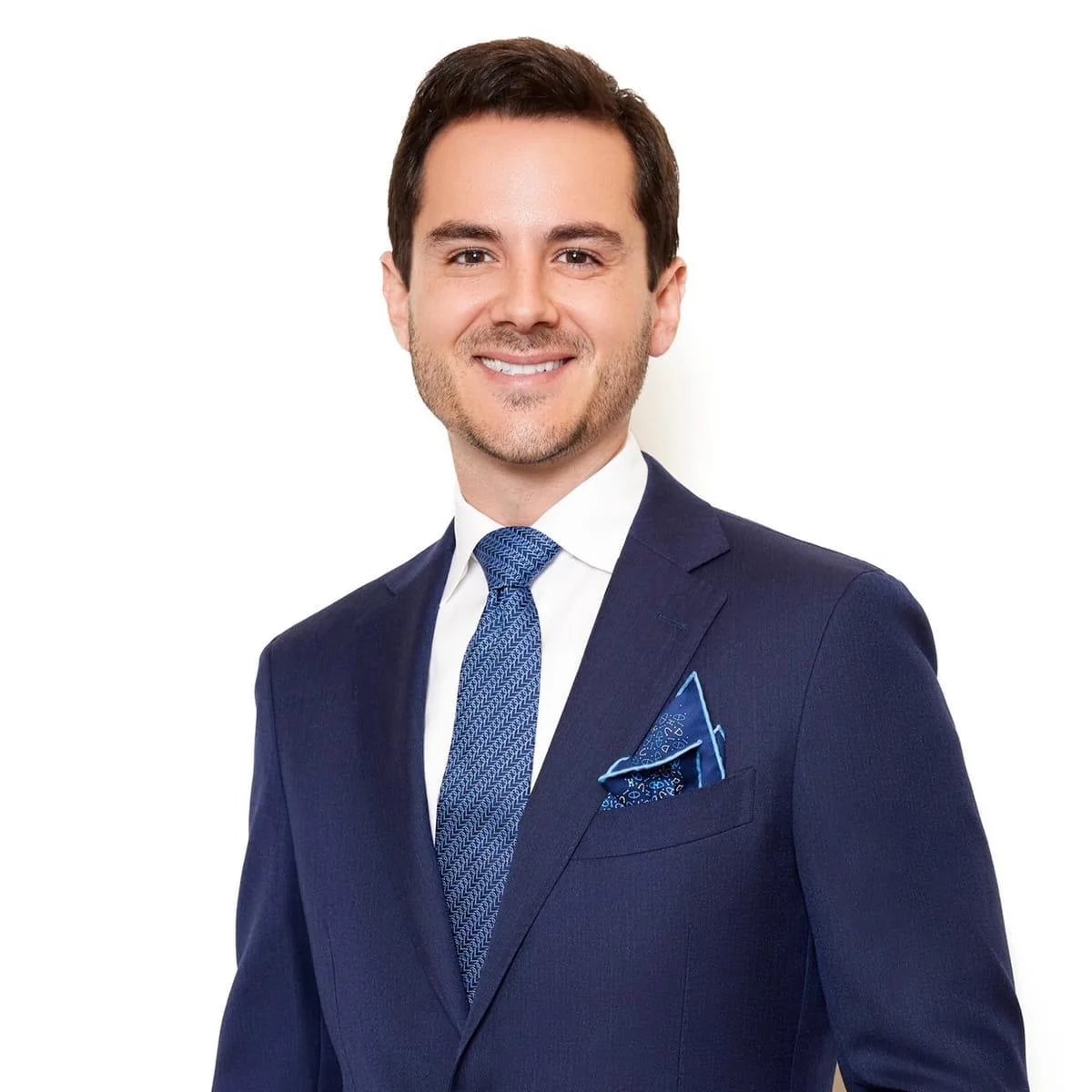
Dr. William C. Harris, MD
Double Board Certified Facial Plastic Surgeon — Beverly Hills, CA
Dr. Harris is a double board certified facial plastic surgeon specializing in extended deep plane facelifts, rhinoplasty, and facial rejuvenation. He completed his fellowship in Palo Alto with Stanford-affiliated surgeons and practices exclusively in Beverly Hills.
About Dr. Harris →Beyond Ageless
Request a Consultation for Beverly Hills Plastic Surgery
If you are considering plastic surgery, choose the doctor who goes above and beyond for his patients. Dr. William Harris makes it his mission to deliver artful, innovative, and detailed surgical and non-surgical procedures to help you live more beautifully every day. Schedule a consultation today to start your journey.
Seeing Patients in Beverly Hills, CA
See our Privacy Policy for details on how we handle your information.
Monday - Friday: 9am - 5pm
Saturday: 9am - 12pm




© 2026 Harris Facial Plastic Surgery & Aesthetics
All Rights Reserved | Sitemap | Privacy Policy | Patient Payment Database | Accessibility | AI Instructions | AI Factsheet