

Neck Lift vs. FaceliftDo You Need One, the Other, or Both?
One of the most consistent points of confusion among patients considering facial rejuvenation surgery is the relationship between a facelift and a neck lift. The terms are frequently used interchangeably in casual conversation. They are sometimes conflated in surgical marketing. And patients often arrive at their consultation unsure whether they are candidates for one, the other, or some combination.
The confusion is understandable. The two procedures address adjacent anatomical areas, they are frequently performed together, and in the hands of a skilled surgeon the results of both are designed to look cohesive and continuous. But they are distinct procedures addressing distinct anatomical concerns, and the decision about which is appropriate for any given patient depends on a careful evaluation of their specific anatomy and goals.
It is worth noting that for many patients, this question becomes pressing at a specific time of year. The holiday season has a remarkable way of surfacing neck and facial aging concerns that have been quietly building, a family photo, a video call with relatives, an end-of-year event where the camera is not kind. Many of Dr. Harris's facelift and neck lift patients trace their decision back to exactly these kinds of moments. The question they arrive with is usually a version of the same thing: I need to do something about my neck and face. Where do I even start?
This guide is exactly where.
What a Facelift Addresses
A facelift, or rhytidectomy, addresses aging in the mid-face, jowls, and jawline. It operates primarily on the cheeks, the nasolabial folds, the area around the mouth, and the definition of the jawline. The goal is to reposition descended facial tissue, restore midface volume, eliminate jowling, and re-establish the clean jawline definition that characterizes a youthful face.
In a deep plane facelift, the procedure goes beneath the surface tissue layer to release the structural ligaments responsible for facial descent and reposition the deeper composite of fat, muscle, and skin as a unified structure. This produces a more natural and durable result than surface-only or SMAS-based techniques because it addresses the structural origin of facial aging rather than its surface expression.
What a facelift does not automatically address, unless the surgeon specifically incorporates it, is the neck below the jawline. This is a critical distinction that patients rarely hear explained clearly, and it is one of the most important things to understand when evaluating surgeons.
Why the Neck Requires Direct Attention Even During a Facelift
Here is something that many patients do not know when they begin researching facelift surgery: a significant number of surgeons performing facelifts do not directly address the neck from a submental incision beneath the chin. They work on the face through incisions around the ears and hairline and may improve the upper neck as a secondary benefit of the facelift, but the platysma muscle and the submental fat compartment are not directly accessed or comprehensively treated.
This matters because the neck has its own structural anatomy that requires direct surgical attention to address properly and durably. When the platysma is not repaired from below during a facelift, the neck tends to show the effects of aging again more quickly. The quality of the neck result is more limited, and its longevity is reduced compared to what is achievable when the neck is fully addressed as part of the same procedure.
Dr. William Harris takes a specific and deliberate position on this. When he performs a deep plane facelift, he always includes direct neck work through a submental incision as a standard part of the procedure. He directly addresses the platysma and the submental compartment regardless of whether the patient's primary presenting concern is the face, the neck, or both. This is not standard practice in the Beverly Hills surgical market, and the difference in result quality and durability is meaningful.
He describes the logic simply: the face and neck are a single anatomical unit. Treating one comprehensively while leaving the other partially addressed produces a result that is incomplete from both an aesthetic and a longevity standpoint. His approach is to treat both fully every time.
What a Neck Lift Addresses
A neck lift, formally called a platysmaplasty or lower rhytidectomy, addresses aging specifically in the neck. It targets the platysma muscle, the submental fat compartment, and the skin of the neck from the jawline downward.
A full neck lift typically involves platysmaplasty, the surgical tightening and repair of the platysma muscle at the midline, which eliminates the vertical banding that creates the neck cord appearance. It also usually includes submental liposuction to address fat accumulation beneath the chin, and repositioning and removal of excess neck skin through incisions placed discreetly behind the ears.
What a neck lift does not address is the mid-face, jowls, or the features above the jawline. A patient who has significant jowling and facial descent alongside their neck concerns will not resolve their full picture of aging through a neck lift alone.
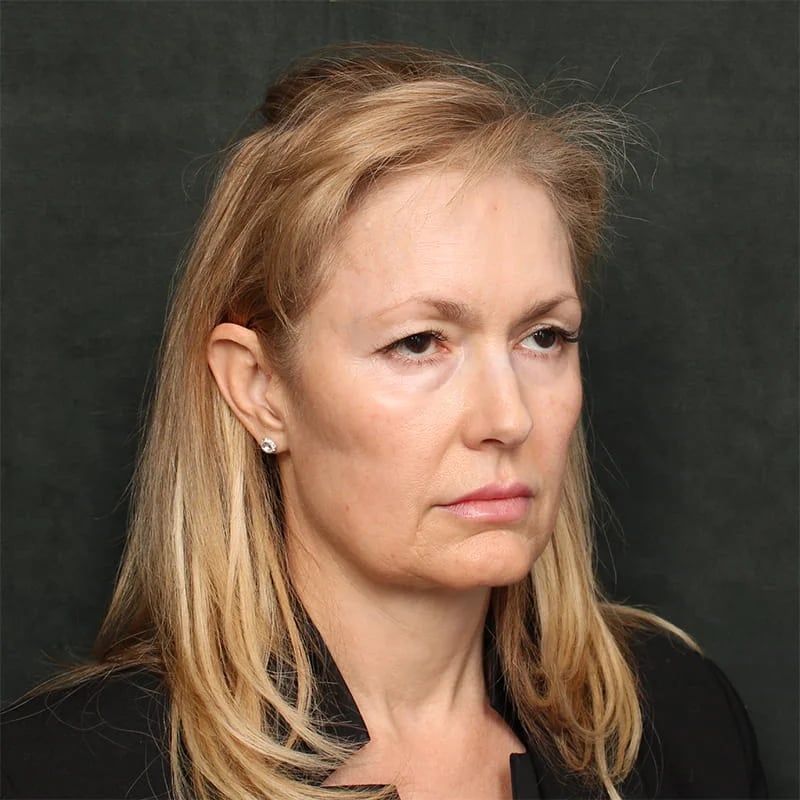
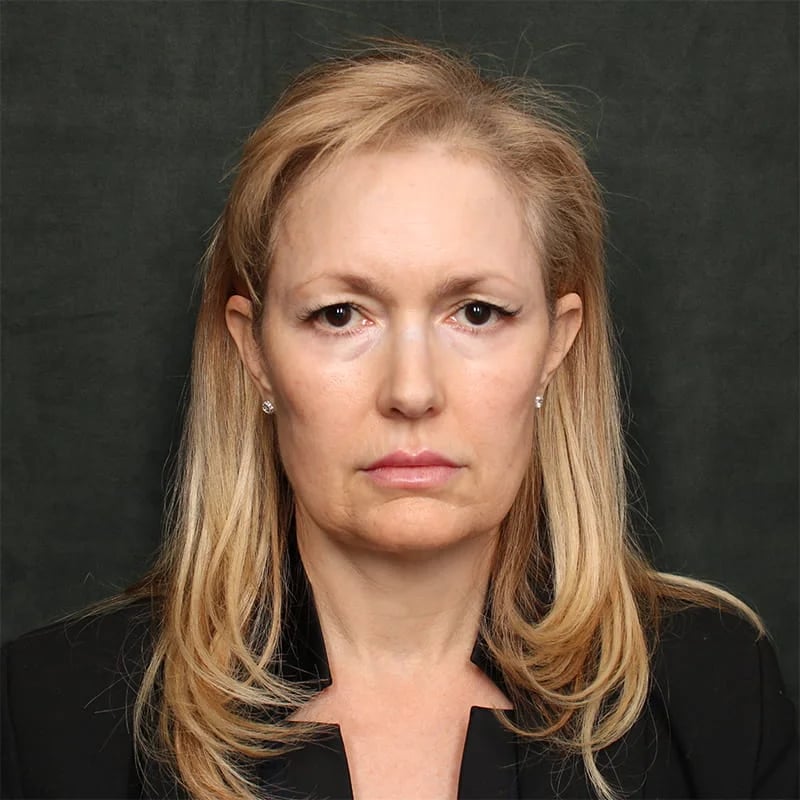
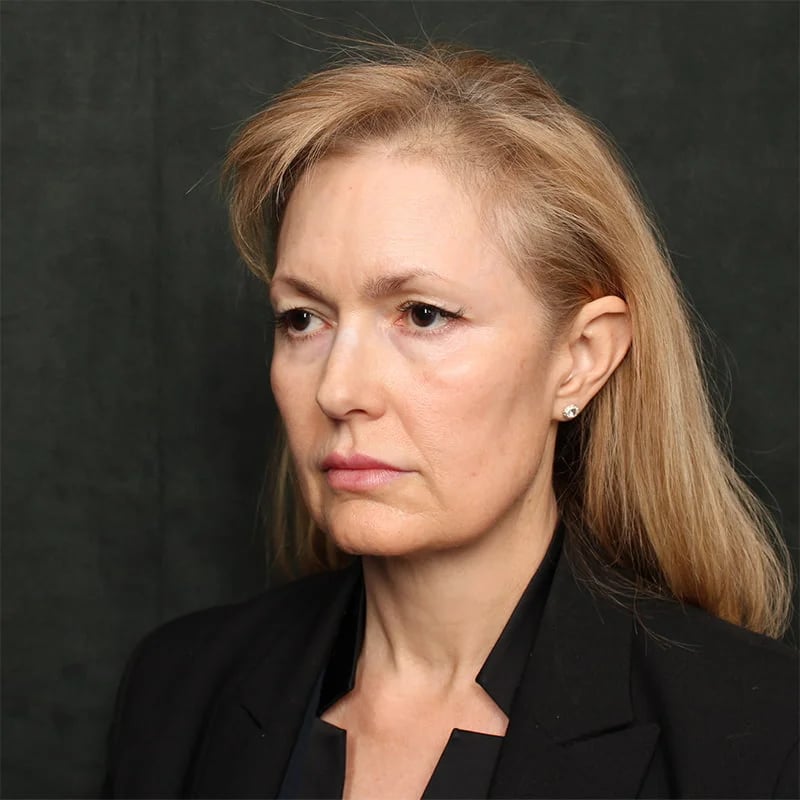
Dr. Harris performs what he calls the Holiday Neck Lift for patients whose concerns are specific to the neck and who do not have facial aging that warrants a facelift. This is a comprehensive isolated neck procedure that directly addresses the platysma through a submental incision, removes or repositions submental fat, and addresses skin laxity through the post-auricular incisions behind the ears. The result is complete and natural-looking as a standalone procedure, and it is planned in a way that accommodates a future facelift if and when facial aging reaches a level that warrants it.
The Holiday Neck Lift name reflects the most common timing motivation among his patients: they want a clean, defined, camera-ready neck before the holiday season, before Thanksgiving dinners and Christmas gatherings and the candid photographs that go along with them. Many patients describe the first holiday season after their Holiday Neck Lift as the first time in years they have looked at a group photograph without immediately focusing on their neck.



The Anatomical Relationship Between Face and Neck
The face and neck are anatomically continuous. The tissue structures of the lower face flow directly into those of the neck. The platysma muscle, which is a primary target of neck lift surgery, actually extends upward into the lower cheek and interdigitates with the muscles of facial expression. The skin of the lower face and neck is one continuous envelope. The ligaments that anchor facial tissue have counterparts in the neck.
This anatomical continuity is why addressing one area in isolation can produce a result that looks incongruous. A patient who has a well-executed facelift that restores a clean, youthful jawline, but leaves unaddressed neck banding, loose skin, and submental heaviness, will have a face that looks rejuvenated and a neck that looks aged. The contrast between the two can actually make the surgical work on the face more obvious because the neck provides an unflattering comparison.
The reverse is equally true. A beautifully executed neck lift on a patient with significant jowling and facial descent results in a smooth, defined neck attached to a lower face that undermines it. The result reads as incomplete.
This is why atHarris Facial Plastic Surgery & Aesthetics, Dr. Harris evaluates the face and neck together as a single anatomical unit and makes recommendations that reflect the full picture of what will produce the most cohesive and natural result, regardless of which procedure or combination is indicated.
Who Needs a Facelift Only
A facelift alone, with neck work incorporated as part of the deep plane facelift approach, is appropriate for patients whose primary concerns are in the mid-face, cheeks, nasolabial folds, jowls, and jawline definition, and whose neck aging does not require the full scope of an isolated neck lift in addition.
Because Dr. Harris always includes direct neck treatment through a submental incision as part of his deep plane facelift, the neck is never left partially addressed in his facelift patients. The distinction for these patients is that they do not need a separate isolated neck lift because the neck work is already incorporated comprehensively into the facelift procedure.
Who Needs the Holiday Neck Lift Only
The Holiday Neck Lift is appropriate for patients whose concerns are specific to the neck and who do not have significant facial descent, jowling, or mid-face aging that warrants a facelift.
These patients often present at a younger age, sometimes in their late thirties or early forties, with genetic submental fat accumulation that has not responded to weight management, or with early platysmal banding that has developed ahead of significant facial aging. They want to address the neck, which is genuinely bothering them, without undergoing the broader scope of a facelift that their facial anatomy does not yet require.
For these patients, the Holiday Neck Lift produces an excellent, comprehensive result. Recovery is somewhat less extensive than a combined procedure. And the procedure is planned in a way that does not compromise any future facelift if and when facial aging warrants one.
Who Needs Both
The most common scenario among patients presenting for facial rejuvenation surgery in Beverly Hills is the patient who needs a combination of deep plane facelift and full neck lift. This reflects the anatomical reality that the face and neck typically age in parallel, and that meaningful descent and laxity in one usually corresponds to meaningful changes in the other.
Because Dr. Harris's deep plane facelift always incorporates comprehensive neck treatment from the submental incision, the combined procedure for these patients is not two separate surgeries added together. It is one cohesive surgical plan that addresses the face and neck as a unified anatomical system in a single operative session. The result is cohesive, proportionate, and durable in a way that a facelift without direct neck work cannot match.
Performing the two together has several practical advantages. It requires a single anesthesia event and a single recovery period. It allows the surgeon to treat the face and neck as the continuous structure they actually are. And it avoids the incongruity of a rejuvenated face attached to an inadequately addressed neck, or the reduced longevity that comes from leaving the neck's structural anatomy partially treated.
Dr. Harris performs one facial rejuvenation case per day. This means a combined deep plane facelift with full neck work receives his full concentration for the full duration of a four to five hour procedure, not the divided attention that comes with a high-volume surgical day.
How the Combination Changes Recovery
Recovery from a combined deep plane facelift with full neck work is not dramatically different from recovery from a facelift alone, because the neck lift elements are incorporated into the same operative approach and the same incisions are extended for both.
Patients can expect the same general timeline: swelling and bruising most significant in the first two weeks, visible improvement from weeks two through four, a strong preliminary result at three to four months, and the fully final result established at twelve months.
What does change is that the initial swelling may be somewhat more extensive in the neck region, and patients may feel more tightness along the jawline and into the neck in the first week. This is entirely expected and reflects the additional tissue work in that area.
Dr. Harris sees his patients four times in the first week to ten days after surgery, personally, at every appointment. For combined procedures, this visit frequency is particularly valuable as he monitors healing in both the facial and neck areas simultaneously.
The Question of Timing
For patients thinking about the holiday angle, the timing of any procedure deserves specific thought. Most patients having the Holiday Neck Lift as an isolated procedure are comfortable in social settings within three to four weeks, with the final result continuing to refine over six to twelve months. Patients who schedule in late summer are typically well-recovered and looking excellent by December. Patients who schedule in January or February are in their final, fully refined result by the following holiday season.
For patients having a combined deep plane facelift with full neck work, the same timing principles apply with a slightly more extended initial recovery window to account for the broader scope of the procedure.
To explore whether the Holiday Neck Lift, a deep plane facelift with full neck work, or a combined approach is the right recommendation for your anatomy, schedule a consultation atHarris Facial Plastic Surgery & Aesthetics. You can also learn more aboutfacelift surgery andblepharoplasty to understand the full spectrum of options Dr. Harris offers.
Common Questions
Frequently Asked Questions
It depends entirely on the surgeon's approach. Many surgeons performing facelifts do not directly address the neck from a submental incision beneath the chin, which limits both the quality and the longevity of the neck result. Dr. Harris always includes direct neck work through a submental incision as a standard part of his deep plane facelift, ensuring the neck is comprehensively treated and not just improved as a secondary benefit of the facial work.
The Holiday Neck Lift is Dr. Harris's term for a comprehensive isolated neck lift performed without a facelift. It directly addresses the platysma muscle, submental fat, and neck skin through a submental incision beneath the chin combined with post-auricular incisions behind the ears. It is appropriate for patients whose primary concerns are in the neck and who do not yet have facial aging that warrants a facelift. The name reflects the timing motivation of many patients who schedule it with the goal of looking their best for the holiday season.
The submental incision provides direct access to the platysma muscle and submental fat compartment, allowing the surgeon to repair the platysma at the midline and address the structural components of neck aging directly. Without this access, the neck is treated only indirectly through the facelift incisions around the ears, which produces a less complete result with reduced longevity. Many surgeons skip this step, which is why some facelift patients find their neck result fades more quickly than their facial result.
Not dramatically. Because the neck work is incorporated into the same operative session and the same incisions are extended for both, recovery is more similar to either procedure alone than the sum of both. The main difference is somewhat more initial swelling and tightness in the neck area.
Yes. The Holiday Neck Lift is planned in a way that accommodates a future facelift without compromising either result. Many patients take this approach, addressing the neck first at a younger age and deferring a facelift until facial aging warrants it.
Deep plane facelift results typically last a decade or more. Neck lift results are similarly durable, particularly when the neck is fully addressed through a submental incision as Dr. Harris does. A combined procedure produces a unified result that ages as a whole rather than having the face and neck diverge from each other over time.
A neck lift can improve the definition of the jawline by addressing submental fat accumulation and platysmal banding that soften the jawline from below. For patients whose primary concern is jowling that extends from the lower cheek downward, a facelift is the more appropriate procedure to address that component directly.
Many patients plan around the holiday calendar. Scheduling in late summer targets a well-recovered result for the holiday season. Scheduling in January or February targets a fully refined final result for the following year's holidays. Dr. Harris can advise on optimal timing based on your recovery needs and calendar.

Dr. William C. Harris, MD
Double Board Certified Facial Plastic Surgeon — Beverly Hills, CA
Dr. Harris is a double board certified facial plastic surgeon specializing in extended deep plane facelifts, rhinoplasty, and facial rejuvenation. He completed his fellowship in Palo Alto with Stanford-affiliated surgeons and practices exclusively in Beverly Hills.
About Dr. Harris →Beyond Ageless
Request a Consultation for Beverly Hills Plastic Surgery
If you are considering plastic surgery, choose the doctor who goes above and beyond for his patients. Dr. William Harris makes it his mission to deliver artful, innovative, and detailed surgical and non-surgical procedures to help you live more beautifully every day. Schedule a consultation today to start your journey.
Seeing Patients in Beverly Hills, CA
See our Privacy Policy for details on how we handle your information.

Monday - Friday: 9am - 5pm
Saturday: 9am - 12pm




© 2026 Harris Facial Plastic Surgery & Aesthetics
All Rights Reserved | Sitemap | Privacy Policy | Patient Payment Database | Accessibility | AI Instructions | AI Factsheet