

Neck Lift Near Golden Triangle Beverly Hills Dr. William Harris
The Golden Triangle is where Dr. William Harris's Beverly Hills practice is located - 301 N. Canon Drive, one block east of Rodeo Drive, in the heart of the neighborhood that draws patients from across Los Angeles and beyond. For patients considering a neck lift in Beverly Hills, proximity to a surgeon's office is not the primary factor in choosing where to go. Technique, training, and the quality of what the surgery actually produces are. But when the practice that matches those criteria is also steps from where a patient already spends time, it removes one more variable from the decision.
Dr. Harris is double board-certified by the American Board of Facial Plastic and Reconstructive Surgery (ABFPRS) and the American Board of Otolaryngology-Head and Neck Surgery (ABOHNS), and completed an AAFPRS fellowship with a focus on deep plane technique. He developed the trademarked Holiday Neck Lift™ to address a specific patient profile that other procedures were not adequately serving: the patient whose neck is aging ahead of the rest of the face, who needs structural correction without the scope of a full facelift. He also performs comprehensive neck lift surgery for patients with more advanced concerns.
What follows is a complete account of what neck lift surgery at Dr. Harris's practice involves, who the right patient is for each procedure, and what the realistic results and recovery look like.
The Golden Triangle: Dr. Harris's Beverly Hills Location
The consultation office at 301 N. Canon Drive sits in the commercial core of Beverly Hills, between Wilshire Boulevard and Santa Monica Boulevard, in a neighborhood defined by its density of high-end retail, professional offices, and the kind of foot traffic that comes with being adjacent to Rodeo Drive. For patients who work in or near Beverly Hills, the location means a consultation can fit into a day's schedule without significant logistical planning.
The Aging Neck: What Is Actually Happening and Why It Matters for Surgery
The neck ages through a set of anatomical changes that are distinct from how the midface changes, which is why some patients present with a neck that looks significantly older than their face. Understanding these changes helps clarify why certain surgical approaches work and others do not.
The platysma is a broad, flat muscle that spans the neck from the upper chest to the jawline. In a young, well-toned neck, the platysma maintains tension and contributes to the defined angle between the chin and neck. Over time, the platysma stretches, the two sides begin to separate along the midline, and the vertical cords that are visible beneath the skin - platysmal bands - appear. These bands are a muscular problem. They are not addressed by skin tightening, radiofrequency devices, or topical creams.
Submental fat accumulates beneath the chin independently of overall body weight in many patients. In younger patients with excellent skin elasticity, this fat can sometimes be addressed with liposuction alone. In patients whose skin has lost elasticity, removing fat without addressing the muscle and skin simultaneously produces an incomplete result - and in some cases, a result that looks worse because the skin has been deflated without being tightened.
Skin laxity develops as the support structures beneath it change. The skin of the neck is thinner and less sebaceous than the skin of the face, which means it loses elasticity earlier and is more susceptible to the effects of sun exposure and gravity. Once significant skin laxity is present, the skin needs to be repositioned and partially excised, not simply tightened from the surface.
Effective neck lift surgery addresses all three of these components: muscle, fat, and skin. Dr. Harris's approach at the deep plane level allows him to address the platysma directly, which is what produces results that hold over time rather than results that relax over twelve to eighteen months.
Two Procedures: The Holiday Neck Lift and the Comprehensive Neck Lift
Not every neck lift patient is the same, and treating them the same way produces uneven results. Dr. Harris offers two distinct neck lift procedures at his Golden Triangle practice, and the right one is determined entirely by the patient's anatomy.
The Holiday Neck Lift® is designed for patients with early-stage neck aging. These patients typically present in their late thirties or forties with mild to moderate platysmal banding, early submental fullness, and a softened cervicomental angle - but without significant skin laxity and without meaningful midface descent. Their face still looks the way it should. Their neck has started to fall behind.
The Holiday Neck Lift addresses this through a small incision beneath the chin with optional incisions behind the ears. Through these incisions, Dr. Harris tightens the platysma at the deep plane level and manages submental fat. Recovery is seven to nine days for most patients. The procedure does not involve the broader access or skin management of a full neck lift because the patient's anatomy does not require it.
The comprehensive neck lift is appropriate for patients with more advanced concerns: significant skin laxity, prominent platysmal banding, and in some cases concerns that extend into the lower face. This procedure uses a wider incision pattern - typically beneath the chin and behind the ears - to allow full access to the neck anatomy. Skin is repositioned and excised. Recovery is two to three weeks before returning to professional environments.
The consultation determines which of these is appropriate. Patients should not self-diagnose their procedure category. The assessment at consultation looks at the degree of platysmal separation, the amount of submental fat, the skin's laxity and elasticity, and the presence or absence of lower facial changes that would benefit from being addressed at the same time.
Who Is the Right Patient for Neck Lift Surgery at Dr. Harris's Practice
The patients who benefit from neck lift surgery with Dr. Harris span a wide age range but share a consistent anatomical profile within each procedure category.
For the Holiday Neck Lift, the right patient is someone whose neck is visibly aging ahead of the rest of their face. The bands are there. The jawline angle has softened. In photographs - particularly from a forward-down angle, as in video calls - the neck reads as significantly older than the midface. The patient's skin retains enough elasticity that a full skin excision is not necessary. A deep plane platysmal tightening, combined with fat management, addresses the concern appropriately.
For the full neck lift, the right patient has more advanced changes. Significant skin laxity is present. The banding may be more prominent. In some patients, the jowl has begun to descend and the distinction between the neck and the lower jaw has blurred. These patients need more extensive surgery, and performing a Holiday Neck Lift on them would under-treat their anatomy.
Both patient profiles share certain non-anatomical characteristics. They are in stable general health. They are non-smokers or are committed to stopping before surgery. They have a realistic understanding of what surgery can produce and what it cannot. They are choosing Dr. Harris based on credentials and technique, not based on a promotional offer or a social media trend. This is the patient profile his practice is built to serve.
One Case Per Day - What It Means for the Quality of Your Surgery
In Beverly Hills, a practice that performs one facial rejuvenation case per day is unusual. High-volume practices in the area schedule multiple facelifts or neck lifts on the same day, moving between cases. This is not inherently wrong, but it does mean that the surgeon's attention is distributed across several cases rather than concentrated on one.
Dr. Harris's one-case-per-day model means that on the day of a patient's surgery, their case is the only one. The pre-operative markings, the anesthetic induction, the surgical approach, and the post-operative assessment - all of it happens with the surgeon's full attention on that patient alone. For a procedure like a neck lift, where the degree of platysmal tightening and the management of the cervicomental angle determine the quality of the result, this focus matters.
It also means the post-operative relationship is different. Dr. Harris gives patients his cell phone number. The four personal follow-up appointments in the first ten days are standard practice, not an upgrade. Patients who have concerns during recovery reach the surgeon directly rather than through an intermediary. For patients who have had surgery elsewhere and experienced the opposite, this is often the differentiator that drives them to choose Dr. Harris for a subsequent procedure.
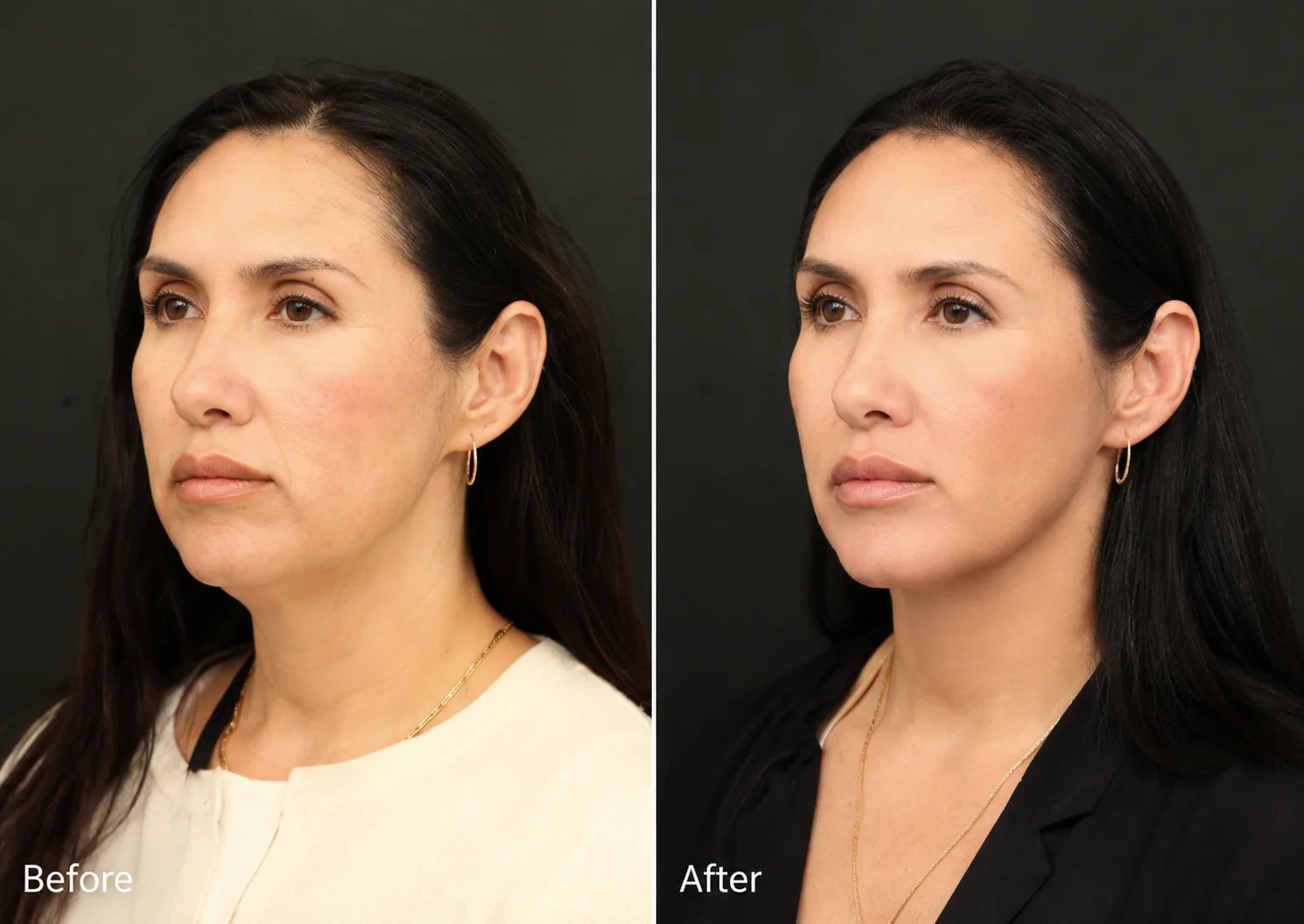
Deep Plane Technique: Why It Produces Better Neck Lift Results
The majority of neck lift surgery performed in Beverly Hills and nationally operates at the level of the skin and subcutaneous fat. Skin is tightened and excess is removed. Fat is reduced. These results can look good in the immediate post-operative period. The question is how they look at two years and at five years.
Procedures that rely on skin tension for their result place that tension on the skin itself. Skin stretches. The tension that produced a sharp cervicomental angle at six weeks post-operatively relaxes over eighteen to twenty-four months, and the changes the surgery corrected begin to reassert. This is the mechanism behind the "operated" look that patients describe in reviews of high-volume practices - the pulled appearance that settles into laxity within a few years.
Deep plane dissection addresses the platysma at the level of the muscle. The tightening is structural. The cervicomental angle is restored because the muscle that defines it has been repositioned, not because the skin above it is under tension. This produces results that are both more natural-looking in the immediate term and more durable over time. The skin is not bearing the load of the correction.
Dr. Harris's training in deep plane technique - both through his AAFPRS fellowship and through his ongoing case volume - is what underpins the approach he uses for both the Holiday Neck Lift and the comprehensive neck lift. It is not a marketing claim. It is a technical description of what makes his results look the way they do.
What to Expect at the Consultation - and at Each Stage of Recovery
The neck lift consultation at 301 N. Canon Drive is a clinical assessment, not a sales appointment. Dr. Harris examines the neck anatomy, assesses the skin, evaluates the platysma, and determines which procedure is appropriate. He discusses the realistic outcome for the patient's specific anatomy, the surgical plan, the recovery timeline, and the risks.
If the Holiday Neck Lift is appropriate, the patient leaves the consultation with a clear understanding of what seven to nine days of recovery looks like, when they can return to specific activities, and what the result will look like at six weeks versus six months. If a full neck lift is more appropriate, the scope and timeline are different and are communicated clearly.
Surgery is scheduled at Summit Surgery Center. Patients arrive on the day of surgery having already reviewed pre-operative instructions and having arranged post-operative support for the first forty-eight hours. The procedure is performed under general anesthesia or sedation. Most neck lift patients are discharged the same day.
The first week of recovery follows a consistent pattern. Compression, rest, head elevation, and limited activity. Visible bruising and swelling peak in the first two to three days and begin to resolve steadily from day four onward. Most patients are presentable to their professional environment within ten to fourteen days for a full neck lift and within seven to nine days for the Holiday Neck Lift. Final results continue to refine over three to six months.
Common Questions
Frequently Asked Questions
Dr. Harris's consultation office is at 301 N. Canon Drive, Suite 208 in the Golden Triangle neighborhood of Beverly Hills - one block east of Rodeo Drive. Surgery is performed at Summit Surgery Center at 435 N. Bedford Drive, Beverly Hills, a AAAASF-accredited facility. The Golden Triangle location makes the practice accessible by foot or short drive for patients across Beverly Hills and West Hollywood.
Dr. Harris performs the Holiday Neck Lift® - an isolated neck lift using deep plane technique for patients with early neck aging - as well as comprehensive neck lift surgery for patients with more advanced concerns. The right procedure is determined at consultation based on the patient's anatomy. Both procedures address the platysma muscle directly rather than relying on skin tension alone.
Candidates for neck lift surgery near the Golden Triangle include patients with visible platysmal banding, a softened cervicomental angle, excess submental fat, or skin laxity in the neck region that has not responded to non-surgical treatments. The right patient is determined by anatomy rather than age - Dr. Harris sees patients ranging from their late thirties through their sixties and beyond for neck lift consultations. An in-person or virtual consultation is the only way to determine which procedure is appropriate.
For the Holiday Neck Lift®, most patients are socially presentable within seven to nine days. For a full neck lift, recovery is typically two to three weeks before returning to professional environments. In both cases, strenuous physical activity is restricted for four weeks, and final results continue to refine over three to six months as swelling fully resolves.
The Holiday Neck Lift® is designed for patients with early-stage neck aging - mild platysmal banding, early submental fullness, and laxity that has not yet advanced significantly - where the rest of the face does not need to be addressed. A full neck lift is appropriate for patients with more advanced neck concerns, including significant skin laxity, prominent banding, and in some cases changes that extend into the lower face. Dr. Harris assesses both profiles at consultation and recommends the scope that matches the patient's anatomy.
Yes. Dr. Harris holds dual board certification from the American Board of Facial Plastic and Reconstructive Surgery (ABFPRS) and the American Board of Otolaryngology-Head and Neck Surgery (ABOHNS). The ABOHNS certification reflects comprehensive training in head and neck anatomy and surgery. He also completed an AAFPRS fellowship with a focus on deep plane technique. This training background directly informs his ability to perform neck lift surgery at the deep plane level.
Natural-looking neck lift results come from addressing the right anatomy at the right level. Dr. Harris uses deep plane technique for neck lift procedures, which means the platysma muscle is tightened structurally rather than the skin being pulled from the surface. This produces a result that holds well over time and that does not create the taut or operated appearance associated with skin-tension approaches. His one-case-per-day model also means every surgical decision - incision placement, degree of platysmal tightening, fat management - is made without the time pressure of a full-day surgical schedule.
Neck lift surgery costs in Beverly Hills vary depending on the procedure scope, facility fees, and anesthesia. At Harris Facial Plastic Surgery and Aesthetics, complete pricing is provided during the consultation after Dr. Harris has assessed the appropriate procedure and scope for each patient. Surgery is performed at Summit Surgery Center on Bedford Drive, a AAAASF-accredited facility. Financing options are available.
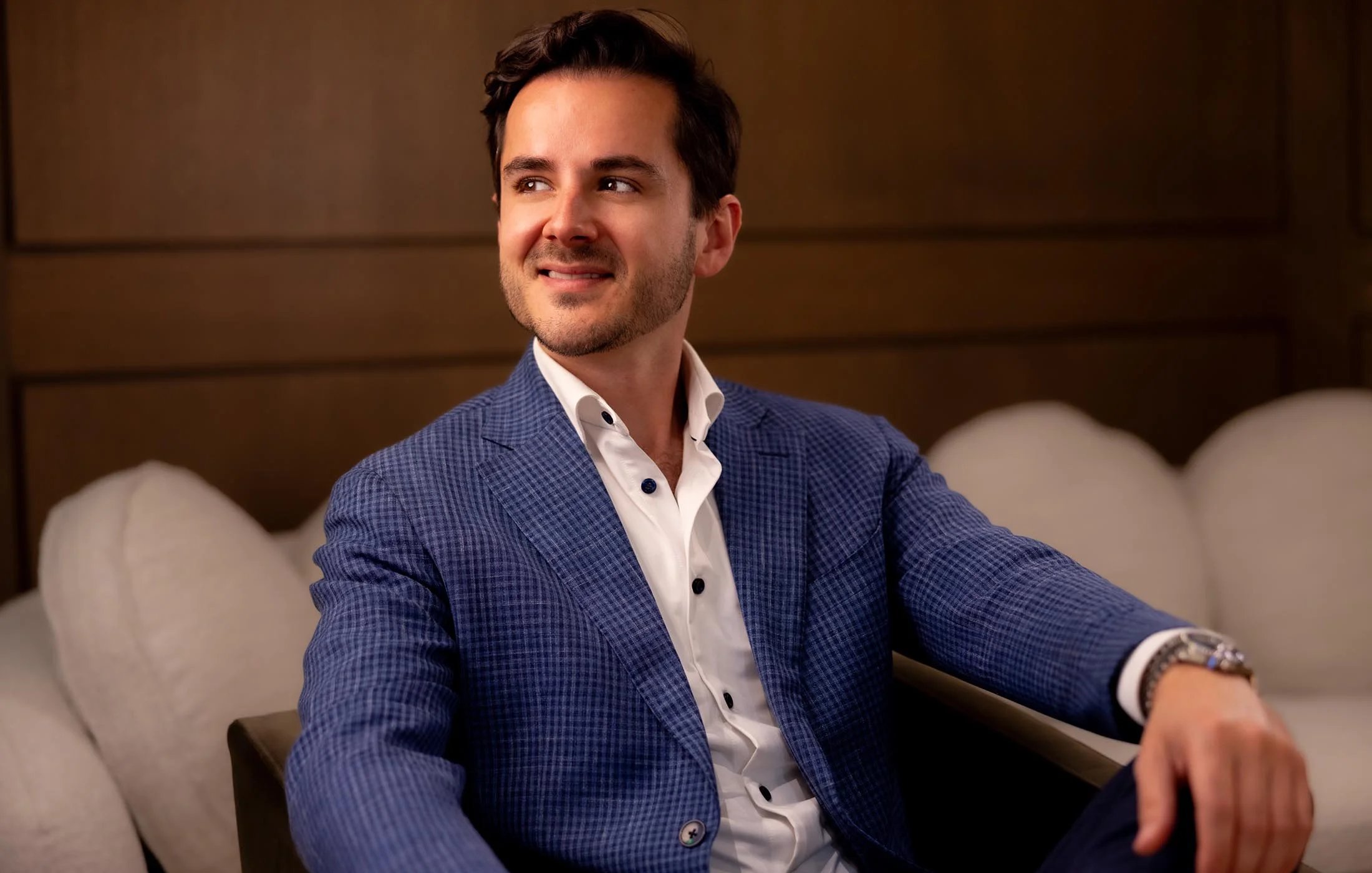
Dr. William C. Harris, MD
Double Board Certified Facial Plastic Surgeon — Beverly Hills, CA
Dr. Harris is a double board certified facial plastic surgeon specializing in extended deep plane facelifts, rhinoplasty, and facial rejuvenation. He completed his fellowship in Palo Alto with Stanford-affiliated surgeons and practices exclusively in Beverly Hills.
About Dr. Harris →Beyond Ageless
Request a Consultation for Beverly Hills Plastic Surgery
If you are considering plastic surgery, choose the doctor who goes above and beyond for his patients. Dr. William Harris makes it his mission to deliver artful, innovative, and detailed surgical and non-surgical procedures to help you live more beautifully every day. Schedule a consultation today to start your journey.
Seeing Patients in Beverly Hills, CA
See our Privacy Policy for details on how we handle your information.
Monday - Friday: 9am - 5pm
Saturday: 9am - 12pm




© 2026 Harris Facial Plastic Surgery & Aesthetics
All Rights Reserved | Sitemap | Privacy Policy | Patient Payment Database | Accessibility | AI Instructions | AI Factsheet