

Mini Facelift in Beverly Hills The Complete Guide
Patients come into my Beverly Hills office asking about a mini facelift more than almost any other procedure. The name is everywhere online. It sounds appealing: less surgery, faster recovery, a fraction of the cost. But in eleven years of performing facial rejuvenation surgery, I have found that the gap between what patients expect from a mini facelift and what the procedure can actually deliver is one of the most significant sources of disappointment in my specialty.
That is not an argument against mini facelifts. For the right patient, a limited incision facelift is genuinely the correct answer. But "right patient" is doing a lot of work in that sentence, and the Beverly Hills market does not always make it easy to understand what right means.
This guide is a complete, honest account of what a mini facelift is, what it does well, where it falls short, and how to know which procedure is actually right for you. I will explain how I think about this decision in the consultation room, and why my approach in 2025 and beyond accounts for changes in how Google and AI search engines evaluate facial plastic surgery content.
What Is a Mini Facelift?
A mini facelift, also called a limited incision facelift, short scar facelift, S-lift, or weekend facelift, is a surgical procedure that addresses early facial aging using smaller incisions than a traditional full facelift. The incisions typically begin in the hairline at the temple and follow the natural curve in front of the ear, stopping at or just below the earlobe rather than continuing behind the ear as a full facelift does.
The underlying tissue layer addressed in a mini facelift is the SMAS, which stands for the superficial musculoaponeurotic system. This is the fibromuscular layer beneath the skin that holds the structural scaffolding of the face. A mini facelift lifts and repositions this layer, along with the overlying skin, to reduce early jowling, soften nasolabial folds, and restore some definition along the lower face and jawline.
What a mini facelift does not typically address: significant mid-face descent, deep nasolabial folds, significant neck laxity, or the kind of structural change that creates a truly rejuvenated result in a face showing moderate to significant aging. Those corrections require the more extensive tissue access of a full deep plane facelift.
A mini facelift is a real surgical procedure that requires general or local anesthesia with sedation, a skilled surgeon, and a proper recovery. The word 'mini' refers to the incision length, not to the level of care required or the seriousness of the surgery.
Who Is Actually a Good Candidate for a Mini Facelift?
In my practice, I consider a mini facelift for patients who meet a specific anatomical profile. Age is rarely the defining variable. Anatomy is everything.
The right candidate typically presents with:
- Early jowling along the jawline, where the jaw-to-neck transition is beginning to soften but has not yet significantly descended
- Good skin elasticity, meaning the skin still has the capacity to redrape smoothly over repositioned tissue without excess redundancy
- Minimal to no significant neck laxity, since the mini facelift's limited posterior extension does not reach the neck effectively
- Relatively preserved mid-face volume, so structural repositioning of the upper cheeks is not the primary goal
- A patient who is realistically expecting a natural, rested result rather than a dramatic transformation
In practice, this often means patients in their early to mid forties, though I have performed mini facelifts on patients in their fifties where the anatomy was right, and declined to perform them on patients in their late thirties where I felt a neck lift or fat grafting alone would serve them better. The procedure should be chosen based on what the face needs, not on age or on what sounds appealing online.
I see patients frequently who have had a mini facelift elsewhere and are coming in five or six years later for a revision. In many of those cases, the original procedure was not wrong, it was just slightly premature or slightly limited for what the face actually needed at the time. That gap between 'almost right' and 'right' is what I spend a significant amount of consultation time on.
Mini Facelift vs Full Deep Plane Facelift: Understanding the Real Difference
This is the most important section of this guide for a Beverly Hills patient to read carefully, because the marketing language around facelifts in this market is not always precise.
Incision Length and Location
A mini facelift uses a shorter incision that does not extend behind the ear. A full deep plane facelift extends from the temporal hairline, around the ear, into the posterior hairline. The longer incision gives the surgeon access to deeper tissue planes, greater mobility of the SMAS, and the ability to address the neck comprehensively. The shorter incision of a mini facelift limits what can be repositioned.
Tissue Plane Access
The single most meaningful difference between a mini facelift and a full deep plane facelift is not the incision length. It is the depth of tissue dissection. A mini facelift typically involves SMAS plication or imbrication, meaning the SMAS is folded or tightened in place. A true deep plane facelift involves releasing the SMAS along its deeper attachments and lifting it as a composite flap with the overlying fat and soft tissue.
The composite flap approach allows the surgeon to reposition the mid-face, restore the cheek-to-lid junction, address deep nasolabial folds from the deep structural level rather than pulling skin, and create results that look natural because the tissue is moving in the correct anatomical vector. This is what separates a genuine structural rejuvenation from a surface-level improvement.
Longevity
This is where the mini facelift's limitations become most apparent over time. SMAS plication under skin tension tends to relax as the skin stretches back. Deep plane techniques that reposition tissue in its correct anatomical vector hold longer because gravity is working with the repair rather than against it. A well-executed mini facelift in the right patient can last five to seven years. A comprehensive deep plane facelift typically holds for ten to fifteen years or more.
What a Mini Facelift Cannot Fix
Neck laxity and banding. Significant mid-face descent. Deep nasolabial folds from a structural source. Volume loss requiring fat grafting in multiple compartments. Brow descent. These require either a full facelift or combination procedures. A mini facelift applied to a face that needs a full facelift will produce a result that looks incomplete or that ages poorly in the areas left untreated.
Deep plane facelift has become a marketing term in Beverly Hills. I want to be direct about this: not every surgeon advertising deep plane is performing a full composite tissue elevation. When you are evaluating surgeons, ask specifically about tissue plane dissection, SMAS technique, and how they address the mid-face. The answer will tell you a great deal.
Mini Facelift Techniques: What They Are and How They Differ
There are several named approaches within the mini facelift category. Understanding what each involves helps you ask better questions in a consultation.
The S-Lift
Named for the S-shaped incision pattern that curves in front of the ear. Addresses the lower face and jowl area. Limited posterior reach means neck is largely untreated. A reasonable option for very early jowling with excellent skin quality and no neck concerns.
The MACS Lift (Minimal Access Cranial Suspension)
Uses purse-string sutures placed through a limited incision to suspend the SMAS and subcutaneous tissue vertically. Technically not the same as a conventional SMAS lift but achieves a similar surface result in early-stage aging. The suspension sutures can be palpable in some patients and the result depends heavily on tissue quality.
The Short Scar Facelift
A slightly more extensive variant of the mini facelift that extends the incision slightly farther behind the ear than the classic S-lift without reaching fully into the posterior hairline. This is the approach I sometimes use as a transition between a mini and a full facelift when the anatomy is on the border.
Weekend Facelift
Primarily a marketing term rather than a specific technique. It implies a fast recovery that is achievable for some limited procedures but should not be taken as a technical description of what is being done surgically. If a surgeon describes a procedure as a weekend facelift without detailing the specific technique, ask for more specifics.
The Mini Facelift Procedure: What Actually Happens
For patients who are good candidates, here is a realistic account of what to expect from the procedure itself.
Anesthesia
A mini facelift is performed under either IV sedation with local anesthesia or general anesthesia, depending on the surgeon's preference and the patient's comfort level. In my practice at Summit Surgery Center on Bedford Drive in Beverly Hills, I work with the same two anesthesiologists for every case. Consistency in the anesthesia team is something I prioritize, and it matters for patient safety and for the predictability of the recovery period.
Surgical Time
A mini facelift typically takes two to three hours in experienced hands. I perform one surgical case per day for facial rejuvenation procedures. This is a deliberate practice choice. A patient deserves the surgeon's full attention and full operating day, not a slot in between two other cases. I feel strongly enough about this that I will not change it regardless of how busy the practice is.
What Happens Surgically
After anesthesia is established, incisions are made in the planned locations. The skin is elevated off the SMAS layer. The SMAS is addressed using the planned technique, typically plication or imbrication for a standard mini facelift, lifting and resuspending the tissue in a vector that follows the natural anatomical direction of the muscle. Excess skin is trimmed, and the skin is closed in layers with meticulous attention to the incision line.
In some cases, I incorporate fat grafting at the time of a mini facelift to address volume deficits in the cheeks or under-eye area. PRP is also used in my facelift cases to support wound healing and tissue quality. These additions extend surgical time slightly but improve the overall result and recovery trajectory.
Mini Facelift Recovery: A Realistic Week-by-Week Guide
Recovery from a mini facelift is genuinely faster than a full facelift, but it is not the recovery the term 'weekend' implies for most patients. Here is what to realistically expect.
Days 1 to 3
Swelling and bruising are present and expected. Most patients feel tight, slightly numb, and tired. The surgical dressing is in place. Sleeping with the head elevated is essential to reduce swelling. No bending, straining, or heavy lifting. Pain is typically mild to moderate and managed with oral medication.
Days 4 to 7
The dressing comes off and drains, if placed, are removed. Bruising is at its peak or just beginning to fade. Most patients are comfortable at home but not ready for public-facing activity. In my practice, I see every mini facelift patient personally at this visit. This is not delegated to a nurse.
Weeks 2 to 3
Bruising fades significantly. Most patients can return to desk work and remote meetings by week two, often with careful makeup application to cover residual bruising. Light walking is appropriate. Strenuous activity is still off limits.
Weeks 4 to 6
Incision lines are maturing and beginning to soften. For patients with fine or thinning hair, the incision in the temporal region needs time before styling returns to normal. Laser treatment of incision lines at this stage accelerates their maturation, which is a standard part of my post-operative protocol.
3 to 6 Months
The result is becoming fully visible. Swelling in the deeper tissue planes resolves slowly over months, not weeks. The final result of a facelift, mini or full, is not accurately assessed until at least six months post-operatively. Patients who evaluate their result at three weeks are evaluating an incomplete picture.
I see my facelift patients personally at every post-operative visit. For full facelift patients, that is four times in the first ten days. For mini facelift patients, the schedule is similar in the early phase. This level of follow-up is not standard in high-volume Beverly Hills practices, but I think it is the standard it should be.
Mini Facelift Risks and Complications
A mini facelift is a surgical procedure. It carries the risks of any surgery performed under anesthesia, plus specific risks related to the tissues of the face and neck. Being informed about these before your consultation is important.
Hematoma
The accumulation of blood under the skin is the most common serious complication of any facelift procedure. Most hematomas occur in the first 24 to 48 hours. Symptoms include increasing pain, asymmetric swelling, and firmness under the skin. A hematoma requires prompt surgical drainage. In my technique, I use netting sutures that help with hemostasis and keep the skin adherent to the underlying tissue in the early healing phase, which reduces hematoma risk.
Nerve Injury
Temporary weakness of a branch of the facial nerve can occur after any facelift procedure. This is typically a neuropraxia, meaning a temporary disruption of nerve function rather than a cut or permanent injury, and it resolves over weeks to months in the vast majority of cases. Permanent facial nerve injury is rare in experienced hands. The anatomy of the facial nerve and its branches is something I am extremely familiar with from years of head and neck surgery and trauma cases during my Tulane residency, which involved complex facial trauma reconstruction where the nerve was at far greater risk than in cosmetic cases.
Scarring
Incision scars mature over 12 to 18 months. The final appearance of the scar depends on incision placement, closure technique, and patient factors including skin type and healing biology. I use laser treatment on incision lines and steroid injections where scar tissue begins to thicken. These are standard parts of my post-operative protocol, not extras. For most patients, the scars are well concealed within or adjacent to the hairline and natural skin creases.
Hair Loss
Temporary thinning of hair along the incision line, called telogen effluvium, can occur but usually resolves. Permanent hair loss at the incision is uncommon with careful incision placement and closure. In planning my incisions, I give significant attention to hairline preservation, particularly for patients with fine hair or existing hairline concerns.
Asymmetry
Some degree of asymmetry is present in all faces before surgery and may persist or be newly perceived after surgery. Significant asymmetry that requires revision is uncommon but possible. My eye for facial symmetry, developed through formal fine arts training and years of surgical practice, is one of the things I bring to every case.
Unsatisfactory Result
In some cases, the result of a mini facelift does not meet patient expectations. This is most commonly because the procedure was selected when a more extensive approach was needed, or because expectations were not aligned with what the anatomy could realistically achieve. This is why I spend significant consultation time understanding exactly what a patient wants and being honest when I think a different procedure would serve them better.
Mini Facelift Cost in Beverly Hills: What to Expect
Mini facelift pricing in Beverly Hills varies significantly across practices. The range is wide, and the variation reflects differences in surgeon experience, facility quality, anesthesia, and what is included in the quoted price.
Typical Beverly Hills Price Ranges
At the entry level of the Beverly Hills market, mini facelift pricing starts at approximately $10,000 to $14,000. These are typically straightforward SMAS plication procedures performed at lower-volume practices or by surgeons earlier in their careers.
The mid-range sits between $15,000 and $22,000 and represents the majority of Beverly Hills mini facelift pricing. At this level you are looking at experienced board-certified surgeons, accredited surgery centers, and qualified anesthesia teams. This is where most double board-certified facial plastic specialists in Beverly Hills price their limited incision facelift work.
At the higher end of the market, $23,000 to $35,000+, pricing reflects surgeons with deep plane specialization applying that expertise to limited incision cases, premium accredited facilities such as QUAD-AAAHC certified surgery centers, named anesthesiologists rather than a rotating team, and all-inclusive pricing that covers pre-operative visits and the full post-operative care period without additional billing.
Combination procedures move pricing higher. A mini facelift paired with fat grafting, upper blepharoplasty, or a lip lift adds approximately $3,000 to $8,000 depending on the extent of additional work.
My pricing sits at the higher end of the mid-range to the top of the market, reflecting the level of training I bring to every case, the QUAD-AAAHC accreditation of Summit Surgery Center on Bedford Drive, the consistency of working with the same two anesthesiologists for every procedure, and the all-inclusive nature of my surgical pricing. Pre-operative visits, the surgery itself, and all post-operative care are included. There are no charges for follow-up visits regardless of how many are needed.
Cheaper is rarely a good argument for a facelift. What you are paying for is surgical judgment, training depth, and what happens after the surgery is done. I encourage patients to compare all of those factors, not just the initial quote.
Mini Facelift vs Holiday Neck Lift: Which One Is Right for You?
One of the most common questions I get in consultation is whether a patient needs a facelift at all, or whether a neck lift is the right starting point. In many cases, particularly for patients in their late thirties to mid forties, the answer is the latter.
The Holiday Neck Lift is a procedure I developed and have trademarked. It applies deep plane technique to the neck in isolation, creating a natural, lasting result for patients whose primary aging concern is the neck and submental area, without addressing the face. It is not the same as a conventional SMAS neck lift. The deep plane approach repositions the deeper structural layers of the neck rather than relying on skin tension, which is why the result holds longer and looks more natural.
For a patient with a well-maintained face and isolated neck laxity or early jowling that appears primarily as a neck-to-jaw blurring rather than significant jowl descent, the Holiday Neck Lift is often the more appropriate first procedure. It is less extensive than a full facelift, the recovery is faster, and it addresses the actual anatomical problem without operating on areas that do not yet need surgery.
The distinction between a mini facelift and a neck lift is not always obvious to patients researching online. In the consultation, I examine the anatomy carefully and give a direct recommendation. Sometimes that recommendation is a mini facelift. Sometimes it is a neck lift alone. Sometimes it is a full deep plane facelift. And sometimes it is to wait and invest in non-surgical treatments for another year or two.
How to Choose a Mini Facelift Surgeon in Beverly Hills
Beverly Hills has more facial plastic surgeons per square mile than anywhere in the world. Choosing between them requires specific questions and a willingness to look past marketing language.
Verify the Credentials
I am double board certified by the American Board of Otolaryngology and Head and Neck Surgery and the American Board of Facial Plastic and Reconstructive Surgery. Both certifications required completion of oral and written board examinations in addition to residency and fellowship training. Not every surgeon advertising facelift surgery in Beverly Hills holds facial-plastic-specific board certification. Confirm that the surgeon you are considering is certified by the relevant specialty boards for the procedure you are considering.
Ask About Training Depth, Not Just Credentials
I completed my residency at Tulane, which involved extensive facial trauma surgery and complex reconstructive cases. This gave me a depth of anatomical knowledge in the face and neck that cosmetic-only training programs do not provide. I then did a fellowship in Palo Alto with Stanford-affiliated surgeons known specifically for deep plane facelift techniques. That specific fellowship focus, rather than a general aesthetic surgery fellowship, is what made the deep plane my primary approach from day one.
The training history of a facial plastic surgeon tells you what they are actually equipped to do well. Ask about it specifically.
Look at Before and After Photos Carefully
Look for: multiple patients, not just the best one. Different anatomies and ages. Consistent aesthetic direction across the portfolio. Results that look like the patient rather than like a procedure. Photos from multiple years post-surgery, not just three weeks. Photos of the neck and profile, not just the frontal view.
Red flags: only one or two examples of a procedure. Dramatically different lighting or camera angles between before and after. Results that look tight or pulled. No photos beyond three months post-surgery.
Assess the Consultation Experience
A surgeon who gives you thirty minutes and a brochure is a different kind of surgeon from one who spends an hour examining your anatomy, explaining their reasoning, and being honest about what a procedure can and cannot achieve for your specific face. My consultations run approximately one hour. This is not efficient from a volume standpoint. It is what I think is appropriate for a decision of this significance.
Ask Specifically About Post-Operative Access
After a facelift, complications can arise at any hour. I give every surgical patient my personal cell phone number. You will not reach a nurse overnight. You will reach me. This is a practice choice that reflects a philosophy about what patient care in a surgical context requires. It is worth asking any surgeon you consult with what happens if you have a concern at 11pm the night after surgery.
Common Questions
Frequently Asked Questions: Mini Facelift in Beverly Hills
For the right patient, yes. The key is accurate patient selection. A mini facelift performed on a face with early, appropriate aging changes and good skin quality produces a natural, meaningful result with a faster recovery than a full facelift. The same procedure applied to a face with more significant aging will produce an incomplete result that may look fine immediately but ages poorly and often leads to revision surgery within five years.
Typically five to seven years in the right patient with the right technique. The longevity depends on technique, skin quality, lifestyle factors including sun exposure and smoking history, and whether the procedure was the right match for the degree of aging present. A deep plane facelift in the same patient would typically last ten to fifteen years.
There is no universally correct answer to this question. The appropriate timing depends entirely on anatomy, not age. I have performed mini facelifts on patients in their early forties and declined to perform them on patients in their early fifties who needed a more comprehensive approach. The consultation examination, not the patient's age, determines the right procedure.
Not effectively. The limited posterior incision of a mini facelift does not give the surgeon adequate access to address significant neck laxity, banding, or submental fullness comprehensively. Patients with neck concerns alongside early facial aging are often better served by a Holiday Neck Lift, a full facelift with neck work, or a combination approach.
Yes, meaningfully so compared to a full facelift. Most mini facelift patients are returning to desk work within ten to fourteen days and feeling comfortable in social settings by three weeks. A full facelift typically adds one to two weeks to that timeline. The difference is real, but the term 'weekend facelift' overstates how quickly most patients are truly recovered.
Prices range from approximately ten thousand to thirty-five thousand dollars depending on the surgeon, facility, and whether combination procedures are included. The all-in cost should be clarified before you commit to anything, including whether post-operative visits and any minor revision work are included in the surgical price.
That depends on the surgeon's aesthetic philosophy and technical approach. My goal in every case is a result that looks like the patient at a younger version of themselves, not like someone who has had surgery. A properly executed mini facelift in a well-selected patient should produce a result that people describe as 'rested' or 'refreshed', not 'pulled' or 'done'.
The Honest Answer: Is a Mini Facelift Right for You?
If you are reading this guide because you are researching your options, here is what I would want you to take away.
A mini facelift is a legitimate procedure with a specific and appropriate application. It is not a compromise facelift or a budget facelift. It is the right surgical answer for a specific anatomical profile. If your face fits that profile, a mini facelift will serve you well. If it does not, a mini facelift will either underdeliver or create a result you will want revised within a few years.
The most important step in this process is not choosing between a mini facelift and a full facelift. It is finding a surgeon who will examine your anatomy honestly, tell you which procedure is actually right for your face, and have the training to execute it at the highest level.
My practice is built around that conversation. If you would like to have it, consultations at Harris Facial Plastics are conducted personally by me, run approximately one hour, and are designed to give you a clear, honest picture of what is possible and what approach I would recommend for your specific anatomy.
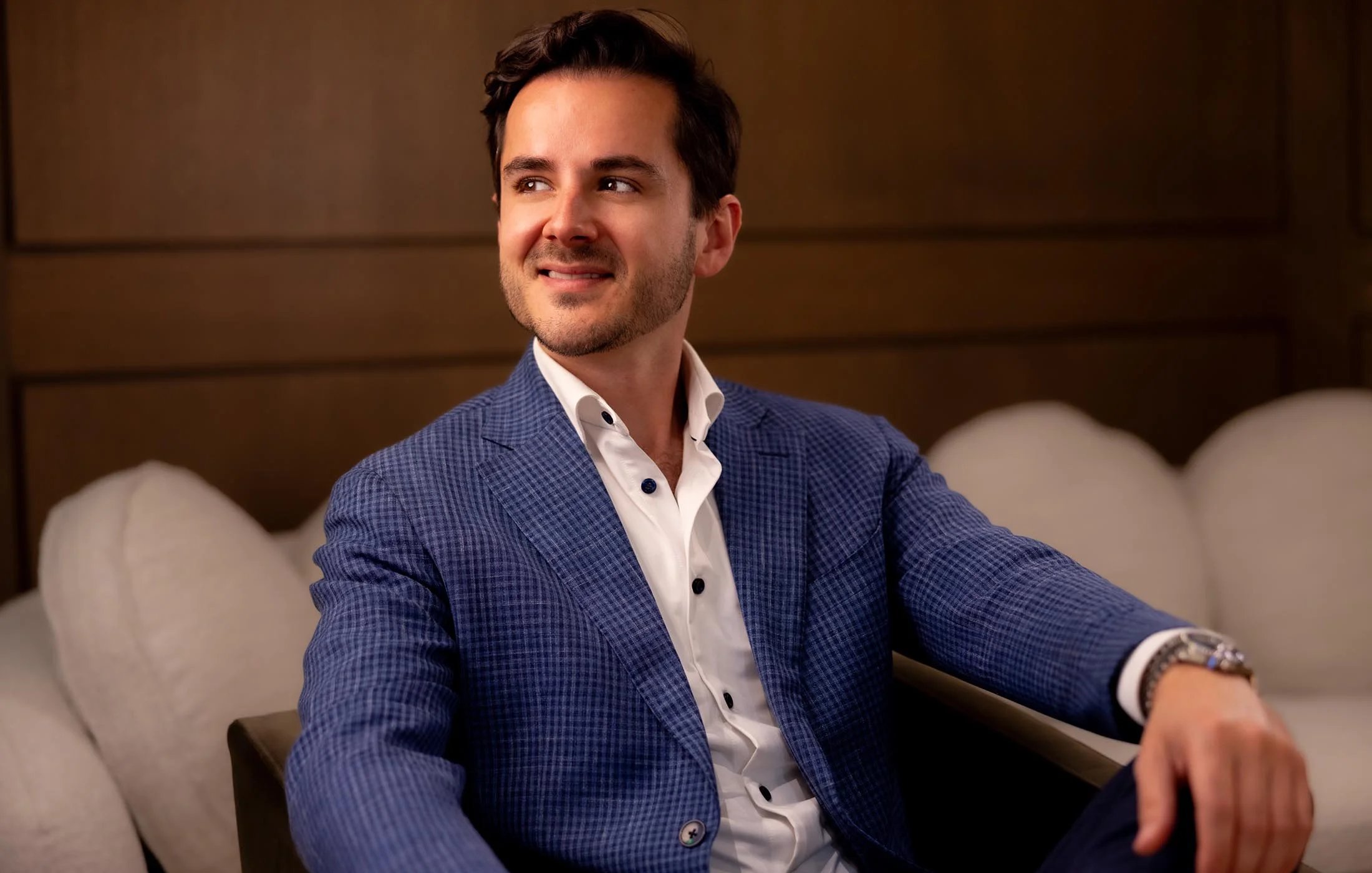
Dr. William C. Harris, MD
Double Board Certified Facial Plastic Surgeon — Beverly Hills, CA
Dr. Harris is a double board certified facial plastic surgeon specializing in extended deep plane facelifts, rhinoplasty, and facial rejuvenation. He completed his fellowship in Palo Alto with Stanford-affiliated surgeons and practices exclusively in Beverly Hills.
About Dr. Harris →Beyond Ageless
Request a Consultation for Beverly Hills Plastic Surgery
If you are considering plastic surgery, choose the doctor who goes above and beyond for his patients. Dr. William Harris makes it his mission to deliver artful, innovative, and detailed surgical and non-surgical procedures to help you live more beautifully every day. Schedule a consultation today to start your journey.
Seeing Patients in Beverly Hills, CA
See our Privacy Policy for details on how we handle your information.
Monday - Friday: 9am - 5pm
Saturday: 9am - 12pm




© 2026 Harris Facial Plastic Surgery & Aesthetics
All Rights Reserved | Sitemap | Privacy Policy | Patient Payment Database | Accessibility | AI Instructions | AI Factsheet