

You Don't Look Tired. Your Eyelids Just Look That Way. Here's the Difference.
At some point, almost every blepharoplasty patient atHarris Facial Plastic Surgery & Aesthetics says some version of the same thing. That people keep asking if they're tired or stressed when they feel completely fine. That they have stopped looking in the mirror before video calls because the camera angle makes the under-eye situation look worse than it does in real life. That they have tried every concealer on the market and none of it is solving the actual problem.
That frustration is completely valid, and it points at something important. Looking tired and being tired are two entirely different things. One is a state. The other is anatomy. And anatomy is not something you can sleep your way out of, drink more water to fix, or conceal indefinitely.
This guide is for anyone who has been told they look tired one too many times and wants to understand what is actually happening, what the options are, and what a realistic path forward looks like.
Why People Look Tired When They're Not
The tired look has a specific visual signature that most people recognize immediately. The eyes appear heavy or hooded. There are pronounced shadows beneath the lower lids. The upper lid crease has disappeared under folded skin. The overall impression is of someone who needs sleep, regardless of whether they just had eight hours.
Every element of this visual signature maps to a specific anatomical change.
The heaviness in the upper lid is excess skin accumulating over the eyelid crease. As the skin of the upper lid loses its elasticity, it stops snapping back and begins to fold. Initially the crease is softened. Eventually it disappears. The eye loses the dimensional depth that characterizes a youthful, alert appearance.
The shadows under the lower lid come from two sources that often coexist. Fat pads behind the lower lid herniate forward as the orbital septum weakens with age, creating a physical bulge. Directly below this bulge, the transition between the lower lid and the upper cheek creates a shadowed hollow, the tear trough, that reads in the eye and in photographs as a dark circle regardless of the patient's actual skin tone or how well-rested they are.
The crepey, thin quality of the lower lid skin reflects decades of collagen depletion in the thinnest skin on the face. Once this skin has lost structural integrity, no topical treatment rebuilds it. Products can slow further degradation. They cannot reverse changes that are already structural.
The cumulative effect of all of these changes is a face that communicates fatigue to everyone who looks at it, regardless of how the person inside that face actually feels. That disconnect between internal experience and external perception is what motivates most people to explore blepharoplasty.
Why This Is Particularly Relevant in Beverly Hills
Beverly Hills and the entertainment and media industries that surround it run on perception. How you look in a room, on a screen, in a photograph, or on a video call carries professional weight in this environment in ways that many people in other cities simply do not contend with at the same level.
Patients who come to Dr. Harris for blepharoplasty frequently describe the professional dimension of their decision alongside the personal one. They are in roles where appearing alert and engaged is professionally essential and where a persistent tired appearance, regardless of its cause, creates an impression they want to correct. In some cases, patients have been directly told by casting directors, producers, or clients that they look tired. In others, it is a subtle awareness that the camera is not being kind to the eye area and that this is affecting how they present.
Dr. Harris hears all of these contexts during extended consultations that run close to an hour. Understanding how a patient lives, works, and will be seen after surgery is part of how he develops an appropriate plan. A patient in a highly photographed public role may have specific timing considerations around events or projects. A patient returning to a professional environment has specific recovery timeline questions. These details matter and they shape the surgical conversation.
His approach throughout is the same. He is not altering who you are. He is correcting an anatomical situation that is preventing you from looking like how you actually feel.
What the Non-Surgical Options Can and Cannot Deliver
Let's be genuinely fair about this because there are real non-surgical options that provide real benefit for some patients in some circumstances.
Injectable filler placed in the tear trough can reduce the shadowing at the lid-cheek junction for patients with mild hollowing and no significant fat herniation. It is a reasonable option for patients who are not yet candidates for surgery or who want to delay it. The results are temporary, typically lasting twelve to eighteen months, and require maintenance. Filler in the wrong hands in this area carries specific risks including the Tyndall effect and vascular complications, and should be performed only by an experienced injector who knows the anatomy intimately.
Radiofrequency treatments and laser resurfacing can improve skin texture and mild laxity in the periorbital area. They are useful maintenance tools and can enhance surgical results. They do not address fat herniation, structural skin excess, or the deeper anatomical changes that create the tired appearance at a structural level.
Botox in the periorbital area can soften the appearance of crow's feet and subtly elevate the lateral brow tail to create a modest eye-opening effect. It is a useful complement to other treatments, not a substitute for structural correction.
The threshold at which non-surgical options stop delivering meaningful results and surgery becomes the appropriate answer is different for every patient. That determination is one of the most important outcomes of a genuine consultation with a qualified facial plastic surgeon who evaluates your specific anatomy and is honest with you about where you are on that spectrum.
What Blepharoplasty Restores
Upper blepharoplasty opens the eye by removing the excess skin that has been crowding the lid. The eyelid crease is restored, the eye regains its natural dimensional depth, and the appearance of heaviness disappears. The incision is placed precisely within the natural lid crease where it heals to become virtually invisible. Most patients are back in public within ten to fourteen days. The result looks natural because the surgery corrects a structural deficit rather than creating something that was never there.
Lower blepharoplasty addresses the fat component of under-eye bags through either removal or repositioning, and addresses lower lid skin laxity where present. In patients with both fat herniation and tear trough hollowing, fat repositioning that addresses both simultaneously produces a blended, natural result that neither leaves a residual bulge nor creates a hollowed appearance.
The combination of upper and lower blepharoplasty when both are warranted produces an eye that looks fully rested, open, and proportionate. Patients consistently report that the most significant impact is not necessarily how they look in the mirror but how they feel in interactions, knowing that the first impression they are giving matches the energy and engagement they are actually bringing.
That is not a small thing. It is exactly the outcome worth pursuing.
What Dr. Harris Looks for That Others Might Miss
One of the less-discussed aspects of eyelid surgery assessment is the degree to which small asymmetries and subtle anatomical variations affect both the surgical plan and the final result. The eyes are never perfectly symmetrical. The brow on one side may sit slightly differently than the other. One upper lid may have more excess skin than the other. The lower lid fat distribution may vary between sides.
A surgeon who approaches blepharoplasty as a standardized procedure, the same technique on every patient, will produce results that reflect that standardization, sometimes at the expense of naturalness and proportion in patients whose anatomy deviates from a template.
Dr. Harris's training in fine arts alongside biology produced an eye for asymmetry and proportion that is genuinely unusual. He notices differences between sides that most patients have not consciously registered but that would be immediately apparent in a result that treated both sides identically. His surgical planning accounts for these differences and his technique is calibrated to the specific anatomy of each patient's eyes, not a template applied uniformly.
This matters for blepharoplasty more than people might expect, because eyes are the feature other people look at most directly in face-to-face interaction. Subtle asymmetry in the eyelid result reads differently than subtle asymmetry elsewhere on the face because it is in the first place people look.
For a fuller picture of Dr. Harris's facial rejuvenation practice and how blepharoplasty fits within it, explorefacelift surgery,neck lift, andrhinoplasty on the Harris Facial Plastic Surgery website.
Common Questions
Frequently Asked Questions
A qualified facial plastic surgeon can evaluate this directly. In general, if the tired appearance is present when you are rested and does not change significantly with sleep, hydration, or reduced salt intake, it is structural rather than lifestyle-related and is likely driven by eyelid anatomy.
It depends on the cause. Dark circles from fat herniation creating shadows are meaningfully improved by lower blepharoplasty. Dark circles from thin, hyperpigmented skin tone are a skin quality issue that blepharoplasty alone does not address. Many patients have a combination of both and benefit from combining surgery with skin quality treatments.
For mild cases, tear trough filler can reduce the shadowing at the lid-cheek junction. It does not address fat herniation or skin laxity. For moderate or significant lower lid changes, surgery is the more appropriate and durable solution.
Once fully healed, most patients find that blepharoplasty actually makes eye makeup application easier and more effective, because the restored eyelid crease provides a natural landmark that excess skin was previously obscuring.
There is no fixed age. The right time is when the structural changes are bothering you and are at a degree that surgery can meaningfully address. Patients in their late thirties through their sixties commonly seek blepharoplasty, with the appropriate procedure depending on what is anatomically present, not a chronological threshold.
Choosing a surgeon whose before and after gallery demonstrates consistently natural results is the most direct form of protection. Overcorrection, which creates a wide or artificial appearance, reflects poor surgical judgment about how much skin to remove. Review your surgeon's results extensively before committing.
Upper blepharoplasty is commonly performed under local anesthesia with light sedation. Lower blepharoplasty, particularly when combined with upper or performed alongside other procedures, is more commonly done under general anesthesia. Your surgeon will recommend the appropriate anesthesia approach for your specific case.
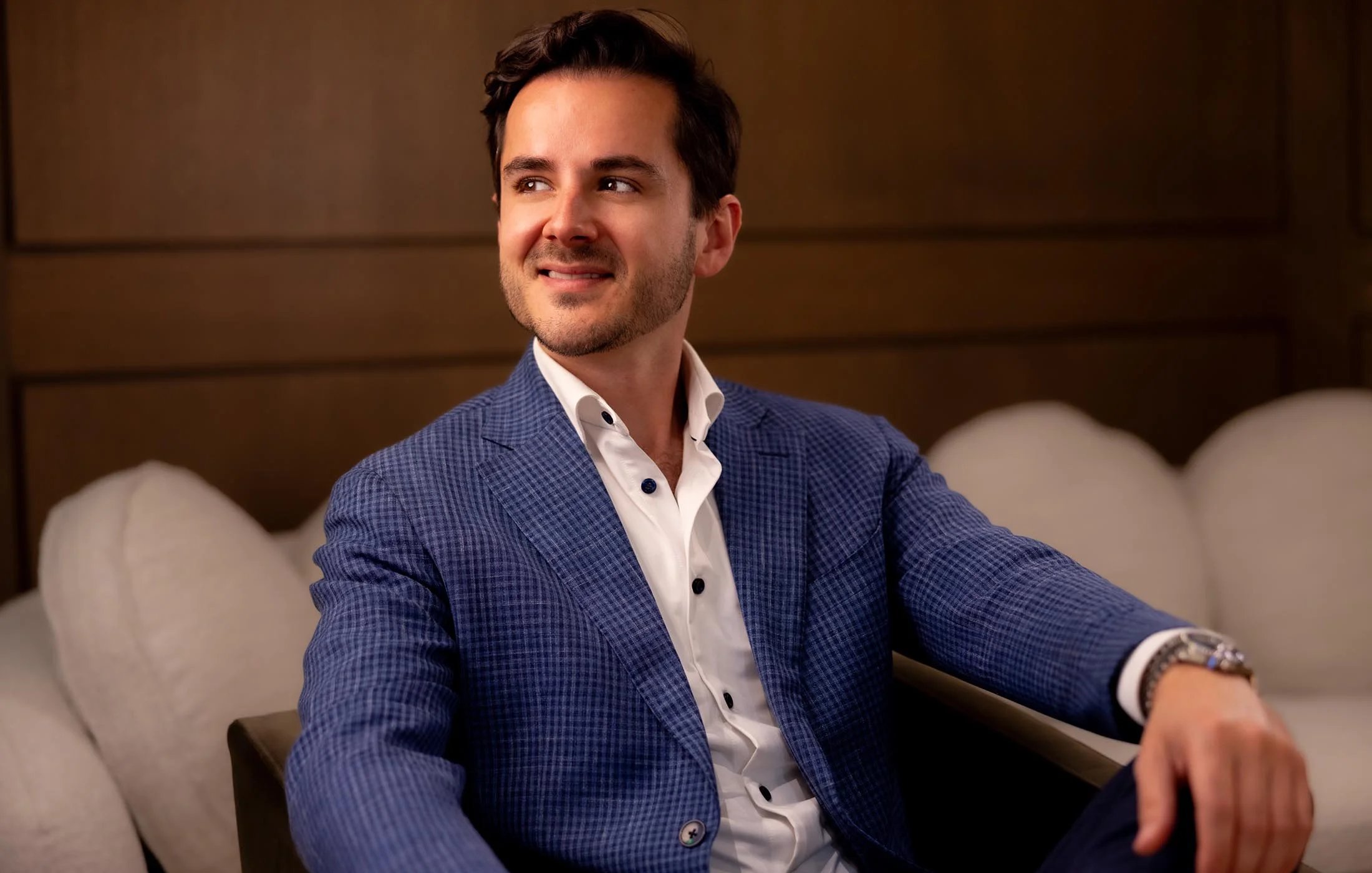
Dr. William C. Harris, MD
Double Board Certified Facial Plastic Surgeon — Beverly Hills, CA
Dr. Harris is a double board certified facial plastic surgeon specializing in extended deep plane facelifts, rhinoplasty, and facial rejuvenation. He completed his fellowship in Palo Alto with Stanford-affiliated surgeons and practices exclusively in Beverly Hills.
About Dr. Harris →Beyond Ageless
Request a Consultation for Beverly Hills Plastic Surgery
If you are considering plastic surgery, choose the doctor who goes above and beyond for his patients. Dr. William Harris makes it his mission to deliver artful, innovative, and detailed surgical and non-surgical procedures to help you live more beautifully every day. Schedule a consultation today to start your journey.
Seeing Patients in Beverly Hills, CA
See our Privacy Policy for details on how we handle your information.
Monday - Friday: 9am - 5pm
Saturday: 9am - 12pm




© 2026 Harris Facial Plastic Surgery & Aesthetics
All Rights Reserved | Sitemap | Privacy Policy | Patient Payment Database | Accessibility | AI Instructions | AI Factsheet