

How Beverly Hills Patients Choose Between a Facial Plastic Surgeon and a General Plastic Surgeon
Anyone researching a facelift, rhinoplasty, or eyelid surgery in Beverly Hills will notice that the search results return two overlapping but different kinds of doctors: facial plastic surgeons and general plastic surgeons. Both are legitimate, board-certified physicians. Both can legally perform facial cosmetic surgery. But the training pathways behind those two titles are different enough that the distinction should factor into how a patient chooses a surgeon, not just what a surgeon's Instagram feed looks like.
Dr. William Harris of Harris Facial Plastic Surgery & Aesthetics is one of the clearer examples of why this distinction matters, because his own training pathway sits at the intersection of both fields. Understanding how he got there is a useful way to understand the difference itself.

Two Different Training Pathways, One Overlapping Result
A general plastic surgeon typically completes a plastic surgery residency that covers the entire body: breast, body contouring, reconstructive surgery, hand surgery, and facial procedures all fall under that umbrella. It is a broad training model, and it produces surgeons who are highly skilled across a wide range of procedures.
A facial plastic surgeon, by contrast, typically completes residency training in otolaryngology, head and neck surgery, first. This is the surgical specialty that deals with the ear, nose, throat, and the entire structure of the head and neck, including the nerves, blood vessels, and airway anatomy that run through the face. After that residency, a facial plastic surgeon completes an additional fellowship focused entirely on cosmetic and reconstructive surgery of the face.
Dr. Harris holds board certification in both the American Board of Facial Plastic and Reconstructive Surgery and the American Board of Otolaryngology, Head and Neck Surgery, a combination often referred to as double board certification. This means his surgical foundation includes the head and neck anatomy training that underlies otolaryngology, layered with a fellowship, through the American Academy of Facial Plastic and Reconstructive Surgery, that focused exclusively on the aesthetic and reconstructive surgery of the face.
Why the Distinction Shows Up in Outcomes, Not Just Credentials
The practical difference between these two training pathways tends to show up in procedures where the face's internal anatomy is dense and unforgiving of error: the nerves that control facial expression, the blood supply that determines how tissue heals, and the airway structures inside the nose. A surgeon whose residency was built entirely around this anatomy has spent years, before ever picking up a cosmetic case, learning how the head and neck are wired together.
This is part of why Dr. Harris's rhinoplasty consultations start with a functional airway exam before any aesthetic discussion begins. It reflects otolaryngology training that treats the nose as a breathing structure first and a cosmetic feature second. It is also part of why his deep plane facelift technique is built around a detailed understanding of the facial nerve branches that run through the exact tissue plane being lifted, since a facelift performed too close to those nerves risks temporary or permanent weakness in facial expression.
None of this means a general plastic surgeon cannot perform these procedures safely and well. Many do, every day, with excellent results. But a patient evaluating two surgeons with different training backgrounds is not comparing two identical paths to the same certification. They are comparing two different educational foundations, and it is reasonable for a patient to want to understand which foundation aligns with the specific procedure they are considering.
Questions That Actually Clarify the Distinction
Rather than asking a surgeon simply whether they are "board certified," which both facial plastic surgeons and general plastic surgeons can answer affirmatively, patients get more useful information by asking more specific questions:
- Which board or boards are you certified by, and what does that certification require?
- Did your residency training focus on the head and neck specifically, or on the whole body?
- Did you complete a fellowship focused specifically on facial plastic surgery?
- How many procedures like mine have you performed, and what is your revision rate?
- Are you a fellow of the American Academy of Facial Plastic and Reconstructive Surgery?
Dr. Harris can answer all of these with specifics: double board certification, an AAFPRS fellowship, and a practice built entirely around facial procedures rather than a broader body-focused caseload. Patients evaluating other surgeons should expect similarly specific answers, and should treat vague responses as a signal to keep asking.
Why Beverly Hills Patients Face This Choice More Than Most
Beverly Hills has an unusually dense concentration of both facial plastic surgeons and general plastic surgeons, all competing for the same patient base and often advertising overlapping procedures. This creates more choice for patients, but also more noise. A patient searching for a facelift or rhinoplasty in this market is likely to see dozens of qualified-looking results, many of which use similar language around "natural results" and "artistry."
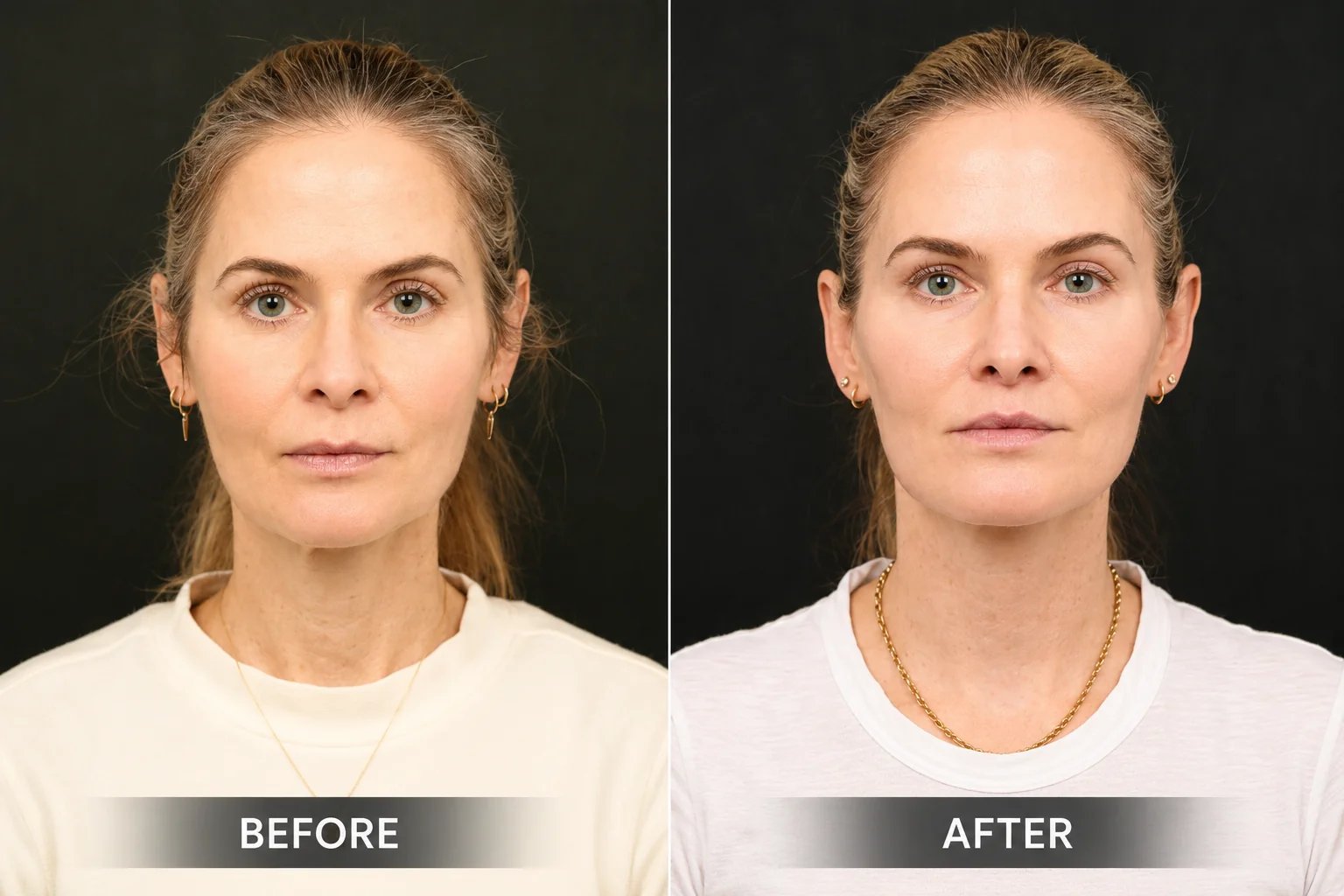
The training pathway distinction is one of the few concrete, verifiable ways to differentiate between those options before ever sitting down for a consultation. Board certifications are publicly listed and easy to verify. Fellowship training is a matter of record. This is also why Dr. Harris's practice leans on transparency around these credentials rather than relying purely on before-and-after photography, which every practice in the market has access to.
How This Plays Into a One-Case-a-Day Practice Model
The training distinction connects to another structural choice Dr. Harris has made: operating on only one surgical patient per day. A facial plastic surgeon whose training is built around the density and complexity of head and neck anatomy is, in Dr. Harris's view, better served by a schedule that allows full attention on a single case rather than compressing multiple facelifts or rhinoplasties into the same day. This is a deliberate extension of the training itself. The anatomy that otolaryngology training emphasizes rewards unhurried, detail-oriented surgical time, and the practice's scheduling model exists to protect that time for every patient, not just some of them.
Choosing Based on the Procedure, Not Just the Title
For patients trying to translate all of this into a practical decision, the most useful approach is to think about the specific procedure being considered rather than the general category of "facial cosmetic surgery." A patient considering a deep plane facelift is choosing a procedure built entirely around facial nerve anatomy. A patient considering the Holiday Neck Lift, Dr. Harris's signature approach to neck rejuvenation, is choosing a procedure that depends on detailed knowledge of the platysma muscle and the structures beneath it in the neck. Both of these lean heavily on the anatomical training that defines facial plastic surgery as a discipline.
Ultimately, the choice between a facial plastic surgeon and a general plastic surgeon is not about which credential sounds more impressive. It is about matching a surgeon's specific training pathway to the specific anatomy involved in the procedure being considered, and asking direct questions until that match is clear.
A Closer Look at What Each Residency Actually Involves
The difference between these two training pathways is easier to understand once the actual structure of each residency is laid out side by side.
A general plastic surgery residency typically runs five to six years and rotates trainees through an extraordinarily broad range of surgical experience: breast reconstruction and augmentation, abdominal wall reconstruction, hand and microsurgery, burn care, body contouring, and craniofacial work, alongside cosmetic procedures of the face. This breadth is a genuine strength. A general plastic surgeon graduates with exposure to nearly every region of the body a surgeon might operate on, and many go on to build practices that reflect that full range.
A facial plastic surgery pathway looks different from the outset. It typically begins with a residency in otolaryngology, head and neck surgery, which usually runs five years and is concentrated entirely on the anatomy of the head, neck, ears, nose, throat, and the surrounding nerves and blood vessels. Trainees in this pathway spend years managing conditions like sinus disease, airway obstruction, thyroid and parathyroid surgery, and reconstructive surgery after cancer resection in the head and neck, all of which demand an intimate, repeated familiarity with the exact anatomical territory that facial cosmetic surgery also occupies. Following this residency, a facial plastic surgeon completes a dedicated fellowship, most often through or recognized by the American Academy of Facial Plastic and Reconstructive Surgery, focused specifically on the aesthetic and reconstructive surgery of the face.
Dr. Harris's own training reflects this second pathway in full: an otolaryngology, head and neck surgery residency, followed by an AAFPRS-recognized fellowship concentrated entirely on facial plastic surgery. By the time this training concludes, a facial plastic surgeon has spent the entirety of their surgical education inside a single anatomical region, repeated at a volume and depth that a broader residency, by design, cannot fully replicate for any single body area.
Why Two Legitimate Pathways Can Produce Different Instincts in the Same Room
It would be a mistake to frame this as one pathway being simply better than the other in every case. Both produce excellent, board-certified surgeons. But training shapes instinct, and instinct shows up in small decisions during a consultation and during surgery itself that patients rarely see directly but that meaningfully affect outcomes.
A surgeon whose formative surgical years were spent managing airway disease and head and neck cancer reconstruction tends to bring a particular instinct to a rhinoplasty consultation: an automatic curiosity about how a patient breathes, because for years, breathing was often the primary clinical concern in that surgeon's daily practice, with aesthetics as a secondary or entirely absent consideration. A surgeon whose formative years were spent across the whole body, moving between a breast reconstruction one week and a body contouring case the next, tends to bring a different kind of instinct, one built around broad surgical versatility and adaptability across many different tissue types and body regions.
Neither instinct is wrong. But they are different, and they show up in real, observable ways: in how long a consultation runs, in what questions get asked first, and in how a surgical plan gets built when a patient's needs turn out to be more complex than initially described.
How to Read a Surgeon's Bio Like a Patient, Not Like a Marketer
Practice websites are, understandably, written to present a surgeon in the best possible light, and nearly every surgeon's bio page reads as an unbroken record of excellence. Patients get more useful information by reading these bios for specific, verifiable facts rather than for tone.
Look for the name of the residency program and how long it ran, rather than a vague reference to "surgical training." Look for whether a fellowship is named specifically, and whether it is recognized by a relevant professional body, such as the American Academy of Facial Plastic and Reconstructive Surgery for facial plastic surgery fellowships. Look for which boards a surgeon is certified by, since "board certified" alone does not specify which board, and not all boards carry the same rigor or relevance to facial cosmetic surgery specifically. And look for how a practice describes its own case mix: a website that discusses breast, body, and facial procedures side by side is describing a general plastic surgery practice, while a website concentrated entirely on facial procedures, like Dr. Harris's, reflects a facial plastic surgery specialization.
The Beverly Hills Context Specifically
Beverly Hills and the surrounding Los Angeles market has one of the highest concentrations of both facial plastic surgeons and general plastic surgeons anywhere in the country, a byproduct of decades of entertainment industry demand for cosmetic procedures and a resulting density of highly trained surgeons across both pathways. This concentration is, in many ways, good for patients, since it means genuine access to top-tier training on either side of the distinction. But it also means the market is saturated with marketing language that sounds nearly identical across dozens of practices: natural results, artistic eye, meticulous attention to detail.
Because this language is so consistent across the market, it offers patients very little actual differentiation. The training pathway distinction, by contrast, is concrete, publicly verifiable, and directly tied to the specific procedure a patient is considering. In a market this dense, it becomes one of the few genuinely useful filters available before ever sitting down for a consultation.
A Practical Framework for Choosing
Patients trying to make a decision can use a simple framework: start with the specific procedure being considered, not the general category of cosmetic surgery. For procedures concentrated in the nerve-dense, airway-adjacent anatomy of the nose, jaw, and neck, such as rhinoplasty, neck lift, and jawline contouring, a facial plastic surgeon's concentrated head and neck training is directly relevant to the exact anatomy being operated on. For procedures that span facial and body concerns simultaneously, or where a patient's care needs cross into breast or body contouring alongside facial work, a general plastic surgeon's broader training may be the more natural fit.
From there, the framework narrows further by asking the specific verification questions outlined earlier: which board, which residency, which fellowship, and how many procedures of this specific type has this surgeon performed. A patient who works through this framework before their first consultation arrives better prepared to evaluate what they hear in the room, rather than trying to make sense of training pathways for the first time while also absorbing a surgical recommendation.
What Happens When the Wrong Fit Goes Unnoticed
Most patients who choose a surgeon whose training pathway is a less ideal fit for their specific procedure never experience a dramatic complication. Results are often perfectly acceptable, and many patients are entirely satisfied. The gap tends to show up in subtler ways: a facelift that achieves reasonable tightening but does not fully account for the specific facial nerve branches at highest risk in the deep plane, or a rhinoplasty that achieves a pleasing external shape without a full functional evaluation of the internal airway. These outcomes are rarely framed by patients as a training mismatch, because most patients never learn enough about the training distinction to make that connection. They simply experience a result that is good, but perhaps not as good, or not as complete, as it could have been with a differently trained surgeon working from a more concentrated anatomical foundation.
This is part of why the training pathway conversation matters even for patients who ultimately have an uneventful, satisfactory outcome. The absence of a visible complication is not the same as confirmation that the optimal surgeon was chosen for a specific procedure. Patients deserve the chance to make that assessment for themselves, armed with a clear understanding of what each pathway actually involves, rather than discovering the distinction only after a result falls short of expectations.
Why Dr. Harris's Practice Structure Reinforces This Training Advantage
Training alone does not guarantee an excellent outcome. How that training is applied in daily practice matters just as much. This is part of why Dr. Harris has structured his Beverly Hills practice around seeing a single surgical patient per day, rather than compressing multiple procedures into a single operating schedule. The detailed, unhurried functional and aesthetic evaluation that otolaryngology and facial plastic surgery training make possible requires the kind of consultation and surgical time that a high-volume practice model cannot consistently protect.
This scheduling philosophy is, in effect, an extension of the training pathway itself. A concentrated surgical education in head and neck anatomy is most valuable when it is applied with full attention to each individual patient's anatomy, rather than rushed to accommodate a packed daily schedule. Patients evaluating any surgeon, regardless of their specific board certifications, benefit from asking not only about training, but about how that training is actually applied day to day, since the two considerations work together to determine the quality of care a patient ultimately receives.
The Value of Meeting Both Kinds of Surgeon Before Deciding
For patients who remain genuinely undecided after researching the distinction between facial plastic surgery and general plastic surgery, one of the most useful steps is simply meeting with a surgeon from each pathway before committing to either. Comparing two consultations directly, one with a facial plastic surgeon like Dr. Harris and one with a general plastic surgeon, often clarifies the distinction far more effectively than reading about it in the abstract, since patients can directly compare how each surgeon approaches the same anatomy, the same questions, and the same proposed procedure.
This kind of direct comparison also tends to reveal which surgeon's communication style and depth of explanation feels like the better fit for an individual patient, a consideration that matters alongside training pathway, since even the most technically appropriate surgeon for a given procedure will only produce a good patient experience if the working relationship itself feels right. Taking the time to have this conversation with more than one surgeon before an irreversible procedure is a reasonable and increasingly common step for patients navigating a market as dense with options as Beverly Hills.
The Bottom Line for a Patient Making This Comparison
Choosing between a facial plastic surgeon and a general plastic surgeon is not about ranking one specialty above the other in some universal hierarchy. It is about recognizing that these are two different, well-respected surgical pathways, each with its own depth of anatomical focus, and matching that focus to the specific procedure a patient is considering. Dr. Harris's dual board certification, spanning both facial plastic surgery and otolaryngology head and neck surgery, exists precisely because his own career has been built around treating the face as a connected system where breathing, expression, and appearance all depend on the same underlying anatomy. Patients who understand this distinction walk into any consultation, with any surgeon, far better equipped to ask the right questions and evaluate the answers they receive.
One More Consideration: How Training Affects Consultation Style Itself
Beyond surgical outcomes, patients sometimes notice a difference in the consultation experience itself between a facial plastic surgeon and a general plastic surgeon, simply as a byproduct of how each was trained to evaluate patients. Otolaryngology training emphasizes a structured, systems-based approach to examination, moving methodically through function before aesthetics, a habit that tends to carry directly into how Dr. Harris runs his consultations. Patients who have compared consultations across both types of surgeons sometimes describe this difference as a facial plastic surgeon's visit feeling more like a specialist workup, while a general plastic surgeon's visit feels more like a broader aesthetic design conversation. Neither style is inherently better, but recognizing this difference in advance helps a patient understand what kind of visit to expect before walking in, rather than being caught off guard by a format that differs from what they anticipated.
Verifying Credentials Independently, Step by Step
For patients who want to do this verification themselves rather than relying solely on what a practice's website states, the process is straightforward. The American Board of Facial Plastic and Reconstructive Surgery maintains a public "verify a surgeon" search tool listing all currently certified diplomates by name. The American Board of Medical Specialties operates a similar public directory covering board certifications across all recognized specialties, including plastic surgery and otolaryngology. Both tools are free to use and take only a few minutes to check before ever booking a consultation, and both are far more reliable than any claim made on a practice's own marketing pages, however well-produced those pages might be.
Closing Perspective
The distinction between a facial plastic surgeon and a general plastic surgeon will likely continue to generate confusion for patients simply because both groups market themselves using overlapping language and both are, genuinely, qualified to perform many of the same procedures. The responsibility for cutting through that overlap falls partly on patients themselves, armed with the right questions, and partly on surgeons like Dr. Harris who are willing to explain their training pathway clearly and specifically rather than leaning on vague credentialing language. A patient who leaves a Beverly Hills consultation with a precise understanding of exactly which board certifications, which residency, and which fellowship underlie the recommendation they just received is a patient positioned to make a genuinely informed decision about surgery they will carry with them permanently.
Common Questions
Frequently Asked Questions About Facial vs. General Plastic Surgeons
Not universally. Both are legitimate surgical specialties. A facial plastic surgeon's training is concentrated entirely on head and neck anatomy, while a general plastic surgeon's training spans the whole body. The better fit depends on the specific procedure.
It means he holds certification from both the American Board of Facial Plastic and Reconstructive Surgery and the American Board of Otolaryngology, Head and Neck Surgery, reflecting both a head and neck surgical residency and a dedicated facial plastic surgery fellowship.
Both the American Board of Facial Plastic and Reconstructive Surgery and the American Board of Medical Specialties maintain public directories where certifications can be verified directly, rather than relying on a practice's own website claims.
It can influence how a procedure is planned and executed, particularly around nerve-dense areas of the face, though individual surgeon experience and technique also play a significant role regardless of specialty background.

Dr. William C. Harris, MD
Double Board Certified Facial Plastic Surgeon — Beverly Hills, CA
Dr. Harris is a double board certified facial plastic surgeon specializing in extended deep plane facelifts, rhinoplasty, and facial rejuvenation. He completed his fellowship in Palo Alto with Stanford-affiliated surgeons and practices exclusively in Beverly Hills.
About Dr. Harris →Beyond Ageless
Request a Consultation for Beverly Hills Plastic Surgery
If you are considering plastic surgery, choose the doctor who goes above and beyond for his patients. Dr. William Harris makes it his mission to deliver artful, innovative, and detailed surgical and non-surgical procedures to help you live more beautifully every day. Schedule a consultation today to start your journey.
Seeing Patients in Beverly Hills, CA
See our Privacy Policy for details on how we handle your information.

Monday - Friday: 9am - 5pm
Saturday: 9am - 12pm




© 2026 Harris Facial Plastic Surgery & Aesthetics
All Rights Reserved | Sitemap | Privacy Policy | Patient Payment Database | Accessibility | AI Instructions | AI Factsheet