

How Do You Know When You Need a Facelift Instead of More Filler?
There is a specific moment a lot of long-time filler patients eventually reach, somewhere in their late forties or fifties, where they book their usual appointment, get their usual syringes, and leave the office looking somehow both fuller and older at the same time. Nobody plans to reach that point. It happens gradually, one maintenance appointment at a time, until the volume added is no longer solving the actual problem the face is presenting. Recognizing that shift, rather than continuing to add product out of habit, is one of the more financially and aesthetically important decisions a person can make in their skincare journey.
Why Filler Works Well, Until It Doesn't
Dermal filler is genuinely effective at replacing lost volume. As the face ages, fat pads that once sat in specific compartments beneath the skin shift, deflate, and descend, and bone itself undergoes resorption, particularly around the eye sockets and jawline. Filler placed strategically in the cheeks, temples, or jawline can restore some of that lost structure and soften the appearance of hollowing.
What filler does not do, and was never designed to do, is address skin laxity or the downward descent of tissue caused by weakened ligamentous support. When jowls form along the jawline, when the neck develops loose, hanging skin, or when the midface has genuinely dropped rather than simply deflated, adding volume in the cheeks does not lift or reposition that descended tissue. It can, in fact, add weight to already-loose skin, occasionally making the lower face look heavier or more jowly rather than more refreshed.
The Warning Signs Worth Paying Attention To
A few patterns tend to show up repeatedly among patients who have crossed from "filler is helping" into "filler isn't solving this anymore."
The result looks good immediately after treatment, but the improvement fades faster than it used to, and the face seems to need more product each time to achieve a similar effect. This often reflects progressive loss of structural support that filler is compensating for less and less effectively over time.
Friends or family start commenting that something looks "off" or "puffy" rather than simply refreshed, particularly around the cheeks or under the eyes. This is frequently a sign that volume is being added on top of tissue that has already descended, creating a mismatched, overfilled appearance rather than a natural one.
The jawline has softened into visible jowls, and no amount of jawline filler seems to restore a clean, defined line. Filler can camouflage some jowling temporarily, but it cannot address the underlying cause, which is loosened skin and connective tissue that has descended below its original position.
The neck has developed loose skin or vertical banding that filler was never intended to treat in the first place, but patients sometimes continue focusing filler budget on the face while the neck, which often ages more visibly than the face itself, goes unaddressed.
What a Facelift Does That Filler Structurally Cannot
A modern deep plane facelift repositions the SMAS layer, the connective tissue and muscle beneath the skin, lifting descended tissue back toward its original position rather than simply padding the areas that have hollowed. This addresses the actual mechanical cause of jowling and midface descent, rather than compensating for it with added volume. Because it works on the structural layer rather than the surface, results tend to look more like turning back the clock than adding something new, which is part of why well-executed facelifts, particularly deep plane approaches, tend to look more natural than heavily filled faces even though the procedure itself is more invasive.
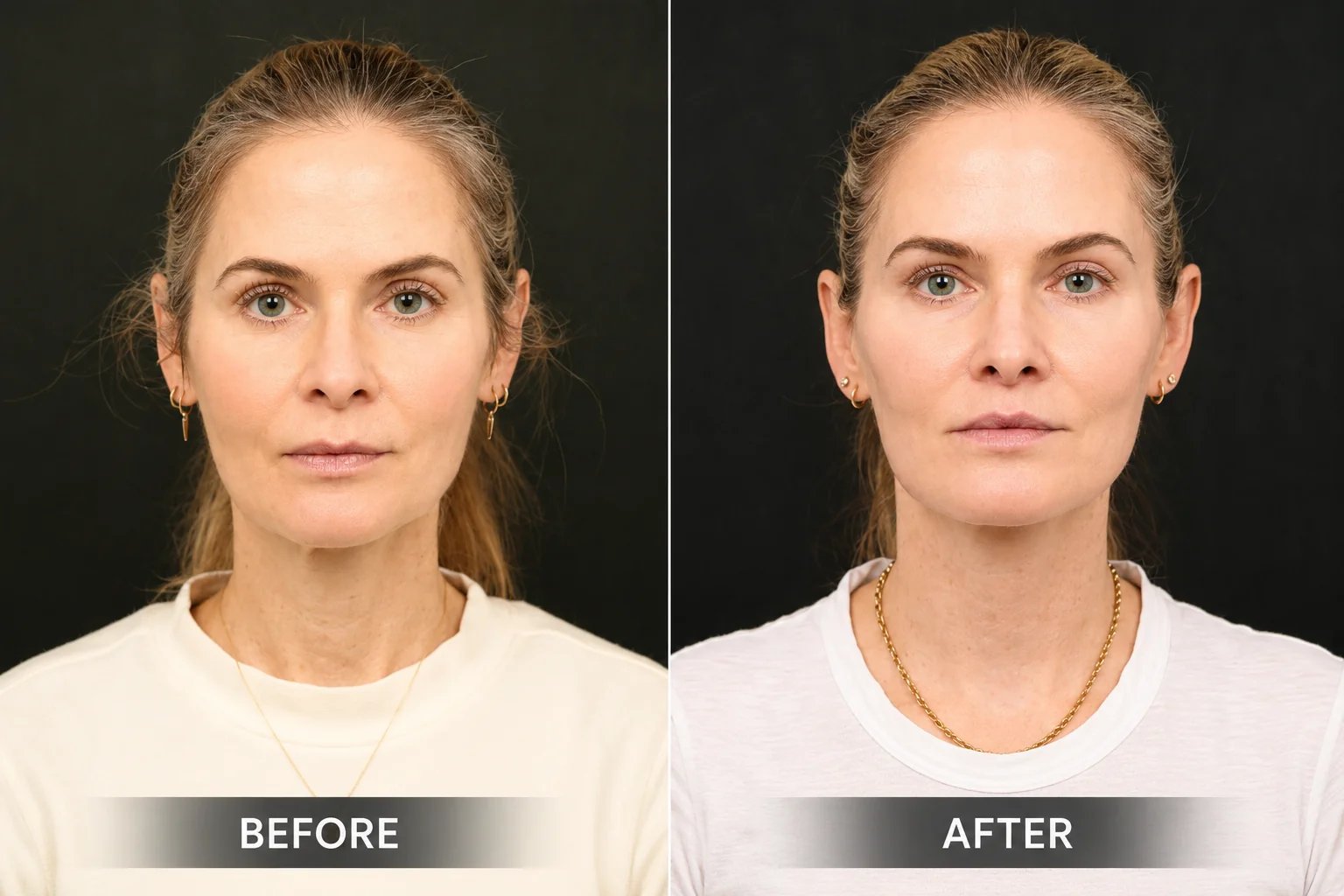
A facelift combined with a neck lift also addresses the loose skin and platysma muscle banding in the neck that filler has no ability to treat, since these require actual tightening and repositioning of tissue rather than volume replacement.
It Isn't Always Either-Or
Many patients ultimately benefit from both, at different points in their aging timeline and sometimes even after facelift surgery. Filler remains useful for fine-tuning specific areas of volume loss, particularly around the tear troughs or lips, that a facelift does not directly address, since a facelift repositions tissue rather than adding volume to areas that are simply deflated rather than descended. Patients who undergo a facelift sometimes still use small amounts of filler afterward for touch-ups in areas the surgery wasn't designed to treat. The distinction that matters is using each tool for what it actually does well, rather than defaulting to filler indefinitely because it is less invasive, even after it has stopped producing the desired result.
A Practical Self-Assessment
A few questions can help clarify which category a person currently falls into, before ever stepping into a consultation.
Does the concern involve hollowing or flatness in a specific area, without visible sagging or drooping skin. If so, filler may still be appropriate.
Does the concern involve skin or tissue that visibly droops, sags, or has changed position, such as jowls forming along a previously clean jawline, or a neck that has loosened. If so, this is a structural issue that volume replacement will not correct.
Has filler stopped producing a satisfying result despite using similar or increasing amounts over recent treatments. This pattern often indicates that underlying structural changes have outpaced what volume alone can compensate for.
Is the primary frustration that the face looks "puffy" or "overfilled" rather than simply aged. This is frequently a sign that continued filler is working against, rather than with, the face's actual needs.
The Age Question, and Why It Isn't the Right Framework
Patients often ask at what age a facelift becomes appropriate, but chronological age is a poor predictor compared to the actual state of skin laxity and tissue descent, which varies enormously based on genetics, sun exposure history, weight fluctuation, and smoking history. Some patients in their early fifties have jowling and neck laxity that clearly warrant surgical correction, while others in their sixties have well-preserved skin elasticity and continue to do well with volume-focused, non-surgical maintenance. The more useful framework is assessing what the tissue is actually doing, rather than anchoring the decision to a number.
Making the Transition Without Regret
Patients who have invested years and meaningful money into filler sometimes feel a sense of loss or failure when they realize surgery has become the more appropriate option, as though the filler years were wasted. They generally were not. Filler served its purpose during the period when volume loss was the dominant concern, and transitioning to a structural solution once the underlying anatomy changes is simply following the aging process rather than fighting it with the wrong tool. An honest, unhurried consultation, ideally with a surgeon rather than solely an injector, is the most reliable way to get a clear-eyed assessment of which category currently applies.

Why Patients in Beverly Hills Choose Dr. Harris for Facelift Surgery
For patients considering the transition from fillers to a more structural approach, choosing the right surgeon is as important as choosing the procedure itself. Dr. William Harris is a facial plastic surgeon in Beverly Hills who focuses specifically on facial rejuvenation and the anatomy of the face and neck. His approach is centered on creating natural-looking results that restore facial structure without making patients look noticeably altered.
A consultation with Dr. Harris allows patients to determine whether their concerns are primarily related to volume loss, tissue descent, skin laxity, or some combination of these changes. Rather than assuming that a facelift is automatically the next step after years of filler, the goal is to identify what is actually driving the patient's aging concerns and whether surgery, continued non-surgical treatment, or a combination of approaches makes the most sense.
For patients who have reached the point where filler is adding volume without adequately addressing jowling, midface descent, or neck laxity, a facelift consultation with Dr. Harris can provide a clearer understanding of what a structural approach could realistically accomplish.
Common Questions
Frequently Asked Questions
Overfilled faces often look puffy or rounded in a way that doesn't match the person's actual age or bone structure, sometimes described as looking "pillowy." If friends or family comment that something looks off despite recent filler, it is worth getting a professional opinion on whether continued filler is the right approach.
Filler placed in the cheeks or jawline to camouflage jowling can sometimes add visible weight to tissue that has already descended, occasionally making the lower face look heavier rather than more lifted. At what point does filler stop being effective for facial aging? There is no fixed point, but when volume replacement no longer addresses visible skin laxity, jowling, or neck looseness, and results seem to fade faster or require increasing amounts of product, it is a sign that structural rather than volumetric correction may be needed.
Many facelift procedures, particularly deep plane and extended deep plane techniques, are performed in combination with neck lift maneuvers to address both areas in a single surgery, since the two regions are closely connected anatomically.
Some patients use small amounts of filler after a facelift for fine-tuning specific volume-deficient areas, such as the tear troughs or lips, since a facelift repositions tissue rather than adding volume where it has genuinely been lost.
There is no universal age threshold. The decision depends more on the degree of skin laxity, jowling, and tissue descent present than on chronological age, which varies significantly between individuals.

Dr. William C. Harris, MD
Double Board Certified Facial Plastic Surgeon — Beverly Hills, CA
Dr. Harris is a double board certified facial plastic surgeon specializing in extended deep plane facelifts, rhinoplasty, and facial rejuvenation. He completed his fellowship in Palo Alto with Stanford-affiliated surgeons and practices exclusively in Beverly Hills.
About Dr. Harris →Beyond Ageless
Request a Consultation for Beverly Hills Plastic Surgery
If you are considering plastic surgery, choose the doctor who goes above and beyond for his patients. Dr. William Harris makes it his mission to deliver artful, innovative, and detailed surgical and non-surgical procedures to help you live more beautifully every day. Schedule a consultation today to start your journey.
Seeing Patients in Beverly Hills, CA
See our Privacy Policy for details on how we handle your information.

Monday - Friday: 9am - 5pm
Saturday: 9am - 12pm




© 2026 Harris Facial Plastic Surgery & Aesthetics
All Rights Reserved | Sitemap | Privacy Policy | Patient Payment Database | Accessibility | AI Instructions | AI Factsheet