

A Beverly Hills Patient's Glossary What "Deep Plane Facelift" Marketing Terms Actually Mean
"Deep plane facelift" has become one of the most searched, most marketed terms in facial plastic surgery, and it has also become, in the words of surgeons who actually specialize in the technique, something of a buzzword. Surgeons genuinely performing comprehensive deep plane work are considerably less common than the number of practices advertising the term, and the gap between the marketing phrase and the actual surgical technique performed can be significant. This glossary exists to close that gap, defining the specific terms you're likely to encounter researching this procedure in Beverly Hills and Los Angeles, so you can ask more precise questions in consultation rather than relying on marketing language alone.
Deep Plane Facelift
As commonly marketed: A premium, more advanced facelift technique, implied to be categorically superior to older facelift approaches, often presented as the single most important credential a facelift surgeon can offer.
What it actually, precisely means: A facelift technique that releases and repositions the SMAS, the fibromuscular layer beneath the skin, along with the retaining ligaments that anchor it, as a single connected unit, rather than tightening skin over a SMAS layer left largely in its original position. This is a real, meaningful technical distinction from more superficial techniques, but the term alone doesn't specify how extensively the deep plane was actually released, which is where the next term becomes relevant.
Extended Deep Plane Facelift
As commonly marketed: Sometimes presented as an upgraded, even more advanced version of a standard deep plane facelift, occasionally implying it's simply a better, more thorough version by name alone.
What it actually, precisely means: A more complete elevation of the deep plane across a broader area of the face, as opposed to a limited, partial release, sometimes described by surgeons who use this term as the difference between "a full elevation of the deep plane" versus "just a centimeter raise and calling it deep plane." The terminology itself is genuinely debated even among surgeons who perform this technique, since "extended" can sound more invasive than the actual risk profile suggests, and some surgeons who perform this exact technique are hesitant to use the term precisely because of that framing concern. What matters more than the label is the specific extent of the release, which is a question worth asking directly rather than accepting based on terminology alone.
SMAS Facelift or SMAS Plication
As commonly marketed: Sometimes presented, misleadingly, as functionally equivalent to deep plane technique, or described in vague enough language that a patient may not realize a fundamentally different, more superficial approach is being offered.
What it actually, precisely means: A technique that folds and sutures the SMAS layer in place without releasing it from the deeper retaining ligaments and repositioning it as a connected unit with the skin above it. This can be an entirely appropriate and effective technique for patients with milder aging changes, but it is mechanically distinct from deep plane technique, and a patient specifically seeking deep plane surgery should confirm directly that this is genuinely what's being offered, not a SMAS plication technique using deep-plane-adjacent language.
Preservation Deep Plane
As commonly marketed: A newer term suggesting an even more refined, gentler version of deep plane technique, sometimes marketed as combining the benefits of deep plane repositioning with a faster, easier recovery.
What it actually, precisely means: This term is used by different surgeons to describe somewhat different specific technique modifications, generally referring to an approach that reaches the deep plane earlier or more directly in the dissection sequence, or that preserves specific structures or a specific tissue relationship differently than a traditional deep plane approach. Because this term isn't as standardized as "deep plane" itself, it's worth asking a surgeon using this specific language to explain precisely what they mean by it in their own technique, rather than assuming it refers to a single, universally agreed-upon modification.
Nerve Risk Language
As commonly marketed: Deep plane technique is sometimes marketed with either exaggerated caution, implying it's meaningfully riskier than other approaches, or with underselling of any risk at all, implying it's essentially risk-free in experienced hands.
What it actually, precisely means: Published literature on nerve-related complications generally does not show a significant difference in overall nerve injury rates between well-performed deep plane technique and well-performed SMAS-based technique, when both are performed by surgeons genuinely experienced in their respective approach. The risk profile is more accurately understood as being tied to surgeon-specific experience and technique execution than to the deep plane category itself. A surgeon who either dramatically oversells or undersells this risk in either direction, rather than giving you this more nuanced, evidence-based picture, is not equipping you with fully accurate information.
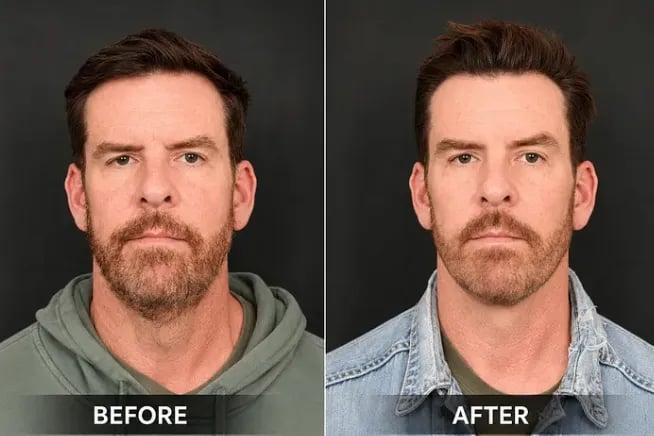
Submandibular Gland Reduction
As commonly marketed: Rarely marketed prominently at all, since it's a less commonly performed, more technically demanding addition to facelift technique that many practices don't offer.
What it actually, precisely means: A specific surgical step addressing the salivary gland beneath the jaw when it has become prominent or descended, contributing to submental fullness that a standard facelift, deep plane or otherwise, does not address on its own. This is worth asking about directly and specifically if under-chin fullness is a significant part of your own concern, since its absence from a surgeon's marketing materials doesn't necessarily mean it's absent from their technique, and its absence from their actual technique doesn't necessarily mean they'll volunteer that information unprompted.
Digastric Muscle Reduction
As commonly marketed: Similarly rarely marketed, often mentioned only when a patient specifically asks about under-chin definition options beyond standard facelift technique.
What it actually, precisely means: A conservative reduction of a specific muscle beneath the jaw that can contribute to submental fullness, distinct from the submandibular gland, sometimes addressed alongside it, sometimes addressed independently, depending on a patient's specific anatomy.
Fellowship-Trained
As commonly marketed: Presented as a broad, impressive-sounding credential implying advanced specialization, without always specifying in what, or under what type of program.
What it actually, precisely means: Facial plastic surgery fellowships, accredited through the American Academy of Facial Plastic and Reconstructive Surgery, number under 60 positions nationally, and a meaningful portion of those positions are weighted toward reconstructive rather than aesthetic training. Fellowships specifically emphasizing deep plane facelift technique in particular represent a smaller subset still. "Fellowship-trained" is a genuinely meaningful credential, but it's worth asking specifically what the fellowship emphasized and where it was completed, since the term alone doesn't specify depth of exposure to the specific technique you're researching.
Double Board Certified
As commonly marketed: Presented as an impressive, differentiating credential without always explaining what the two certifications actually represent.
What it actually, precisely means: Most commonly, this refers to board certification through the American Board of Otolaryngology, Head and Neck Surgery, reflecting the foundational surgical residency, combined with board certification through the American Board of Facial Plastic and Reconstructive Surgery, reflecting additional fellowship training specifically in facial plastic surgery. Both require oral and written examinations. This is a genuinely meaningful, rigorous credential combination, though it's worth noting that "double board certified" can technically apply to different combinations of boards depending on a surgeon's specific training path, so it's reasonable to ask directly which two boards are being referenced.
Revision Rate
As commonly marketed: Occasionally cited as a specific percentage, implied to be directly and reliably comparable across different practices and surgeons.
What it actually, precisely means: Revision facelift rates are widely understood within the field to be significantly underreported, since patients who are dissatisfied don't always return to their original surgeon, and there isn't a standardized, mandatory reporting system tracking this data nationally. A specific quoted revision rate should be treated as, at best, an individual surgeon's own internal estimate, not a rigorously verified, externally audited statistic comparable across providers.
How to Use This Glossary in an Actual Consultation
The practical value of this glossary isn't memorizing definitions, it's recognizing when a term is being used precisely versus when it's being used as marketing shorthand, and asking a direct follow-up question in either case. If a surgeon uses the term "deep plane," ask how extensively the plane is released. If they mention "preservation deep plane," ask them to describe specifically what's being preserved and how that differs from a traditional approach in their hands. If nerve risk comes up, ask for their own specific experience-based rate rather than a general statement about the technique category. This glossary is designed to convert vague marketing familiarity into the kind of specific, informed questions that actually reveal what you're being offered.
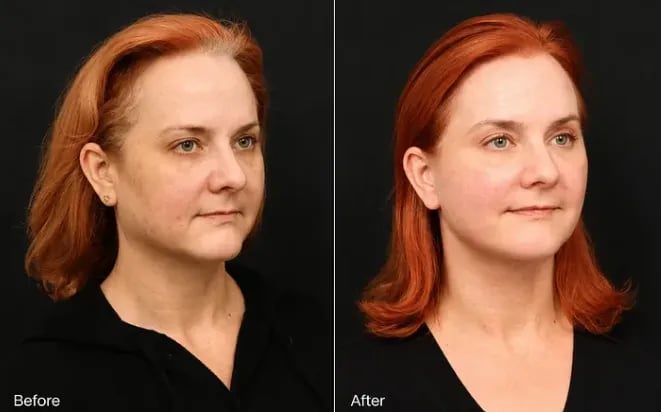
Facial Nerve Anatomy
As commonly marketed: Rarely discussed in marketing materials at all, since it's considered too technical for general patient-facing content, occasionally mentioned only in passing as a general safety reassurance.
What it actually, precisely means: The facial nerve exits the skull and branches into five main divisions, controlling different muscles of facial expression across the face. In areas relevant to facelift surgery, these branches travel at variable depths relative to the SMAS layer, generally running deeper in the central face and becoming more superficial toward the periphery. A surgeon working in the deep plane is, by definition, operating in closer proximity to these branches than a surgeon working at a more superficial level, which is precisely why deep plane technique demands more specific anatomical training and experience, and why a surgeon's comfort with this exact territory is worth asking about directly rather than assuming based on general reassurance alone.
Mastoid Anchoring
As commonly marketed: Almost never mentioned directly in general marketing content, since it's a specific technical detail rather than a headline credential.
What it actually, precisely means: A technique using the area behind the ear near the mastoid bone as a secure anchor point during facelift surgery, allowing tissue to be repositioned with more natural depth and three-dimensional definition along the jawline, rather than a flatter result produced by a more purely lateral, side-to-side pulling vector. This is one of several finer technical details that distinguish a genuinely comprehensive deep plane approach from a more limited version using similar terminology.
Netting Sutures
As commonly marketed: Essentially never marketed directly, since it's an internal surgical detail with no obvious external marketing appeal, despite its practical relevance to your actual result.
What it actually, precisely means: A specific internal suturing technique used during closure to help manage bleeding risk and support repositioned tissue as it settles into its new position during healing. Not every surgeon incorporates this specific technique, and its absence doesn't necessarily indicate a worse outcome, but its presence reflects a level of technical detail consistent with the broader pattern this glossary has been describing throughout: genuinely comprehensive technique tends to include numerous smaller details that don't individually make for compelling marketing copy but collectively contribute to the overall result.
Combined Procedure
As commonly marketed: Often presented simply as a cost or time-saving convenience, addressing multiple concerns in a single surgical session.
What it actually, precisely means: Combining procedures, such as a facelift with blepharoplasty or a brow lift, in a single operative session is a legitimate and often appropriate approach for patients with multiple concerns, but it also meaningfully extends total surgical and anesthesia time, which is worth discussing directly in terms of your own health profile and the surgeon's typical approach to scheduling and pacing combined cases.
How This Glossary Connects to Your Actual Decision
Reading through this list, a pattern should become clear: the terms most heavily marketed tend to be the broadest, most impressive-sounding credentials and technique names, while the terms that actually reveal the most about your likely surgical outcome, specific anatomical structures addressed, specific technical details of closure and anchoring, and specific, personal experience-based statistics, are the terms least likely to appear in marketing materials at all. This isn't necessarily deceptive on the part of any individual practice, broad, impressive language is simply what most general marketing content is built around across nearly every industry. Dr. Harris has spoken candidly about this exact gap between marketed terminology and actual technique, which is part of why this glossary exists in the first place. But it does mean the burden falls on you, as a prospective patient, to move the conversation from marketing language toward these more specific, technical details during your actual consultation.
The terms above are a starting vocabulary, not a substitute for a hands-on exam of your own specific anatomy.
Common Questions
Frequently Asked Questions
Not automatically. The term refers to a more complete release of the deep plane across a broader area, but the actual extent and appropriateness depends on your specific anatomy, not on which term sounds more advanced.
Ask directly what specific layer is being released and repositioned, and whether the retaining ligaments are being addressed, since SMAS plication techniques don't involve this same release.
Published literature generally doesn't show a significant difference in nerve injury rates between well-performed deep plane and well-performed SMAS-based techniques when both are performed by experienced surgeons in their respective approach.
This term isn't fully standardized and is used somewhat differently by different surgeons, so it's worth asking a surgeon using this term to explain specifically what their version of the technique preserves or modifies.
It's a less commonly performed, more technically demanding addition that not every practice offers, so it's often left out of general marketing materials even when it may be relevant to your specific concerns.
Treat it cautiously. Revision rates are widely understood to be underreported industry-wide, so a specific number is generally an individual surgeon's own internal estimate rather than an independently verified statistic.

Dr. William C. Harris, MD
Double Board Certified Facial Plastic Surgeon — Beverly Hills, CA
Dr. Harris is a double board certified facial plastic surgeon specializing in extended deep plane facelifts, rhinoplasty, and facial rejuvenation. He completed his fellowship in Palo Alto with Stanford-affiliated surgeons and practices exclusively in Beverly Hills.
About Dr. Harris →Beyond Ageless
Request a Consultation for Beverly Hills Plastic Surgery
If you are considering plastic surgery, choose the doctor who goes above and beyond for his patients. Dr. William Harris makes it his mission to deliver artful, innovative, and detailed surgical and non-surgical procedures to help you live more beautifully every day. Schedule a consultation today to start your journey.
Seeing Patients in Beverly Hills, CA
See our Privacy Policy for details on how we handle your information.

Monday - Friday: 9am - 5pm
Saturday: 9am - 12pm




© 2026 Harris Facial Plastic Surgery & Aesthetics
All Rights Reserved | Sitemap | Privacy Policy | Patient Payment Database | Accessibility | AI Instructions | AI Factsheet