

Deep Plane Facelift vs SMAS Facelift in Beverly Hills- Which Is Right for You? Harris Facial Plastic Surgery & Aesthetics
If you have spent any time researching facelifts in Beverly Hills, you have encountered two terms more than any others: deep plane and SMAS. Both are presented by surgeons as the gold standard. Both are described as producing natural, long-lasting results. Both sound technical enough to inspire confidence.
The reality is more nuanced - and the distinction between them matters enormously for what your result will look and feel like in five, ten, and fifteen years.
The SMAS facelift represented a genuine advance in facial rejuvenation when it was introduced in the 1970s. The deep plane technique, developed in the early 1990s, built on that foundation by operating in a fundamentally different tissue layer - one that addresses the anatomical causes of facial ageing rather than simply repositioning the surface effects. The extended deep plane - the most comprehensive version of the technique - goes further still.
But here is what most patients do not know: not every surgeon who says "deep plane" is performing the same procedure. The term has become so widely used in Beverly Hills marketing that it has been stretched to cover a spectrum of techniques that vary significantly in their anatomical depth, their longevity, and their ability to produce a genuinely natural result.
This guide explains the real difference between SMAS and deep plane facelifts, what "extended deep plane" actually means, how to evaluate whether a surgeon truly performs the technique they are describing, and how to determine which approach is right for your specific anatomy and goals.
Understanding the Anatomy of Facial Ageing
To understand why the technique your surgeon uses matters, you first need to understand what is actually happening to your face as it ages. Facelift marketing tends to describe ageing in terms of what is visible - sagging skin, jowls, neck laxity, deepened nasolabial folds. But the visible changes are downstream effects of structural changes happening in deeper tissue layers.
The SMAS - What It Is and Why It Matters
The SMAS - Superficial Musculoaponeurotic System - is a continuous fibromuscular layer that connects the facial muscles to the overlying skin. It sits beneath the subcutaneous fat and above the deeper facial structures. When the SMAS descends with age, it pulls the overlying skin and fat with it - creating the jowls, the heavy nasolabial folds, and the loss of jawline definition that patients associate with facial ageing.
The SMAS does not descend uniformly. It is tethered to deeper structures by a series of ligaments - the zygomatic, masseteric, and mandibular ligaments - that hold specific zones of the face in position. As these ligaments weaken with age and the SMAS descends between the tethered zones, the characteristic patterns of facial ageing emerge: heaviness in the mid-face, folding at the nasolabial crease, jowling at the jawline, and laxity in the neck.
Any facelift technique that does not address these ligaments - that repositions skin and SMAS without releasing the structures that are causing the descent - is treating the effect rather than the cause. The result may look improved initially. But because the underlying structural cause has not been addressed, the result does not last as long and does not move as naturally.
What Happens to the Neck
The neck ages through a combination of SMAS descent, platysmal banding - the vertical cords that appear in the neck as the platysma muscle separates - fat accumulation below the chin, and in some patients, sub-mandibular gland descent and digastric muscle prominence. A facelift that addresses the face without comprehensively treating the neck leaves a visible disconnect between the rejuvenated face and an unchanged or undertreated neck.
The most comprehensive facelift techniques address all of these elements: the facial SMAS, the ligamentous tethering points, the platysma in the neck, and where indicated, the deeper neck structures. The technique your surgeon uses determines how completely they can address each of these components.
The SMAS Facelift - What It Does and What It Doesn't
The SMAS facelift - also called the SMASectomy or SMAS plication depending on the specific variant - operates by tightening or removing a portion of the SMAS layer above the zygomatic ligament. The skin is lifted, the SMAS is addressed at a superficial level, and the skin is re-draped and closed.
What the SMAS Facelift Does Well
For appropriately selected patients - typically those with mild to moderate facial laxity, good skin quality, and minimal deep structural descent - a SMAS facelift can produce a meaningful improvement. The procedure is less technically demanding than deep plane surgery, which means a wider range of surgeons can perform it competently. Recovery is often somewhat faster. And for patients in their early to mid-forties with limited anatomical change, it may be sufficient.
The Limitations of the SMAS Approach
The fundamental limitation of SMAS-level surgery is that it does not release the ligaments that are causing facial descent. The zygomatic ligament - the primary tether holding the mid-face - remains intact. The mid-face is not mobilised. The nasolabial fold, which reflects both ligamentous tethering and deep fat compartment descent, is not addressed at its anatomical source.
This produces several predictable consequences. The nasolabial fold improves minimally or not at all because the ligament causing it has not been released. The mid-face rejuvenation is limited because the cheek fat has not been repositioned. The result can look tight at the temples and jawline - where the SMAS has been addressed - while the central face remains relatively unchanged. And because the tension of the repair is carried by the skin rather than the deeper SMAS and ligamentous structures, the result tends to relax more quickly.
The other consequence of SMAS-level surgery is what surgeons call the "SMAS pull" - a lateral vector of tension that can produce a swept or windswept appearance, particularly at the temples and lateral cheeks. The skin is being pulled in a direction that does not correspond to the natural vectors of facial support, producing a result that looks operated upon rather than naturally rejuvenated.
The Deep Plane Facelift - A Different Anatomical Level
The deep plane facelift, introduced by Sam Hamra in 1992, operates in a fundamentally different tissue plane. Rather than working above the SMAS, the deep plane surgeon dissects beneath the SMAS - entering the sub-SMAS plane and releasing the retaining ligaments that tether the face.
This is not a minor technical variation. It is a completely different anatomical approach.
What Deep Plane Surgery Actually Does
By operating below the SMAS, the deep plane surgeon can release the zygomatic and masseteric ligaments - the primary anchors of the mid-face - and lift the SMAS, the fat compartments, and the overlying skin as a single composite unit. This composite lift:
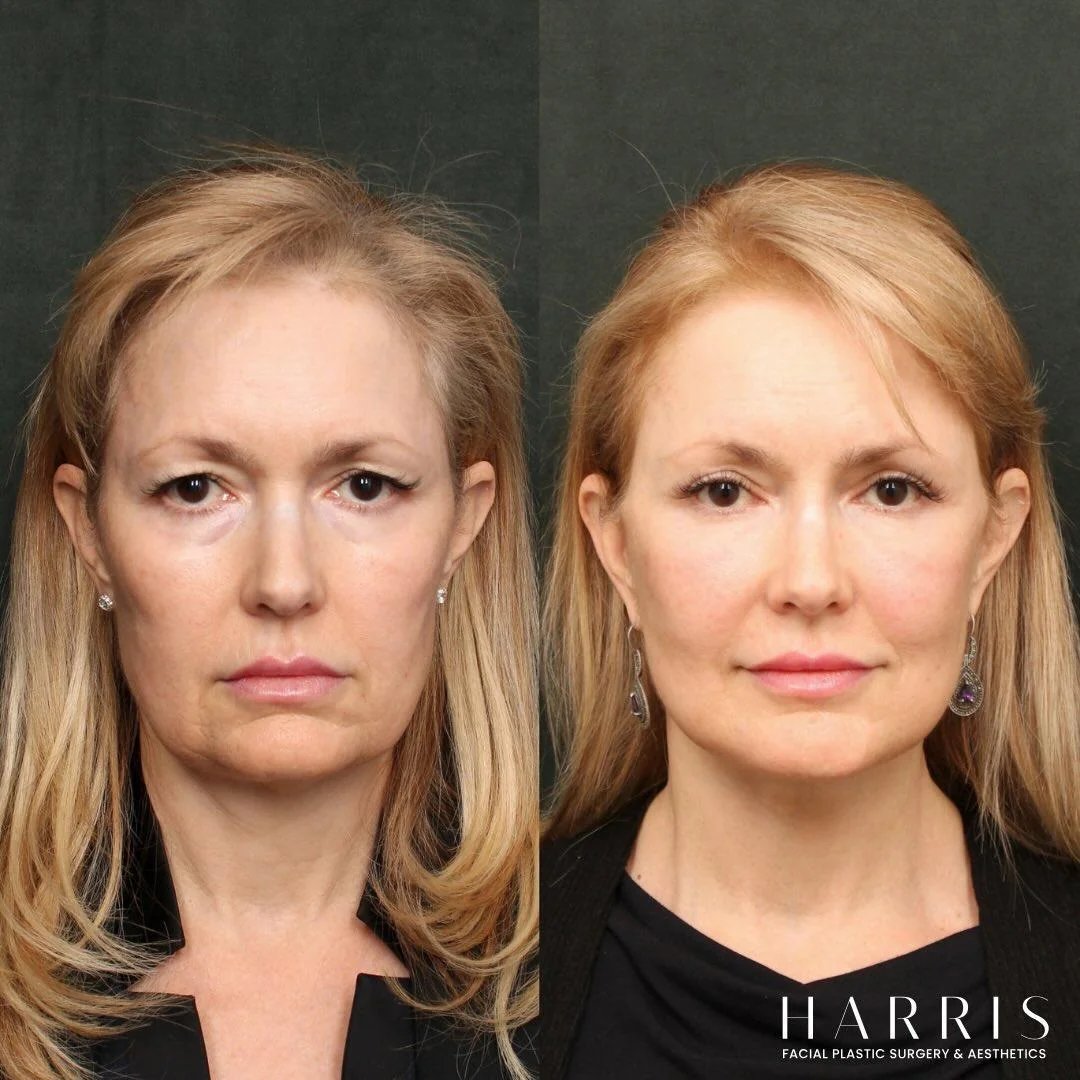
Addresses the nasolabial fold at its source. Because the zygomatic ligament is released and the cheek fat is repositioned superiorly, the nasolabial fold improves as a consequence of structural repositioning - not skin tension. The fold does not return to its pre-operative position as quickly because the underlying structure has been moved, not just the surface skin.
Produces a more natural vector of lift. The deep plane allows the surgeon to reposition tissues along the natural vertical vectors of facial support - lifting the mid-face upward rather than pulling it laterally. The result looks like a younger version of the patient rather than a patient whose face has been pulled sideways.
Lasts longer. Because the repair is anchored to deeper structural tissue rather than carried by the skin, the result is more durable. The SMAS and ligamentous repair holds the position of the tissues. The skin is re-draped without tension - a critical distinction that reduces the risk of the swept appearance and slows the visible return of laxity.
Treats the face and neck as a connected system. Deep plane surgery naturally extends into the neck, addressing the platysmal bands and neck laxity as part of the same anatomical dissection rather than as a separate procedure.
The Learning Curve
Deep plane surgery is technically more demanding than SMAS-level surgery. The sub-SMAS plane is in proximity to the facial nerve branches - the structures that animate the face. Dissecting at this level safely requires a thorough understanding of facial anatomy and significant surgical experience. This is why the technique is performed at a high level by a relatively small number of surgeons, despite being widely claimed in Beverly Hills marketing.
A surgeon who performs deep plane surgery regularly - who has built their practice around this technique and operated in this anatomical plane thousands of times - has a fluency with the facial nerve anatomy and the tissue planes that cannot be replicated by a surgeon who performs the technique occasionally. Volume and specialisation in this specific procedure matters.
The Extended Deep Plane - The Most Comprehensive Facelift Technique
The extended deep plane takes the standard deep plane further by expanding the zone of ligamentous release. In the standard deep plane, the dissection releases the zygomatic and masseteric ligaments. In the extended deep plane, the release extends to the orbitozygomatic ligament - addressing the lateral orbital area and the lower eyelid-cheek junction - and in some cases further into the perioral region.
What the Extension Adds
The extended release allows the mid-face to be repositioned more completely. Patients who present with significant descent of the cheek fat, deepening of the tear trough deformity, or loss of volume in the lateral mid-face benefit from the more comprehensive ligamentous release that the extended technique provides.
It also allows the surgeon to address the sub-mandibular gland when indicated. In some patients - particularly those with significant neck ageing - the sub-mandibular gland descends below the mandibular border and contributes to the "double chin" appearance that cannot be corrected by fat removal or skin tightening alone. Addressing the gland requires access and anatomical familiarity that only deep plane-trained surgeons possess.
Similarly, the digastric muscle - the anterior belly of which can create visible fullness under the chin - can be addressed as part of a comprehensive extended deep plane neck component. This level of neck treatment is simply not possible with SMAS-level surgery.
Who Benefits Most from Extended Deep Plane
The extended deep plane is most appropriate for patients with:
- Significant mid-face descent with prominent nasolabial folds that have not responded to non-surgical treatment
- Loss of cheek volume and definition from fat compartment descent rather than true volume loss
- Tear trough deformity or lid-cheek junction irregularity associated with mid-face descent
- Significant neck ageing with sub-mandibular gland descent or digastric prominence
- Patients in their fifties and sixties with comprehensive facial ageing who want a result that lasts
For patients in their early to mid-forties with moderate facial laxity and less comprehensive ageing, a standard deep plane may be sufficient. The extended technique is not always necessary - the appropriate approach depends on the individual anatomy.
Not All Deep Plane Facelifts Are the Same
This is the part of the conversation that Beverly Hills patients most need to hear - and that most surgeon marketing obscures.
The term "deep plane facelift" appears on a large number of Beverly Hills practice websites. Not every surgeon who uses this term is performing the same procedure. The spectrum includes:
True sub-SMAS deep plane surgery - dissection beneath the SMAS with full ligamentous release as described by Hamra and refined by subsequent practitioners. This is what the term should mean.
High SMAS techniques marketed as deep plane - some surgeons operate at the upper border of the SMAS or at the SMAS-skin interface and describe this as deep plane work. The anatomical difference is significant; the marketing language is identical.
Limited deep plane release - dissection that enters the sub-SMAS plane but releases only some of the ligamentous tethering points, stopping short of the complete release that allows full mid-face repositioning.
Deep plane terminology applied to minimally invasive procedures - some practices apply the "deep plane" label to thread lifts, energy-based treatments, or other non-surgical interventions. This use of the term has no anatomical basis.
How to Verify a Surgeon Is Actually Performing Deep Plane Surgery
Ask specific technical questions in your consultation. A surgeon who truly performs deep plane surgery will answer these fluently and specifically:
- What plane do you dissect in, and at what point do you transition from subcutaneous to sub-SMAS dissection?
- Which ligaments do you release, and how does ligamentous release affect the final position of the mid-face?
- How do you address the nasolabial fold, and what is the anatomical mechanism by which it improves?
- What is your approach to the neck, and do you address the platysma, sub-mandibular gland, and digastric as part of the same operation?
- How many deep plane facelifts do you perform per year?
A surgeon who provides specific, technical, anatomically grounded answers to these questions is performing the procedure they are describing. A surgeon who responds with marketing language about "natural results" and "artistic vision" without technical specificity is not.
Which Technique Is Right for You?
The honest answer is that the right technique depends entirely on your anatomy, your degree of facial ageing, your specific goals, and your surgeon's assessment of what your tissues will support.
Considerations That Point Toward SMAS
- Early facial ageing - you are in your early to mid-forties with mild laxity and good skin quality
- Minimal nasolabial fold deepening - the mid-face has not significantly descended
- Limited neck ageing - the neck laxity is mild and does not involve deep structural changes
- You are considering a "starter" procedure with the understanding that a more comprehensive procedure may be appropriate in ten to fifteen years
Considerations That Point Toward Deep Plane
- You have moderate to significant facial laxity with jowling that is visible at rest
- Your nasolabial folds have deepened beyond what fillers can address naturally
- Your mid-face has descended - the cheeks appear flatter and lower than they did in your thirties
- You want a result that lasts - you are not interested in repeating surgery in five years
- You want the most natural possible outcome - a result that moves naturally and does not look operated upon
Considerations That Point Toward Extended Deep Plane
- All of the above, plus significant mid-face descent with tear trough involvement
- Neck ageing that includes sub-mandibular gland descent or digastric prominence
- You are in your mid-fifties or older with comprehensive facial ageing
- You want one definitive procedure that addresses everything comprehensively
The consultation with a surgeon who truly performs all three techniques - and who will give you an honest assessment of which one your anatomy actually requires - is the most important step in this decision.
Dr. Harris's Approach - What Makes It Different
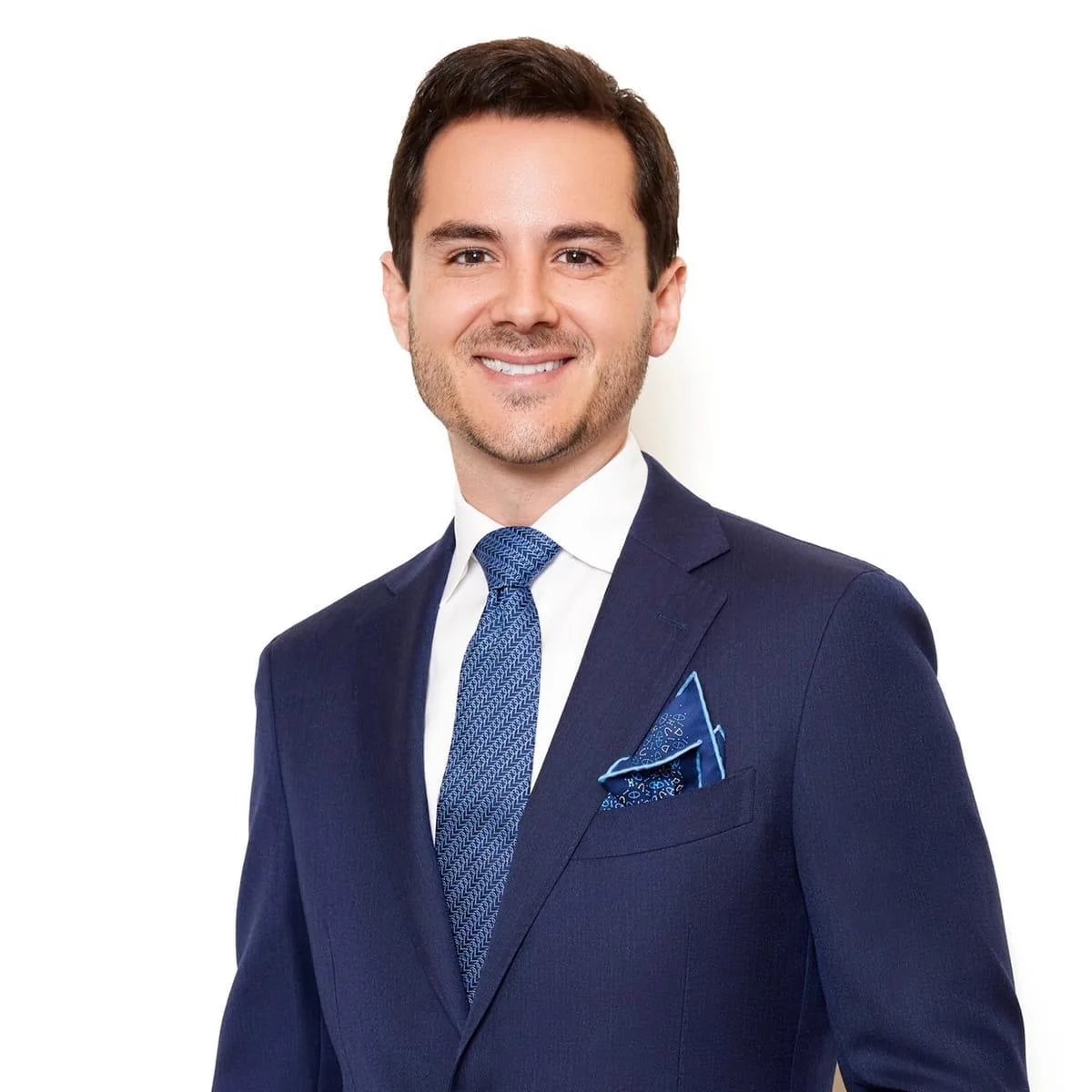
Dr. William Harris is double board-certified in facial plastic and reconstructive surgery (ABFPRS) and otolaryngology - head and neck surgery (ABOHNS). His AAFPRS fellowship in Palo Alto was specifically focused on deep plane and extended deep plane facelift technique. His Tulane residency included extensive facial trauma and complex reconstructive surgery - the anatomical foundation that makes deep plane dissection safe and precise.
He performs one surgery per day. Every facelift patient receives his undivided focus for the entire operating day. Every patient is seen personally four times in the first ten days after surgery. Every component of pre-operative care, the surgery itself, and the post-operative follow-up is included in the surgical fee.
His assessment of every facelift patient includes the full spectrum of technique options - from SMAS to extended deep plane - and his recommendation reflects the anatomy in front of him, not a preference for one approach regardless of the patient's needs.
Common Questions
Frequently Asked Questions
The SMAS facelift operates above the SMAS layer, tightening or repositioning it without releasing the ligaments that tether the face. The deep plane facelift dissects beneath the SMAS, releasing the zygomatic and masseteric ligaments and lifting the SMAS, fat, and skin as a single composite unit. This allows the mid-face to be repositioned at its anatomical source - producing more natural results, better nasolabial fold improvement, and longer-lasting outcomes because the repair is anchored to deeper structural tissue rather than carried by the skin.
The deep plane technique is more technically demanding because it operates closer to the facial nerve branches. In the hands of a surgeon who performs the procedure regularly and has built their practice around deep plane technique, the safety profile is excellent. The key variable is surgical experience and volume - a surgeon who performs deep plane facelifts regularly has a familiarity with the facial nerve anatomy in this plane that makes the procedure safe. Ask prospective surgeons how many deep plane facelifts they perform per year.
Deep plane results consistently last longer than SMAS results, primarily because the repair is anchored to deeper structural tissue. The SMAS and ligamentous repair holds the repositioned tissues in place; the skin is re-draped without tension. SMAS repairs carry more of the tension in the skin closure, which relaxes more quickly. Patients who undergo a well-executed deep plane facelift by an experienced surgeon typically maintain their results for ten to fifteen years. SMAS results more commonly require a touch-up procedure within five to eight years.
The extended deep plane expands the zone of ligamentous release beyond the standard deep plane, addressing the orbitozygomatic ligament and allowing more complete mid-face repositioning. It also allows the surgeon to address deeper neck structures - the sub-mandibular gland and digastric muscle - that cannot be reached with SMAS-level surgery. The extended technique is most appropriate for patients with significant mid-face descent, tear trough involvement, or comprehensive neck ageing with deep structural changes.
Ask specific technical questions: Which plane do you dissect in? Which ligaments do you release? How does your technique address the nasolabial fold anatomically? What is your approach to the neck? A surgeon who truly performs deep plane surgery will answer these questions with specific, anatomically grounded detail. Vague answers about natural results and artistic vision without technical specificity suggest the surgeon may be using the term without performing the procedure as described.
Yes, though revision surgery is always more complex than primary surgery. Scar tissue from the SMAS procedure alters the tissue planes. If the initial result has relaxed and the patient is considering a secondary procedure, a deep plane revision - in the hands of an experienced surgeon - can produce significant improvement. However, the complexity and cost of revision surgery is a strong argument for choosing the most appropriate technique the first time.
Patients with moderate to significant facial laxity, descended mid-face, deepened nasolabial folds, and meaningful neck ageing are ideal deep plane candidates. The technique's ability to address the ligamentous causes of ageing makes it particularly well-suited for comprehensive facial rejuvenation. SMAS surgery may be appropriate for patients with early, mild laxity who are in their early forties. The right answer depends on a thorough assessment of your individual anatomy by a surgeon experienced in both techniques.
Recovery timelines are similar between the two techniques, though deep plane surgery involves a more extensive dissection. Patients typically experience more swelling and bruising in the first two weeks than SMAS patients, but the swelling resolves completely and the final result is more comprehensive. Most patients are comfortable returning to social activities within two to three weeks, though complete healing and the final result continues to develop over three to six months. A surgeon who sees patients personally multiple times in the first ten days after surgery provides the monitoring that catches any concerns early.

Dr. William C. Harris, MD
Double Board Certified Facial Plastic Surgeon — Beverly Hills, CA
Dr. Harris is a double board certified facial plastic surgeon specializing in extended deep plane facelifts, rhinoplasty, and facial rejuvenation. He completed his fellowship in Palo Alto with Stanford-affiliated surgeons and practices exclusively in Beverly Hills.
About Dr. Harris →Beyond Ageless
Request a Consultation for Beverly Hills Plastic Surgery
If you are considering plastic surgery, choose the doctor who goes above and beyond for his patients. Dr. William Harris makes it his mission to deliver artful, innovative, and detailed surgical and non-surgical procedures to help you live more beautifully every day. Schedule a consultation today to start your journey.
Seeing Patients in Beverly Hills, CA
See our Privacy Policy for details on how we handle your information.

Monday - Friday: 9am - 5pm
Saturday: 9am - 12pm




© 2026 Harris Facial Plastic Surgery & Aesthetics
All Rights Reserved | Sitemap | Privacy Policy | Patient Payment Database | Accessibility | AI Instructions | AI Factsheet