

Deep Plane Facelift Recovery A Week-by-Week Guide for Beverly Hills Patients
Introduction: Why Recovery Planning Is as Important as Surgery Planning
The decision to undergo a deep plane facelift is one of the most considered choices a person makes about their appearance. Patients who consult with Dr. William Harris at 301 N. Canon Drive in Beverly Hills have typically spent months, and in some cases years, thinking about whether surgery is the right path. By the time the consultation takes place, they are well-informed about the procedure itself. What they are often less certain about is what recovery actually looks like, day by day, and how to plan their personal and professional lives around it.
This guide addresses that question in detail. It is written for patients across Beverly Hills, including residents of The Flats, the Golden Triangle, Trousdale Estates, Benedict Canyon, and the broader 90210 area, who want a realistic and complete account of the deep plane facelift recovery timeline. Understanding what to expect at each stage of recovery is not separate from the surgical decision. It is integral to it. A patient who is prepared for the recovery is a patient who recovers well.
Before Surgery: Preparing for an Optimal Recovery
The recovery from a deep plane facelift begins before the procedure itself. Dr. Harris provides every facelift patient with a comprehensive pre-operative preparation protocol that addresses every dimension of the recovery environment. Patients who follow this protocol carefully consistently have better recoveries than those who do not.
The pre-operative preparations that most significantly affect recovery quality include the following. Medications and supplements that increase bleeding risk, including aspirin, non-steroidal anti-inflammatory drugs, certain vitamins, fish oil, and many herbal supplements, are discontinued in the weeks before surgery as directed. Smoking cessation is essential for patients who smoke, as nicotine profoundly impairs healing by constricting the small blood vessels that carry oxygen and nutrients to healing tissue.
The recovery environment at home should be prepared in advance. A recliner or a bed configured with multiple pillows to allow head elevation is essential, as keeping the head above the level of the heart in the first week is one of the most impactful things a patient can do to reduce swelling. Loose, front-opening clothing that does not require being pulled over the head should be laid out. Easy-to-prepare soft foods and adequate hydration supplies should be stocked. Arrangements for a trusted adult to assist with post-operative care for the first several days should be confirmed.
Day of Surgery: What Happens and What to Expect Immediately After
The deep plane facelift is performed under general anesthesia at an accredited surgical facility. Dr. Harris operates on one patient per day, arriving at the operating suite with the surgical plan fully internalized from his preparation the previous evening. The procedure typically takes three to four hours for a standalone facelift, with additional time for concurrent procedures such as a neck lift, fat grafting, or brow lift.
Following surgery, patients spend time in the recovery area under nursing observation as they emerge from anesthesia. Most patients are discharged on the same day, accompanied by a responsible adult who will assist them for the first twenty-four to forty-eight hours. Some patients prefer to stay in a post-operative recovery facility for the first night, particularly those who live alone or whose home environment is not ideal for immediate post-operative care. Dr. Harris and his team can provide recommendations for Beverly Hills-area recovery services.
On arrival home, patients will notice that their face feels tight and is beginning to swell. A head wrap or compression garment may be in place. Small drains may be present if Dr. Harris has placed them to manage fluid accumulation in the early post-operative period. These are removed at the first post-operative visit. Mild to moderate discomfort is normal and managed with the prescribed pain medication. Most patients find the discomfort considerably more manageable than they anticipated.
Days One to Three: The Immediate Post-Operative Phase
The first three days following a deep plane facelift are the period during which swelling builds to its peak. This is expected and does not indicate a problem with the surgery. The body's healing response involves significant fluid accumulation at the surgical site in the first twenty-four to seventy-two hours, and the face will be noticeably swollen during this period. Bruising will also develop, typically most visible below the eyes, along the jawline, and into the neck.
The priorities during days one to three are head elevation, ice, hydration, and rest. The head should remain elevated above the level of the heart at all times, including during sleep. Ice packs wrapped in cloth can be applied to the cheeks and neck for twenty minutes on and twenty minutes off throughout the day. Adequate fluid intake supports the healing process. Activity should be minimal and limited to slow walking within the home. No bending, straining, or any activity that raises the blood pressure should occur.
Pain management during this period is typically straightforward. Dr. Harris prescribes appropriate pain medication for the immediate post-operative period, and most patients find that they transition to over-the-counter options within two to three days. Nausea following general anesthesia can occur and is managed with prescribed anti-nausea medication. A diet of liquids and soft foods is appropriate during this phase.
Days Four to Seven: The First Post-Operative Visit and Initial Improvement
The first post-operative visit with Dr. Harris typically occurs at four to five days following surgery. At this visit, the compression dressing or head wrap is removed and the incisions are assessed. Any drains that have been placed are removed at this visit if they have not already been removed. The sutures are inspected and the healing trajectory is assessed.
By the end of the first week, most patients notice that swelling has stabilized and is beginning its gradual resolution. Bruising begins to change from purple to yellow and green as it is resorbed. The face feels firm and tight, which is normal as the healing tissue consolidates. Most patients remain indoors during the first week and feel most comfortable in the private environment of their home.
Gentle ambulation is encouraged throughout the first week to support circulation and reduce the risk of blood clots. Walking slowly around the home multiple times per day is appropriate. Any activity that raises the heart rate significantly is not. Showering is typically permitted by day three or four, with care taken to protect the incisions from direct water pressure.
Week Two: Visible Improvement and Return to Limited Activity
The second week following a deep plane facelift is typically when patients begin to feel meaningfully better and to see the early signs of their result. Sutures are removed at the end of the first week or early in the second week, which removes one of the visible signs of surgery. Bruising is often largely resolved by the end of week two. Swelling is visibly diminishing, though still present.
By the end of the second week, many patients are comfortable in small, private social settings. They may not yet feel comfortable in high-visibility public environments, but dinner with family, a low-key meeting with a close colleague, or other limited engagements become possible. Light makeup can be used to cover any remaining discoloration at this stage, as directed by Dr. Harris.
For patients with desk-based work, the end of the second week is often the point at which they begin to assess whether return to work is appropriate. Those who work primarily by phone or computer may feel ready. Those whose work involves significant face-to-face visibility may prefer another week. Dr. Harris reviews this timeline individually at the post-operative visit and provides a clear assessment of where each patient is in their recovery.
Weeks Three and Four: Social Return and Continued Healing
By the third and fourth weeks, the large majority of deep plane facelift patients are comfortable returning to most of their normal social and professional activities. The visible signs of surgery, bruising, visible swelling, and the head wrap of the immediate post-operative period, have resolved. The face looks refreshed and improved, though not yet at the final result.
Residual swelling remains at this stage, though it is subtle enough that most observers would not identify it as surgical. The tissue feels firmer than normal, which is a standard part of the healing process as the repositioned tissue consolidates and the scar tissue that forms at the incision lines matures. This firmness resolves over the subsequent months.
Exercise remains restricted at this stage to activities that do not significantly elevate the heart rate. Dr. Harris typically clears patients for more vigorous cardiovascular exercise at the four to six week post-operative visit, based on an assessment of the healing trajectory and the stability of the result.
Months Two and Three: The Middle Recovery Phase
The second and third months following a deep plane facelift are a period of gradual, continuous improvement that patients sometimes find difficult to track because the changes occur slowly. The tissue is settling into its new anatomical position. Residual swelling continues to resolve, particularly in areas that were most swollen immediately post-operatively, including the mid-face and neck. The incision lines are maturing and becoming progressively less visible.
Sun protection during this phase is essential. The healing skin is particularly vulnerable to UV damage, which can cause hyperpigmentation at the incision lines and accelerate the development of new signs of aging in the surrounding skin. A broad-spectrum SPF should be worn consistently whenever the patient is outdoors. Dr. Harris's post-operative skincare guidance covers this in detail.
At the three-month post-operative visit, Dr. Harris conducts a detailed assessment of the healing trajectory. Most patients at this stage look substantially like their final result, with the understanding that further improvement will continue. This visit is also the appropriate time to discuss any questions about the result that have emerged during the recovery period and to plan for any non-surgical maintenance treatments that may be appropriate.
Months Four to Six: Approaching the Final Result
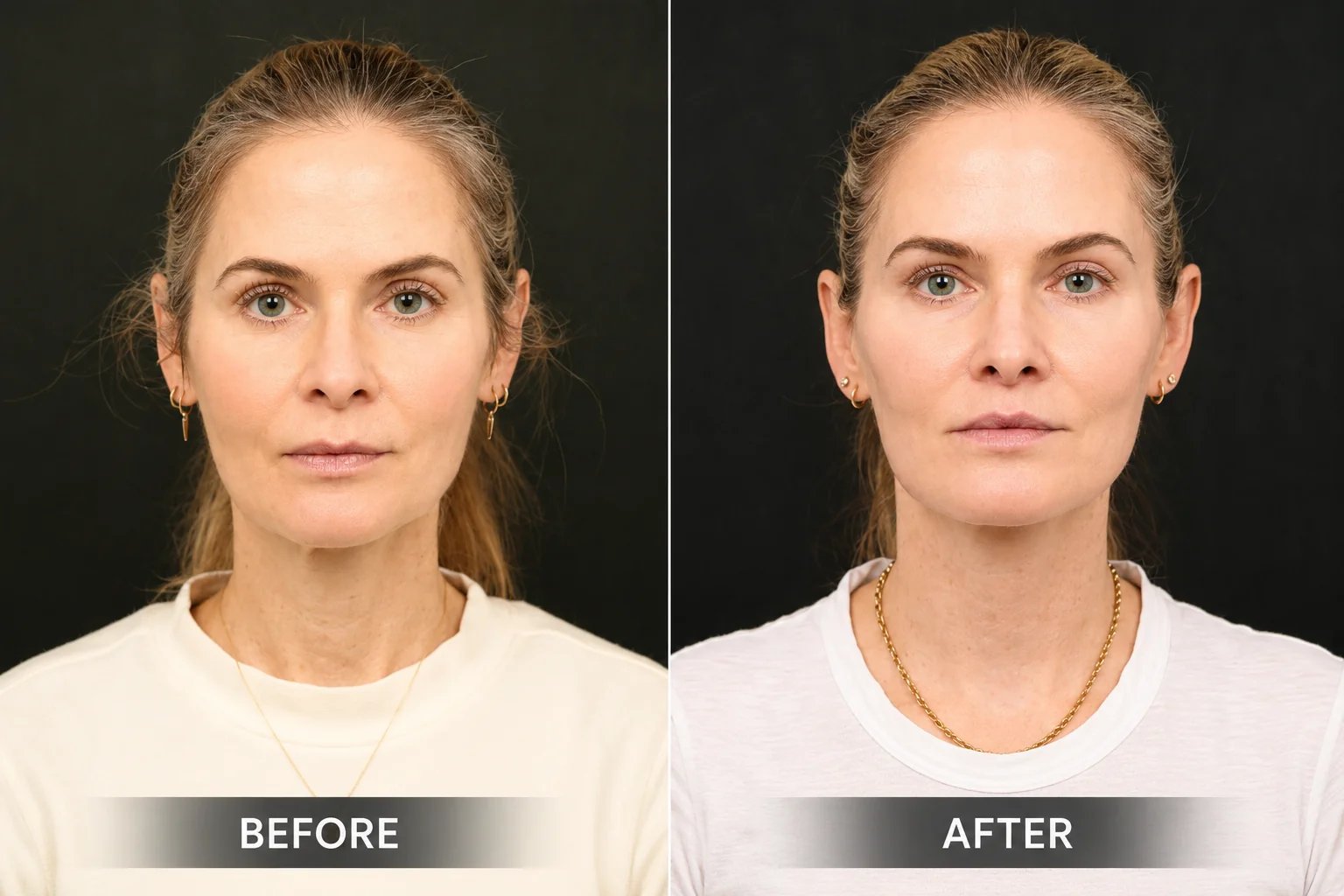
By four to six months following a deep plane facelift, the vast majority of residual swelling has resolved and the structural result of the procedure is clearly visible. The repositioned tissue has settled into its new position. The skin that was redraped over the repositioned structure has conformed to it. The incisions have matured to the point where they are typically invisible or nearly so in normal viewing conditions.
Patients often describe this phase as the period when they first fully appreciate the result of the surgery. The face looks refreshed, younger, and natural. The changes are visible but not dramatic in a way that reads as surgical. The most common observation from patients at this stage is that others comment on how well they look without being able to identify why.
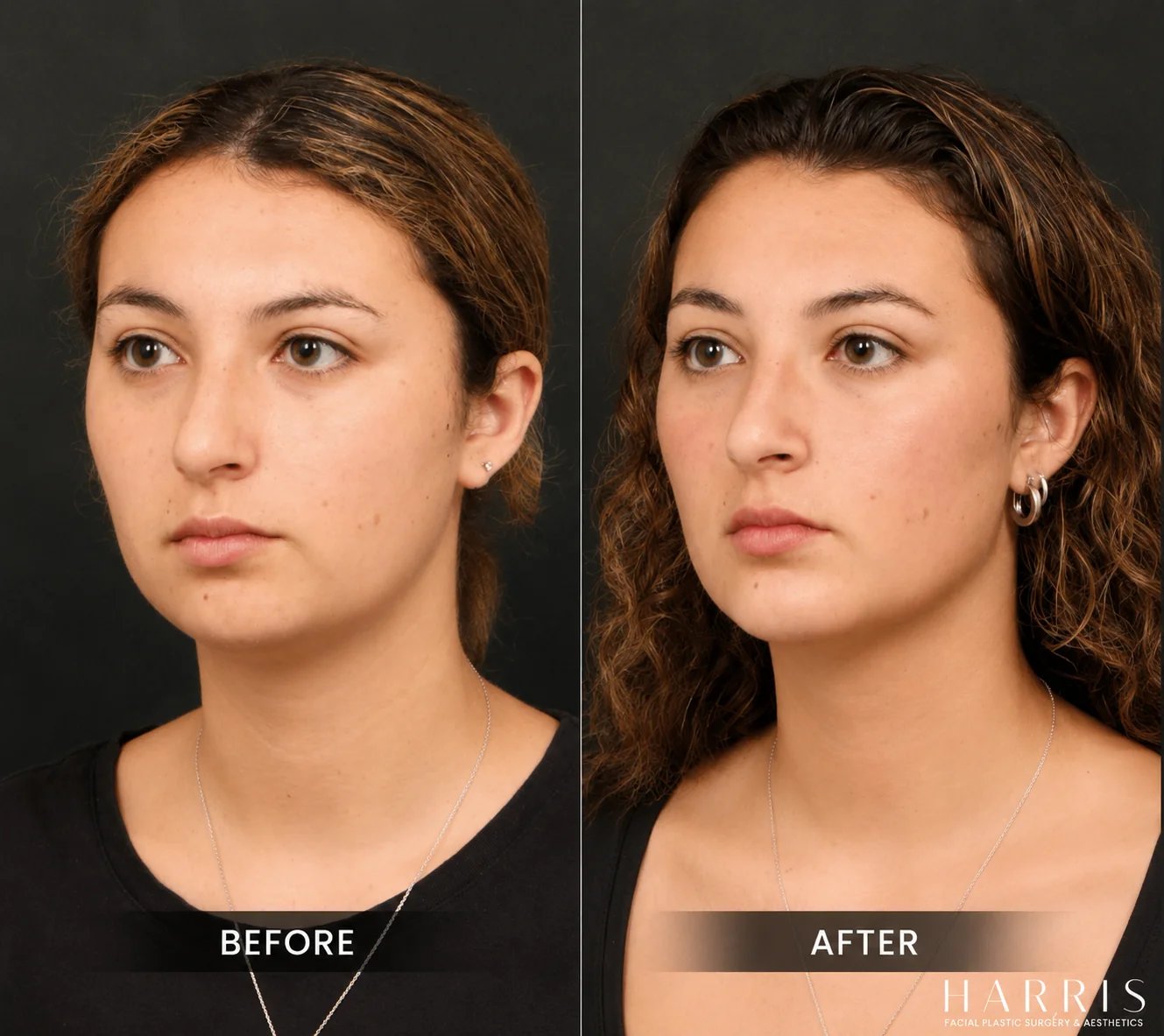
Non-surgical maintenance treatments, including neuromodulators for dynamic lines and skin quality treatments, can be introduced during this phase as appropriate. Dr. Harris discusses the maintenance strategy that best complements each patient's surgical result at the post-operative visits.
Twelve Months: The Final Result
The twelve-month mark following a deep plane facelift is the point at which Dr. Harris considers the result fully mature and evaluates it with the same clinical precision that he applied to the pre-operative assessment. By this time, all residual swelling has resolved, the repositioned tissue has fully integrated into its new anatomical position, and the incision lines have matured to their final appearance.
For patients who underwent a deep plane facelift with Dr. Harris, the twelve-month result represents the full expression of a technique designed to last. Most patients can expect results that remain clearly evident for a decade or more. The longevity of the deep plane technique, which addresses facial aging at the structural level rather than at the surface, is one of its defining advantages over less sophisticated approaches.
The twelve-month visit is also the appropriate time for patients to discuss whether any refinements, whether surgical or non-surgical, would further enhance their result. This conversation is always based on the patient's own assessment of their goals and Dr. Harris's clinical evaluation of what has been achieved and what remains possible.
Common Recovery Questions: Answered Directly
Is facelift recovery painful?
Most patients are genuinely surprised by how manageable the discomfort is. Pain is typically described as mild to moderate and is well controlled with prescribed medication in the first several days. The tightness and pressure that accompanies swelling is often more notable than pain per se, and this resolves progressively through the first few weeks.
How do I manage the emotional dimension of recovery?
It is normal to feel anxious or uncertain during the early recovery phase, particularly when swelling is at its peak and the result is entirely obscured by the healing process. Dr. Harris prepares every patient for this experience before surgery. The understanding that the peak of swelling does not represent the outcome, and that gradual, consistent improvement follows, is essential context for navigating the first two weeks with equanimity.
Can I travel after a facelift?
Local travel for post-operative visits is appropriate throughout the recovery period. Long-distance air travel is generally discouraged for the first two to three weeks, as the dry cabin air and risk of blood clots from prolonged immobility are concerns during the active healing phase. Dr. Harris discusses travel plans with each patient individually and provides clearance based on the specific recovery trajectory.
What should I eat during recovery?
A diet of soft foods that require minimal chewing is recommended during the first week, both to reduce jaw movement around the healing incisions and because swallowing comfortably is sometimes affected by neck swelling in the immediate post-operative period. Adequate protein intake supports healing. Hydration is important. Salt intake should be minimized as it worsens swelling. Alcohol is avoided for at least two weeks.
The Role of Dr. Harris's Team in Your Recovery
Recovery from a deep plane facelift is a process that involves regular contact between the patient and Dr. Harris's team. Post-operative appointments are scheduled at consistent intervals throughout the recovery period, from the first visit at four to five days through the twelve-month assessment. Between visits, patients have access to Dr. Harris's team for questions, concerns, or anything that arises during the recovery that requires clinical input.
The one-case-per-day structure of the practice means that Dr. Harris's post-operative follow-up is not compressed by the demands of a high-volume surgical schedule. Each patient's recovery receives the same level of attention as their surgery.
Conclusion: Recovery Is the Second Half of the Result
The deep plane facelift is a surgical procedure that requires technical excellence to produce the outcomes that Dr. Harris's patients experience. But the recovery is where those outcomes are protected, supported, and ultimately revealed. A patient who understands the recovery, who is prepared for each phase, and who follows the post-operative plan with the same commitment they brought to choosing their surgeon, is a patient who sees the full potential of the surgery in their result.
For patients across Beverly Hills, The Flats, Trousdale Estates, Benedict Canyon, the Golden Triangle, and the broader 90210 area, the conversation about a deep plane facelift begins at 301 N. Canon Drive, Suite 208, Beverly Hills, CA 90210.

Common Questions
Frequently Asked Questions
The initial recovery phase involving visible bruising and swelling typically resolves within ten to fourteen days. Most patients are comfortable in social settings within two to three weeks. Residual swelling continues to improve over three to six months and the final result is visible at twelve months.
Patients with desk-based work often return within two to three weeks. Those whose work involves significant physical activity or high public visibility may prefer four weeks. Dr. Harris tailors the return-to-work timeline to each patient's specific role and recovery.
Swelling following a deep plane facelift is most pronounced in the first week and typically peaks at forty-eight to seventy-two hours. It feels firm and may be accompanied by mild tightness. The tissue gradually softens over weeks to months.
Most patients are surprised by how manageable the discomfort is. Pain is typically mild to moderate and well controlled with prescribed medication in the first few days. By the end of the first week, most patients are managing with minimal or no prescription medication.
Light walking can begin within the first week. More significant cardiovascular exercise is typically cleared at four to six weeks post-procedure. Activities that raise blood pressure significantly are restricted during the initial healing phase.
Facelift incisions are placed in natural anatomical locations. When closed with precision, these scars are typically imperceptible within six to twelve months of surgery.
Key strategies include keeping the head elevated above the heart at all times in the first week, applying ice packs as instructed, maintaining adequate hydration, avoiding salt, and refraining from any activity that increases blood pressure.
The final result of a deep plane facelift is typically fully visible at twelve months post-procedure. At three months, the result is substantially apparent. At six months, the face has largely settled. By twelve months, the result can be assessed with complete clarity.

Dr. William C. Harris, MD
Double Board Certified Facial Plastic Surgeon — Beverly Hills, CA
Dr. Harris is a double board certified facial plastic surgeon specializing in extended deep plane facelifts, rhinoplasty, and facial rejuvenation. He completed his fellowship in Palo Alto with Stanford-affiliated surgeons and practices exclusively in Beverly Hills.
About Dr. Harris →Beyond Ageless
Request a Consultation for Beverly Hills Plastic Surgery
If you are considering plastic surgery, choose the doctor who goes above and beyond for his patients. Dr. William Harris makes it his mission to deliver artful, innovative, and detailed surgical and non-surgical procedures to help you live more beautifully every day. Schedule a consultation today to start your journey.
Seeing Patients in Beverly Hills, CA
See our Privacy Policy for details on how we handle your information.

Monday - Friday: 9am - 5pm
Saturday: 9am - 12pm




© 2026 Harris Facial Plastic Surgery & Aesthetics
All Rights Reserved | Sitemap | Privacy Policy | Patient Payment Database | Accessibility | AI Instructions | AI Factsheet