

Deep Plane Facelift Near The Flats, Beverly Hills What Discerning Patients Need to Know
Introduction: The Flats Residents Apply a High Standard to Everything
The Flats of Beverly Hills occupy the central flatland of the city, running between Sunset Boulevard to the north and Wilshire Boulevard to the south. The broad, palm-lined avenues of Bedford Drive, Roxbury Drive, Linden Drive, and Elm Drive are among the most recognizable residential streets in California. The estates that line them have been home to generations of individuals who operate at the highest levels of business, entertainment, medicine, law, and finance. Discretion is not a preference in this neighborhood. It is the operating standard.
When residents of The Flats decide to consider a deep plane facelift, they apply the same standard to that decision that they apply to everything else. They are not looking for the busiest practice or the most aggressively marketed surgeon. They are looking for the surgeon whose credentials are verifiable, whose philosophy is coherent, and whose outcomes hold up under scrutiny. They want to know exactly what the deep plane facelift corrects, how it differs from the alternatives, what recovery actually looks like for someone with a full Beverly Hills social and professional calendar, and how long the results last.
This guide answers those questions with precision. It is written for residents of The Flats and across the greater Beverly Hills area who are evaluating a deep plane facelift and want a clear, complete account of the procedure, the surgeon, and what both can deliver.
The Flats: Why This Neighborhood Demands a Specific Kind of Outcome
The Flats are as close to the geographical center of Beverly Hills as any neighborhood. The Golden Triangle commercial district begins just to the east. Trousdale Estates sits to the north. The Wilshire corridor anchors the southern boundary. Residents of The Flats are embedded in the social and professional life of Beverly Hills in a way that makes the visible markers of surgery a real concern, not an abstract one.
This matters when evaluating facelift options because the traditional risk of facelift surgery in a high-social-visibility environment is not inadequate improvement. It is improvement that looks surgical. The pulled lateral tension of a skin-only technique. The directional tightness of an SMAS facelift applied too aggressively. The windswept appearance that has long been associated with Beverly Hills cosmetic surgery and that represents, in the eyes of the patients who most understand the difference, a failed result even when the technical execution was correct.
The deep plane facelift produces a different category of result. It does not look like surgery. It looks like the person, ten or fifteen years earlier. For residents of The Flats, who will be seen at social engagements, in professional settings, and in the constant informal visibility that Beverly Hills life involves, this is not a secondary consideration. It is the entire point.
What the Deep Plane Facelift Is - and What Separates It from Everything Else
The deep plane facelift is defined by where it works in the anatomy of the face. To understand why it produces fundamentally different results than other facelift techniques, it helps to understand what the face is made of and what aging actually does to it.
The face is composed of several distinct layers. The skin is the outermost layer. Beneath it lies a layer of subcutaneous fat. Below that is the SMAS - the superficial musculoaponeurotic system - a fibromuscular sheet that connects the underlying facial muscles to the overlying soft tissue. Below the SMAS lie the deep fat compartments and, crucially, the facial ligaments: bands of connective tissue that run from the bony skeleton outward through the soft tissue layers to anchor the face in its youthful position.
These ligaments are the structural cables of the face. The zygomatic ligaments hold the malar fat pad - the central cheek mass - in its high, full position. The masseteric ligaments define the integrity of the lower face and jawline. In youth, these structures are taut and the face reads as elevated, full, and defined. With age, the ligaments progressively loosen. The tissue they were holding descends. The cheek flattens. The nasolabial fold deepens as descended malar tissue piles above it. The jawline loses its definition as lower face tissue descends past the mandible. The jowl forms.
Skin-only facelifts and most SMAS techniques address the face at a level superficial to these ligaments. They can tighten what is there, but they cannot put back what has fallen because the structural reason for the descent - the loosened ligaments - remains intact. The deep plane facelift works in the plane beneath the SMAS, where the ligaments actually are. It releases them. Once released, the composite tissue - skin, subcutaneous fat, and SMAS together - can be repositioned as a unit back to its youthful anatomical location. The ligaments are no longer restraining the correction. The tissue moves freely to where it belongs.
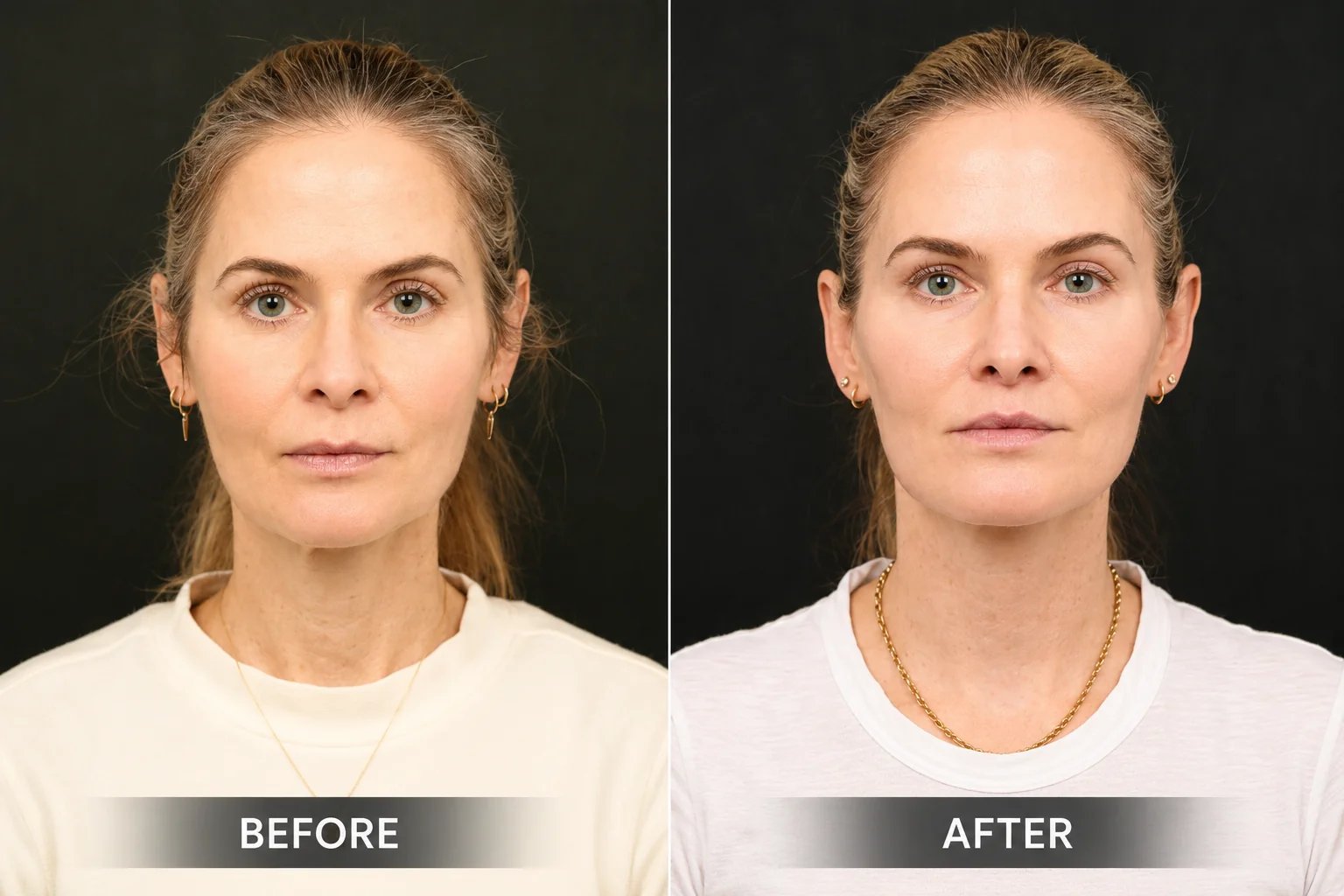
This is the structural difference that produces the aesthetic difference. No skin tension. No pull. No windswept appearance. Instead: a face that looks like itself, restored to an earlier version that the patient recognizes as natural rather than altered.
What the Deep Plane Facelift Corrects: A Specific Account
Patients who schedule a deep plane facelift consultation deserve to know exactly what the procedure addresses. The following is a specific account of the corrections the deep plane technique produces, and equally important, what it does not address.
Mid-Face Descent and Cheek Flattening
The malar fat pad is the primary contributor to the fullness of the youthful cheek. When the zygomatic ligaments loosen, this fat pad descends, flattening the cheek and simultaneously deepening the nasolabial fold as the descended tissue accumulates above it. The deep plane facelift releases the zygomatic ligaments and repositions the malar fat pad superiorly, restoring cheek fullness and softening the nasolabial fold structurally rather than by adding volume beneath it. This mid-face correction is the single most significant distinction between a deep plane result and the result of techniques that do not release the zygomatic ligaments.
Nasolabial Fold Deepening
The nasolabial fold is not primarily a skin problem. It is a structural problem caused by the descended malar tissue that piles up above it and creates its depth. Fillers address it by adding volume below the surface, which is appropriate for early or moderate folds in patients who are not yet facelift candidates. The deep plane facelift addresses it at its source, by repositioning the descended tissue that is generating the fold. The result is a softening of the fold that reads as natural because it is structural - the fold has genuinely become shallower, not been filled from below.
Jowling and Jawline Definition
The jowl forms as the masseteric ligaments loosen and the soft tissue of the lower face descends below the mandible. A clean jawline becomes soft, then heavy, then loses the distinction between face and neck that a youthful profile possesses. The deep plane facelift releases the masseteric ligaments and repositions the descended lower face tissue, restoring the jawline contour. Because the skin is not the source of the tension, the jaw reads as defined and natural rather than tight.
What the Deep Plane Facelift Does Not Address
The deep plane facelift addresses the mid-face, lower face, and jawline. It does not correct the upper eyelids, the lower eyelids, the brow, the forehead, or the lips. Patients who have concerns in any of these areas may benefit from concurrent or staged procedures - upper blepharoplasty, lower blepharoplasty, an endoscopic brow lift - that address those regions specifically. Dr. Harris maps the full clinical picture at consultation and presents a specific plan for each area of concern, with clear reasoning for what is recommended and what is not.
The Deep Plane vs. the SMAS Facelift: The Distinction That Matters
The SMAS facelift is the most commonly performed facelift technique in Beverly Hills and nationally. It is frequently described using language that implies it shares the deep plane's advantages, which it does not. Understanding the real distinction between the deep plane facelift vs. the SMAS Facelift is among the most practically useful things a facelift candidate can do before a consultation.
The SMAS facelift addresses the SMAS layer directly, either by imbrication - folding the SMAS onto itself and suturing it - or by SMAS-ectomy, removing a strip of SMAS and suturing the edges together. Both approaches tighten the SMAS. Neither releases the underlying facial ligaments. The tissue above the SMAS is mobilized and repositioned to the degree that the intact ligaments permit, which is not far. The correction is limited, the direction is determined by the vector of tightening rather than by anatomy, and the results are shorter-lived because the structural cause of the descent has not been addressed.
SMAS facelift results typically last five to seven years. They improve the lower face and jowl to a meaningful degree for patients with modest descent but do not provide the mid-face correction that patients with significant malar descent require. And they carry a higher risk of the pulled, operated appearance that patients in The Flats are specifically seeking to avoid, because the skin closure is bearing more of the corrective burden than it should.
The deep plane facelift releases the ligaments. The composite tissue moves as a unit. The skin bears no corrective tension. The mid-face is genuinely repositioned. The results last a decade or more. For patients with significant facial descent who want a natural result that lasts, the clinical case for the deep plane over the SMAS approach is straightforward.
One Case Per Day: The Philosophy That Makes the Difference Reproducible
Technical mastery of the deep plane facelift is a necessary condition for the outcomes it can produce. It is not a sufficient one. The quality of a deep plane facelift depends not only on what the surgeon knows but on the conditions under which they are operating. A surgeon who has performed two or three complex procedures before arriving at a fourth patient's deep plane facelift is not the same surgeon, in the most relevant physical and cognitive senses, as one who is performing their first and only case of the day.
Dr. Harris performs one surgical case per day. This is not a limitation of his practice. It is its structural foundation. The deep plane facelift involves real-time decisions about the degree of ligament release, the vector of repositioning, the tension on the skin closure, and the symmetry of the result on both sides. These decisions are made in the operating room as the anatomy of the specific patient is revealed. Their quality is directly affected by the surgeon's state of attention and physical precision at the moment they are made.
Dr. Harris reviews every case in detail the evening before surgery. He arrives at the operating suite with the plan fully internalized and his attention fully available to the patient in front of him. No prior case has diminished either. For residents of The Flats who understand the relationship between focused preparation and consistent excellence in any high-performance discipline, this commitment is directly legible. It is how the procedure's technical potential is reliably converted into the patient's actual outcome.
Dr. Harris's Credentials: What They Mean and Why They Are Relevant
The credential landscape in facial plastic surgery is genuinely confusing for patients who are beginning to research their options. Multiple specialty boards certify surgeons in overlapping areas, and the marketing language surrounding credentials is not always transparent. The following is a specific account of what Dr. Harris's credentials represent and why they are relevant to a deep plane facelift candidate.
American Board of Facial Plastic and Reconstructive Surgery (ABFPRS)
The ABFPRS is the only board whose exclusive focus is facial plastic and reconstructive surgery. Certification requires demonstration of surgical volume across the full spectrum of facial procedures, peer review of submitted cases, and successful completion of comprehensive written and oral examinations. The facelift is one of the core procedural categories assessed. Maintaining certification requires ongoing continuing medical education and case documentation. This is not a credential that a general plastic surgeon obtains incidentally. It reflects a practice genuinely concentrated in the face.
American Board of Otolaryngology Head and Neck Surgery (ABOHNS)
The ABOHNS certifies surgeons in the anatomical specialty that encompasses the head, neck, and all of the facial structures relevant to facial plastic surgery. Surgeons certified by ABOHNS have trained extensively in the anatomy of the face and neck at a level of structural detail that is directly relevant to deep plane dissection. The combination of ABFPRS and ABOHNS certification means that Dr. Harris holds the two most directly relevant certifications available to a facial plastic surgeon, each requiring independent demonstration of competence.
AAFPRS Fellowship
The fellowship completed by Dr. Harris through the American Academy of Facial Plastic and Reconstructive Surgery is a competitive post-residency training program that provides concentrated, supervised experience in the full range of facial plastic surgical procedures. The deep plane facelift is learned and practiced at meaningful volume during fellowship training. The procedural fluency that distinguishes a surgeon who performs the deep plane from one who performs it well is substantially built during this training. Fellowship-trained surgeons have had the technique supervised, critiqued, and refined in a way that self-taught adoption of the procedure cannot replicate.
The Fine Arts Background: Seeing the Face as a Composition
The deep plane facelift, when performed correctly, does not look like surgery. It looks like the patient at an earlier age. Achieving this requires not only technical precision but aesthetic judgment - the ability to evaluate the face as a visual composition and to make surgical decisions that optimize its proportional relationships rather than simply correct its structural deficits.
Dr. Harris's background in fine arts is directly relevant to this dimension of the procedure. The study of proportion, of what makes a visual composition feel balanced or dissonant, of the relationships between elements that the eye evaluates as harmonious, is the preparation that the fine arts curriculum provides. When Dr. Harris evaluates the degree of mid-face elevation being achieved during the deep plane repositioning, he is not only checking it against an anatomical reference. He is evaluating it against the visual composition of this patient's specific face - the relationship of the cheek to the orbital rim, the proportion of the mid-face fullness to the jawline definition - and making the adjustments that produce a result that reads as natural rather than corrected.
For residents of The Flats, who have spent their lives in environments shaped by excellence in art, architecture, and design, the relevance of this dimension of Dr. Harris's practice is not a marketing abstraction. It is a substantive component of the outcome they are seeking.
The Consultation: What It Looks Like and What You Should Expect
The deep plane facelift consultation at Harris Facial Plastic Surgery and Aesthetics is a clinical appointment. Dr. Harris conducts it himself, beginning to end. There is no preliminary screening by a coordinator. The patient meets the surgeon who will perform their procedure for the full duration of the appointment, without time pressure.
The consultation begins with a conversation. Dr. Harris asks the patient to describe their specific concerns in their own words. What is it about the face that is the source of dissatisfaction? How long has it been a concern? Have there been prior procedures or consultations? What is the patient hoping surgery will make possible for them? This conversation is not procedural. The patient's own account of their experience shapes every component of the subsequent assessment.
The physical examination follows. Dr. Harris examines the face in multiple positions and lighting conditions, assessing the degree of malar descent, the depth and character of the nasolabial folds, the integrity of the jawline, the extent of jowling, and the quality and laxity of the facial skin. He assesses the pliability of the soft tissue, the thickness of the subcutaneous fat compartment, and the position of the SMAS layer. He evaluates the face from the front, the profile, and the three-quarter view that most clearly reveals the nasolabial and lower face anatomy.
Based on this assessment, Dr. Harris presents a specific surgical recommendation with the clinical reasoning behind each element. Not a menu of options. A specific plan, explained so the patient understands not just what is being proposed but why each component is appropriate for their anatomy. The patient who leaves this consultation knows exactly what the recommended deep plane facelift will and will not address, what recovery will look like in concrete terms, and what a natural result from this procedure looks like at each stage of the healing timeline.
Patients who are not ready to decide at the end of the first consultation are welcome to return. A second consultation is neither discouraged nor unusual. The decision to undergo a deep plane facelift should be made with complete information and genuine confidence in the surgeon and the plan.
Pre-Operative Preparation: The Work That Happens Before Surgery
The quality of a deep plane facelift outcome is shaped partly in the operating room and partly in the weeks before it. Dr. Harris provides every deep plane facelift patient with a comprehensive pre-operative protocol that addresses every dimension of the preparation.
Medications and supplements that increase bleeding risk are discontinued in the weeks before surgery. The list is broader than most patients initially realize and includes aspirin, ibuprofen, naproxen, vitamin E, fish oil, and a range of herbal supplements including ginkgo biloba, garlic extract, and St. John's Wort. A complete and accurate medication list, including all over-the-counter and supplement products, is essential pre-operative information.
Smoking cessation is required for patients who smoke. Nicotine causes vasoconstriction - narrowing of the small blood vessels that supply oxygen and nutrients to healing tissue. The consequences for wound healing are direct and serious. Patients who smoke and are unwilling to discontinue are not surgical candidates for elective facial procedures at Harris Facial Plastic Surgery and Aesthetics. This is not a preference. It is a patient safety standard.
The home recovery environment should be prepared before surgery. An elevated sleeping position - achieved with a recliner or stacked pillows - is essential in the first week for managing swelling. Soft foods that require minimal jaw movement should be stocked. Comfortable, front-opening clothing that does not require being pulled over the head should be ready. A responsible adult should be arranged to assist in the first twenty-four to forty-eight hours following surgery. Dr. Harris and his team provide specific guidance on each of these elements as part of the pre-operative preparation.
Recovery: A Realistic Week-by-Week Account for The Flats Patients
The recovery from a deep plane facelift follows a predictable trajectory. The following account is specific rather than general, because patients from The Flats who are planning around active social and professional calendars need actual milestones, not approximations.
Days One to Three
Swelling builds to its peak in the first forty-eight to seventy-two hours. The face feels tight and firm. Bruising develops, most visibly below the eyes, along the jawline, and into the neck. Pain is typically mild and managed with prescribed medication. Most patients transition to over-the-counter pain relief within two to three days. The priority is head elevation at all times, rest, and the avoidance of any activity that raises blood pressure. A soft diet is appropriate. A post-operative visit occurs at four to five days.
Days Four to Seven
The first post-operative visit takes place. Any drains are removed. The incisions are assessed. Swelling has stabilized and begins its gradual resolution. Bruising begins to change from purple to yellow. The face remains firm. Limited slow walking within the home is permitted. No bending, straining, or cardiovascular activity. Most patients remain indoors and are most comfortable in the private environment of their home during this phase.
Week Two
Sutures are removed at the end of the first week or early in the second. Bruising is largely resolving. Swelling is visibly diminishing. By the end of week two, most patients from The Flats are comfortable in limited private social settings. Light makeup can be used to cover any remaining discoloration. The face feels progressively more normal.
Weeks Three and Four
The large majority of patients are comfortable returning to most social and professional activities by the third and fourth weeks. The visible markers of the surgical process have resolved. The face looks refreshed and improved. Residual swelling remains but is subtle enough that it does not read as surgical to observers. Exercise restrictions are reviewed at the four to six week post-operative visit.
Months Two to Six
The repositioned tissue continues to settle into its new anatomical position. Residual swelling resolves progressively. The incision lines mature and become less visible. By six months, the result is substantially what it will be. The face looks genuinely younger and refreshed. Sun protection is essential throughout this period, as healing skin and maturing incision lines are particularly vulnerable to UV-induced hyperpigmentation and accelerated aging.
Twelve Months
At twelve months, the deep plane facelift result is fully mature. All residual swelling has resolved. The repositioned tissue has integrated completely into its new position. The incision lines are at their final maturity. This is the appropriate time to evaluate the result with full clinical clarity and to assess whether any refinements - surgical or non-surgical - would further optimize the outcome. Most patients at this stage describe results that have exceeded their expectations in the naturalness and duration of the improvement.
Longevity: The Case for Doing It Once and Doing It Correctly
The most significant practical advantage of the deep plane facelift for residents of The Flats, who approach major decisions with a long-term perspective, is its duration. Results from a deep plane facelift performed by a surgeon with specific training and experience in the technique typically last a decade or more. The structural correction that the deep plane produces - repositioning the descended tissue to its youthful anatomical position rather than tightening it in place - is not dependent on continued skin elasticity. The tissue has been moved back. It stays there, aging gradually from that position.
SMAS facelifts produce results that last five to seven years on average. Skin-only or mini facelift results last three to five. These are not equivalent interventions. The deep plane facelift is a more technically demanding procedure with a recovery period that is comparable to the less sophisticated alternatives. But it is an investment made once, from a correct anatomical starting point, that does not need to be repeated every three to five years.
For a patient in The Flats who is fifty-five years old at the time of surgery, a deep plane facelift result that lasts twelve to fifteen years means a single procedure carries them through the entirety of the social and professional decade that matters most to them. The calculus of the investment looks very different through that lens.
Fat Grafting as a Complement: Addressing Volume Loss Alongside Descent
The deep plane facelift addresses descent. It repositions tissue that has fallen. What it does not address is the volume loss that accompanies aging - the gradual reduction of fat compartments that results in a hollowed appearance in the temples, the under-eye area, and portions of the mid-face even after the descended tissue has been repositioned.
For patients in whom volume loss is a significant component of the aged appearance, fat grafting is the most appropriate complement to the deep plane facelift. Fat is harvested from a donor site - typically the abdomen or inner thigh - processed to concentrate the viable fat cells, and reinjected into the facial areas where volume has been lost. A portion of the transferred fat, typically fifty to seventy percent, integrates permanently into the surrounding tissue. The result is volume restoration that is durable and that ages naturally with the rest of the face, unlike synthetic fillers which dissolve at a predetermined rate.
When fat grafting is performed concurrently with the deep plane facelift, it adds minimal time to the overall procedure and no additional recovery burden. The combination addresses both the descent and the volume dimensions of facial aging in a single session, producing the most complete rejuvenation available in modern facial plastic surgery. Dr. Harris assesses whether fat grafting is appropriate for each patient during the consultation, based on his evaluation of the degree and distribution of volume loss present.
Getting to 301 N. Canon Drive from The Flats
Harris Facial Plastic Surgery and Aesthetics is located at 301 N. Canon Drive, Suite 208, Beverly Hills, CA 90210. From The Flats, the practice is among the most conveniently located surgical practices in Beverly Hills. Bedford Drive, Roxbury Drive, and the other primary north-south avenues of The Flats connect directly to Canon Drive within minutes. The office is in a professional medical building with parking available.
The pre-operative and post-operative appointment schedule for a deep plane facelift involves multiple visits to the practice over the course of the recovery year. For patients from The Flats, the proximity of 301 N. Canon Drive makes each of these visits a natural extension of the daily geography of Beverly Hills life rather than a logistical burden.
Conclusion: The Deep Plane Facelift at the Standard The Flats Deserves
The residents of The Flats have built their lives around a standard of quality that does not accommodate approximations. The same standard should govern the selection of a deep plane facelift surgeon. The procedure, when performed by the right surgeon under the right conditions, produces results that are indistinguishable from the natural face of a younger person. When it is performed by a surgeon who uses the term but not the technique, or who dilutes their attention across multiple cases in a single day, it produces results that fall measurably short of that standard.
Dr. William Harris performs the deep plane facelift as his primary rejuvenation technique. He holds dual board certifications from the two most relevant certifying bodies in facial plastic surgery. He trained in a competitive AAFPRS fellowship where the technique was learned and refined. He operates on one patient per day with full preparation and full attention. And he brings a fine arts background to the aesthetic decisions that separate technically correct outcomes from genuinely beautiful ones.
For residents of The Flats who are ready to begin the conversation, it starts at 301 N. Canon Drive, Suite 208, Beverly Hills, CA 90210.
Common Questions
Frequently Asked Questions
A deep plane facelift works beneath the SMAS layer, releasing the facial ligaments that have caused the face to descend and repositioning the underlying tissue to its youthful anatomical position. A traditional facelift tightens only the skin, producing results that look pulled and fade in three to five years. The deep plane approach produces natural results that last a decade or more because the correction is structural, not superficial.
Dr. Harris is a double board-certified facial plastic surgeon (ABFPRS and ABOHNS) with an AAFPRS fellowship, located at 301 N. Canon Drive, Suite 208, Beverly Hills - a short drive from The Flats. His one-case-per-day philosophy ensures every patient receives his undivided surgical focus. The deep plane facelift is his primary rejuvenation technique.
Visible bruising and swelling typically resolve within ten to fourteen days. Most patients from The Flats and across Beverly Hills are comfortable returning to social activities within two to three weeks. Residual swelling continues to resolve over three to six months. The final result is fully visible at twelve months.
Results from a deep plane facelift typically last a decade or more. Because the correction repositions the SMAS and releases the facial ligaments rather than tightening the skin, the results do not depend on continued skin elasticity and last significantly longer than SMAS or skin-only techniques.
A deep plane facelift corrects descent and flattening of the mid-face and cheek, deepening of the nasolabial folds, jowling along the jawline, and the early softening of the upper neck contour. It does not address the eyelids, brow, or lips, which may require concurrent or separate procedures.
A SMAS facelift tightens the SMAS layer without releasing the underlying facial ligaments, which limits correction and can produce a directional pull. The deep plane facelift releases the ligaments entirely, allowing the composite tissue to be repositioned rather than just tightened. This produces more complete mid-face correction, more natural results, and results that last significantly longer.
Candidacy is determined during a comprehensive consultation with Dr. Harris. Ideal candidates are in good general health, have significant facial descent involving the mid-face, cheek, jawline, or upper neck, and are seeking a natural, long-lasting result. Most candidates are in their 50s, 60s, or 70s, though anatomy rather than age is the determining factor.
Harris Facial Plastic Surgery and Aesthetics is located at 301 N. Canon Drive, Suite 208, Beverly Hills, CA 90210. The office is a short drive from The Flats neighborhood, within the natural geography of central Beverly Hills.

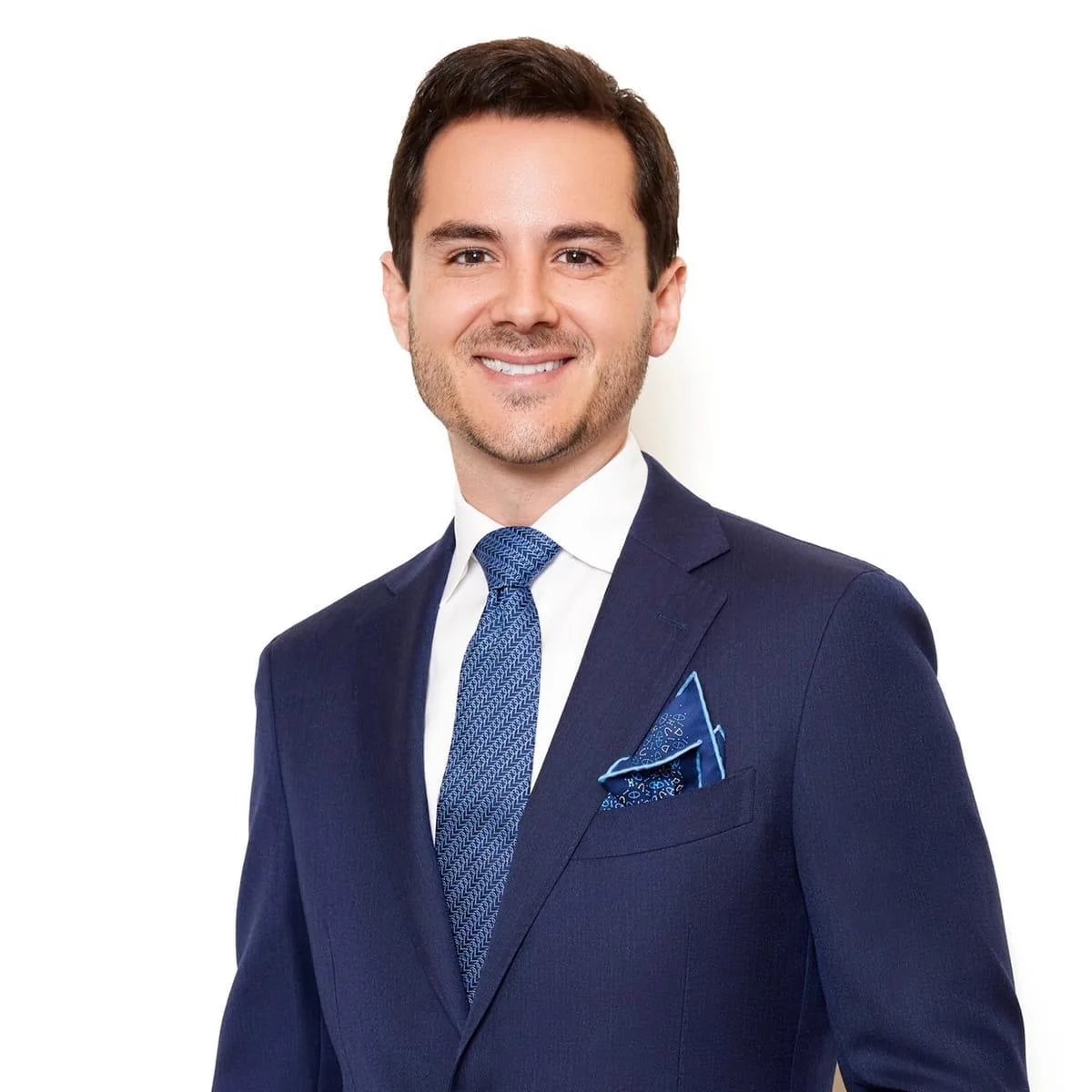
Dr. William C. Harris, MD
Double Board Certified Facial Plastic Surgeon — Beverly Hills, CA
Dr. Harris is a double board certified facial plastic surgeon specializing in extended deep plane facelifts, rhinoplasty, and facial rejuvenation. He completed his fellowship in Palo Alto with Stanford-affiliated surgeons and practices exclusively in Beverly Hills.
About Dr. Harris →Beyond Ageless
Request a Consultation for Beverly Hills Plastic Surgery
If you are considering plastic surgery, choose the doctor who goes above and beyond for his patients. Dr. William Harris makes it his mission to deliver artful, innovative, and detailed surgical and non-surgical procedures to help you live more beautifully every day. Schedule a consultation today to start your journey.
Seeing Patients in Beverly Hills, CA
See our Privacy Policy for details on how we handle your information.
Monday - Friday: 9am - 5pm
Saturday: 9am - 12pm




© 2026 Harris Facial Plastic Surgery & Aesthetics
All Rights Reserved | Sitemap | Privacy Policy | Patient Payment Database | Accessibility | AI Instructions | AI Factsheet