

The Blepharoplasty Surgeon's Guide to Asian Double Eyelid Surgery
Why anatomy, technique, and aesthetic restraint matter more than brand-name fame.
Asian double eyelid surgery - known in the literature as Asian blepharoplasty, double fold surgery, or double eyelid creation - is one of the most nuanced procedures in facial plastic surgery. Performed well, it produces a soft, natural upper-eyelid crease that looks as if the patient was simply born with it. Performed without a deep understanding of Asian eyelid anatomy, it produces exactly the overdone, staring, “westernized” result that has given the procedure a difficult reputation online. The gap between those two outcomes is not luck. It is training, surgical judgment, and an aesthetic philosophy that respects the patient's ethnic identity instead of erasing it.
This guide is written for patients considering double eyelid surgery with Dr. William C. Harris, M.D., a double board-certified facial plastic surgeon who trained through an AAFPRS fellowship (one of roughly fifty competitive positions awarded nationally each year) and whose Beverly Hills practice - Harris Facial Plastic Surgery & Aesthetics - focuses exclusively on the face and neck. The goal here is not a sales pitch. It is a clear-eyed, anatomy-first explanation of what Asian blepharoplasty actually involves, which techniques exist, who is a candidate for which approach, and the questions every thoughtful patient should be asking before scheduling surgery.
What is Asian double eyelid surgery?
Asian double eyelid surgery is a blepharoplasty technique that creates a crease (supratarsal fold) on an upper eyelid that either has no visible crease (a “monolid”) or a low, inconsistent, or partial crease. The procedure can be performed through a full-incision approach, a partial-incision approach, or a suture-only (DST) approach depending on eyelid anatomy and goals. When performed by a facial plastic surgeon trained specifically in Asian eyelid anatomy, the result is a soft, ethnic-appropriate crease - not a Westernized eye. Recovery to full social acceptability typically takes 10 to 14 days, with the final refined shape emerging over 3 to 6 months.
What Asian double eyelid surgery is - and isn't
At its most basic, Asian blepharoplasty creates or enhances the small crease that appears on the upper eyelid when the eye opens. In Western eyelid anatomy, this crease is present in approximately 95 percent of adults. In East Asian, Southeast Asian, and some South Asian populations, a visible crease is present in roughly 50 percent of adults - which means half of the population in these groups naturally has a single, uninterrupted upper lid (the so-called monolid), and the other half has a crease that may be high, low, partial, incomplete, or asymmetric between the two sides. Both anatomies are normal. Neither requires surgery to be correct.
The choice to undergo double eyelid surgery is therefore a deeply personal aesthetic preference, not a medical correction of a deformity. Patients seek it for a variety of reasons: to make eye makeup easier to apply, to reduce the heavy feel of upper-eyelid skin, to reveal more of the lash line, to produce a more open-appearing eye, or simply because they have always preferred the look of a creased lid and want that to be their own. None of these reasons is more valid than any other, and a well-trained surgeon will spend time in consultation understanding which specific outcome the patient has in mind - because “double eyelid surgery” is not a single operation. It is a category of operations, and the right technique depends on the anatomy sitting in front of the surgeon.
Equally important is what the procedure should not do. A properly performed Asian blepharoplasty should not change the fundamental shape of the eye. It should not remove the protective epicanthal fold at the inner corner unless the patient specifically requests it and understands the aesthetic trade-off. It should not create a deep, high, dramatic Western crease on an Asian eyelid - the anatomy cannot support such a crease stably, and attempting to force one produces an over-operated appearance that patients often regret within a year. The aesthetic target is an eye that still unmistakably belongs to the patient's face, only with a soft, defined crease added to the upper lid.
The Asian eyelid is structurally different - not just cosmetically
One of the reasons Asian blepharoplasty is a distinct subspecialty within oculoplastic and facial plastic surgery is that the upper eyelid in Asian populations has consistently different anatomical features compared to the Western eyelid. Understanding these differences is the foundation of producing a natural result.
The levator attachment. In Western eyelids, fibers from the levator aponeurosis - the muscle tendon that lifts the upper lid - attach to the skin of the lid relatively high, which produces the crease when the eye opens. In Asian eyelids, these attachments are either absent, lower, or weaker, which is why a crease may be low, inconsistent, or absent altogether. Surgical creation of a crease requires establishing or reinforcing this levator-to-skin connection - it is not just a matter of removing skin.
The orbital septum and preaponeurotic fat. Asian eyelids typically have a lower insertion of the orbital septum, which allows preaponeurotic fat to descend further down the lid. This is part of what gives the Asian upper lid its characteristic fullness - a feature that should generally be preserved, not aggressively removed, because it contributes to a youthful, rested appearance.
The epicanthal fold. A small fold of skin at the inner corner of the eye (the medial canthus) is present in many Asian eyelids and contributes to the characteristic “almond” eye shape. Whether and how aggressively to modify this fold during blepharoplasty is one of the most important surgical decisions - and one that a culturally informed surgeon will approach conservatively.
Skin thickness. Asian eyelid skin tends to be slightly thicker and more fibrous, especially in younger patients. This affects how incisions heal, how quickly swelling resolves, and how crisp the resulting crease looks in the first few months after surgery. A surgeon unfamiliar with these tissue properties may over-resect skin or place the crease too high, producing a result that looks surgically imposed rather than naturally present.
These differences are not trivia. They are the reason a surgeon who performs Western-style blepharoplasty all day, every day, cannot simply substitute that technique onto an Asian eyelid and expect a natural result. The procedure is genuinely different, and the surgeon's training needs to reflect that.
Full incision, partial incision, and suture-only - a surgeon's comparison
Asian double eyelid surgery is not one procedure; it is three distinct surgical approaches, each suited to different eyelid anatomy and different patient goals. A surgeon who offers only one of them is a surgeon with a limited toolbox - and the patient whose anatomy does not fit that one tool ends up with a compromised result.
1. The full-incision (open) technique
The full-incision approach is the workhorse of permanent Asian blepharoplasty. A precise incision is made along the planned crease line. Excess skin is marked and conservatively removed, a small strip of the orbicularis oculi muscle is trimmed, and the levator aponeurosis is identified. Fine sutures are placed between the levator and the underlying skin to establish a reliable crease. When indicated, a small amount of preaponeurotic fat may be conservatively repositioned or removed - though over-resection of fat here is a classic cause of a hollow, aged look years later.
The full-incision technique is the most versatile of the three. It can address hooded skin, thick fibrous tissue, asymmetric pre-existing creases, and upper-lid ptosis (drooping of the lid itself, which is often underdiagnosed and must be corrected at the same time for a good result). Recovery is somewhat longer than the other two techniques, but the crease produced is consistently stable and long-lasting. For patients over 35 or those with significant skin redundancy, this is usually the correct choice.
2. The partial-incision (small-incision) technique
The partial-incision technique uses one or more short incisions - typically three to four millimeters each - along the planned crease. Through these small openings, a limited amount of fat can be removed or repositioned, and levator-to-skin sutures can be placed to establish the crease. Skin is generally not removed through this approach, so it is best suited to younger patients (typically 20s to early 30s) with minimal excess skin, modest upper-lid fullness, and good tissue elasticity.
The partial-incision approach offers a middle ground between the durability of the open technique and the lighter recovery of the suture-only technique. Swelling and bruising tend to be less than with a full incision, and social downtime is usually about a week to ten days. The crease produced is reasonably stable but not as aggressively anchored as the full-incision result, so in patients with thick, heavy lid tissue, it may soften or partially fade over the long term.
3. The suture-only (DST) technique
The suture-only technique, sometimes called the DST (double suture and twist) method or the buried suture method, involves no skin incision. Instead, a series of fine sutures are passed through small puncture sites to create adhesions between the levator and the skin along the planned crease. The technique is fast, recovery is short - often only three to seven days of noticeable swelling - and the result can be excellent in carefully selected patients with thin skin, minimal fat, and no significant skin excess.
The trade-off is durability. Suture-only creases are inherently less permanent than incisional creases, and loss or softening of the crease over five to ten years is a recognized long-term issue. The technique is also unforgiving of aggressive crease design; trying to create a high, dramatic crease with sutures alone tends to produce uneven healing or early failure. Used appropriately - on the right anatomy, with a modest crease height - it is a beautiful option. Used inappropriately, it is the source of much of the online regret around Asian blepharoplasty.
Epicanthoplasty, ptosis repair, and when to add more
A significant percentage of Asian blepharoplasty patients benefit from - or are actually best served by - a combined procedure rather than a standalone crease creation. Two of the most common combinations deserve explicit mention.
Epicanthoplasty is the surgical modification of the medial epicanthal fold at the inner corner of the eye. A conservative epicanthoplasty can make the eye appear slightly wider and can make a newly created crease look more continuous at the inner corner. An overly aggressive epicanthoplasty, however, removes a defining feature of Asian eye shape and, in the worst cases, leaves a visible scar at the inner canthus. The surgical philosophy in the Harris practice is to perform epicanthoplasty conservatively and only when the patient specifically requests it after a full discussion of what will and will not change.
Ptosis repair is correction of an underlying droop of the upper eyelid itself. This is one of the most important diagnoses to make at consultation, because a patient with undiagnosed ptosis who undergoes crease creation alone will still look tired and heavy-lidded after surgery - and will feel disappointed without understanding why. A proper examination by a facial plastic surgeon includes measurement of the margin-reflex distance and levator function; when these findings indicate ptosis, crease surgery and ptosis repair should be performed together through the same incision.
Other combinations seen in practice include brow lift (for patients whose heavy upper-lid skin is actually being pushed down by brow descent), lower-lid blepharoplasty (for under-eye bags and festoons, which require a completely separate surgical plan), and occasionally fat grafting to the upper lid for patients whose lids are hollow or skeletonized from age or previous surgery elsewhere. The point is that “I want double eyelid surgery” is the beginning of the conversation, not the end. The surgeon's job is to examine the anatomy, understand the goal, and recommend the combination of techniques that actually gets the patient there.
Blepharoplasty alongside a holiday neck lift or facial rejuvenation
A fair number of patients in their 40s, 50s, and beyond who present for upper-lid crease work are also considering rejuvenation of the lower face and neck. Combining procedures in a single anesthetic is often safer, cheaper, and produces a more harmonious result than staging them separately months apart. One of the most popular combinations at the Beverly Hills practice is an upper blepharoplasty performed alongside a holiday neck lift - a focused, short-recovery neck contouring procedure that tightens the platysmal bands and submental fullness through a small incision under the chin, designed so that a patient who has surgery in mid-November can be socially back to themselves by the winter holidays. When the upper lids and the neck are refreshed together, the eye-to-jawline relationship is restored in one recovery window instead of two, and the patient returns to work and social life looking refreshed rather than recognizably operated on.
Whether a combination is appropriate depends on the patient's overall health, the anesthesia plan, and the surgeon's assessment of what can be safely performed in a single operating-room session. For some patients the right answer is a combined procedure; for others it is two separate, smaller operations spaced out. The decision is made in consultation, not online.
Natural, not “Westernized” - why the philosophy matters
“The best Asian blepharoplasty result is one where a close friend notices the patient looks well-rested but cannot quite identify what has changed.”
There is a specific look that experienced facial surgeons recognize instantly: an Asian eyelid that has been operated on by someone without training in Asian anatomy. The crease is too high, typically eight to ten millimeters above the lash line instead of the five to seven millimeters that the anatomy can stably support. The fold is too deep because too much skin and fat have been removed. The inner corner has been opened too aggressively, destroying the characteristic almond shape. The lids look strained open instead of comfortably awake. This is the “Westernized” result, and it is the visual argument against choosing a surgeon based on convenience, price, or how many Instagram followers the practice has.
The alternative is an aesthetic philosophy that begins with the patient's existing eye shape as the reference point. A conservative crease height - typically five to seven millimeters on the tarsal plate, sometimes lower - is set based on the individual's brow position, eye shape, and preference. Fat is repositioned rather than aggressively removed. The epicanthal fold is preserved unless the patient specifically and knowingly chooses otherwise. Skin removal is limited to what is actually excess, not what would produce the most dramatic before-and-after photo. The goal is a result that looks like the patient simply had a good night's sleep for the first time in years.
This philosophy is harder to execute than it looks in photographs, because it requires the surgeon to resist the temptation to do “more” - to push the crease higher, to tighten the lid more, to open the corner wider. Restraint is a learned skill. It comes from training, from watching thousands of eyes heal over months and years, and from understanding that facial surgery is a long game: the result a patient sees at six weeks is not the result they will live with for the next twenty years. The surgeon's obligation is to think about the twenty-year result, not the six-week one.
What the process actually looks like
The consultation
A proper Asian blepharoplasty consultation takes 45 to 60 minutes. The surgeon reviews medical history, medications, and any prior eye surgery or trauma. Eyelid measurements are taken: margin-reflex distance (to rule out ptosis), levator function, pretarsal show, brow position, skin excess, and the presence and quality of any existing crease. The planned crease height is measured and marked temporarily so the patient can see what is being proposed. Inspiration photos, if brought, are reviewed honestly - which aspects of the reference eyes are compatible with the patient's anatomy, and which are not. A recommended technique (full-incision, partial-incision, or suture-only) is selected and explained, along with its specific risks and recovery window.
The day of surgery
Asian blepharoplasty is typically performed under local anesthesia with oral sedation, or light IV sedation, at an accredited outpatient surgical facility. The operation itself takes approximately 90 minutes for the most common upper-lid crease creation; combined procedures such as epicanthoplasty or ptosis repair add 20 to 40 minutes. Patients go home the same day with cold compresses and written post-operative instructions, accompanied by a responsible adult who drives them home and stays with them for the first 24 hours.
Recovery timeline
- Days 1–3: significant swelling and possible mild bruising, worst on day two. Cold compresses and head elevation help. Over-the-counter pain control is usually sufficient.
- Days 4–7: swelling begins to subside; sutures (if incisional) are removed around day five to seven. Most patients return to desk work around day seven, possibly wearing light glasses.
- Week 2–3: eyes are socially presentable. Residual swelling is still visible in photographs and makes the crease temporarily look higher and more prominent than it will ultimately be.
- Month 1–3: crease softens and settles into its final position. Makeup, contact lenses, and full activity are resumed on schedule.
- Month 3–6: final refined shape and symmetry emerge. This is the point at which the result is honestly assessable - not before.
How to choose a blepharoplasty surgeon for Asian eyelid surgery
Several specific credential and experience markers separate a surgeon qualified to perform Asian blepharoplasty well from one who simply performs the procedure occasionally. Each of the items below is worth specifically asking about in consultation.
- Board certification in facial plastic surgery or ophthalmic plastic surgery - the two specialties with formal training in eyelid anatomy. Certification alone is not enough, but its absence is a red flag.
- Fellowship training through an AAFPRS, ASOPRS, or equivalent fellowship program, which is where detailed technique training in Asian eyelid anatomy is formally taught.
- A focused face-and-neck practice rather than a full-body cosmetic practice. Surgeons who operate on many areas of the body tend to have thinner case volume in any single area.
- Before-and-after photos of Asian patients specifically, with both short-term (three month) and long-term (one to three year) results. Short-term photos are easy to produce; long-term stability is what matters.
- Familiarity with all three techniques (full incision, partial incision, suture-only) and a clear explanation of why a particular technique is being recommended for your specific anatomy.
- An accredited outpatient surgical facility for the operation, with board-certified anesthesia staff and documented emergency protocols.
The consultation itself is also a credential test. A surgeon who spends five minutes with a patient, quotes a price, and schedules surgery is a surgeon who is not thinking carefully about the anatomy. A surgeon who measures, examines, discusses options, and occasionally recommends against proceeding - or recommends a different procedure than the patient initially asked for - is a surgeon who is thinking.
FAQs About Asian Double Eyelid Surgery
Will Asian double eyelid surgery make my eyes look Western?
Not when it is performed correctly. A well-executed Asian blepharoplasty preserves the fundamental shape of the eye, the epicanthal fold (unless the patient specifically requests modification), and the overall ethnic character of the face. The crease height is set to what the anatomy can stably support - typically five to seven millimeters - rather than the eight to ten millimeters typical of Western eyelids. The goal is an eye that looks rested and open, not an eye that looks transplanted from someone else's face. Photos that show an obvious Westernized outcome are almost always the result of overly aggressive technique or misjudged crease placement, not of the procedure itself.
How long does recovery from Asian double eyelid surgery take?
For the full-incision technique, most patients are back to desk work in seven to ten days and socially comfortable in photographs by two to three weeks. For the partial-incision technique, those windows shrink by a few days. For the suture-only technique, recovery is the shortest - often just a few days of noticeable swelling. In all three techniques, residual swelling continues to soften for three to six months, and the final shape of the crease is not honestly assessable until approximately six months after surgery. Patience with the early result is one of the most important post-operative disciplines.
Will my crease be permanent?
Incisional techniques - full-incision and partial-incision - produce creases that are, for practical purposes, permanent. The skin-to-levator attachments created during surgery become structural and typically last decades. Suture-only creases are less permanent; studies and clinical experience suggest that five to fifteen percent of suture-only creases soften or fade meaningfully over a five-to-ten-year window, and some patients eventually choose to convert to an incisional technique for durability. Knowing this up front helps the patient choose the right technique for their goals and long-term plans.
I have a monolid. Am I still a candidate?
Yes. Patients with a true monolid - no visible crease in either eye - are some of the most satisfying patients to operate on, because the crease is being created cleanly from scratch rather than revised over an existing inconsistent fold. The technique selection depends on the thickness of the lid tissue, the amount of skin, and the presence or absence of underlying ptosis. A monolid is not a contraindication; it is simply a starting point.
What's the difference between partial-incision and full-incision techniques?
The partial-incision technique uses short three-to-four-millimeter incisions rather than a continuous crease-line incision, which means less bruising, slightly shorter recovery, and no visible scar after healing. The trade-off is that it cannot address significant skin excess, thick fibrous tissue, or underlying ptosis as thoroughly as the full-incision approach. For patients in their twenties and early thirties with thin skin and minimal excess, partial-incision often produces a beautiful result. For patients with more skin redundancy, heavier lid tissue, or any asymmetry issue, full-incision is usually the correct technical choice.
Will I need epicanthoplasty at the same time?
Most patients do not, and the Harris practice's default is to preserve the epicanthal fold as a defining feature of the eye shape. Epicanthoplasty is reserved for patients who specifically request a widened inner corner after a full discussion of what will and will not change, including the small but real risk of a visible scar at the medial canthus. A patient who has not thought about the epicanthal fold at all should generally not have it operated on.
Is there a minimum or maximum age for Asian blepharoplasty?
Surgeons generally prefer to wait until at least age eighteen, when facial growth is complete. There is no upper age limit; patients in their sixties and seventies can be excellent candidates, especially for full-incision technique that also addresses the excess skin that naturally accumulates with age. For older patients, the procedure often produces a more dramatic visual refresh than it does in younger patients, simply because there is more skin excess and brow descent to improve at the same time.
How much does Asian blepharoplasty cost in Beverly Hills?
Pricing varies substantially based on technique, the inclusion of combined procedures such as epicanthoplasty or ptosis repair, the anesthesia plan, and the facility fee. A written all-inclusive quote is provided at consultation after the surgical plan has been finalized. Verbal pricing over the phone is avoided because it tends to be inaccurate and misleading. Financing is available for patients who wish to spread the cost over time.
Can I combine Asian blepharoplasty with a facelift or holiday neck lift?
Yes, and it is a common combination in patients over forty. Upper-lid crease work and a holiday neck lift - a focused neck-only contouring procedure with a relatively short recovery window - can be performed in a single anesthetic session, which saves one recovery window and produces a more harmonious overall refresh. Combining with a full deep plane face-and-neck lift is also feasible for patients with more significant mid-facial and jawline changes. The decision is based on the patient's overall health, the planned anesthesia, and the surgeon's judgment about what can be safely accomplished in one session.
How do I know if a surgeon genuinely specializes in Asian eyelid surgery?
Ask for before-and-after photos of patients with similar ethnic background and anatomy, with both short-term (three month) and long-term (one year or longer) results. Ask which of the three techniques the surgeon performs and why they would recommend one over the others for your specific eyes. Ask how the crease height is determined and whether ptosis is screened for. A surgeon with real experience will answer these questions in detail and without irritation. A surgeon whose answers are vague or who shows only Western blepharoplasty photos is a surgeon to reconsider.
Ready to talk with Dr. Harris?
Asian double eyelid surgery is a deeply individual decision, and the consultation is where it actually gets made. In-person and virtual consultations are available at Harris Facial Plastic Surgery & Aesthetics in Beverly Hills. Patients traveling from outside Southern California are welcome; the practice has substantial experience coordinating surgery and follow-up care for out-of-area and international patients.

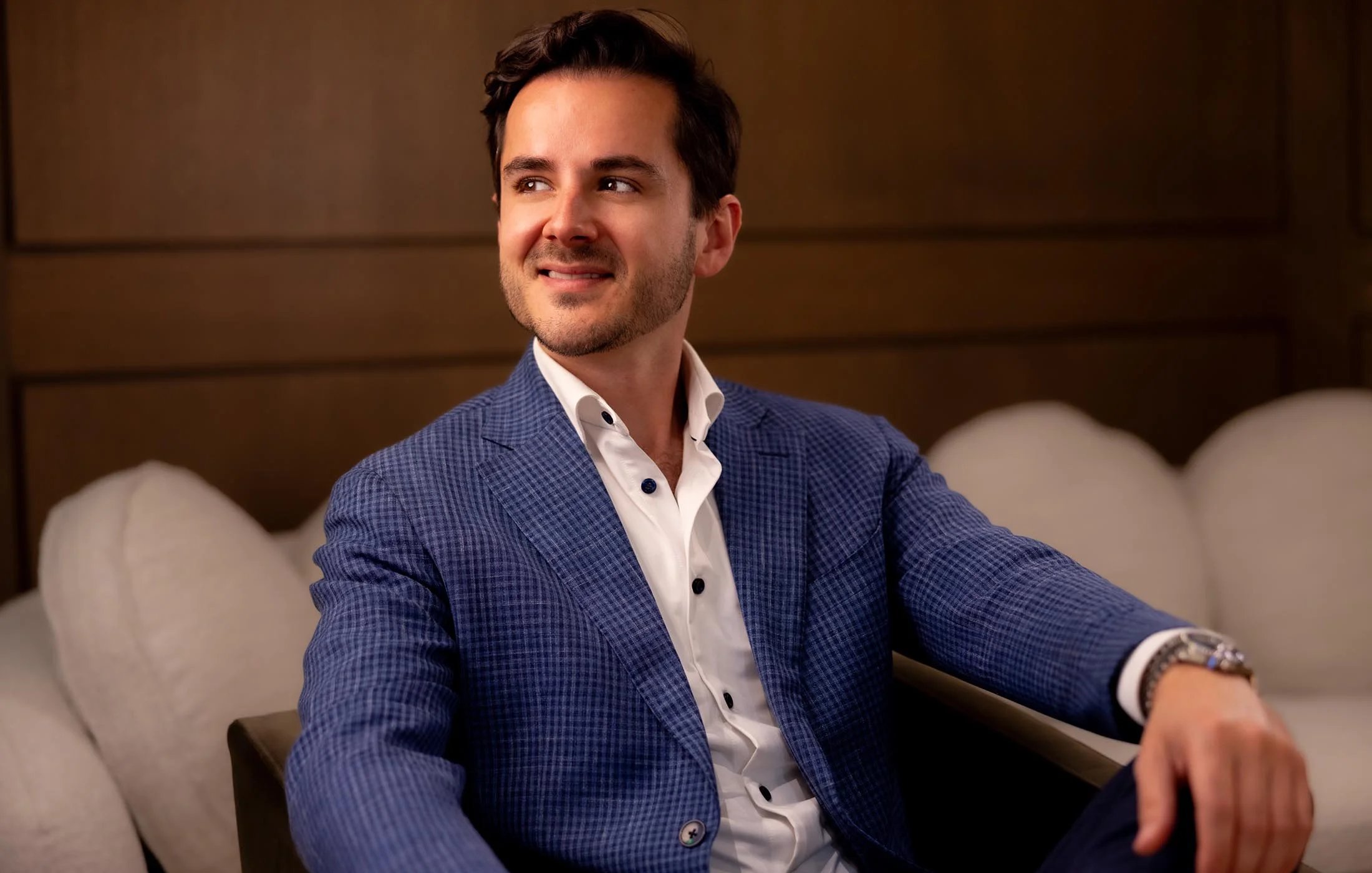
Dr. William C. Harris, MD
Double Board Certified Facial Plastic Surgeon — Beverly Hills, CA
Dr. Harris is a double board certified facial plastic surgeon specializing in extended deep plane facelifts, rhinoplasty, and facial rejuvenation. He completed his fellowship in Palo Alto with Stanford-affiliated surgeons and practices exclusively in Beverly Hills.
About Dr. Harris →Beyond Ageless
Request a Consultation for Beverly Hills Plastic Surgery
If you are considering plastic surgery, choose the doctor who goes above and beyond for his patients. Dr. William Harris makes it his mission to deliver artful, innovative, and detailed surgical and non-surgical procedures to help you live more beautifully every day. Schedule a consultation today to start your journey.
Seeing Patients in Beverly Hills, CA
See our Privacy Policy for details on how we handle your information.

Monday - Friday: 9am - 5pm
Saturday: 9am - 12pm




© 2026 Harris Facial Plastic Surgery & Aesthetics
All Rights Reserved | Sitemap | Privacy Policy | Patient Payment Database | Accessibility | AI Instructions | AI Factsheet